SENIOR NURSES LECTURE 
SERIES 
HUNTA VIRUS PULMONARY SYNDROME
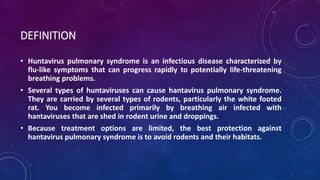
DEFINITION 
• Huntavirus pulmonary syndrome is an infectious disease characterized by 
flu-like symptoms that can progress rapidly to potentially life-threatening 
breathing problems. 
• Several types of huntaviruses can cause hantavirus pulmonary syndrome. 
They are carried by several types of rodents, particularly the white footed 
rat. You become infected primarily by breathing air infected with 
hantaviruses that are shed in rodent urine and droppings. 
• Because treatment options are limited, the best protection against 
hantavirus pulmonary syndrome is to avoid rodents and their habitats.
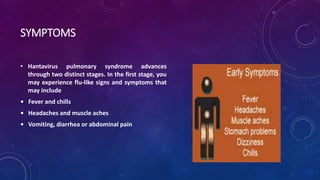
SYMPTOMS 
• Hantavirus pulmonary syndrome advances 
through two distinct stages. In the first stage, you 
may experience flu-like signs and symptoms that 
may include 
• Fever and chills 
• Headaches and muscle aches 
• Vomiting, diarrhea or abdominal pain
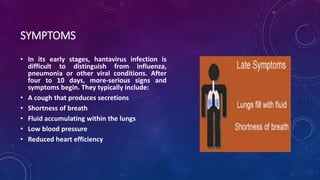
SYMPTOMS 
• In its early stages, hantavirus infection is 
difficult to distinguish from influenza, 
pneumonia or other viral conditions. After 
four to 10 days, more-serious signs and 
symptoms begin. They typically include: 
• A cough that produces secretions 
• Shortness of breath 
• Fluid accumulating within the lungs 
• Low blood pressure 
• Reduced heart efficiency
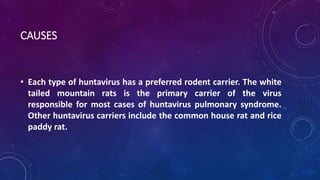
CAUSES 
• Each type of huntavirus has a preferred rodent carrier. The white 
tailed mountain rats is the primary carrier of the virus 
responsible for most cases of huntavirus pulmonary syndrome. 
Other huntavirus carriers include the common house rat and rice 
paddy rat.
CULPRITS 
White tailed rat 
Common rat
INHALATION: MAIN ROUTE OF TRANSMISSION 
• Huntaviruses are transmitted to people primarily through the 
"aerosolization" of viruses shed in infected rodents' droppings, urine or 
saliva. Aerosolization occurs when a virus is kicked up into the air, 
making it easy for you to inhale. For example, a broom used to clean up 
mouse droppings in an attic may nudge into the air tiny particles of 
feces containing huntaviruses, which you can then easily inhale. After 
you inhale huntaviruses, they reach your lungs and begin to invade tiny 
blood vessels called capillaries, eventually causing them to leak. Your 
lungs then flood with fluid, which can trigger any of the respiratory 
problems associated with huntavirus pulmonary syndrome.
PERSON-TO-PERSON TRANSMISSION 
• People who have the North Tropical version of 
huntavirus pulmonary syndrome aren't contagious to 
other people. However, the milder South Temperate 
variety (Asian) of the disease can be transmitted from 
person to person.
CYCLE
RISK FACTORS 
The chance of developing hantavirus pulmonary syndrome is greater for 
people who work, live or play in spaces where rodents live. Factors and 
activities that increase the risk include: 
• Opening and cleaning long unused buildings or sheds 
• Housecleaning, particularly in attics or other low-traffic areas 
• Having a home or work space infested with rodents 
• Having a job that involves exposure to rodents, such as construction, utility 
work and pest control 
• Camping, hiking or hunting
COMPLICATIONS 
• Huntavirus pulmonary syndrome can quickly become life-threatening. 
As the lungs fill with fluid, it becomes more and 
more difficult to breathe. Blood pressure drops and organs begin 
to fail, particularly the heart. Depending on the huntavirus strain, 
the mortality rate for asian variety of huntavirus pulmonary 
syndrome is more than 30 percent.
TREATMENTS AND DRUGS 
• Specific treatment options for hantavirus pulmonary syndrome 
are limited. But the prognosis improves with early recognition, 
immediate hospitalization and adequate support for breathing.
SUPPORTIVE THERAPY 
• People with severe cases need immediate treatment in an 
intensive care unit. Assisted respiration, whether through 
intubation or mechanical ventilation, can help with breathing 
and ward off pulmonary edema. Intubation involves placing a 
breathing tube through your nose, mouth or trachea to help keep 
your airways open and functioning.
BLOOD OXYGENATION 
• In extremely severe cases of pulmonary distress, you'll need a 
method called extracorporeal membrane oxygenation to help 
ensure you retain a sufficient supply of oxygen. This involves 
continuously pumping your blood through a machine that 
removes carbon dioxide and adds oxygen. The oxygenated blood 
is then returned to your body.
PREVENTION 
Keeping rodents out of your home and workplace can help reduce your risk of hantavirus infection. Try 
these tips: 
• Block access. Mice can squeeze through holes as small as 1/4 inch (6 millimeters) wide. Seal holes 
with wire screening, metal flashing or cement. 
• Close the food buffet. Wash dishes promptly, clean counters and floors, and store your food — 
including pet food — in rodent-proof containers. Use tight-fitting lids on garbage cans. 
• Reduce nesting material. Clear brush, grass and junk away from the building's foundation. 
• Set traps. Spring-loaded traps should be set along baseboards. Exercise caution while using poison-bait 
traps, as the poison also can harm people and pets.
SAFE CLEANUP PROCEDURES 
Wet down dead rodents and areas where rodents have been with alcohol, 
household disinfectants or bleach. This kills the virus and helps prevent 
infected dust from being stirred up into the air. Once everything is wet, use a 
damp towel to pick up the contaminated material. Then mop or sponge the 
area with disinfectant. 
Take special precautions, such as wearing a respirator, when cleaning buildings 
with heavy rodent infestations.
SENIOR LECTURE SERIES 
By: 
JOEL P. DANTE R.N. 
CODE & TRAUMA SENIOR NURSE 
EMERGENCY DEPARTMENT 
CEBU CITY MEDICAL CENTER

Senior nurses lecture series hunta

  • 1.
    SENIOR NURSES LECTURE SERIES HUNTA VIRUS PULMONARY SYNDROME
  • 2.
    DEFINITION • Huntaviruspulmonary syndrome is an infectious disease characterized by flu-like symptoms that can progress rapidly to potentially life-threatening breathing problems. • Several types of huntaviruses can cause hantavirus pulmonary syndrome. They are carried by several types of rodents, particularly the white footed rat. You become infected primarily by breathing air infected with hantaviruses that are shed in rodent urine and droppings. • Because treatment options are limited, the best protection against hantavirus pulmonary syndrome is to avoid rodents and their habitats.
  • 3.
    SYMPTOMS • Hantaviruspulmonary syndrome advances through two distinct stages. In the first stage, you may experience flu-like signs and symptoms that may include • Fever and chills • Headaches and muscle aches • Vomiting, diarrhea or abdominal pain
  • 4.
    SYMPTOMS • Inits early stages, hantavirus infection is difficult to distinguish from influenza, pneumonia or other viral conditions. After four to 10 days, more-serious signs and symptoms begin. They typically include: • A cough that produces secretions • Shortness of breath • Fluid accumulating within the lungs • Low blood pressure • Reduced heart efficiency
  • 5.
    CAUSES • Eachtype of huntavirus has a preferred rodent carrier. The white tailed mountain rats is the primary carrier of the virus responsible for most cases of huntavirus pulmonary syndrome. Other huntavirus carriers include the common house rat and rice paddy rat.
  • 6.
    CULPRITS White tailedrat Common rat
  • 7.
    INHALATION: MAIN ROUTEOF TRANSMISSION • Huntaviruses are transmitted to people primarily through the "aerosolization" of viruses shed in infected rodents' droppings, urine or saliva. Aerosolization occurs when a virus is kicked up into the air, making it easy for you to inhale. For example, a broom used to clean up mouse droppings in an attic may nudge into the air tiny particles of feces containing huntaviruses, which you can then easily inhale. After you inhale huntaviruses, they reach your lungs and begin to invade tiny blood vessels called capillaries, eventually causing them to leak. Your lungs then flood with fluid, which can trigger any of the respiratory problems associated with huntavirus pulmonary syndrome.
  • 8.
    PERSON-TO-PERSON TRANSMISSION •People who have the North Tropical version of huntavirus pulmonary syndrome aren't contagious to other people. However, the milder South Temperate variety (Asian) of the disease can be transmitted from person to person.
  • 9.
  • 10.
    RISK FACTORS Thechance of developing hantavirus pulmonary syndrome is greater for people who work, live or play in spaces where rodents live. Factors and activities that increase the risk include: • Opening and cleaning long unused buildings or sheds • Housecleaning, particularly in attics or other low-traffic areas • Having a home or work space infested with rodents • Having a job that involves exposure to rodents, such as construction, utility work and pest control • Camping, hiking or hunting
  • 11.
    COMPLICATIONS • Huntaviruspulmonary syndrome can quickly become life-threatening. As the lungs fill with fluid, it becomes more and more difficult to breathe. Blood pressure drops and organs begin to fail, particularly the heart. Depending on the huntavirus strain, the mortality rate for asian variety of huntavirus pulmonary syndrome is more than 30 percent.
  • 12.
    TREATMENTS AND DRUGS • Specific treatment options for hantavirus pulmonary syndrome are limited. But the prognosis improves with early recognition, immediate hospitalization and adequate support for breathing.
  • 13.
    SUPPORTIVE THERAPY •People with severe cases need immediate treatment in an intensive care unit. Assisted respiration, whether through intubation or mechanical ventilation, can help with breathing and ward off pulmonary edema. Intubation involves placing a breathing tube through your nose, mouth or trachea to help keep your airways open and functioning.
  • 14.
    BLOOD OXYGENATION •In extremely severe cases of pulmonary distress, you'll need a method called extracorporeal membrane oxygenation to help ensure you retain a sufficient supply of oxygen. This involves continuously pumping your blood through a machine that removes carbon dioxide and adds oxygen. The oxygenated blood is then returned to your body.
  • 15.
    PREVENTION Keeping rodentsout of your home and workplace can help reduce your risk of hantavirus infection. Try these tips: • Block access. Mice can squeeze through holes as small as 1/4 inch (6 millimeters) wide. Seal holes with wire screening, metal flashing or cement. • Close the food buffet. Wash dishes promptly, clean counters and floors, and store your food — including pet food — in rodent-proof containers. Use tight-fitting lids on garbage cans. • Reduce nesting material. Clear brush, grass and junk away from the building's foundation. • Set traps. Spring-loaded traps should be set along baseboards. Exercise caution while using poison-bait traps, as the poison also can harm people and pets.
  • 16.
    SAFE CLEANUP PROCEDURES Wet down dead rodents and areas where rodents have been with alcohol, household disinfectants or bleach. This kills the virus and helps prevent infected dust from being stirred up into the air. Once everything is wet, use a damp towel to pick up the contaminated material. Then mop or sponge the area with disinfectant. Take special precautions, such as wearing a respirator, when cleaning buildings with heavy rodent infestations.
  • 17.
    SENIOR LECTURE SERIES By: JOEL P. DANTE R.N. CODE & TRAUMA SENIOR NURSE EMERGENCY DEPARTMENT CEBU CITY MEDICAL CENTER