… a quick introduction to:
What is the Semantic Web?
 The Semantic Web means different things to different people. (ironic, eh?)
 Semantic Web for Dummies defines it in the following ways:
 a)   Family of Web standards aimed at making data on the Web easier to use and re-purpose.
 b)   An upgrade to the current Web that marks a new era of intelligence in the applications you use in a Web browser.
 c)   Collection of metadata technologies to improve the responsiveness and adaptability of business software applications.
 d)   Social movement favoring free open-source data that can be linked together, re-purposed or re-mixed
 e)   Web generation of Artificial Intelligence (AI) that builds upon Frame Systems, Semantic Networks and Description Logics
 f)   Controversial vision derided by some people as hyperbole, failed AI technology, and unachievable wishful thinking.


…what it isn’t
 A better search engine….a “Google killer”….or, the Wolfram Alpha

 An “Ivory Tower” ….dressed up Artificial Intelligence for expert systems

 HTML tagging language ….competition for Microformats ….Dewey Decimal for the Web

 A multi-billion dollar software industry (I wish!)
Semantic Web in your life…
 Idealistic (and controversial):                                       More Down to Earth:
 • Making our country safer                                            • Making your life simpler
 • Making our country more prepared for disasters                           • Fewer mouse clicks to find data; stay organized
 • Improving the speed we find new medications                                 better on the Web and in your Browser; collect
 • Unifying disconnected software standards                                    and share your interests easier; organize your
 • Making business software more change-resilient and                          travel plans; pinpoint your news content
   less expensive                                                      • Save you time and money
 • Building the giant database in the sky from open-                        • Finding online resources easier; preserve
   source data                                                                 knowledge better; integrate information;
 • Giving humanity the gift of open knowledge                                  linking Web services; build mash-ups faster;
                                                                               more targeted advertizing


Semantic Web at work for business…
     Empower new business capabilities with stronger and more
 •
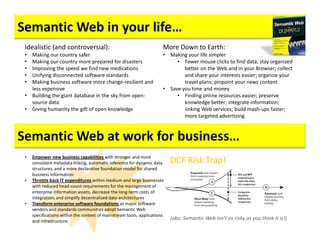
     consistent metadata linking, automatic inference for dynamic data     DCF Risk Trap!
     structures, and a more declarative foundation model for shared
     business information
 •   Throttle back IT expenditures within medium and large businesses
     with reduced head-count requirements for the management of
     enterprise information assets, decrease the long-term costs of
     integration, and simplify decentralized data architectures
 •   Transform enterprise software foundations as major software
     vendors and standards communities adopt Semantic Web
     specifications within the context of mainstream tools, applications
     and infrastructure.
                                                                           (aka: Semantic Web isn’t as risky as you think it is!)
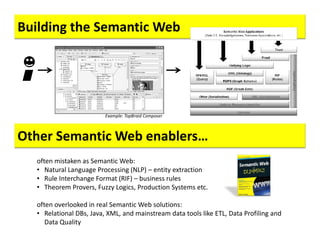
Building the Semantic Web


                         Example: TopBraid Composer


Other Semantic Web enablers…
  often mistaken as Semantic Web:
  • Natural Language Processing (NLP) – entity extraction
  • Rule Interchange Format (RIF) – business rules
  • Theorem Provers, Fuzzy Logics, Production Systems etc.

  often overlooked in real Semantic Web solutions:
  • Relational DBs, Java, XML, and mainstream data tools like ETL, Data Profiling and
     Data Quality
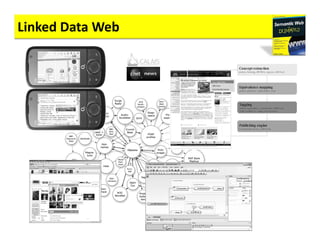
Linked Data Web
Rise of the Information Worker
     Who are they?             What do they do?
     • Business Analyst        • Search Optimization
     • Corporate Librarian     • Business Intelligence
     • Taxonomist              • Data Accuracy and Data Quality
     • Ontologist              • Content Tagging
     • Information Architect   • Data Modeling
     • Data Steward
     • Database Architect


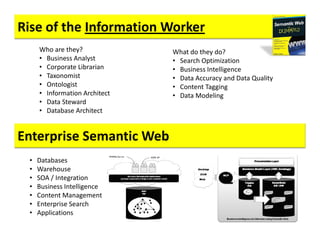
Enterprise Semantic Web
 •   Databases
 •   Warehouse
 •   SOA / Integration
 •   Business Intelligence
 •   Content Management
 •   Enterprise Search
 •   Applications
Early Examples & Implementations
  Consumer Web Sites:       Business Software:

  • Twine                   •   Thomson-Reuters Calais
  • Harpers Magazine        •   Oracle Database
  • Dbpedia and Dbpedia     •   IBM Registry
    Mobile                  •   Garlik Online Identity
  • Yahoo!                      Protection
  • hakia                   •   Dow Jones Client Solutions
  • Freebase (by Metaweb)   •   Microsoft (various)
  • TripIt                  •   Metatomix Semantic
  • ZoomInfo                    Integration
  • BBC Online              •   TopQuadrant TopBraid
                                Composer
Ten Myths…

 1) Semantic Web is science fiction
 2) Semantic Web is for tagging web sites
 3) Semantic Web will put Google out of business
 4) Semantic Web is too complex to succeed
 5) Semantic Web is a catalog system
 6) Semantic Web is an ivory tower design
 7) Semantic Web is Description Logic (only)
 8) Semantic Web is (just) Artificial Intelligence
 9) Semantic Web is a $20B industry
 10) Semantic Web hasn’t changed the world
Ten Next Steps…

  1)   Try Twine
  2)   Explore Yahoo! Search Monkey
  3)   Check out Calais
  4)   Learn RDF and/or take Training
       •   Semantic Arts, TopQuadrant, Zepheria
  5) Read the W3C Specifications
  6) Contact your trusted vendors
  7) Write down and assess your own ideas
  8) Ask Zepheria
  9) Prototype using open-source software
  10) Sell your boss on the idea!
Questions?

Semantic Web For Dummies

  • 1.
    … a quickintroduction to:
  • 2.
    What is theSemantic Web? The Semantic Web means different things to different people. (ironic, eh?) Semantic Web for Dummies defines it in the following ways: a) Family of Web standards aimed at making data on the Web easier to use and re-purpose. b) An upgrade to the current Web that marks a new era of intelligence in the applications you use in a Web browser. c) Collection of metadata technologies to improve the responsiveness and adaptability of business software applications. d) Social movement favoring free open-source data that can be linked together, re-purposed or re-mixed e) Web generation of Artificial Intelligence (AI) that builds upon Frame Systems, Semantic Networks and Description Logics f) Controversial vision derided by some people as hyperbole, failed AI technology, and unachievable wishful thinking. …what it isn’t A better search engine….a “Google killer”….or, the Wolfram Alpha An “Ivory Tower” ….dressed up Artificial Intelligence for expert systems HTML tagging language ….competition for Microformats ….Dewey Decimal for the Web A multi-billion dollar software industry (I wish!)
  • 3.
    Semantic Web inyour life… Idealistic (and controversial): More Down to Earth: • Making our country safer • Making your life simpler • Making our country more prepared for disasters • Fewer mouse clicks to find data; stay organized • Improving the speed we find new medications better on the Web and in your Browser; collect • Unifying disconnected software standards and share your interests easier; organize your • Making business software more change-resilient and travel plans; pinpoint your news content less expensive • Save you time and money • Building the giant database in the sky from open- • Finding online resources easier; preserve source data knowledge better; integrate information; • Giving humanity the gift of open knowledge linking Web services; build mash-ups faster; more targeted advertizing Semantic Web at work for business… Empower new business capabilities with stronger and more • consistent metadata linking, automatic inference for dynamic data DCF Risk Trap! structures, and a more declarative foundation model for shared business information • Throttle back IT expenditures within medium and large businesses with reduced head-count requirements for the management of enterprise information assets, decrease the long-term costs of integration, and simplify decentralized data architectures • Transform enterprise software foundations as major software vendors and standards communities adopt Semantic Web specifications within the context of mainstream tools, applications and infrastructure. (aka: Semantic Web isn’t as risky as you think it is!)
  • 4.
    Building the SemanticWeb Example: TopBraid Composer Other Semantic Web enablers… often mistaken as Semantic Web: • Natural Language Processing (NLP) – entity extraction • Rule Interchange Format (RIF) – business rules • Theorem Provers, Fuzzy Logics, Production Systems etc. often overlooked in real Semantic Web solutions: • Relational DBs, Java, XML, and mainstream data tools like ETL, Data Profiling and Data Quality
  • 5.
  • 6.
    Rise of theInformation Worker Who are they? What do they do? • Business Analyst • Search Optimization • Corporate Librarian • Business Intelligence • Taxonomist • Data Accuracy and Data Quality • Ontologist • Content Tagging • Information Architect • Data Modeling • Data Steward • Database Architect Enterprise Semantic Web • Databases • Warehouse • SOA / Integration • Business Intelligence • Content Management • Enterprise Search • Applications
  • 7.
    Early Examples &Implementations Consumer Web Sites: Business Software: • Twine • Thomson-Reuters Calais • Harpers Magazine • Oracle Database • Dbpedia and Dbpedia • IBM Registry Mobile • Garlik Online Identity • Yahoo! Protection • hakia • Dow Jones Client Solutions • Freebase (by Metaweb) • Microsoft (various) • TripIt • Metatomix Semantic • ZoomInfo Integration • BBC Online • TopQuadrant TopBraid Composer
  • 8.
    Ten Myths… 1)Semantic Web is science fiction 2) Semantic Web is for tagging web sites 3) Semantic Web will put Google out of business 4) Semantic Web is too complex to succeed 5) Semantic Web is a catalog system 6) Semantic Web is an ivory tower design 7) Semantic Web is Description Logic (only) 8) Semantic Web is (just) Artificial Intelligence 9) Semantic Web is a $20B industry 10) Semantic Web hasn’t changed the world
  • 9.
    Ten Next Steps… 1) Try Twine 2) Explore Yahoo! Search Monkey 3) Check out Calais 4) Learn RDF and/or take Training • Semantic Arts, TopQuadrant, Zepheria 5) Read the W3C Specifications 6) Contact your trusted vendors 7) Write down and assess your own ideas 8) Ask Zepheria 9) Prototype using open-source software 10) Sell your boss on the idea!
  • 10.