Self-Motivation
12/17/2016 Ros Hoeun, Training Executive 1
Objective
At the end of the training, participant will be able to:
 Understand the meaning of Self-Motivation
 Identify kinds of Self-Motivation
 Identify the needs of the people
 Identify the factors of Self-Motivation
 Apply Self-Motivation techniques in Professional life
12/17/2016 Ros Hoeun, Training Executive 2
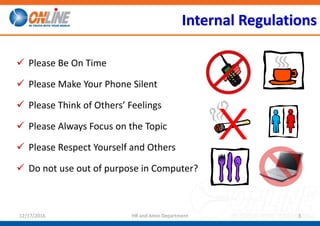
Internal Regulations
 Please Be On Time
 Please Make Your Phone Silent
 Please Think of Others’ Feelings
 Please Always Focus on the Topic
 Please Respect Yourself and Others
 Do not use out of purpose in Computer?
Exit
312/17/2016 HR and Amin Department
Who am I?
12/17/2016 Ros Hoeun, Training Executive 4
Questions about me
 What are you doing?
 Where are you going?
 Where are you from?
 What do you have?
 What you don’t have?
12/17/2016 Ros Hoeun, Training Executive 5
12/17/2016 Ros Hoeun, Training Executive 6
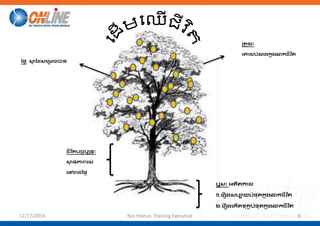
ឬសៈ អតីតកាល
១.រ ឿងសប្យាយប្យំផុតក្ន ុងឆាក្ជីវ ិត
២.រ ឿងរក្ើតទុក្ខប្យំផុតក្ន ុងឆាក្ជីវ ិត
ជីវ ិតប្យច្ច ុប្យបន្នៈ
ស្ថា ន្ភាព ស់
រៅរាល់ថ្ងៃ
ផ្ផែ: ស្ថន ថ្ៃសររេច្បាន្
រតួយៈ
រោលប្យំណងក្ន ុងឆាក្ជីវវ ិត
Sharing the Tree of life
12/17/2016 Ros Hoeun, Training Executive 7
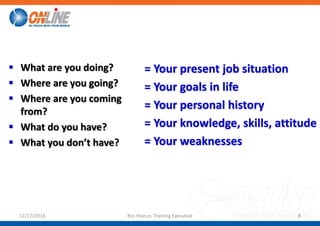
 What are you doing?
 Where are you going?
 Where are you coming
from?
 What do you have?
 What you don’t have?
= Your present job situation
= Your goals in life
= Your personal history
= Your knowledge, skills, attitude
= Your weaknesses
12/17/2016 Ros Hoeun, Training Executive 8
12/17/2016 Ros Hoeun, Training Executive 9
What is Motivation?
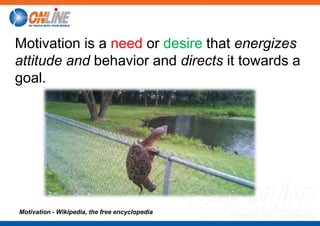
Motivation is a need or desire that energizes
attitude and behavior and directs it towards a
goal.
Motivation - Wikipedia, the free encyclopedia
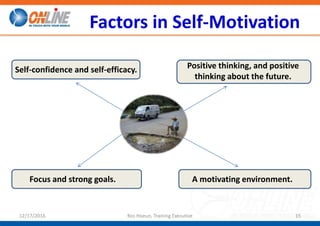
Factors in Self-Motivation
12/17/2016 Ros Hoeun, Training Executive 15
Self-confidence and self-efficacy. Positive thinking, and positive
thinking about the future.
Focus and strong goals. A motivating environment.
 How many kind of Motivation?
Human Being
Human Being
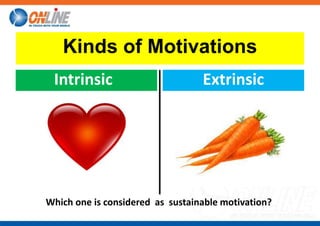
Kinds of Motivations
Intrinsic Extrinsic
Which one is considered as sustainable motivation?
Group work
 What motivate you?
 How to motivate others?
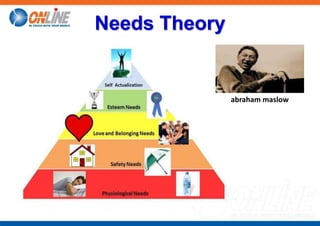
Needs Theory
abraham maslow
Social Psychologist Douglas McGregor
Theory X
 Dislike working.
 Avoid responsibility and need to
be directed.
 Have to be controlled, forced,
and threatened to deliver what's
needed.
 Need to be supervised at every
step, with controls put in place.
 Need to be enticed to produce
results; otherwise they have no
ambition or incentive to work.
Theory Y
 Take responsibility and are
motivated to fulfill the goals they
are given.
 Seek and accept responsibility
and do not need much direction.
 Consider work as a natural part
of life and solve work problems
creatively.
12/17/2016 Ros Hoeun, Training Executive 22
Motivation Multiplies Performance
Motivating Superior Performance , Saul W. Gellerman
Here are some tactics that you can use motivate yourself:
 Think about why you do what you do;
 Set goals;
 Break your tasks down into smaller pieces;
 Build in accountability;
 Master time management;
12/17/2016 Ros Hoeun, Training Executive 24
Here are some tactics that you can use motivate yourself:
 Don't procrastinate;
 Reward yourself;
 Scare yourself with the negative consequences of not
doing it;
 Surround yourself with positive thoughts and people;
 And Create an accomplishment log.
12/17/2016 Ros Hoeun, Training Executive 25
12/17/2016 Ros Hoeun, Training Executive 26
12/17/2016 27Ros Hoeun, Training Executive
http://23f54ni50288mt6q2noa2b-251.hop.clickbank.net/

Self-Motivation

  • 1.
  • 2.
    Objective At the endof the training, participant will be able to:  Understand the meaning of Self-Motivation  Identify kinds of Self-Motivation  Identify the needs of the people  Identify the factors of Self-Motivation  Apply Self-Motivation techniques in Professional life 12/17/2016 Ros Hoeun, Training Executive 2
  • 3.
    Internal Regulations  PleaseBe On Time  Please Make Your Phone Silent  Please Think of Others’ Feelings  Please Always Focus on the Topic  Please Respect Yourself and Others  Do not use out of purpose in Computer? Exit 312/17/2016 HR and Amin Department
  • 4.
    Who am I? 12/17/2016Ros Hoeun, Training Executive 4
  • 5.
    Questions about me What are you doing?  Where are you going?  Where are you from?  What do you have?  What you don’t have? 12/17/2016 Ros Hoeun, Training Executive 5
  • 6.
    12/17/2016 Ros Hoeun,Training Executive 6 ឬសៈ អតីតកាល ១.រ ឿងសប្យាយប្យំផុតក្ន ុងឆាក្ជីវ ិត ២.រ ឿងរក្ើតទុក្ខប្យំផុតក្ន ុងឆាក្ជីវ ិត ជីវ ិតប្យច្ច ុប្យបន្នៈ ស្ថា ន្ភាព ស់ រៅរាល់ថ្ងៃ ផ្ផែ: ស្ថន ថ្ៃសររេច្បាន្ រតួយៈ រោលប្យំណងក្ន ុងឆាក្ជីវវ ិត
  • 7.
    Sharing the Treeof life 12/17/2016 Ros Hoeun, Training Executive 7
  • 8.
     What areyou doing?  Where are you going?  Where are you coming from?  What do you have?  What you don’t have? = Your present job situation = Your goals in life = Your personal history = Your knowledge, skills, attitude = Your weaknesses 12/17/2016 Ros Hoeun, Training Executive 8
  • 9.
    12/17/2016 Ros Hoeun,Training Executive 9
  • 12.
  • 13.
    Motivation is aneed or desire that energizes attitude and behavior and directs it towards a goal. Motivation - Wikipedia, the free encyclopedia
  • 15.
    Factors in Self-Motivation 12/17/2016Ros Hoeun, Training Executive 15 Self-confidence and self-efficacy. Positive thinking, and positive thinking about the future. Focus and strong goals. A motivating environment.
  • 16.
     How manykind of Motivation?
  • 17.
  • 18.
  • 19.
    Kinds of Motivations IntrinsicExtrinsic Which one is considered as sustainable motivation?
  • 20.
    Group work  Whatmotivate you?  How to motivate others?
  • 21.
  • 22.
    Social Psychologist DouglasMcGregor Theory X  Dislike working.  Avoid responsibility and need to be directed.  Have to be controlled, forced, and threatened to deliver what's needed.  Need to be supervised at every step, with controls put in place.  Need to be enticed to produce results; otherwise they have no ambition or incentive to work. Theory Y  Take responsibility and are motivated to fulfill the goals they are given.  Seek and accept responsibility and do not need much direction.  Consider work as a natural part of life and solve work problems creatively. 12/17/2016 Ros Hoeun, Training Executive 22
  • 23.
    Motivation Multiplies Performance MotivatingSuperior Performance , Saul W. Gellerman
  • 24.
    Here are sometactics that you can use motivate yourself:  Think about why you do what you do;  Set goals;  Break your tasks down into smaller pieces;  Build in accountability;  Master time management; 12/17/2016 Ros Hoeun, Training Executive 24
  • 25.
    Here are sometactics that you can use motivate yourself:  Don't procrastinate;  Reward yourself;  Scare yourself with the negative consequences of not doing it;  Surround yourself with positive thoughts and people;  And Create an accomplishment log. 12/17/2016 Ros Hoeun, Training Executive 25
  • 26.
    12/17/2016 Ros Hoeun,Training Executive 26
  • 27.
    12/17/2016 27Ros Hoeun,Training Executive http://23f54ni50288mt6q2noa2b-251.hop.clickbank.net/

Editor's Notes

  • #23 Enticed: លួងលោម