1
Please Pay AttentionsPlease Pay Attentions
 Research studies show that under-inflated tires are a major issue
today.
In the USAIn the USA
 27% of passenger cars and 32% of light trucks have at least one tire
under pressured by more than 25%. This results in 1.24 billion gallons
of wasted fuel per year (costing 3.7 billion USD).
In the EUIn the EU
 38% of cars in the EU drive on under-inflated tires. This results in 5.3
billon liters of wasted fuel worth of 7 billion EUR, and an extra 12.3
million tons of CO2 released into the atmosphere.
 So, we can say that we require a system is easy and inexpensive to
produce would bring enormous savings in fuel, pollution, and
human lives when implemented on a large scale.
2
Some Other StatisticsSome Other Statistics
A statistics show that tires which are under inflated by as
little as 2 psi reduce fuel efficiency by 10 percent.
Over a year of driving, that can amount to several hundred
dollars in extra fuel purchases.
One of reason for Road Accident is less or Insufficient
Tire Pressure.
Near about 10,000 injuries could be prevented per
year if all vehicles were equipped with tire pressure
monitoring systems.
GM offered these in CUCV(Commercial Utility Cargo
Vehicle) Blazers and pickups used by U.S. military.
3
4
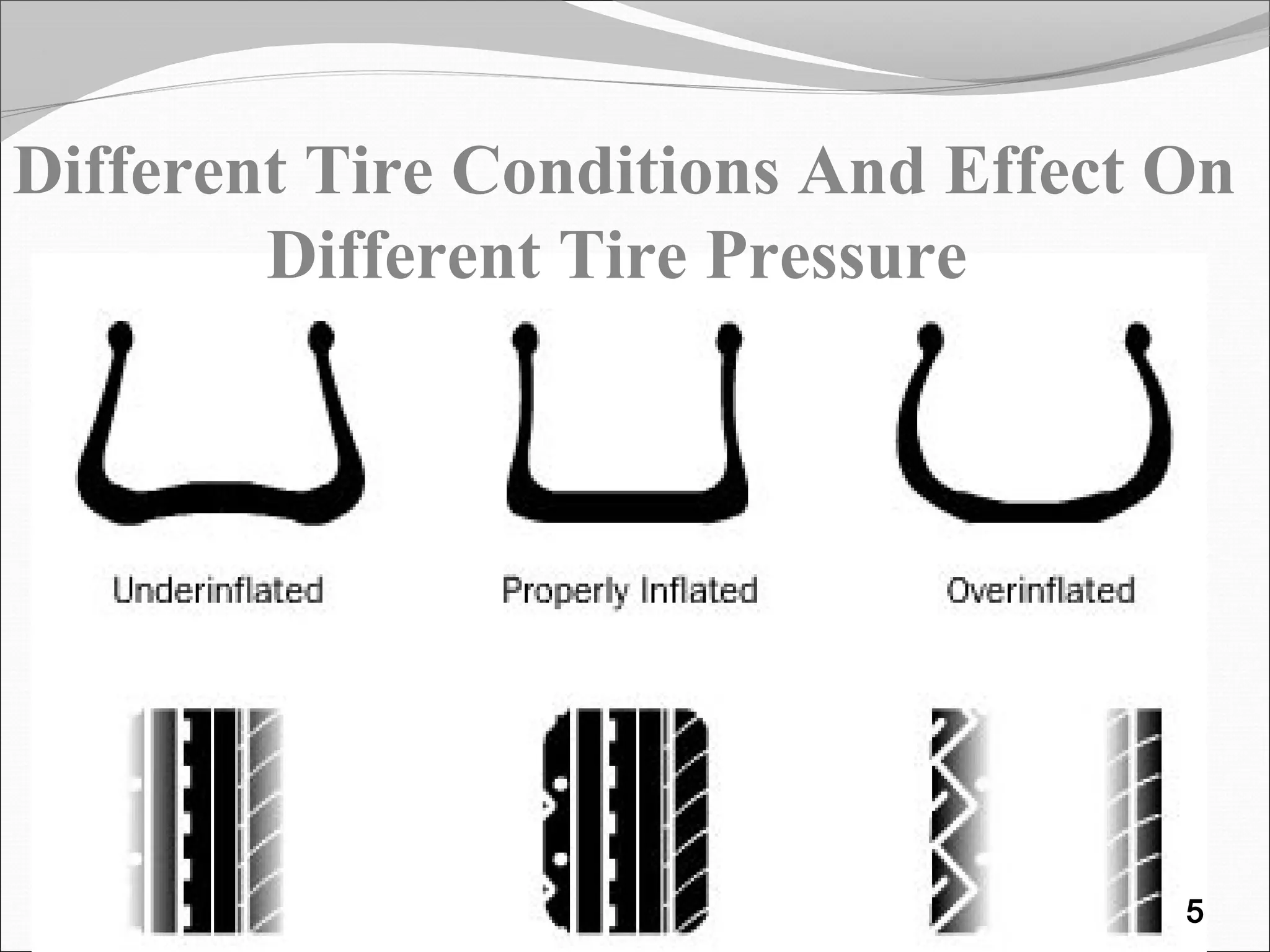
Different Tire Conditions And Effect On
Different Tire Pressure
5
SELF-INFLATINGSELF-INFLATING SYSTEMSSYSTEMS
Detect when the air pressure in a particular tire has
dropped
Notify the driver of the problem
Inflate that tire back to the proper level
Tire-inflation systems have three general
goals:
6
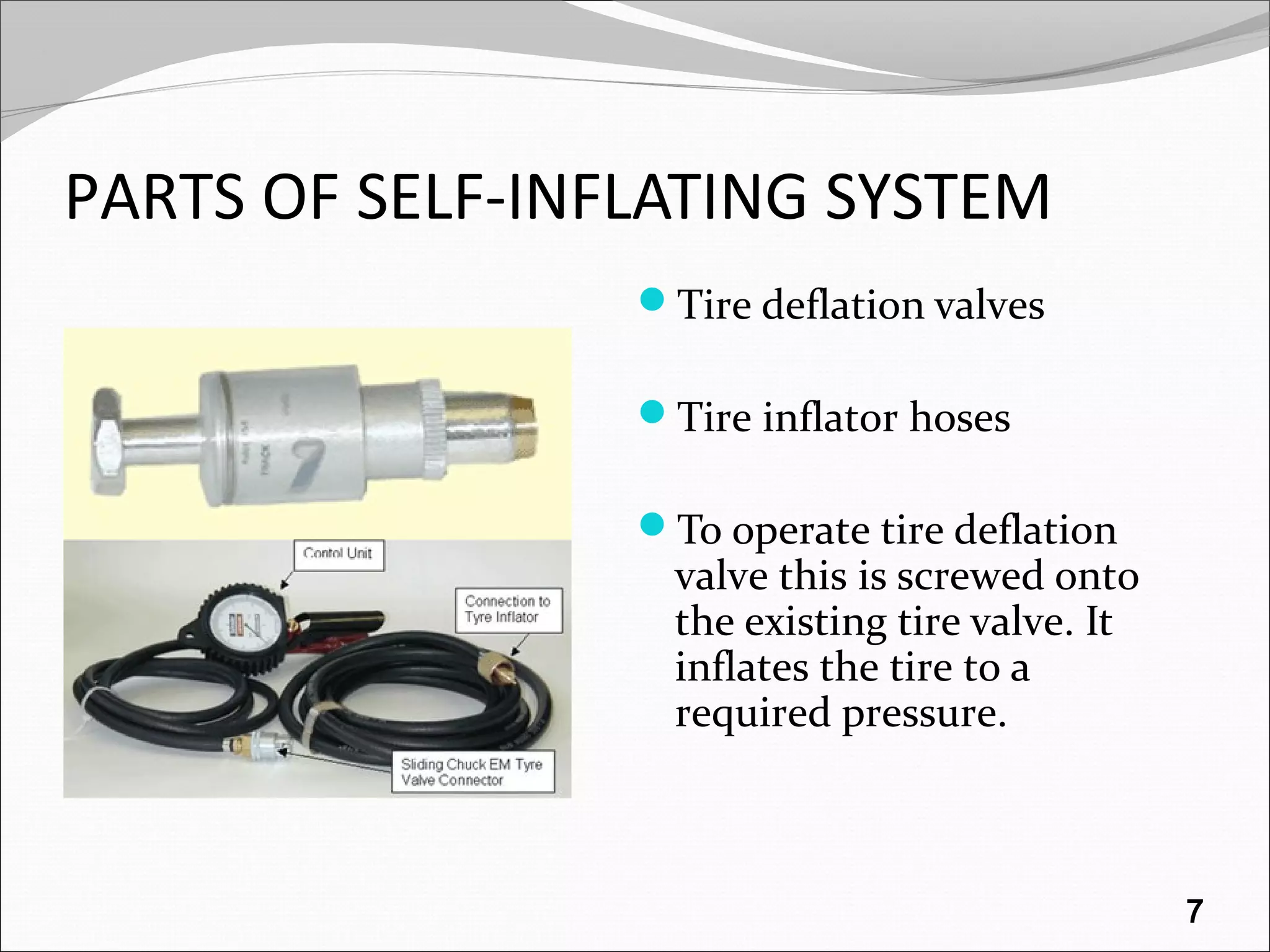
PARTS OF SELF-INFLATING SYSTEM
Tire deflation valves
Tire inflator hoses
To operate tire deflation
valve this is screwed onto
the existing tire valve. It
inflates the tire to a
required pressure.
7
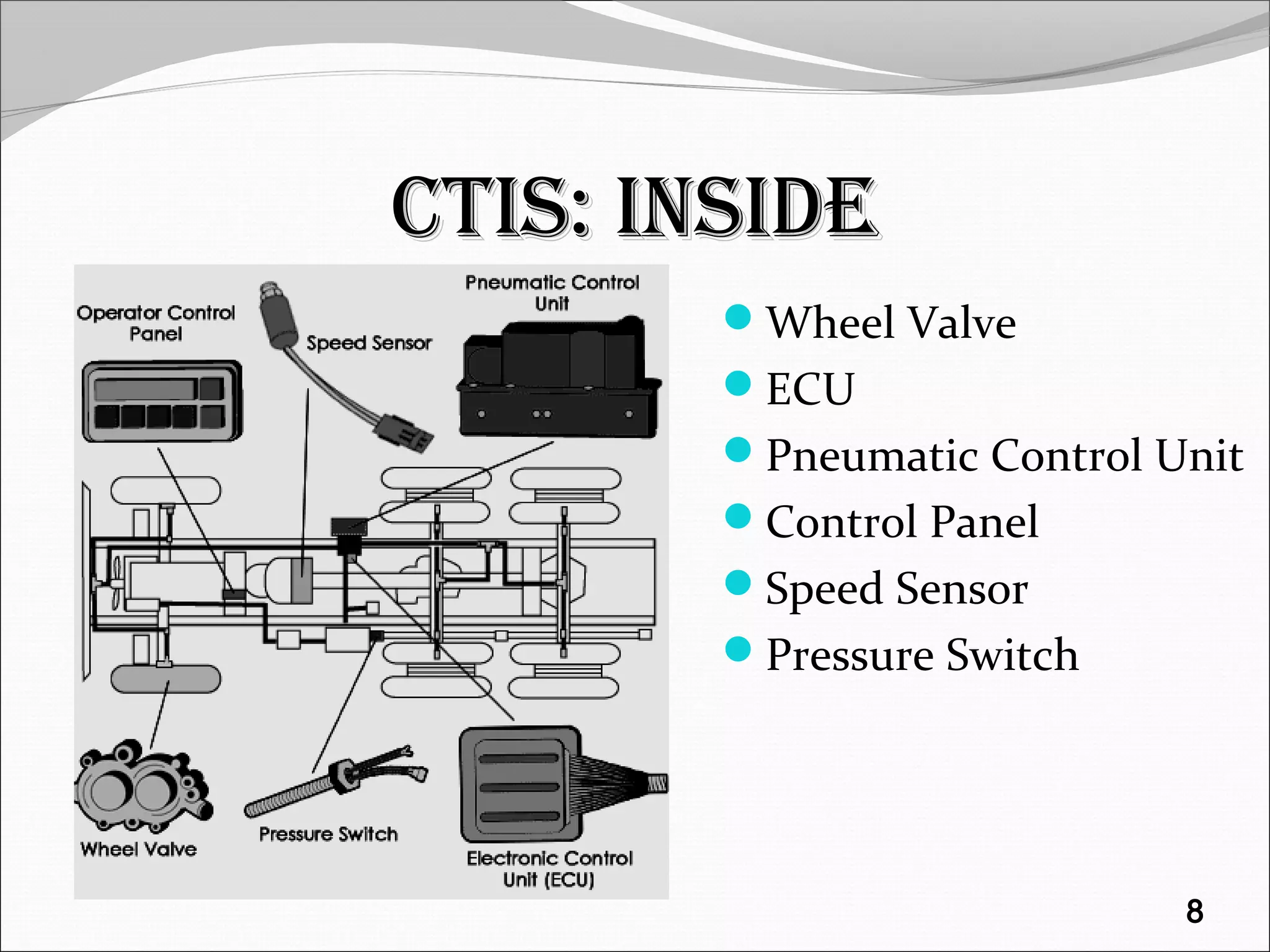
CTIS: INSIDECTIS: INSIDE
Wheel Valve
ECU
Pneumatic Control Unit
Control Panel
Speed Sensor
Pressure Switch
8
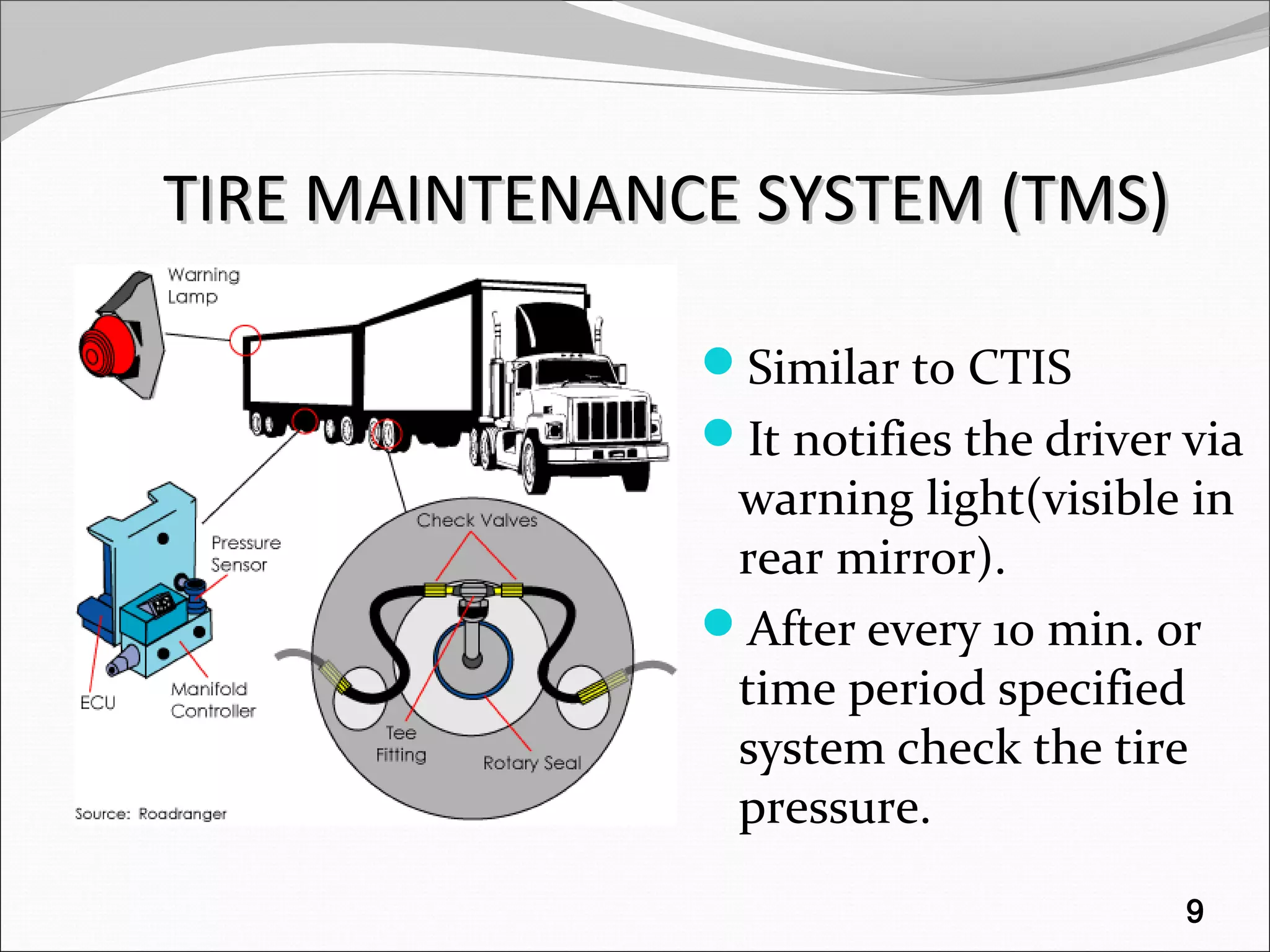
TIRE MAINTENANCE SYSTEM (TMS)TIRE MAINTENANCE SYSTEM (TMS)
Similar to CTIS
It notifies the driver via
warning light(visible in
rear mirror).
After every 10 min. or
time period specified
system check the tire
pressure.
9
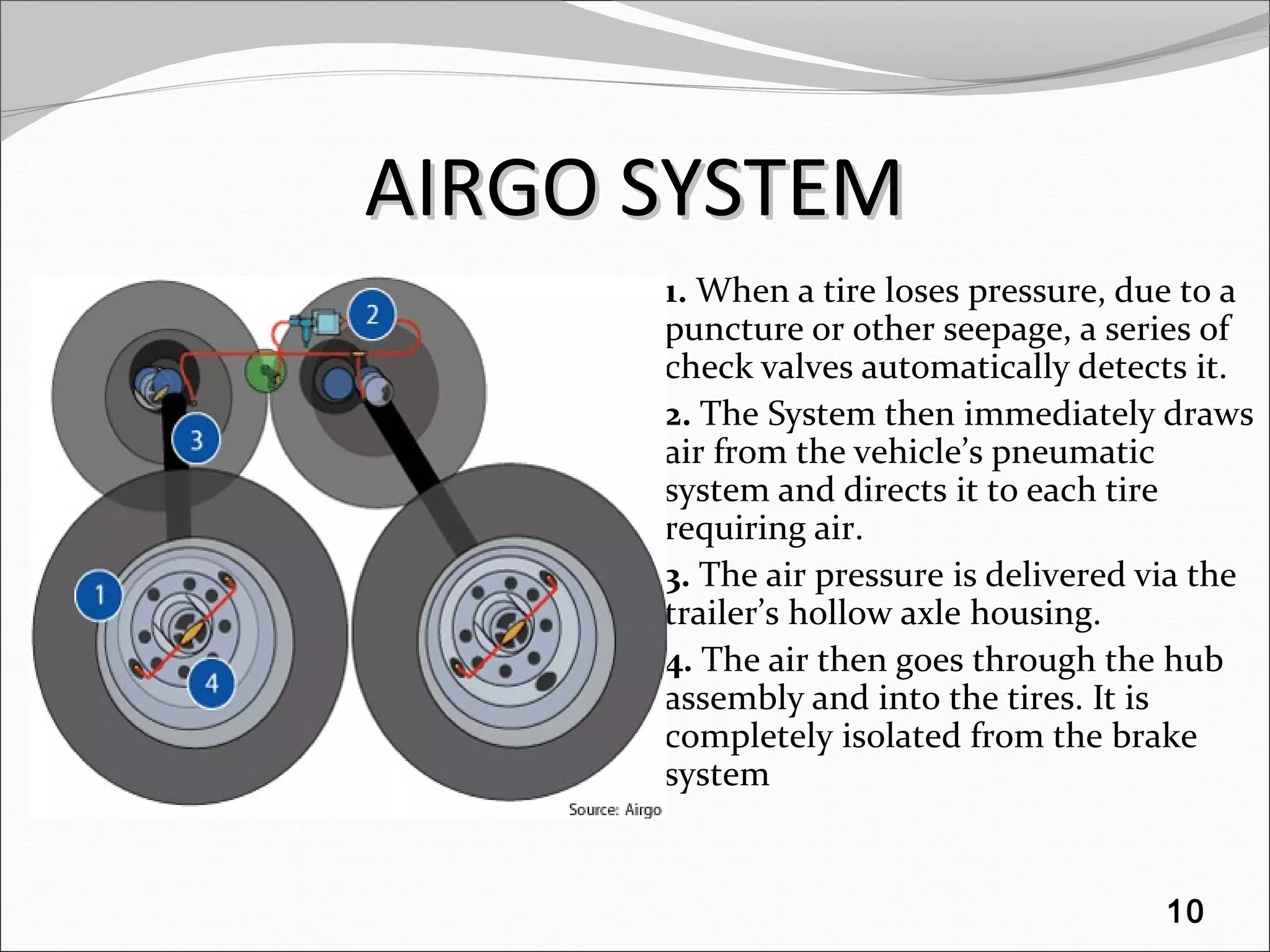
AIRGO SYSTEMAIRGO SYSTEM
1. When a tire loses pressure, due to a
puncture or other seepage, a series of
check valves automatically detects it.
2. The System then immediately draws
air from the vehicle’s pneumatic
system and directs it to each tire
requiring air.
3. The air pressure is delivered via the
trailer’s hollow axle housing.
4. The air then goes through the hub
assembly and into the tires. It is
completely isolated from the brake
system
10
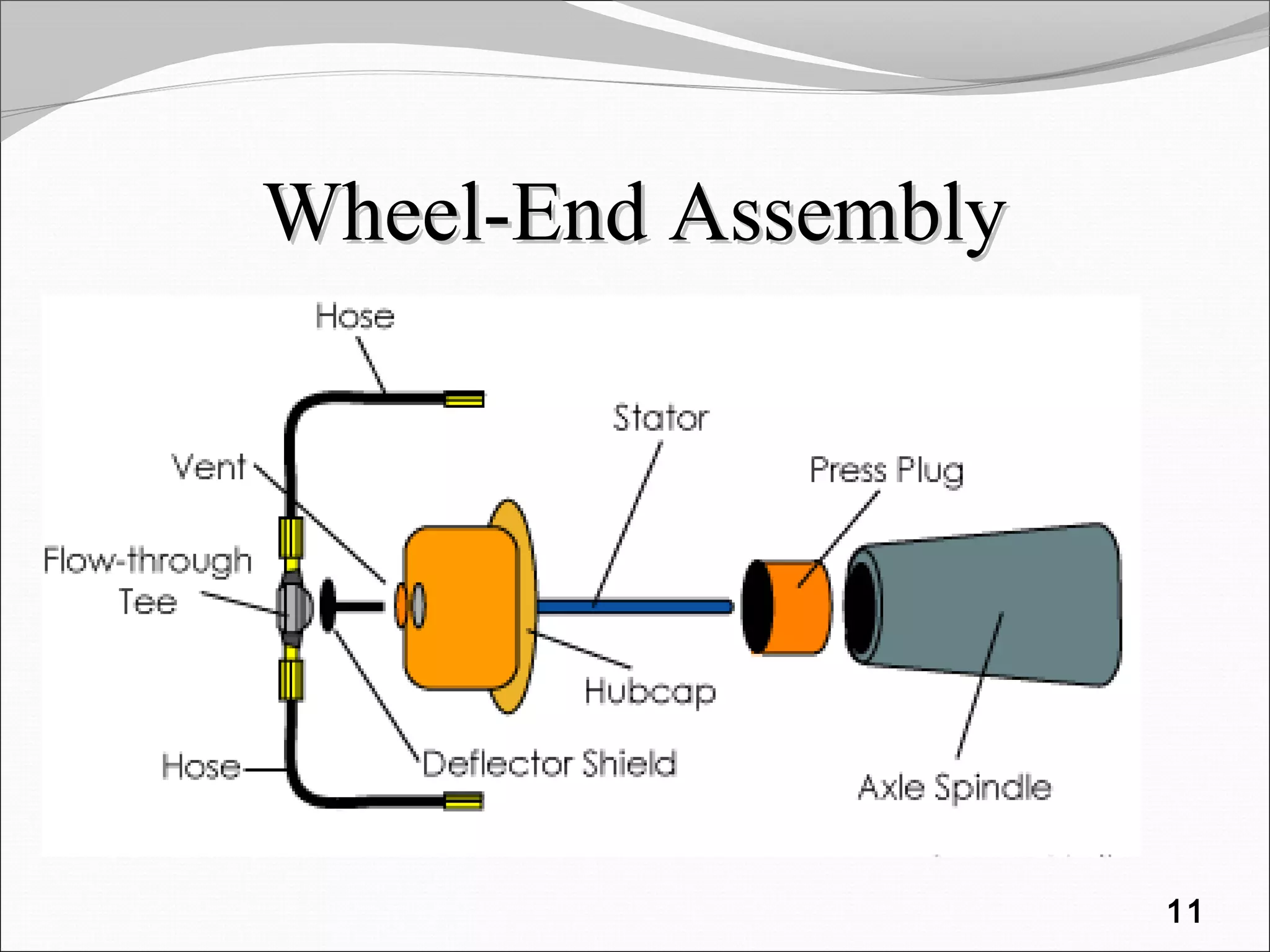
Wheel-End AssemblyWheel-End Assembly
11
Why YOU & ME go for SITWhy YOU & ME go for SIT
SAFETYSAFETY
FUEL ECONOMYFUEL ECONOMY
TIRE LONGEVITYTIRE LONGEVITY
ENVIRONMENTAL FRIENDLINESSENVIRONMENTAL FRIENDLINESS
CONVENIENCECONVENIENCE
LOW VARIABLE COSTSLOW VARIABLE COSTS
12
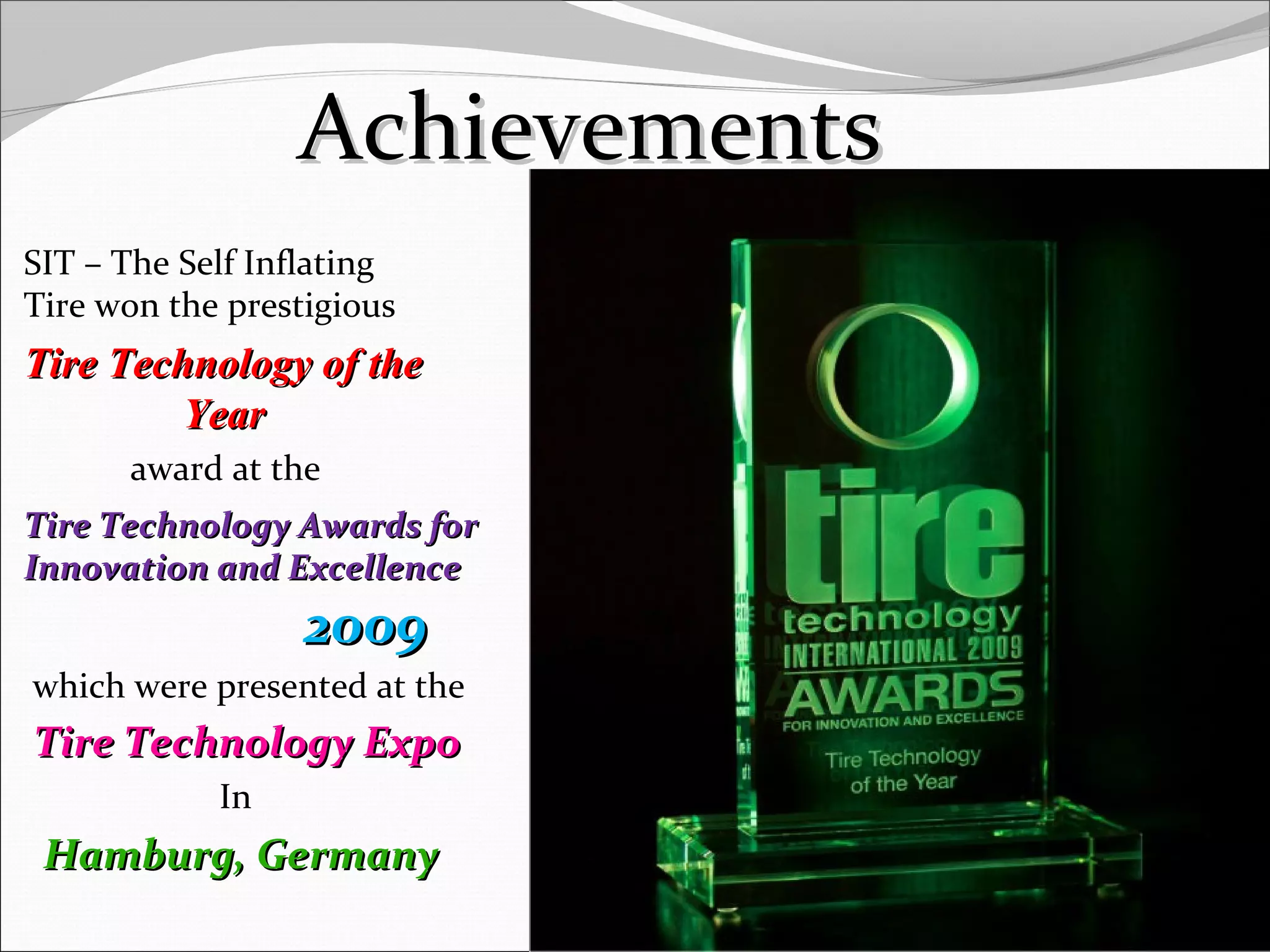
AchievementsAchievements
SIT – The Self Inflating
Tire won the prestigious
Tire Technology of theTire Technology of the
YearYear
award at the
Tire Technology Awards forTire Technology Awards for
Innovation and ExcellenceInnovation and Excellence
20092009
which were presented at the
Tire Technology ExpoTire Technology Expo
In
Hamburg, GermanyHamburg, Germany
13
ConclusionConclusion
Increases safety, comfort and fuel efficiency
Flexibility for drivers
Future tires
Better option to reduce road accidents
14
Thank you
15

self-inflating-tyre-systems

  • 1.
  • 2.
    Please Pay AttentionsPleasePay Attentions  Research studies show that under-inflated tires are a major issue today. In the USAIn the USA  27% of passenger cars and 32% of light trucks have at least one tire under pressured by more than 25%. This results in 1.24 billion gallons of wasted fuel per year (costing 3.7 billion USD). In the EUIn the EU  38% of cars in the EU drive on under-inflated tires. This results in 5.3 billon liters of wasted fuel worth of 7 billion EUR, and an extra 12.3 million tons of CO2 released into the atmosphere.  So, we can say that we require a system is easy and inexpensive to produce would bring enormous savings in fuel, pollution, and human lives when implemented on a large scale. 2
  • 3.
    Some Other StatisticsSomeOther Statistics A statistics show that tires which are under inflated by as little as 2 psi reduce fuel efficiency by 10 percent. Over a year of driving, that can amount to several hundred dollars in extra fuel purchases. One of reason for Road Accident is less or Insufficient Tire Pressure. Near about 10,000 injuries could be prevented per year if all vehicles were equipped with tire pressure monitoring systems. GM offered these in CUCV(Commercial Utility Cargo Vehicle) Blazers and pickups used by U.S. military. 3
  • 4.
  • 5.
    Different Tire ConditionsAnd Effect On Different Tire Pressure 5
  • 6.
    SELF-INFLATINGSELF-INFLATING SYSTEMSSYSTEMS Detect whenthe air pressure in a particular tire has dropped Notify the driver of the problem Inflate that tire back to the proper level Tire-inflation systems have three general goals: 6
  • 7.
    PARTS OF SELF-INFLATINGSYSTEM Tire deflation valves Tire inflator hoses To operate tire deflation valve this is screwed onto the existing tire valve. It inflates the tire to a required pressure. 7
  • 8.
    CTIS: INSIDECTIS: INSIDE WheelValve ECU Pneumatic Control Unit Control Panel Speed Sensor Pressure Switch 8
  • 9.
    TIRE MAINTENANCE SYSTEM(TMS)TIRE MAINTENANCE SYSTEM (TMS) Similar to CTIS It notifies the driver via warning light(visible in rear mirror). After every 10 min. or time period specified system check the tire pressure. 9
  • 10.
    AIRGO SYSTEMAIRGO SYSTEM 1.When a tire loses pressure, due to a puncture or other seepage, a series of check valves automatically detects it. 2. The System then immediately draws air from the vehicle’s pneumatic system and directs it to each tire requiring air. 3. The air pressure is delivered via the trailer’s hollow axle housing. 4. The air then goes through the hub assembly and into the tires. It is completely isolated from the brake system 10
  • 11.
  • 12.
    Why YOU &ME go for SITWhy YOU & ME go for SIT SAFETYSAFETY FUEL ECONOMYFUEL ECONOMY TIRE LONGEVITYTIRE LONGEVITY ENVIRONMENTAL FRIENDLINESSENVIRONMENTAL FRIENDLINESS CONVENIENCECONVENIENCE LOW VARIABLE COSTSLOW VARIABLE COSTS 12
  • 13.
    AchievementsAchievements SIT – TheSelf Inflating Tire won the prestigious Tire Technology of theTire Technology of the YearYear award at the Tire Technology Awards forTire Technology Awards for Innovation and ExcellenceInnovation and Excellence 20092009 which were presented at the Tire Technology ExpoTire Technology Expo In Hamburg, GermanyHamburg, Germany 13
  • 14.
    ConclusionConclusion Increases safety, comfortand fuel efficiency Flexibility for drivers Future tires Better option to reduce road accidents 14
  • 15.