My First Presentation at Iqra University For Self Management Skills Mati ur Rehman
The Topics… Career Planning Self Esteem Positive Thinking Stress Management TIME MANAGEMENT Communication Skills
What did I achieve? Every Chapter has given me a different scope of thought to put the things I got from the subject.
The things for future… Team Building & Management Conflict Management Negotiation
Career Planning Set goals for yourself and then you visualize your success in terms of the achievement of those goals. Limitations Your belief  Your acquired skills Your natural talents Your environment Our limitations are responsible for preventing us from becoming successful…
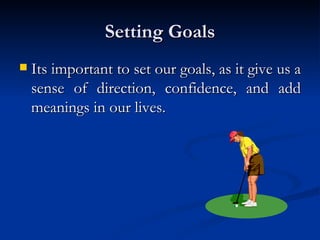
Setting Goals Its important to set our goals, as it give us a sense of direction, confidence, and add meanings in our lives.
Dreams and self belief are free.  You can take all you want and walk away. Steps to High Self-Esteem Tips for building Self Esteem You will become which you think about most – SO THINK POSITIVE Self - Esteem
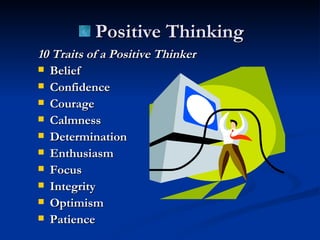
10 Traits of a Positive Thinker Belief Confidence Courage Calmness Determination Enthusiasm Focus Integrity Optimism Patience Positive Thinking
That’s it! Start from today… Visualize your goals each day and fill your mind with a positive image of the outcomes you want to achieve. Use these positive thoughts as a springboard to take action. Understand that repeated action becomes a habit. Establish the habits that will lead you to achieve your most important life goals.
Solve Problems Find them List them Look at them in all possible angles Identify solutions Consider solutions Plan Rehearse Execute Take feed back  Repeat if necessary Stress Management
Manage time What are you doing? Why are you here? Where do demands come from? A FINAL WORD There is no short cut to manage stress there are some guide lines shape it according to your need!
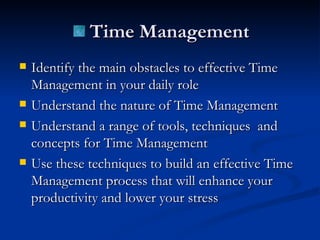
Identify the main obstacles to effective Time Management in your daily role  Understand the nature of Time Management Understand a range of tools, techniques  and concepts for Time Management  Use these techniques to build an effective Time Management process that will enhance your productivity and lower your stress Time Management
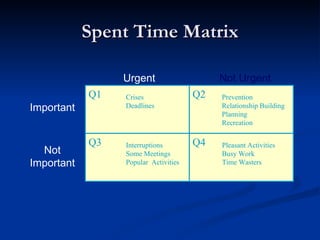
Spent Time Matrix Q1 Q3 Q2 Q4 Crises Deadlines Prevention Relationship Building Planning Recreation Interruptions Some Meetings Popular  Activities Pleasant Activities Busy Work Time Wasters Urgent Not Urgent Not Important Important
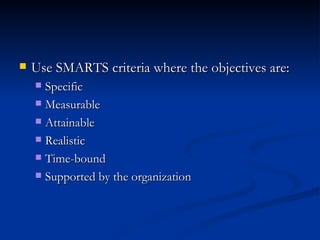
Use SMARTS criteria where the objectives are: Specific Measurable Attainable Realistic Time-bound Supported by the organization
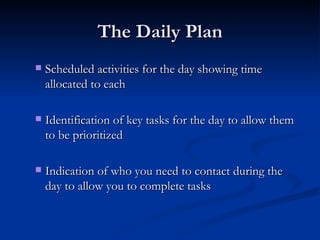
The Daily Plan Scheduled activities for the day showing time allocated to each  Identification of key tasks for the day to allow them to be prioritized  Indication of who you need to contact during the day to allow you to complete tasks
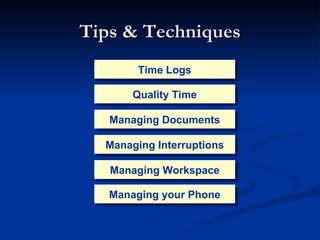
Tips & Techniques Time Logs Quality   Time Managing Documents Managing Interruptions Managing Workspace Managing your Phone
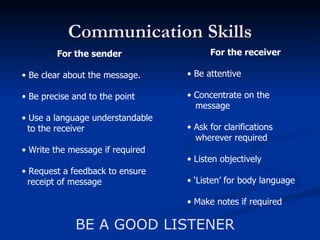
Communication Skills For the sender Be clear about the message. Be precise and to the point Use a language understandable  to the receiver Write the message if required Request a feedback to ensure  receipt of message For the receiver Be attentive Concentrate on the  message Ask for clarifications wherever required Listen objectively ‘ Listen’ for body language Make notes if required BE A GOOD LISTENER
CONCLUSION  What I learned, made a positive impact on my daily routine life plus my future objectives. Every king was once a helpless baby & every great building was once only a sketch… Its not important where you are today, rather where you will reach tomorrow… Do not complain, try to change yourself if want achievement.
THANKING YOU Mati ur Rehman MBA – I April 09, 2009.

Self Management Skills

  • 1.
    My First Presentationat Iqra University For Self Management Skills Mati ur Rehman
  • 2.
    The Topics… CareerPlanning Self Esteem Positive Thinking Stress Management TIME MANAGEMENT Communication Skills
  • 3.
    What did Iachieve? Every Chapter has given me a different scope of thought to put the things I got from the subject.
  • 4.
    The things forfuture… Team Building & Management Conflict Management Negotiation
  • 5.
    Career Planning Setgoals for yourself and then you visualize your success in terms of the achievement of those goals. Limitations Your belief Your acquired skills Your natural talents Your environment Our limitations are responsible for preventing us from becoming successful…
  • 6.
    Setting Goals Itsimportant to set our goals, as it give us a sense of direction, confidence, and add meanings in our lives.
  • 7.
    Dreams and selfbelief are free. You can take all you want and walk away. Steps to High Self-Esteem Tips for building Self Esteem You will become which you think about most – SO THINK POSITIVE Self - Esteem
  • 8.
    10 Traits ofa Positive Thinker Belief Confidence Courage Calmness Determination Enthusiasm Focus Integrity Optimism Patience Positive Thinking
  • 9.
    That’s it! Startfrom today… Visualize your goals each day and fill your mind with a positive image of the outcomes you want to achieve. Use these positive thoughts as a springboard to take action. Understand that repeated action becomes a habit. Establish the habits that will lead you to achieve your most important life goals.
  • 10.
    Solve Problems Findthem List them Look at them in all possible angles Identify solutions Consider solutions Plan Rehearse Execute Take feed back Repeat if necessary Stress Management
  • 11.
    Manage time Whatare you doing? Why are you here? Where do demands come from? A FINAL WORD There is no short cut to manage stress there are some guide lines shape it according to your need!
  • 12.
    Identify the mainobstacles to effective Time Management in your daily role Understand the nature of Time Management Understand a range of tools, techniques and concepts for Time Management Use these techniques to build an effective Time Management process that will enhance your productivity and lower your stress Time Management
  • 13.
    Spent Time MatrixQ1 Q3 Q2 Q4 Crises Deadlines Prevention Relationship Building Planning Recreation Interruptions Some Meetings Popular Activities Pleasant Activities Busy Work Time Wasters Urgent Not Urgent Not Important Important
  • 14.
    Use SMARTS criteriawhere the objectives are: Specific Measurable Attainable Realistic Time-bound Supported by the organization
  • 15.
    The Daily PlanScheduled activities for the day showing time allocated to each Identification of key tasks for the day to allow them to be prioritized Indication of who you need to contact during the day to allow you to complete tasks
  • 16.
    Tips & TechniquesTime Logs Quality Time Managing Documents Managing Interruptions Managing Workspace Managing your Phone
  • 17.
    Communication Skills Forthe sender Be clear about the message. Be precise and to the point Use a language understandable to the receiver Write the message if required Request a feedback to ensure receipt of message For the receiver Be attentive Concentrate on the message Ask for clarifications wherever required Listen objectively ‘ Listen’ for body language Make notes if required BE A GOOD LISTENER
  • 18.
    CONCLUSION WhatI learned, made a positive impact on my daily routine life plus my future objectives. Every king was once a helpless baby & every great building was once only a sketch… Its not important where you are today, rather where you will reach tomorrow… Do not complain, try to change yourself if want achievement.
  • 19.
    THANKING YOU Matiur Rehman MBA – I April 09, 2009.