1
Self Development
Everyone thinks of changing the world,
But no one thinks of changing himself/herself
LEO TOLSTOY
2
Assignment
 Assess yourself
Philosophy
 Trust People
 Every one is important for your success
 Praise and acknowledgement of people you are working with
 Motivated people always achieve miracles
 Encourage Feedback/Comments/Critical
 Sandwich Every Criticism
 Open door policy/access to all all the time
 You are a professional 24@7
 Develop work culture
 Recognition and respect
 Emphasis on end results
 Positive actions and individual basis
3
Basic Managerial Skills
 Philosophy Style and Approach of Management
 Planning and Organizing
 Setting Goals and Prioritize
 Self assessment
 Time and stress Management
 Team work and Motivation
 Coordination, Communication and Controlling
 Monitoring and Evaluation
 Effective Listening and Feedback
 Creativity and Innovation
4
Managerial Skills
 Teamwork
 Fully integrating teams and teamwork into
the organization’s operations, structure and
mission
 Employing team for primary means for
delivering operating strategy
 Creating common structure and support to
ensure teams functions efficiently
 Developing team enabling tools and
measurement
5
Managerial Skills
 Increased Productivity
 Increase capital investment
 Increase innovation
 Develops learning attitude
 Improve employee Motivation
 Improved Quality of Work Life
 Autonomy and Empowerment
 Recognition and Rewards
 Belonging and Affiliation
 Progress and Development
6
Managerial Skills
 Readiness for Changes
 Orientation and learning environment
 Training and development
 Participation
 Access to Information
 Awareness of Reward and punishment
 Good employee relation (Trade Union)
 Two-way Communication
 Friendly environment for adapting chage
7
Indicators of Self Management
 Personal Growth
 Professional Growth
 Maintained Good Relationship
 Increase Wealth
 Good Health
 Integrity and Dignity
 Spirituality, Prosperity and Happiness
 Sense of Meaningful Life
8
Group Work
What are the actions
you would like to do
in the next
one month?
Action Points?
Commitments
9
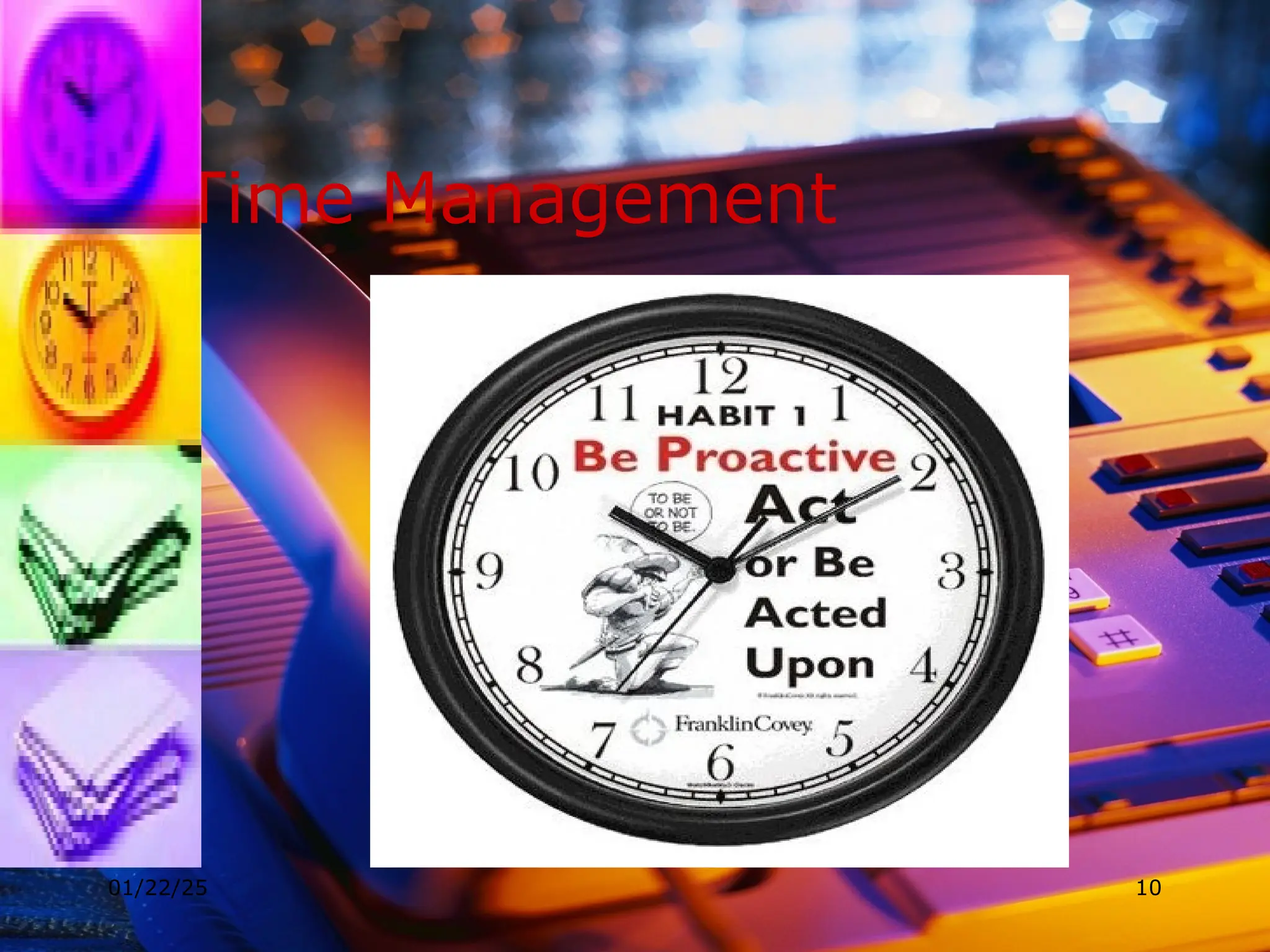
Time Management
01/22/25 10
Time Management
“There is only one thing equally
available to every one in this
earth, is the time. Everyone has
the same amount of time.”
 60 minutes per hour
 1,440 minutes per day
 525,600 minutes per year
01/22/25 11
Can we manage time?
 Yes! We can manage time
 Being successful doesn’t make
you manage your time well
 Managing your time well makes
you successful.
 Plan Each Day, Each Week, Each
Month and Each Year
 You can always change your
plan, but only once you have
one!
01/22/25 12
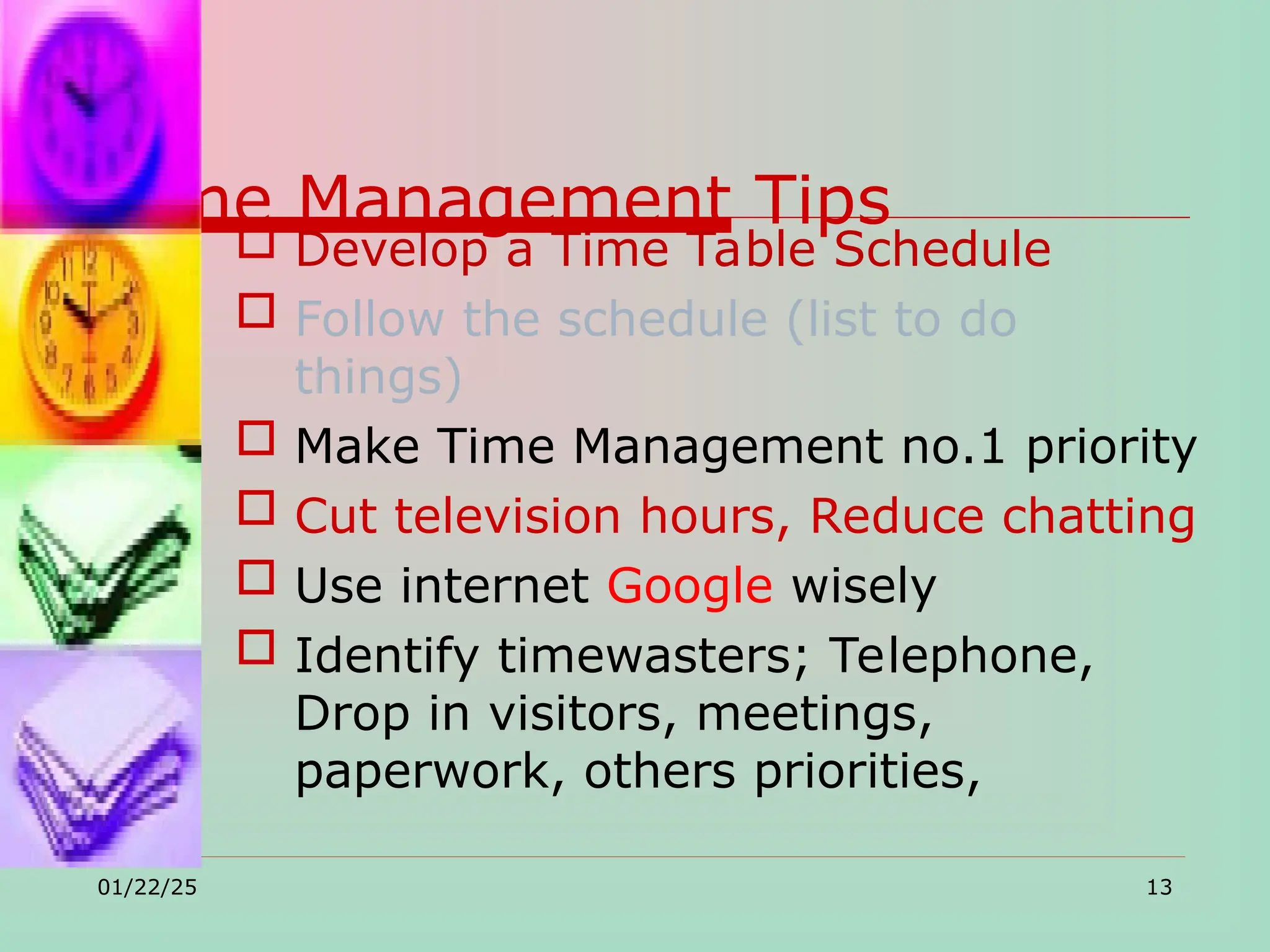
Time Management Tips
 Develop a Time Table Schedule
 Follow the schedule (list to do
things)
 Make Time Management no.1 priority
 Cut television hours, Reduce chatting
 Use internet Google wisely
 Identify timewasters; Telephone,
Drop in visitors, meetings,
paperwork, others priorities,
01/22/25 13
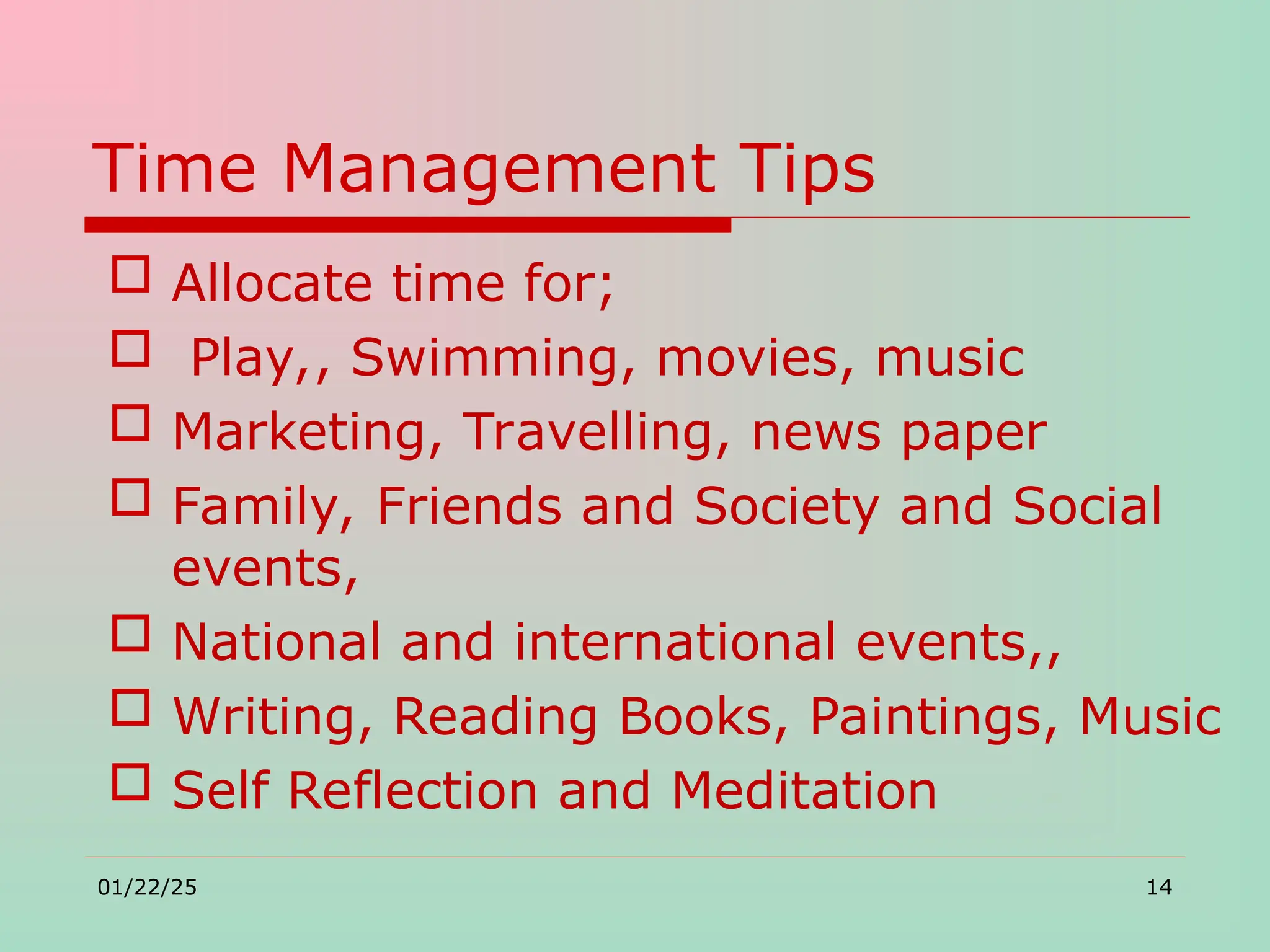
Time Management Tips
 Allocate time for;
 Play,, Swimming, movies, music
 Marketing, Travelling, news paper
 Family, Friends and Society and Social
events,
 National and international events,,
 Writing, Reading Books, Paintings, Music
 Self Reflection and Meditation
01/22/25 14
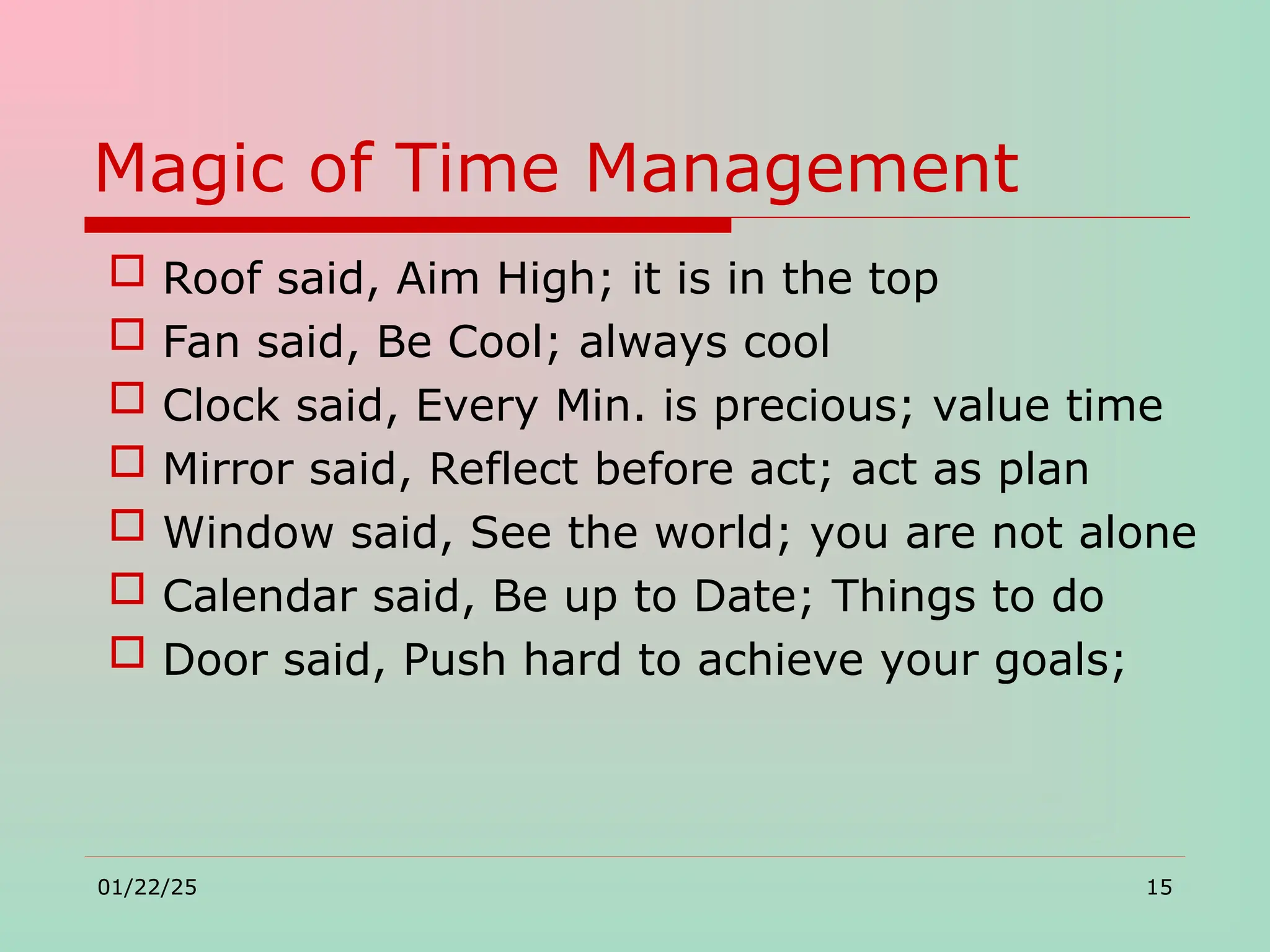
Magic of Time Management
 Roof said, Aim High; it is in the top
 Fan said, Be Cool; always cool
 Clock said, Every Min. is precious; value time
 Mirror said, Reflect before act; act as plan
 Window said, See the world; you are not alone
 Calendar said, Be up to Date; Things to do
 Door said, Push hard to achieve your goals;
01/22/25 15
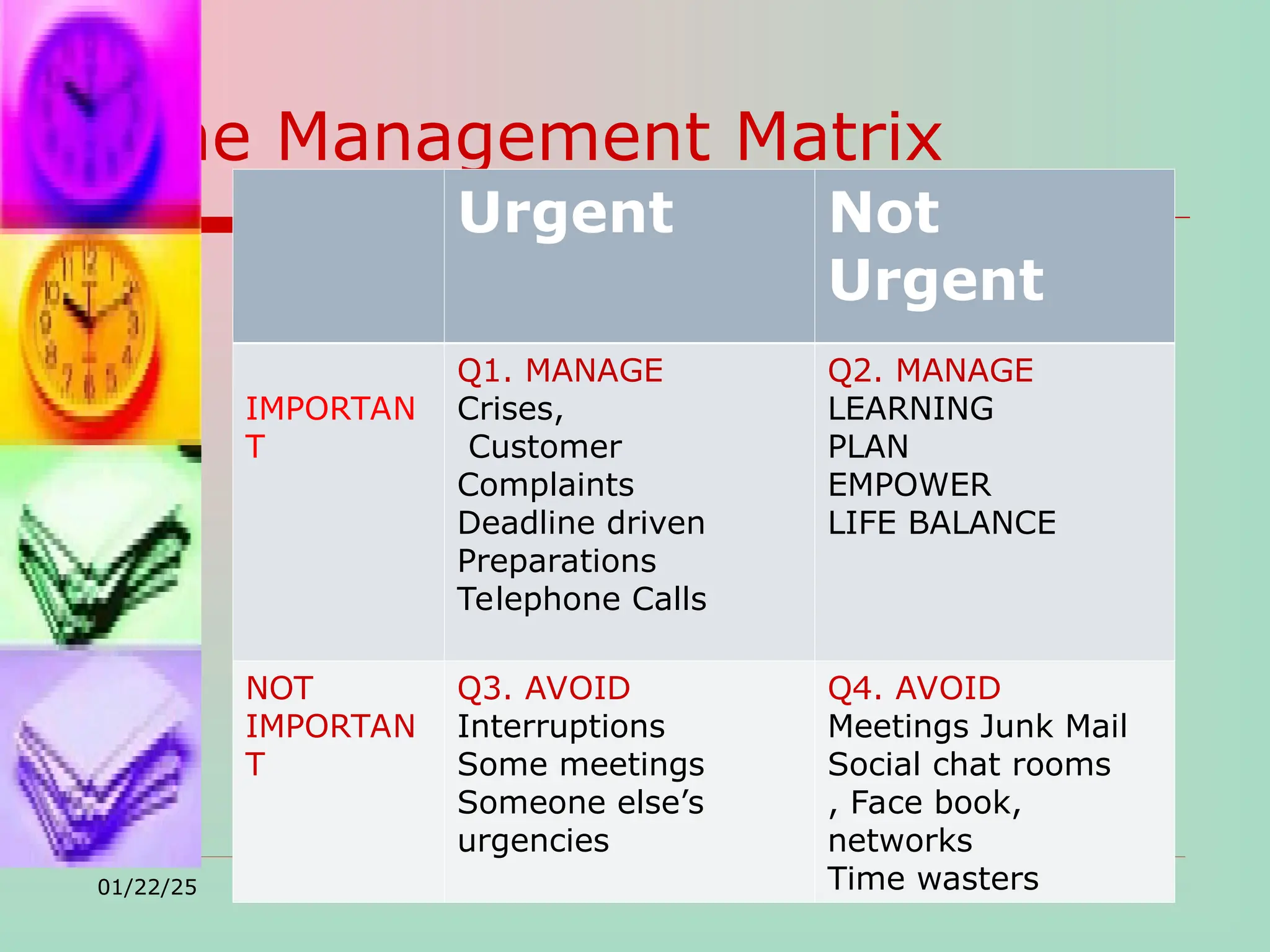
Time Management Matrix
01/22/25 16
Urgent Not
Urgent
IMPORTAN
T
Q1. MANAGE
Crises,
Customer
Complaints
Deadline driven
Preparations
Telephone Calls
Q2. MANAGE
LEARNING
PLAN
EMPOWER
LIFE BALANCE
NOT
IMPORTAN
T
Q3. AVOID
Interruptions
Some meetings
Someone else’s
urgencies
Q4. AVOID
Meetings Junk Mail
Social chat rooms
, Face book,
networks
Time wasters
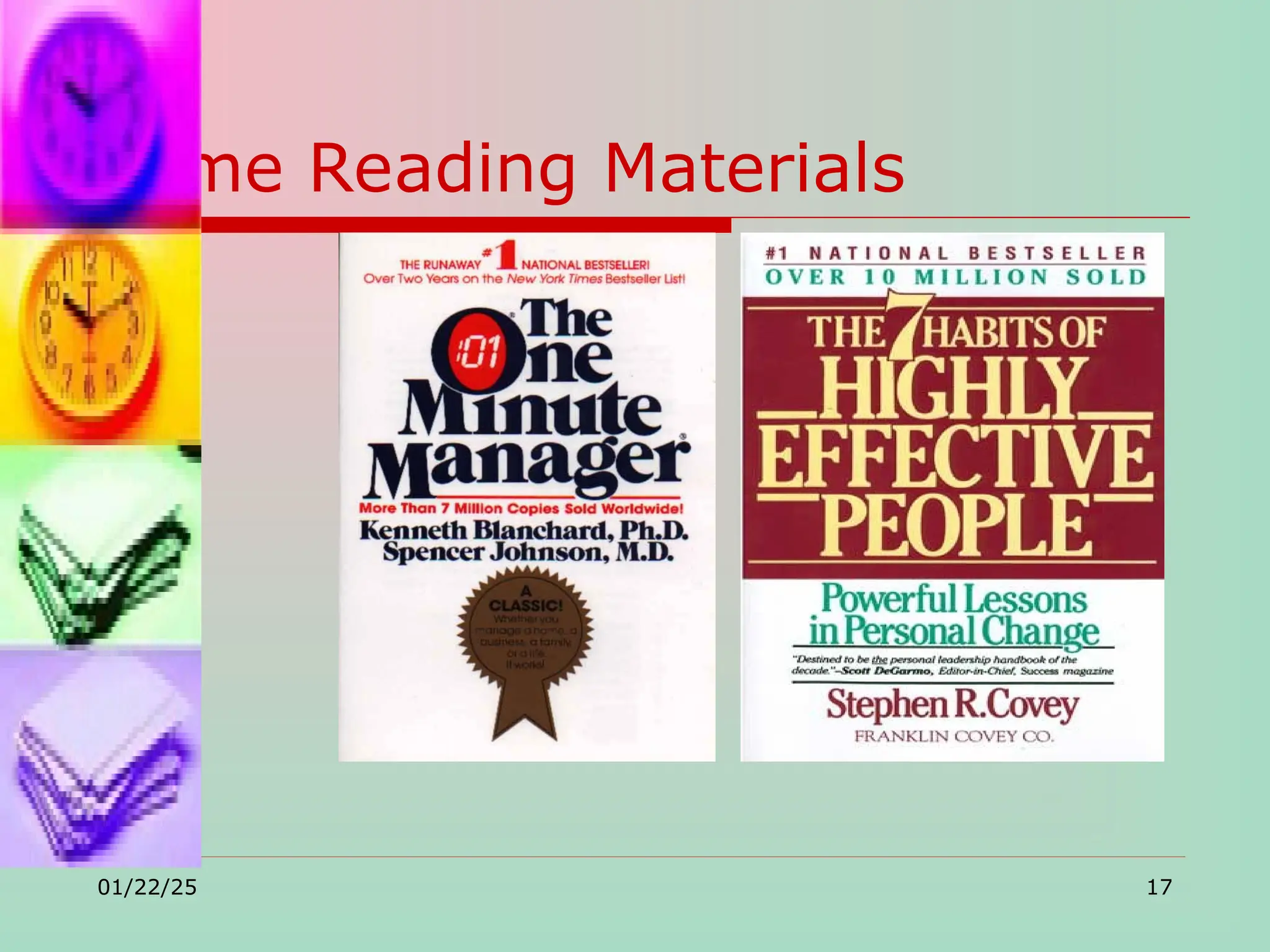
Some Reading Materials
01/22/25 17
So…….
Manage your time: Get
success in life
01/22/25 18
•Identifying and understanding onself (SWPP)
•Developing self development goals/plan
•Creating and Practicing Positive attitude
•Understanding and Achieving success
•Managing yourself with time management
Self development
 ‘Self Knowledge is the begining of self-
employment’
 Key understanding about Self
Development
 Identifying and understanding onself
(SWPP)
 Developing self development goals/plan
 Creating and Practicing Positive attitude
 Understanding and Achieving success
 Managing yourself with time management
19
Permanent domain of concern:
 Body/health
 Friends/Sociability
 Marriage/Relationship
 Family
 Work/job/career
 Education/learning/competence
 Money/investments/assets
 Community/Country/world
 Emotions/moods/kleshas
 Spirituality/Ethical living
20
21
And…be sure
You can make the difference.

Self Development on how do you change yourlife.ppt

  • 1.
    1 Self Development Everyone thinksof changing the world, But no one thinks of changing himself/herself LEO TOLSTOY
  • 2.
  • 3.
    Philosophy  Trust People Every one is important for your success  Praise and acknowledgement of people you are working with  Motivated people always achieve miracles  Encourage Feedback/Comments/Critical  Sandwich Every Criticism  Open door policy/access to all all the time  You are a professional 24@7  Develop work culture  Recognition and respect  Emphasis on end results  Positive actions and individual basis 3
  • 4.
    Basic Managerial Skills Philosophy Style and Approach of Management  Planning and Organizing  Setting Goals and Prioritize  Self assessment  Time and stress Management  Team work and Motivation  Coordination, Communication and Controlling  Monitoring and Evaluation  Effective Listening and Feedback  Creativity and Innovation 4
  • 5.
    Managerial Skills  Teamwork Fully integrating teams and teamwork into the organization’s operations, structure and mission  Employing team for primary means for delivering operating strategy  Creating common structure and support to ensure teams functions efficiently  Developing team enabling tools and measurement 5
  • 6.
    Managerial Skills  IncreasedProductivity  Increase capital investment  Increase innovation  Develops learning attitude  Improve employee Motivation  Improved Quality of Work Life  Autonomy and Empowerment  Recognition and Rewards  Belonging and Affiliation  Progress and Development 6
  • 7.
    Managerial Skills  Readinessfor Changes  Orientation and learning environment  Training and development  Participation  Access to Information  Awareness of Reward and punishment  Good employee relation (Trade Union)  Two-way Communication  Friendly environment for adapting chage 7
  • 8.
    Indicators of SelfManagement  Personal Growth  Professional Growth  Maintained Good Relationship  Increase Wealth  Good Health  Integrity and Dignity  Spirituality, Prosperity and Happiness  Sense of Meaningful Life 8
  • 9.
    Group Work What arethe actions you would like to do in the next one month? Action Points? Commitments 9
  • 10.
  • 11.
    Time Management “There isonly one thing equally available to every one in this earth, is the time. Everyone has the same amount of time.”  60 minutes per hour  1,440 minutes per day  525,600 minutes per year 01/22/25 11
  • 12.
    Can we managetime?  Yes! We can manage time  Being successful doesn’t make you manage your time well  Managing your time well makes you successful.  Plan Each Day, Each Week, Each Month and Each Year  You can always change your plan, but only once you have one! 01/22/25 12
  • 13.
    Time Management Tips Develop a Time Table Schedule  Follow the schedule (list to do things)  Make Time Management no.1 priority  Cut television hours, Reduce chatting  Use internet Google wisely  Identify timewasters; Telephone, Drop in visitors, meetings, paperwork, others priorities, 01/22/25 13
  • 14.
    Time Management Tips Allocate time for;  Play,, Swimming, movies, music  Marketing, Travelling, news paper  Family, Friends and Society and Social events,  National and international events,,  Writing, Reading Books, Paintings, Music  Self Reflection and Meditation 01/22/25 14
  • 15.
    Magic of TimeManagement  Roof said, Aim High; it is in the top  Fan said, Be Cool; always cool  Clock said, Every Min. is precious; value time  Mirror said, Reflect before act; act as plan  Window said, See the world; you are not alone  Calendar said, Be up to Date; Things to do  Door said, Push hard to achieve your goals; 01/22/25 15
  • 16.
    Time Management Matrix 01/22/2516 Urgent Not Urgent IMPORTAN T Q1. MANAGE Crises, Customer Complaints Deadline driven Preparations Telephone Calls Q2. MANAGE LEARNING PLAN EMPOWER LIFE BALANCE NOT IMPORTAN T Q3. AVOID Interruptions Some meetings Someone else’s urgencies Q4. AVOID Meetings Junk Mail Social chat rooms , Face book, networks Time wasters
  • 17.
  • 18.
    So……. Manage your time:Get success in life 01/22/25 18 •Identifying and understanding onself (SWPP) •Developing self development goals/plan •Creating and Practicing Positive attitude •Understanding and Achieving success •Managing yourself with time management
  • 19.
    Self development  ‘SelfKnowledge is the begining of self- employment’  Key understanding about Self Development  Identifying and understanding onself (SWPP)  Developing self development goals/plan  Creating and Practicing Positive attitude  Understanding and Achieving success  Managing yourself with time management 19
  • 20.
    Permanent domain ofconcern:  Body/health  Friends/Sociability  Marriage/Relationship  Family  Work/job/career  Education/learning/competence  Money/investments/assets  Community/Country/world  Emotions/moods/kleshas  Spirituality/Ethical living 20
  • 21.
    21 And…be sure You canmake the difference.