Self Awareness and
Emotional Intelligence
Dr Bushra Khan
Department of Psychology
University of Karachi
Dr Bushra Khan/MSW-Establishment Division
Objectives
Part One: Understanding and application of self awareness
• Definition
• Significance
• Psychological Theories
• Factors
• Concepts linked with self awareness (activities)
Part Two: Understanding and application of emotional intelligence
• Definition
• Significance
• Psychological Theories
• Factors
• EI Model (activity)
Dr Bushra Khan/MSW-Establishment Division
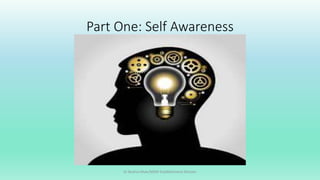
Part One: Self Awareness
Dr Bushra Khan/MSW-Establishment Division
Self
A individual's essential being that distinguishes him/her from others
• Thoughts
• Emotional
• Actions
• Experiences
Dr Bushra Khan/MSW-Establishment Division
Self awareness
• Self Awareness is having a clear perception of one’s personality,
including strengths, weaknesses, thoughts, beliefs, values, motivation,
and emotions.
• Focuses on What, How and Why
Dr Bushra Khan/MSW-Establishment Division
Significance
By becoming self-aware one can have;
• understanding of one’s strengths and limitations
• open up opportunities that just aren’t available if we don’t know
ourselves.
• more honest and establish genuine relationships
Dr Bushra Khan/MSW-Establishment Division
Factors for self awareness
• Past experiences and learnings (values/beliefs)
• Motivation to know oneself
• Positive emotions
• Knowledge
Dr Bushra Khan/MSW-Establishment Division
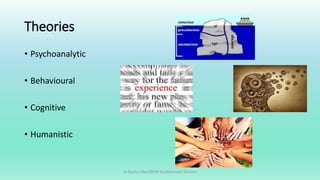
Theories
• Psychoanalytic
• Behavioural
• Cognitive
• Humanistic
Dr Bushra Khan/MSW-Establishment Division
Linked concept with self awareness
Defense Mechanisms
a tactic used by the ego to protect against anxiety. Defense
mechanisms are considered to safeguard the mind against feelings and
thoughts that are difficult for the conscious mind to cope with
Dr Bushra Khan/MSW-Establishment Division
Linked concept with self awareness
Self esteem
• Negative and positive evaluation of one’s self with reference to
1. what we think about ourselves
2. what other think about us
Self esteem is affected by
• Physical illness
• Poor relationships
• Lack of competence at work
• Childhood experiences (neglect, bullying etc)
Dr Bushra Khan/MSW-Establishment Division
Linked concept with self awareness
Building self esteem
• Tell us about you (Activity)
• Challenge negative thoughts
• Think positively
• Benefit of doubt
• Developing positive environment
• Regular positive activities
• Set realistic challenges
• Social support
Dr Bushra Khan/MSW-Establishment Division
Self Awareness allows you to understand other people, how they
perceive you, your attitude and your responses to them in the moment
and then helps you to engage in a positive interaction
Dr Bushra Khan/MSW-Establishment Division
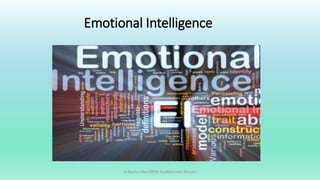
Emotional Intelligence
Dr Bushra Khan/MSW-Establishment Division
Emotional Intelligence
• Ability to monitor, discriminate and label appropriately one’s own and
others’ emotion; and to use emotion to guide thinking and behaviour
Dr Bushra Khan/MSW-Establishment Division
Significance
Testing
• Cognitive tests
• Multiple intelligence (interpersonal and intrapersonal)
Attributes of EQ people
• Curious about people (empathy)
• Adapting
• Know strengths and weaknesses
• Good judge of character
• Open minded
• Don’t hold grudges
• Neutralize toxic people
• Appreciate what they have
• Disconnect: keep stress under control
Dr Bushra Khan/MSW-Establishment Division
Emotional Intelligence Models
• Ability
• Trait
• Mix
Dr Bushra Khan/MSW-Establishment Division
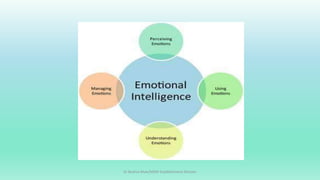
Ability Model
Introduced by Mayer & Salovey
Focuses on four abilities
• Perceiving emotions
• Using emotions/facilitation
• Understanding emotions
• Managing emotions
Dr Bushra Khan/MSW-Establishment Division
Trait Model
Introduced by Konstantinos Vasilis Petrides
Focuses on Personality Traits
• Behavior disposition
• Self perceived abilities
Dr Bushra Khan/MSW-Establishment Division
Mix Model
Introduced by Daniel Goleman
Focuses on five elements of trait and abilities
• Self awareness
• Self regulation
• Social skill
• Empathy
• Motivation
Dr Bushra Khan/MSW-Establishment Division
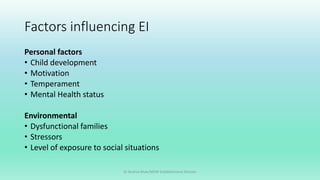
Factors influencing EI
Personal factors
• Child development
• Motivation
• Temperament
• Mental Health status
Environmental
• Dysfunctional families
• Stressors
• Level of exposure to social situations
Dr Bushra Khan/MSW-Establishment Division
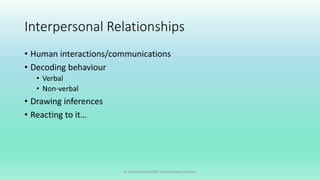
Interpersonal Relationships
• Human interactions/communications
• Decoding behaviour
• Verbal
• Non-verbal
• Drawing inferences
• Reacting to it…
Dr Bushra Khan/MSW-Establishment Division
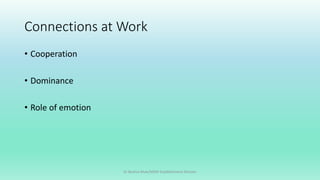
Connections at Work
• Cooperation
• Dominance
• Role of emotion
Dr Bushra Khan/MSW-Establishment Division
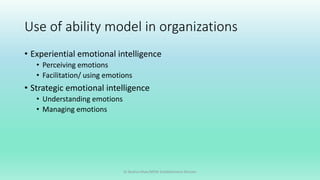
Use of ability model in organizations
• Experiential emotional intelligence
• Perceiving emotions
• Facilitation/ using emotions
• Strategic emotional intelligence
• Understanding emotions
• Managing emotions
Dr Bushra Khan/MSW-Establishment Division
Group Activity on EI
Dr Bushra Khan/MSW-Establishment Division
Thank You!
Dr Bushra Khan/MSW-Establishment Division

Self Awareness and Emotional Intelligence

  • 1.
    Self Awareness and EmotionalIntelligence Dr Bushra Khan Department of Psychology University of Karachi Dr Bushra Khan/MSW-Establishment Division
  • 2.
    Objectives Part One: Understandingand application of self awareness • Definition • Significance • Psychological Theories • Factors • Concepts linked with self awareness (activities) Part Two: Understanding and application of emotional intelligence • Definition • Significance • Psychological Theories • Factors • EI Model (activity) Dr Bushra Khan/MSW-Establishment Division
  • 3.
    Part One: SelfAwareness Dr Bushra Khan/MSW-Establishment Division
  • 4.
    Self A individual's essentialbeing that distinguishes him/her from others • Thoughts • Emotional • Actions • Experiences Dr Bushra Khan/MSW-Establishment Division
  • 5.
    Self awareness • SelfAwareness is having a clear perception of one’s personality, including strengths, weaknesses, thoughts, beliefs, values, motivation, and emotions. • Focuses on What, How and Why Dr Bushra Khan/MSW-Establishment Division
  • 6.
    Significance By becoming self-awareone can have; • understanding of one’s strengths and limitations • open up opportunities that just aren’t available if we don’t know ourselves. • more honest and establish genuine relationships Dr Bushra Khan/MSW-Establishment Division
  • 7.
    Factors for selfawareness • Past experiences and learnings (values/beliefs) • Motivation to know oneself • Positive emotions • Knowledge Dr Bushra Khan/MSW-Establishment Division
  • 8.
    Theories • Psychoanalytic • Behavioural •Cognitive • Humanistic Dr Bushra Khan/MSW-Establishment Division
  • 9.
    Linked concept withself awareness Defense Mechanisms a tactic used by the ego to protect against anxiety. Defense mechanisms are considered to safeguard the mind against feelings and thoughts that are difficult for the conscious mind to cope with Dr Bushra Khan/MSW-Establishment Division
  • 10.
    Linked concept withself awareness Self esteem • Negative and positive evaluation of one’s self with reference to 1. what we think about ourselves 2. what other think about us Self esteem is affected by • Physical illness • Poor relationships • Lack of competence at work • Childhood experiences (neglect, bullying etc) Dr Bushra Khan/MSW-Establishment Division
  • 11.
    Linked concept withself awareness Building self esteem • Tell us about you (Activity) • Challenge negative thoughts • Think positively • Benefit of doubt • Developing positive environment • Regular positive activities • Set realistic challenges • Social support Dr Bushra Khan/MSW-Establishment Division
  • 12.
    Self Awareness allowsyou to understand other people, how they perceive you, your attitude and your responses to them in the moment and then helps you to engage in a positive interaction Dr Bushra Khan/MSW-Establishment Division
  • 13.
    Emotional Intelligence Dr BushraKhan/MSW-Establishment Division
  • 14.
    Emotional Intelligence • Abilityto monitor, discriminate and label appropriately one’s own and others’ emotion; and to use emotion to guide thinking and behaviour Dr Bushra Khan/MSW-Establishment Division
  • 15.
    Significance Testing • Cognitive tests •Multiple intelligence (interpersonal and intrapersonal) Attributes of EQ people • Curious about people (empathy) • Adapting • Know strengths and weaknesses • Good judge of character • Open minded • Don’t hold grudges • Neutralize toxic people • Appreciate what they have • Disconnect: keep stress under control Dr Bushra Khan/MSW-Establishment Division
  • 16.
    Emotional Intelligence Models •Ability • Trait • Mix Dr Bushra Khan/MSW-Establishment Division
  • 17.
    Ability Model Introduced byMayer & Salovey Focuses on four abilities • Perceiving emotions • Using emotions/facilitation • Understanding emotions • Managing emotions Dr Bushra Khan/MSW-Establishment Division
  • 18.
    Trait Model Introduced byKonstantinos Vasilis Petrides Focuses on Personality Traits • Behavior disposition • Self perceived abilities Dr Bushra Khan/MSW-Establishment Division
  • 19.
    Mix Model Introduced byDaniel Goleman Focuses on five elements of trait and abilities • Self awareness • Self regulation • Social skill • Empathy • Motivation Dr Bushra Khan/MSW-Establishment Division
  • 20.
    Factors influencing EI Personalfactors • Child development • Motivation • Temperament • Mental Health status Environmental • Dysfunctional families • Stressors • Level of exposure to social situations Dr Bushra Khan/MSW-Establishment Division
  • 21.
    Interpersonal Relationships • Humaninteractions/communications • Decoding behaviour • Verbal • Non-verbal • Drawing inferences • Reacting to it… Dr Bushra Khan/MSW-Establishment Division
  • 22.
    Connections at Work •Cooperation • Dominance • Role of emotion Dr Bushra Khan/MSW-Establishment Division
  • 23.
    Use of abilitymodel in organizations • Experiential emotional intelligence • Perceiving emotions • Facilitation/ using emotions • Strategic emotional intelligence • Understanding emotions • Managing emotions Dr Bushra Khan/MSW-Establishment Division
  • 24.
  • 25.
    Group Activity onEI Dr Bushra Khan/MSW-Establishment Division
  • 26.
    Thank You! Dr BushraKhan/MSW-Establishment Division