SEIZURE DISORDER
Presented by :
Preeti
Roll no 36
BSc {n} 3rd
year
CHECK YOUR KNOWLEDGE ?
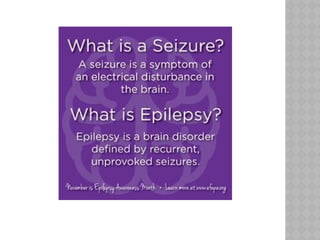
 Difference between epilepsy, seizures and
convulsions?
 Etiology ?
 Pathophysiology ?
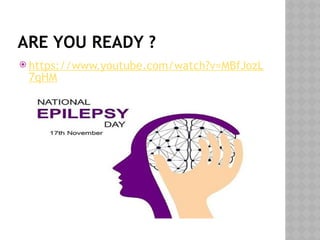
ARE YOU READY ?
 https://www.youtube.com/watch?v=MBfJozL
7qHM
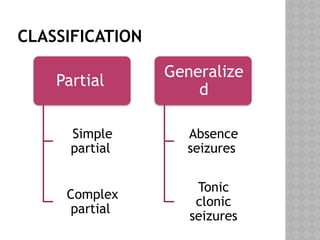
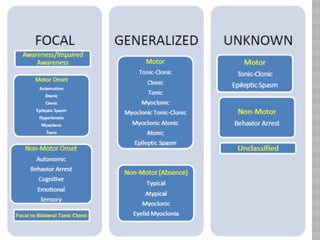
CLASSIFICATION
Partial
Simple
partial
Complex
partial
Generalize
d
Absence
seizures
Tonic
clonic
seizures
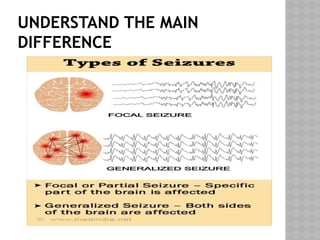
UNDERSTAND THE MAIN
DIFFERENCE
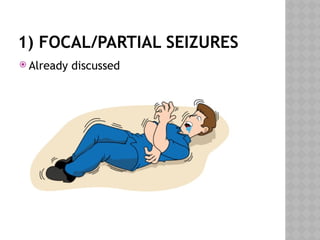
1) FOCAL/PARTIAL SEIZURES
 Already discussed
2) GENERALIZED SEIZURES
 Generalized seizures involve abnormal
electrical discharge from the both cerebral
hemispheres.
 Also called as grand mal seizures.
 Consciousness is always impaired
 There are two major types:-
1. Absence seizures
2. Tonic clonic seizures
ABSENCE SEIZURES
 Petit mal seizure is the term used for the
absence seizures.
 Usually last for 15 seconds.
 Most commonly occur in the children below
the 20 years, usually occur in the childrenn
of ages 6-12 years.
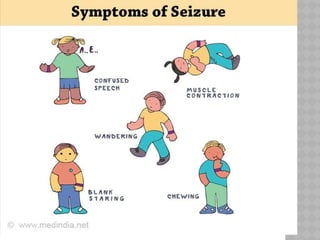
 It commonly involve the starring episode
change in alertness (consciousness)
 The child may show a temporary blackout
that lasts for a short duration.
TONIC CLONIC SEIZURES
 The patient may experience a premonition
just before the seizure (aura).
 This is followed by the stiffening of limbs in
the tonic phase.
 The tonic phase is followed by the clonic
phase in which the person starts shaking and
jerking.
 The patient may bite his/her tongue.
 This stage is followed by deep sleep (loss of
consciousness). Loss of bladder and bowel
control may be seen during the seizure.
PHASES OF TONIC CLONIC
SEIZURES
Initial phase : (tonic phase)
 Intense muscle contraction
 Jaw clenches
 legs and arms flexed or contracted
 The pupil dilates
 chest become rigid, pallor or cyanosis
Next phase : (clonic phase)
 Jerking movements
 Last from 30 sec to 30 min
DIAGNOSTIC EVALUATION
 History
 EEG
 Lumbar puncture
 Other test :
1. Roentgenogram
2. Computed axial tomography
3. positron emission tomography
4. Magnetic resonance imaging
MANAGEMENT
MEDICAL MANAGEMENT
 Anticonvulsant of choice : phenobarbitone
with initial dose of 20mg/kg IV slowly over 10
min
 If no response additional dosage of 10mg/kg
over 15 min
 If still not controlled phenytoin is added of
20mg/kg, IV over 20 min
 DIAZEPAM is generally avoided in neonates
 Status epilepticus DOC is phenytoin
SURGICAL MANAGEMENT
 Neurosurgery with uncontrolled seizures
 Removal of tumors, hematomas,
malformations and other brain lesions.
 Corpus callostomy
NURSING MANAGEMENT
NURSING ASSESMENT
 History. The diagnosis of epileptic seizures is
made by analyzing the patient’s detailed
clinical history.
 Physical exam. A physical examination helps
in the diagnosis of specific epileptic
syndromes that cause abnormal findings
NURSING DIAGNOSIS
 Risk for trauma or suffocation related to
loss of large or small muscle coordination.
 Risk for ineffective airway clearance
related to neuromuscular impairment.
 Situational low self-esteem related to
stigma associated with the condition.
 Deficient knowledge related to information
misinterpretation.
 Risk for injury related to weakness,
balancing difficulties, cognitive limitations or
altered consciousness.
NURSING INTERVENTIONS
 Prevent trauma/injury
 Promote airway clearance.
 Improve self-esteem.
 Enforce education about the disease.
EMERGENCY CARE DURING
SEIZURES
 Assist the child to a lying position.
 Take off eye glasses, if the child wears and loosen
tight clothes.
 Remove dangerous objects from the vicinity of the
child.
 Maintain patent airway and adequate oxygenation
must be ensured.
 Administer the prescribed medications on time.
 Do not restrain the child during seizures.
 The side rails of bed should be padded.
 Do not force anything into the child's mouth
during seizures.
EMERGENCY CARE AFTER
SEIZURE
 After the seizures are over, the child should be provided complete bed rest.
 Change the clothes and bed sheet, if soiled.
 Suction the airway, if excessive secretions are present.
 Turn the face of the child to one side, to avoid aspiration of secretions.
 Give CPR if breathing is not re-established after the attack.
 Observe the child until fully conscious.
 Treat any injury that may have occurred during convulsions.
 Continuously monitor the vital signs of the child.
 After the child is awake and fully conscious, give oral fluids like fruit juice,
lemonade, etc.
 Administer intravenous fluids if oral intake is less.
 Maintain intake and output chart.
 Provide a non-stimulating, calm and quiet environment to the child.
 Parents need to be counseled regarding the disease and its prognosis.
 Parents should be taught how to take care of the child at home.
 The child should not be left alone and should not be allowed to perform
activities which involve risk of injury.
 The child who is a known case of epilepsy should wear a medical
identification card.
DOES AND DONT’S
 https://www.youtube.com/watch?v=jJWfHH
qfSbk
ANY DOUBTS ?
LET’S HAVE A
PRACTICE TEST
PRACTICE TEST
1. In diagnosing seizure disorder, which of the
following is the most beneficial?
1. A. Brain scan
B. Skull radiographs
C. Lumbar puncture
D. Electroencephalogram
2. Tatiana has a seizure disorder; which of the
following would be the lowest priority when
caring for her?
1. A. Assessing for signs and symptoms of increased
intracranial pressure (ICP).
B. Educating the family about anticonvulsant therapy.
C. Observing and taking down data on all seizures.
D. Assuring safety and protection from injury.
3.The drug of choice in status epileptics is ?
A. Phenytoin
B. Phenobarbiton
C. Diazepam
D. sodium valporate
4. . Which is the most common treatment for
epilepsy?
A. Surgery
B. Special diet
C. Medication
D. An implanted electrical device
5. What is the most common type of seizure?
A. The grand mal seizure
B. Petit mal seizure
C. Absence seizure
D. Both 2 and 3

seizures and nursing management .pptx

  • 1.
    SEIZURE DISORDER Presented by: Preeti Roll no 36 BSc {n} 3rd year
  • 2.
    CHECK YOUR KNOWLEDGE?  Difference between epilepsy, seizures and convulsions?  Etiology ?  Pathophysiology ?
  • 4.
    ARE YOU READY?  https://www.youtube.com/watch?v=MBfJozL 7qHM
  • 5.
  • 6.
  • 8.
  • 9.
    2) GENERALIZED SEIZURES Generalized seizures involve abnormal electrical discharge from the both cerebral hemispheres.  Also called as grand mal seizures.  Consciousness is always impaired  There are two major types:- 1. Absence seizures 2. Tonic clonic seizures
  • 10.
    ABSENCE SEIZURES  Petitmal seizure is the term used for the absence seizures.  Usually last for 15 seconds.  Most commonly occur in the children below the 20 years, usually occur in the childrenn of ages 6-12 years.  It commonly involve the starring episode change in alertness (consciousness)  The child may show a temporary blackout that lasts for a short duration.
  • 11.
    TONIC CLONIC SEIZURES The patient may experience a premonition just before the seizure (aura).  This is followed by the stiffening of limbs in the tonic phase.  The tonic phase is followed by the clonic phase in which the person starts shaking and jerking.  The patient may bite his/her tongue.  This stage is followed by deep sleep (loss of consciousness). Loss of bladder and bowel control may be seen during the seizure.
  • 12.
    PHASES OF TONICCLONIC SEIZURES Initial phase : (tonic phase)  Intense muscle contraction  Jaw clenches  legs and arms flexed or contracted  The pupil dilates  chest become rigid, pallor or cyanosis Next phase : (clonic phase)  Jerking movements  Last from 30 sec to 30 min
  • 14.
    DIAGNOSTIC EVALUATION  History EEG  Lumbar puncture  Other test : 1. Roentgenogram 2. Computed axial tomography 3. positron emission tomography 4. Magnetic resonance imaging
  • 15.
  • 16.
    MEDICAL MANAGEMENT  Anticonvulsantof choice : phenobarbitone with initial dose of 20mg/kg IV slowly over 10 min  If no response additional dosage of 10mg/kg over 15 min  If still not controlled phenytoin is added of 20mg/kg, IV over 20 min  DIAZEPAM is generally avoided in neonates  Status epilepticus DOC is phenytoin
  • 17.
    SURGICAL MANAGEMENT  Neurosurgerywith uncontrolled seizures  Removal of tumors, hematomas, malformations and other brain lesions.  Corpus callostomy
  • 18.
  • 19.
    NURSING ASSESMENT  History.The diagnosis of epileptic seizures is made by analyzing the patient’s detailed clinical history.  Physical exam. A physical examination helps in the diagnosis of specific epileptic syndromes that cause abnormal findings
  • 20.
    NURSING DIAGNOSIS  Riskfor trauma or suffocation related to loss of large or small muscle coordination.  Risk for ineffective airway clearance related to neuromuscular impairment.  Situational low self-esteem related to stigma associated with the condition.  Deficient knowledge related to information misinterpretation.  Risk for injury related to weakness, balancing difficulties, cognitive limitations or altered consciousness.
  • 21.
    NURSING INTERVENTIONS  Preventtrauma/injury  Promote airway clearance.  Improve self-esteem.  Enforce education about the disease.
  • 22.
    EMERGENCY CARE DURING SEIZURES Assist the child to a lying position.  Take off eye glasses, if the child wears and loosen tight clothes.  Remove dangerous objects from the vicinity of the child.  Maintain patent airway and adequate oxygenation must be ensured.  Administer the prescribed medications on time.  Do not restrain the child during seizures.  The side rails of bed should be padded.  Do not force anything into the child's mouth during seizures.
  • 23.
    EMERGENCY CARE AFTER SEIZURE After the seizures are over, the child should be provided complete bed rest.  Change the clothes and bed sheet, if soiled.  Suction the airway, if excessive secretions are present.  Turn the face of the child to one side, to avoid aspiration of secretions.  Give CPR if breathing is not re-established after the attack.  Observe the child until fully conscious.  Treat any injury that may have occurred during convulsions.  Continuously monitor the vital signs of the child.  After the child is awake and fully conscious, give oral fluids like fruit juice, lemonade, etc.  Administer intravenous fluids if oral intake is less.  Maintain intake and output chart.  Provide a non-stimulating, calm and quiet environment to the child.  Parents need to be counseled regarding the disease and its prognosis.  Parents should be taught how to take care of the child at home.  The child should not be left alone and should not be allowed to perform activities which involve risk of injury.  The child who is a known case of epilepsy should wear a medical identification card.
  • 24.
    DOES AND DONT’S https://www.youtube.com/watch?v=jJWfHH qfSbk
  • 25.
  • 26.
  • 27.
    PRACTICE TEST 1. Indiagnosing seizure disorder, which of the following is the most beneficial? 1. A. Brain scan B. Skull radiographs C. Lumbar puncture D. Electroencephalogram 2. Tatiana has a seizure disorder; which of the following would be the lowest priority when caring for her? 1. A. Assessing for signs and symptoms of increased intracranial pressure (ICP). B. Educating the family about anticonvulsant therapy. C. Observing and taking down data on all seizures. D. Assuring safety and protection from injury.
  • 28.
    3.The drug ofchoice in status epileptics is ? A. Phenytoin B. Phenobarbiton C. Diazepam D. sodium valporate 4. . Which is the most common treatment for epilepsy? A. Surgery B. Special diet C. Medication D. An implanted electrical device 5. What is the most common type of seizure? A. The grand mal seizure B. Petit mal seizure C. Absence seizure D. Both 2 and 3