Sedimentary rocks
contents
 1.Introduction
 2.Formation
 2.1 mechanically
 2.2organically
 2.2 chemically
 3.structural features
 3.1Stratification
 3.2Lamination
 3.3Cross bedding
 4.Types of sedimentary rocks
 4.1Limestone
 4.2Sandstone
 4.3Shale
 4.4laterite
intorduction
 Sedimentary rock is formed by deposition and
consolidation of mineral and organic material and
from precipitation of minerals from solution.
 sedimentary rock occur at the surface of the
earth and within bodies of water
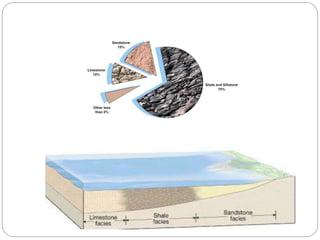
 Rock formed from sediments covers 70-80 % of
the earth‘s land area,
 common types such as limestone, chalk,
sandstone, conglomerate and shale.
formation
Mechanical formation
 The mechanically formed sedimentary rocks are
of three types
 Rudaceous rocks which is the cementing
together of boulders, for example, conglomerate.
 Arenaceous rocks for example sandstone,
 Argillaceous rocks which clay rocks for example
shale
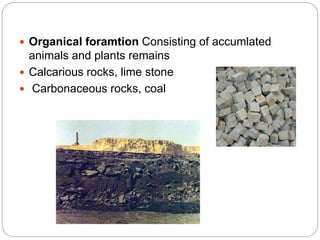
 Organical foramtion Consisting of accumlated
animals and plants remains
 Calcarious rocks, lime stone
 Carbonaceous rocks, coal
Chemical formation :this type of rocks is formed by
precipitation and accumulation of soluble
constituents .4C
 Consolidation is a process by which soft and loose
sediments are converted into hard and firm rocks
 Cementation precipitation of some cementing
materials eg: silica, calcium carbonate
 Compaction The squeezing out of water from the
pores of the sediments
 Crystallization Chemically formed sedimentaryrocks
such as limestone, Compaction Consolidation
Cementation Crystallization
Compaction Consolidation
Cementation Crystallization
Structural Features
 Stratification :
 The deposition of sediments into layer or beds is
called stratification
formed due to the following
 Difference in the kinds of materials
 Difference in the size of particles
 Difference in the color of the material
Lamination:
Thin bedding, less than one
centimeter in thickness, are called lamination.
 It is usually fined grained sedimentary rocks like
shales
 Cross-bedding :
 also called current bedding or false bedding
 found in shallow water and wind formed deposites
 minor bedding or lamination which lie at an angle to
the planes of
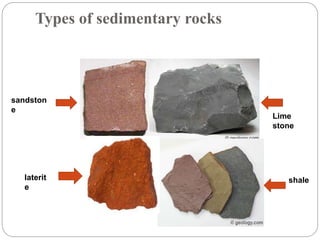
Types of sedimentary rocks
sandston
e
laterit
e
Lime
stone
shale
Sand stone
 It mechanically formed sedimentary rocks
of arenaceous group
 Sandstone is as its name says sand grains
cemented together into solid stone.
 The grain size of sandstone is 1/16 to 2
mm in diameter
 Si O2 is the dominate mineral in
sandstone
 Sandstone rocks are generally classified
as quartz sandstone, arkose and
graywacke
 Si O2 is the dominate mineral in sandstone
 Uses - if soft then generally of no use; if hard then
can be used as aggregate, fill etc.
 the construction and roading industries. dimension
stone for buildings, paving, etc.’
 Compostion
 Silica, calcite, and iron oxides are the most common
cementing minerals for sand stone.
 These minerals are deposited in the spaces
between the sand grains by water
 Over the course of thousands or even millions of
years the minerals fill up all of the spaces
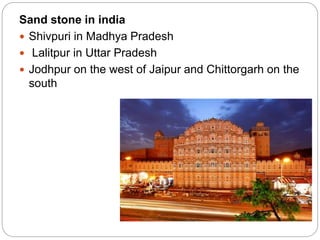
Sand stone in india
 Shivpuri in Madhya Pradesh
 Lalitpur in Uttar Pradesh
 Jodhpur on the west of Jaipur and Chittorgarh on the
south
Lime stone
 Limestone is a sedimentary rock consisting of more
than 50% calcium carbonate
 Limestone is a sedimentary rock, mainly composed
of mineral calcite
 Grain size variable, can consist of clasts of all sizes
 they are of different types bituminous lime stone,
chalk, coral rag, and tufa.
 Uses
 It is quarried for roadbeds and gravel roads
 landscape construction and cement manufacture
 production of lime fertilizer, paper, petrochemicals,
pesticide, glass
 Compostion
 limestones are formed by the deposition and
consolidation of the skeletons of marine invertebrates
 a few originate in chemical precipitation from solution
 Limestone deposits are frequently of great thickness
 Lime stone in india
 Madhya Pradesh-Raipur, Durg, Bastar
 Rajasthan-Udaipur ,jodhpur, , Nagaur
 Andhra Pradesh- Vishakhapatnam, Krishna,
Adilabad
 Tamil Nadu- Tirunelveli, Coimbatore, Madurai
shale
 Shale is a fine-grained, clastic sedimentary rock
composed of mud
 very fine less than 1/256 mm
 Shale are fissle and laminated
 Shale have different shades green ,red black
yellow etc.
 Uses of Shale
 Black shales contain organic material that
sometimes breaks down to form natural gas or oil.
 Other clay are are used for producing clay
compostion:
 Shale is a rock composed mainly of clay-size mineral
grains
 These "other constituents" in the rock are often
determined by the shale's environment of deposition
 determine the color of the rock
laterite
 Laterites are a source of aluminium ore
 laterites are formed from the leaching of parent
sedimentary rocks ,metamorphic rocks igneous
rock and mineralized proto-ores
 Uses of laterite rocks
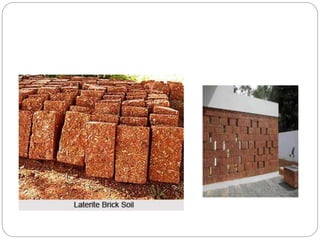
 building blocks for construction of masonry in
building
 used to construct walls without the use of cement
mortar
 Compostion of laterite:
 laterites consist mainly of quartz and oxides
of titanium, iron, tin, aluminium and manganese,
which remain during the course of weathering
 Laterites in india
 southern regions of the Western Ghats
inlcudes coastal regions in Ratnagiri District and
Malabar.
 Mahadeo ranges in Madhya Pradesh
Sedimentary rocks
Sedimentary rocks

Sedimentary rocks

  • 1.
  • 2.
    contents  1.Introduction  2.Formation 2.1 mechanically  2.2organically  2.2 chemically  3.structural features  3.1Stratification  3.2Lamination  3.3Cross bedding  4.Types of sedimentary rocks  4.1Limestone  4.2Sandstone  4.3Shale  4.4laterite
  • 3.
    intorduction  Sedimentary rockis formed by deposition and consolidation of mineral and organic material and from precipitation of minerals from solution.  sedimentary rock occur at the surface of the earth and within bodies of water  Rock formed from sediments covers 70-80 % of the earth‘s land area,  common types such as limestone, chalk, sandstone, conglomerate and shale.
  • 4.
    formation Mechanical formation  Themechanically formed sedimentary rocks are of three types  Rudaceous rocks which is the cementing together of boulders, for example, conglomerate.  Arenaceous rocks for example sandstone,  Argillaceous rocks which clay rocks for example shale
  • 5.
     Organical foramtionConsisting of accumlated animals and plants remains  Calcarious rocks, lime stone  Carbonaceous rocks, coal
  • 6.
    Chemical formation :thistype of rocks is formed by precipitation and accumulation of soluble constituents .4C  Consolidation is a process by which soft and loose sediments are converted into hard and firm rocks  Cementation precipitation of some cementing materials eg: silica, calcium carbonate  Compaction The squeezing out of water from the pores of the sediments  Crystallization Chemically formed sedimentaryrocks such as limestone, Compaction Consolidation Cementation Crystallization
  • 7.
  • 8.
    Structural Features  Stratification:  The deposition of sediments into layer or beds is called stratification formed due to the following  Difference in the kinds of materials  Difference in the size of particles  Difference in the color of the material
  • 9.
    Lamination: Thin bedding, lessthan one centimeter in thickness, are called lamination.  It is usually fined grained sedimentary rocks like shales  Cross-bedding :  also called current bedding or false bedding  found in shallow water and wind formed deposites  minor bedding or lamination which lie at an angle to the planes of
  • 10.
    Types of sedimentaryrocks sandston e laterit e Lime stone shale
  • 12.
    Sand stone  Itmechanically formed sedimentary rocks of arenaceous group  Sandstone is as its name says sand grains cemented together into solid stone.  The grain size of sandstone is 1/16 to 2 mm in diameter  Si O2 is the dominate mineral in sandstone  Sandstone rocks are generally classified as quartz sandstone, arkose and graywacke  Si O2 is the dominate mineral in sandstone
  • 13.
     Uses -if soft then generally of no use; if hard then can be used as aggregate, fill etc.  the construction and roading industries. dimension stone for buildings, paving, etc.’  Compostion  Silica, calcite, and iron oxides are the most common cementing minerals for sand stone.  These minerals are deposited in the spaces between the sand grains by water  Over the course of thousands or even millions of years the minerals fill up all of the spaces
  • 14.
    Sand stone inindia  Shivpuri in Madhya Pradesh  Lalitpur in Uttar Pradesh  Jodhpur on the west of Jaipur and Chittorgarh on the south
  • 15.
    Lime stone  Limestoneis a sedimentary rock consisting of more than 50% calcium carbonate  Limestone is a sedimentary rock, mainly composed of mineral calcite  Grain size variable, can consist of clasts of all sizes  they are of different types bituminous lime stone, chalk, coral rag, and tufa.
  • 16.
     Uses  Itis quarried for roadbeds and gravel roads  landscape construction and cement manufacture  production of lime fertilizer, paper, petrochemicals, pesticide, glass  Compostion  limestones are formed by the deposition and consolidation of the skeletons of marine invertebrates  a few originate in chemical precipitation from solution  Limestone deposits are frequently of great thickness
  • 17.
     Lime stonein india  Madhya Pradesh-Raipur, Durg, Bastar  Rajasthan-Udaipur ,jodhpur, , Nagaur  Andhra Pradesh- Vishakhapatnam, Krishna, Adilabad  Tamil Nadu- Tirunelveli, Coimbatore, Madurai
  • 18.
    shale  Shale isa fine-grained, clastic sedimentary rock composed of mud  very fine less than 1/256 mm  Shale are fissle and laminated  Shale have different shades green ,red black yellow etc.
  • 19.
     Uses ofShale  Black shales contain organic material that sometimes breaks down to form natural gas or oil.  Other clay are are used for producing clay compostion:  Shale is a rock composed mainly of clay-size mineral grains  These "other constituents" in the rock are often determined by the shale's environment of deposition  determine the color of the rock
  • 20.
    laterite  Laterites area source of aluminium ore  laterites are formed from the leaching of parent sedimentary rocks ,metamorphic rocks igneous rock and mineralized proto-ores  Uses of laterite rocks  building blocks for construction of masonry in building  used to construct walls without the use of cement mortar
  • 21.
     Compostion oflaterite:  laterites consist mainly of quartz and oxides of titanium, iron, tin, aluminium and manganese, which remain during the course of weathering  Laterites in india  southern regions of the Western Ghats inlcudes coastal regions in Ratnagiri District and Malabar.  Mahadeo ranges in Madhya Pradesh