


Chong Boon Secondary School 
Humanities Department (Geography Unit) 
Lower Secondary Geography (Sec Two) 
Prepared by Mr Kelwin Koh
 At the end of this unit you will be able to : 
1. Calculate rate of natural increase 
2. Identify the causes, consequences and 
responses for high rate of population 
increase. 
3. Identify the causes, consequences and 
responses for low rate of population 
increase.
 High in Less Developed Countries (LDCs) 
 India, Indonesia, Brazil, etc. 
 Caused by high birth rates due to 
 Early marriage 
 Children seen as wealth 
 High number of child deaths 
 Lack of birth control knowledge 
 Preference for a male child 
 Religious beliefs
 As early as 15 years old. 
Women who marry young more 
likely to have more children. 
 Longer potential fertility period
 Children viewed as assets. 
 Free labour on farms. 
Tradition of filial piety. 
 Children will look after their 
parents 
 Bring in additional income
 Lack of basic health care services. 
 Bad water and food hygiene. 
 Easy spread of diseases. 
 Children die easily of common 
ailments 
 Additional children seen as security / 
insurance.
 People ignorant of birth control 
methods. 
 Illiterate 
 Not well-informed 
 Lacking in available information 
 Birth Control might not be readily 
available
 Asian (Patriarchal ) societies 
prefer male children. 
 Carry on the family name 
 Inherit the family business 
People keep giving birth if they 
don’t have male offspring.
Some religions do not allow 
use of contraceptives 
Contravenes the religious 
beliefs 
Catholics & Muslims
Humans require resources. 
Earth has finite resources. 
More humans means less 
resource for each person 
Reduction in quality of life.
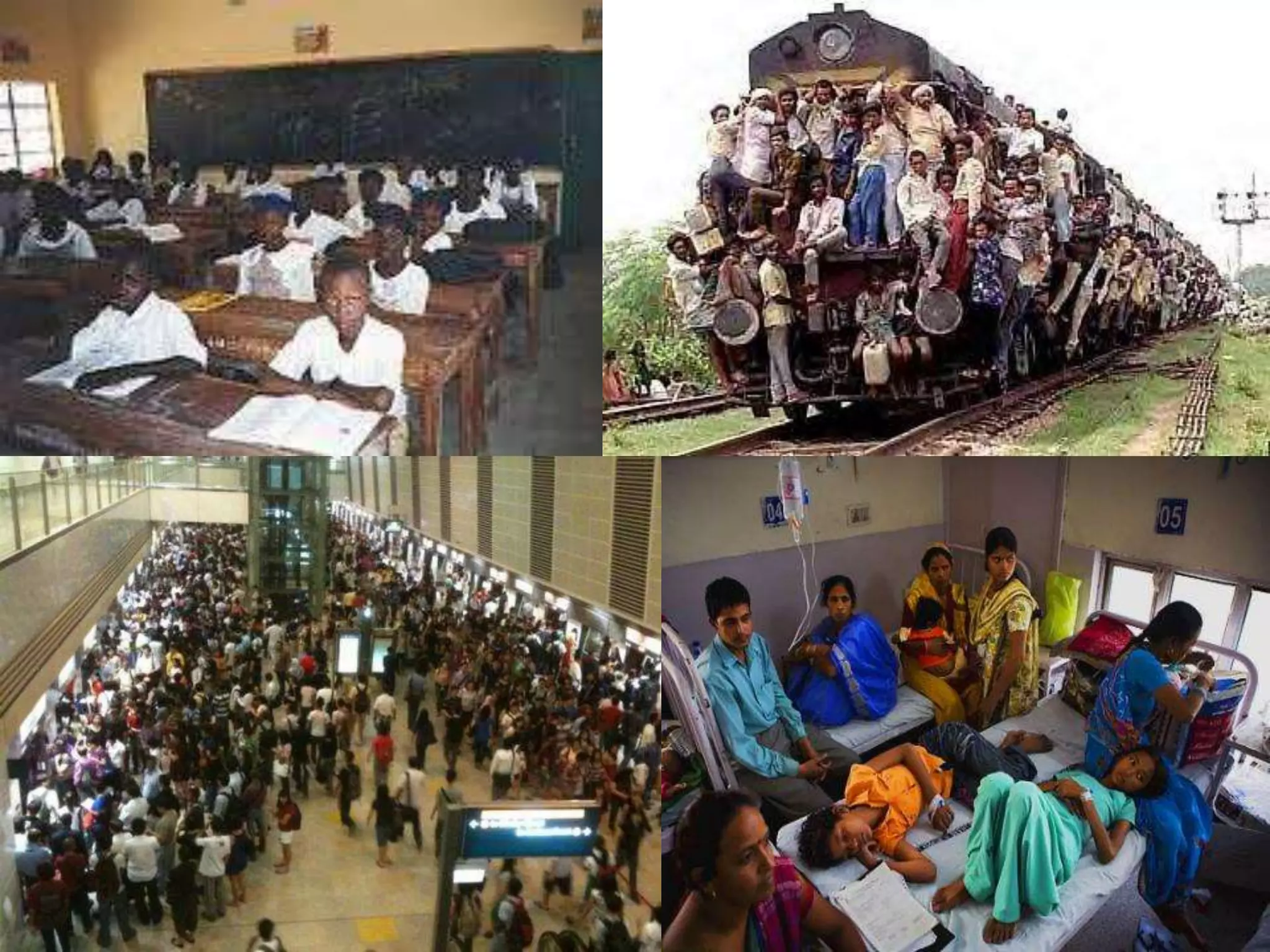
1.Overcrowding 
2.Food shortage 
3. Pressure on social 
services 
4.Social problems
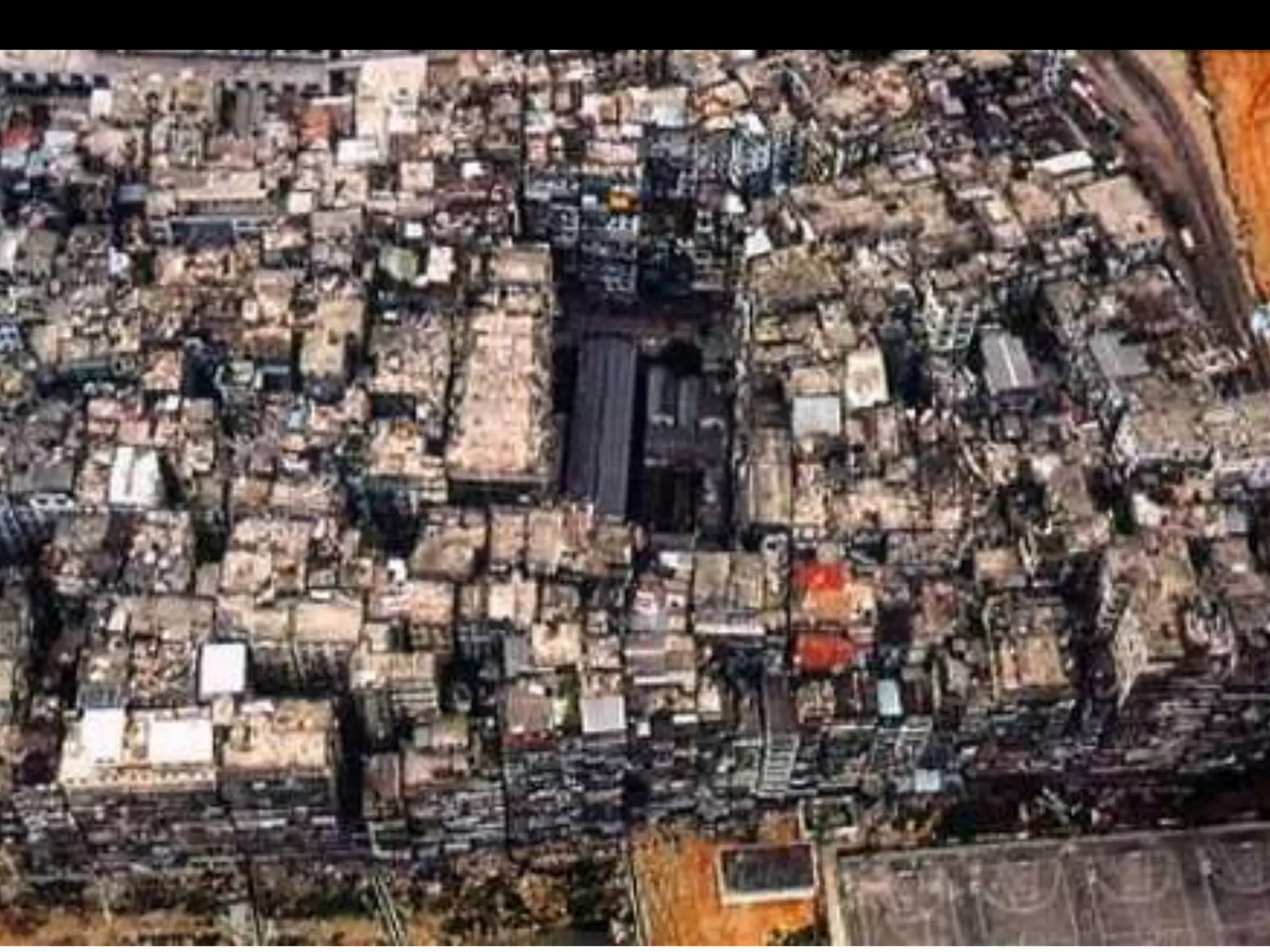
 Congestion due to lack of space. 
 Growth of slums (eg Sao Paulo, Brazil) 
 1100 people living in a square kilometre of 
land 
 Large population causes high pressure 
on food production. 
 Fields become over-cultivated as 
farmers try to cope. 
 Fields might end up destroyed
 Large population requires a lot of food. 
 Green revolution has helped but might not be 
always enough. 
 Green revolution = use of technology to increase 
food production 
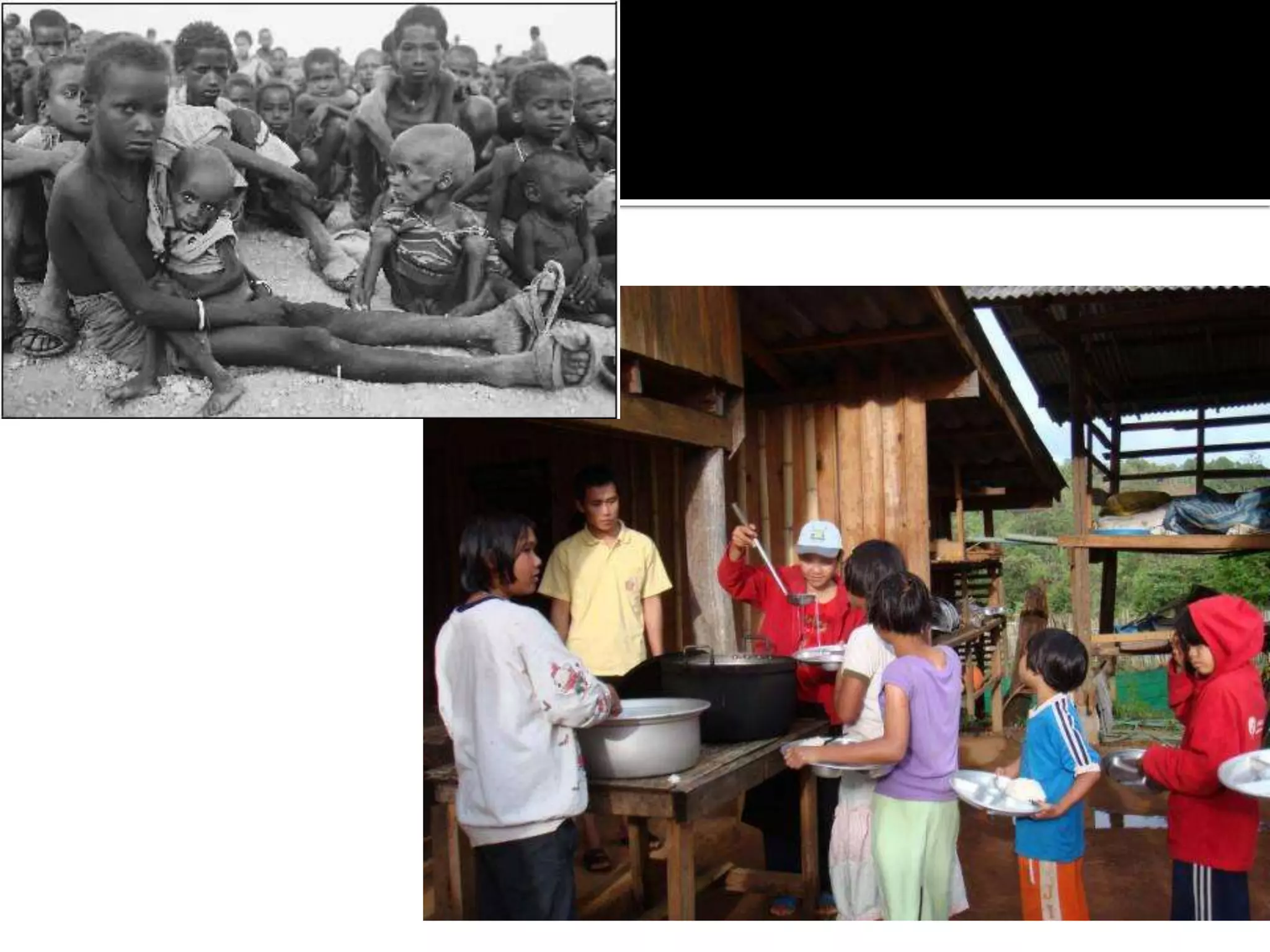
 Local food supply cannot meet increasing 
demands. 
 Young children might suffer from malnutrition 
 Prone to diseases and poor health.
 Healthcare 
 Lack of doctors, hospitals, clinics. 
 Insufficient medical equipment and medication 
 Poor education services 
 Insufficient teachers, schools, books. 
 Overcrowded public transport systems 
 Overloaded transport systems a hazard
 Unemployment 
 Result of rural urban migration (unskilled 
labour in cities without jobs) 
 High crime rate 
 Unemployed and unskilled turn to crime 
 Lack of basic hygiene 
 No proper sanitation 
 Crowded living conditions 
▪ Leads to spread of diseases
1.Economic 
Development 
2.Birth control and family 
planning 
3. Increase literacy rate
 Economic development tends to lower Birth 
Rates 
 Better standards of living reduces the desires 
for young couples to have children 
 Longer working hours and absence of need 
for children 
 City living, no need for free labour on the farm 
 High costs of bringing up children in cities
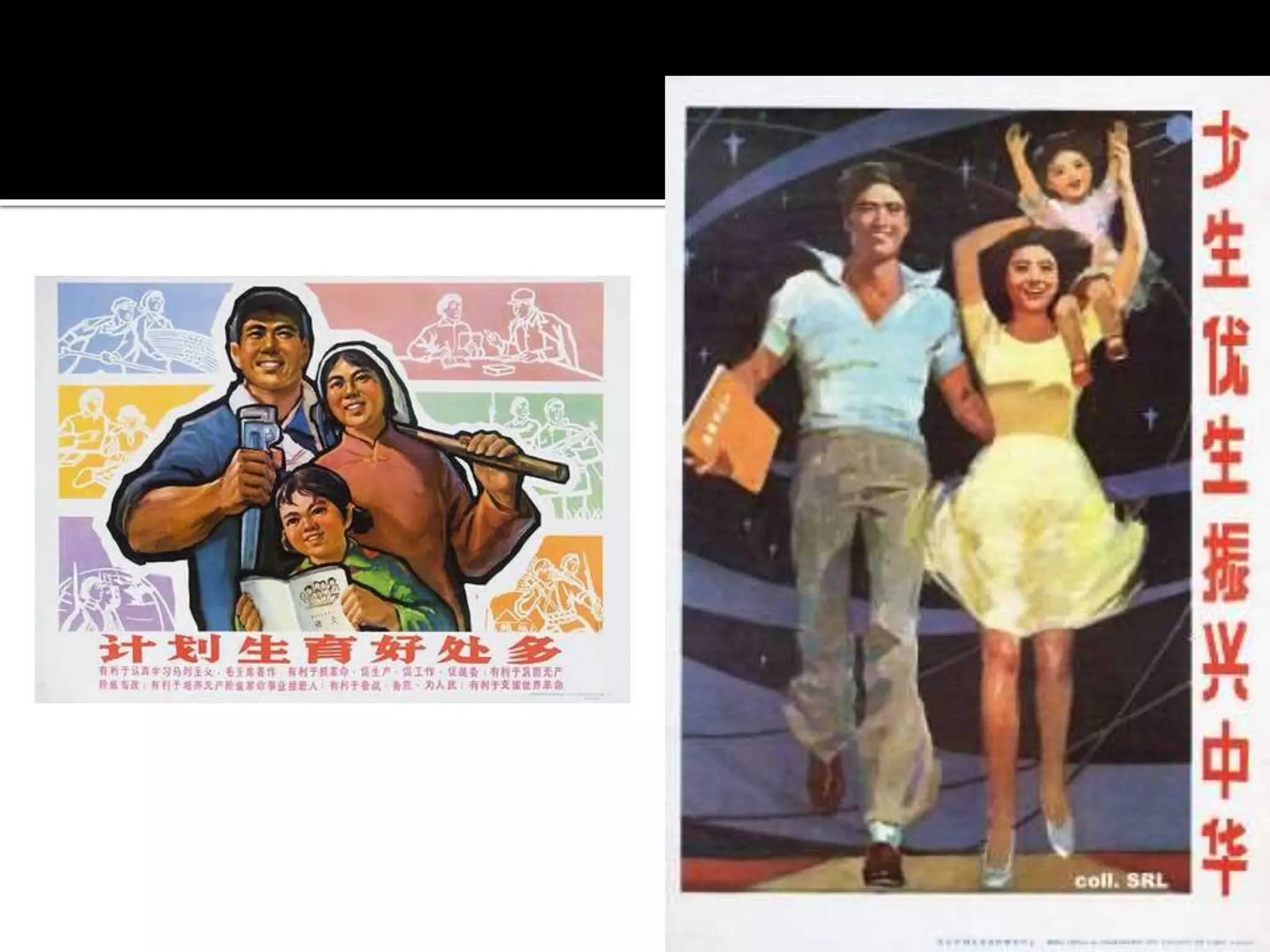
 State enforced birth control. 
 China’s 1 child policy 
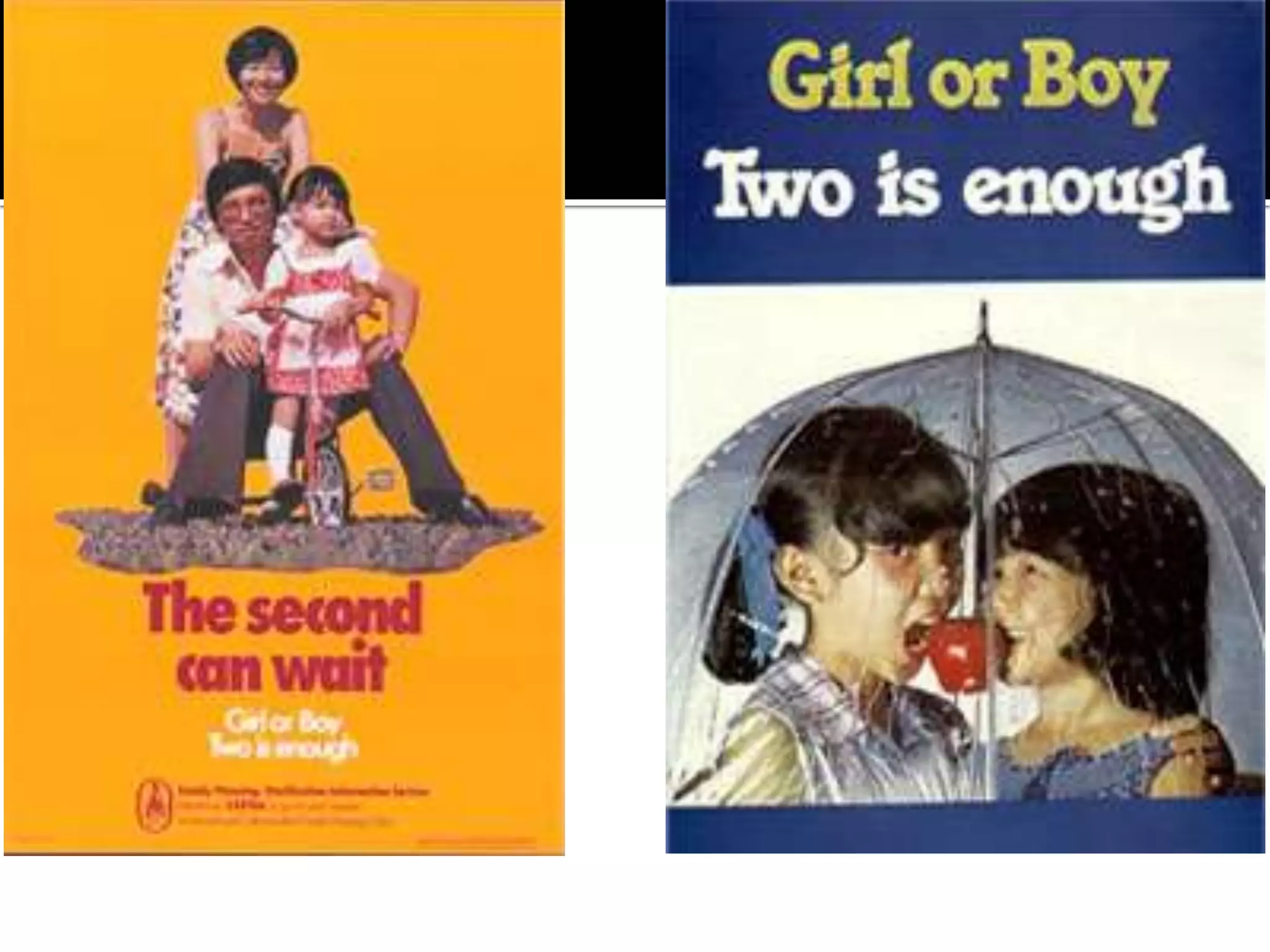
 State sponsored family planning. 
 India’s birth control incentives 
 Indonesia’s economic rewards for small 
families 
 Not always effective as other factors 
come into play when couples plan for 
families.
 Education for women and children 
 Educated women enters the labour 
force, reduces the potential child-bearing 
time 
 Educated children leads to faster 
development of society 
 High literacy rate facilitates family 
planning information dissemination
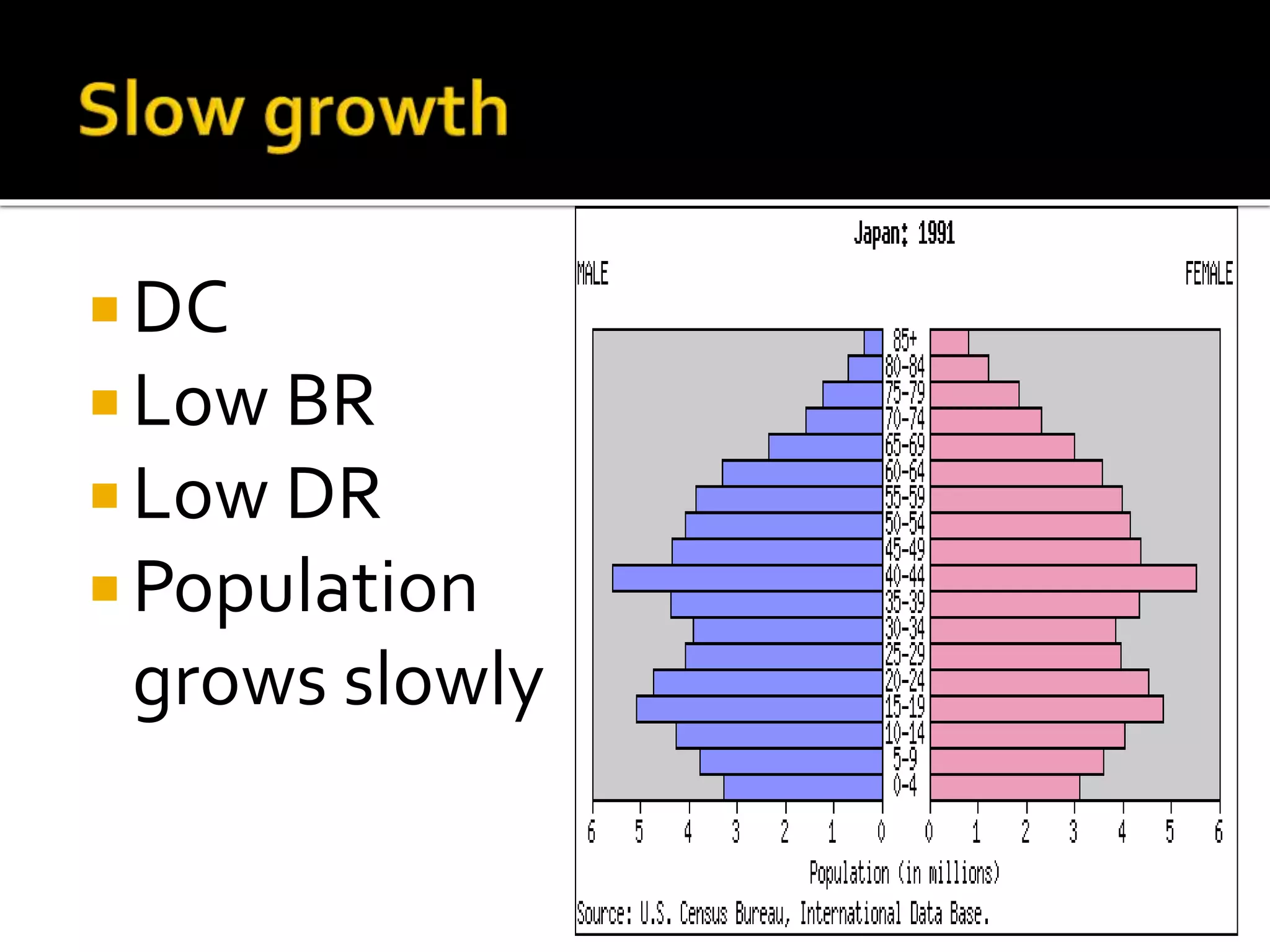
 Developed Countries (DCs) 
 Faced with population growth that is 
slow, stagnant or even reducing 
 Countries with highly developed 
economies 
▪ Switzerland, Japan, Taiwan, Singapore, 
Germany, etc.
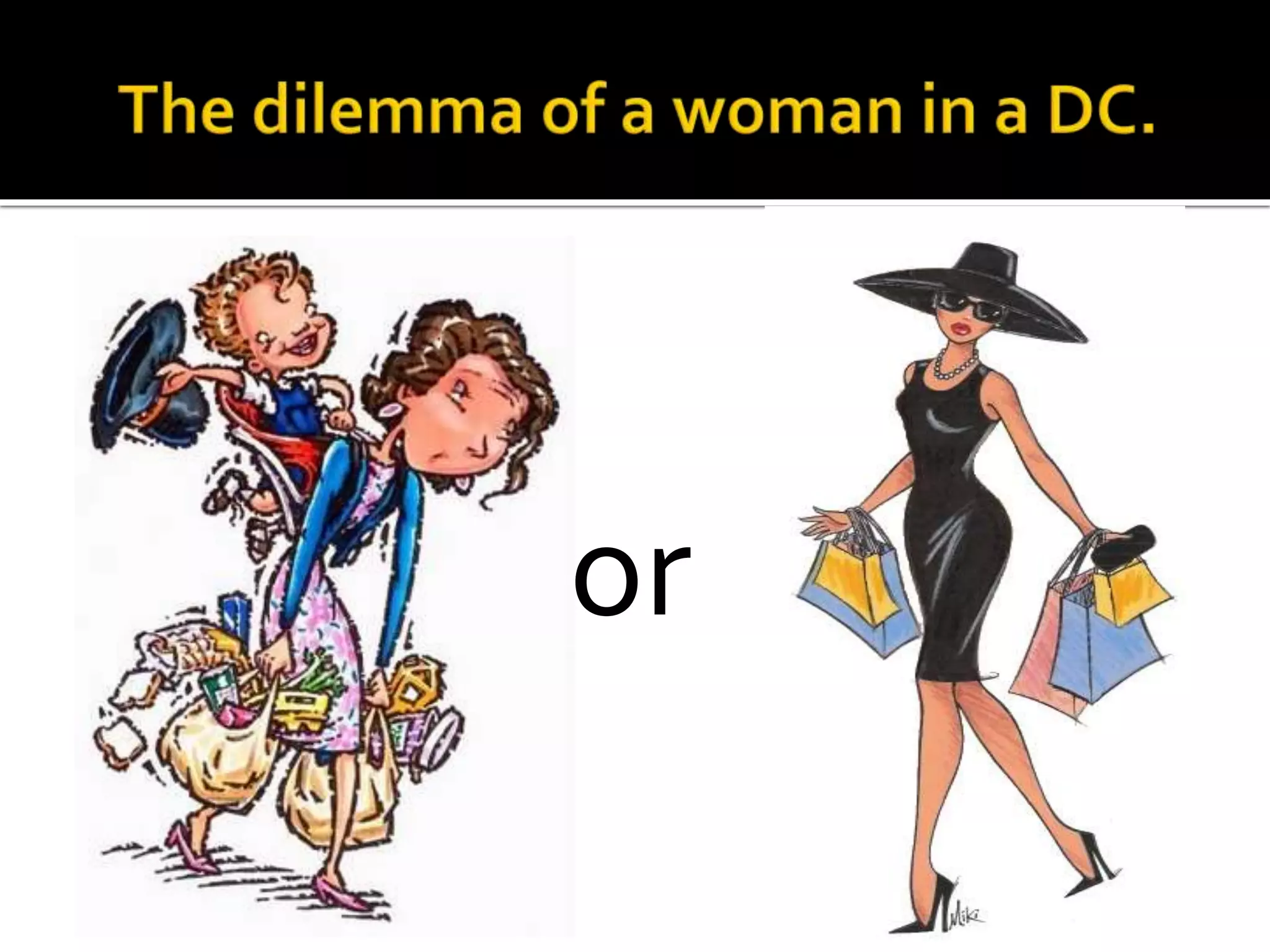
or
 Dependants 
 Population that is not working 
▪ Not contributing economically to the country 
 0-14 years of age & above 60 years of age 
 Working population 
 Population that is contributing to the 
economy of the country 
 15-59 years of age
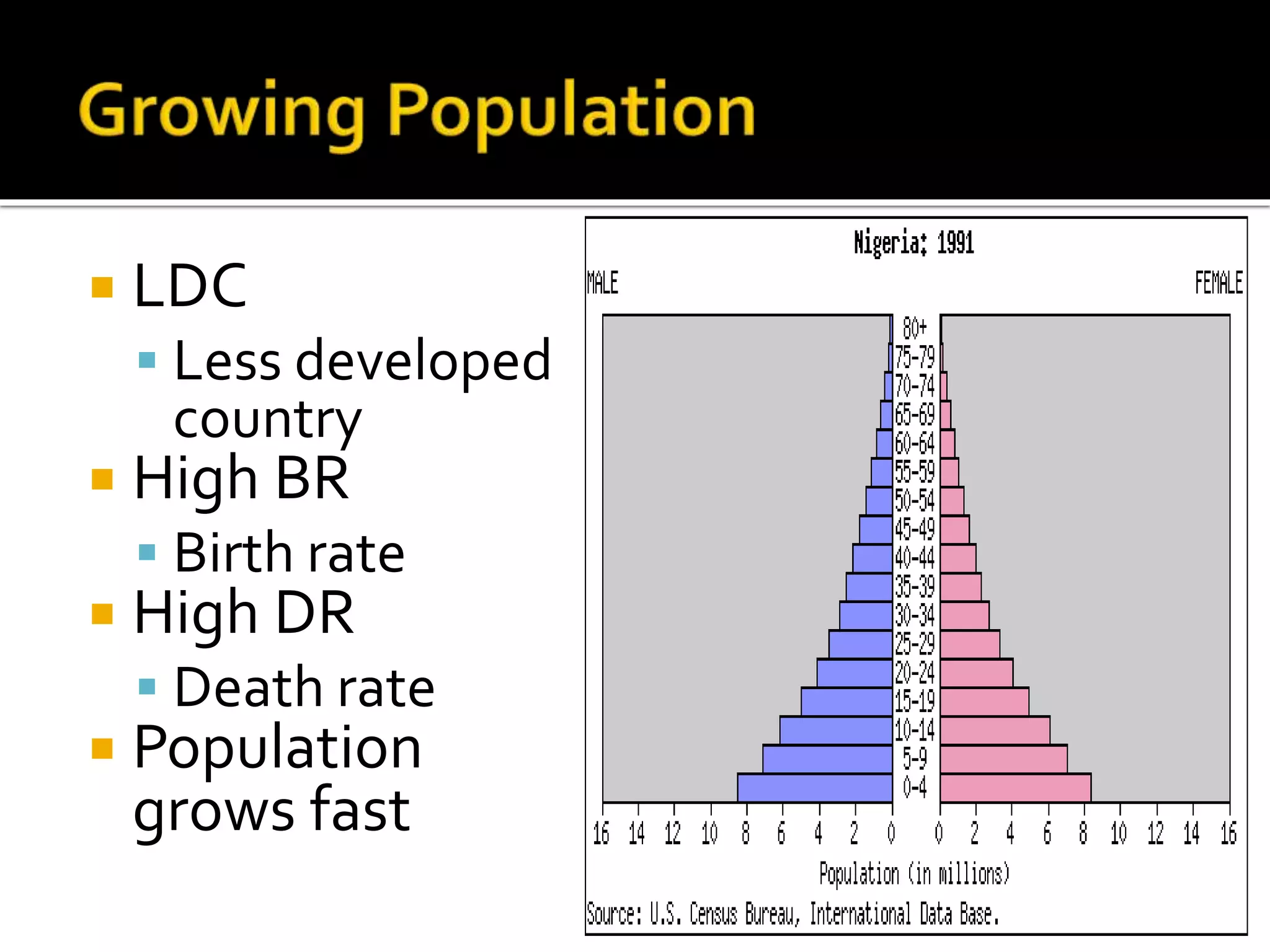
 LDC 
 Less developed 
country 
 High BR 
 Birth rate 
 High DR 
 Death rate 
 Population 
grows fast
DC 
Low BR 
Low DR 
Population 
grows slowly
 In your groups, construct the population 
pyramids that you have been allocated 
in the data sheet that is given. 
 Draw it on the A3 Paper provided. 
 At the bottom of the pyramid you have 
created, write down whether it belongs 
to a DC or LDC and state 2 countries 
that you think will have such a pyramid.
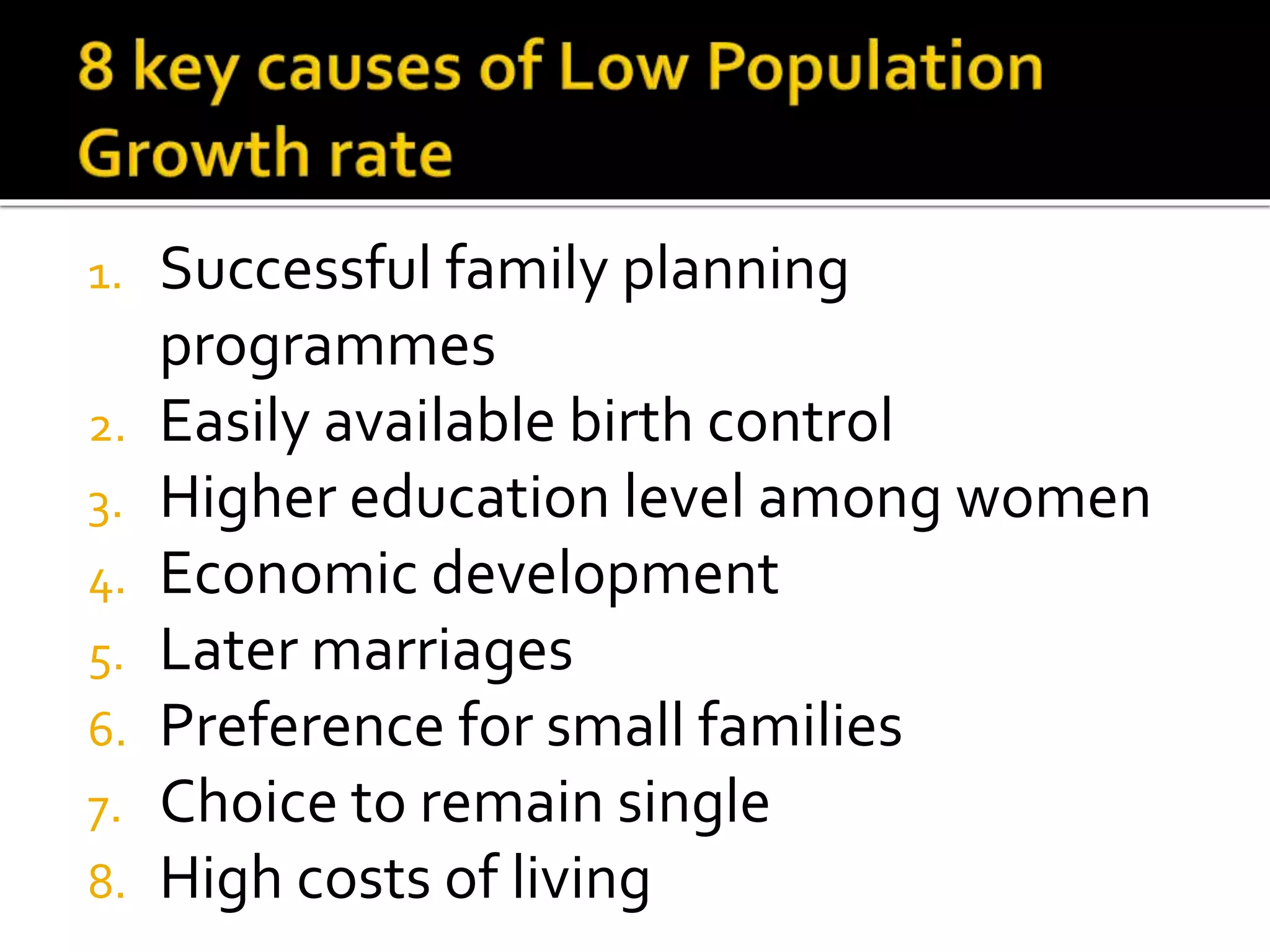
1. Successful family planning 
programmes 
2. Easily available birth control 
3. Higher education level among women 
4. Economic development 
5. Later marriages 
6. Preference for small families 
7. Choice to remain single 
8. High costs of living
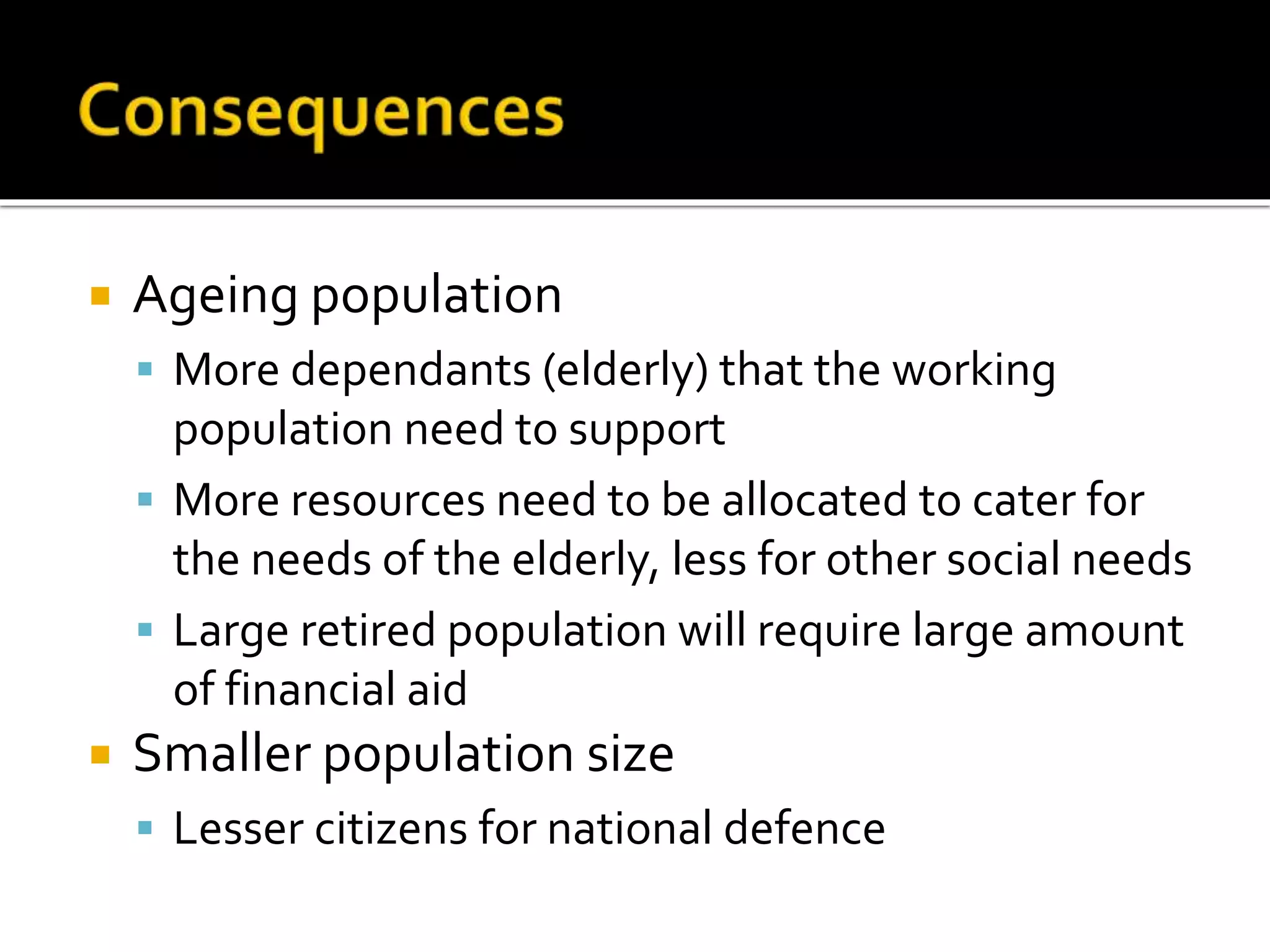
 Ageing population 
 More dependants (elderly) that the working 
population need to support 
 More resources need to be allocated to cater for 
the needs of the elderly, less for other social needs 
 Large retired population will require large amount 
of financial aid 
 Smaller population size 
 Lesser citizens for national defence
 Pro-birth policies 
 Financial incentives for couples who have children 
▪ Baby Bonus Scheme 
 Subsidies for childcare or domestic help 
▪ Government subsidised childcare facilities 
▪ Reduction in tax for employing domestic help 
 Pro-family work environment 
▪ Additional leave granted for childcare for workforce 
with young children
 Complete the following exercise in 
the next 10 minutes 
 Turn to Pg27, read the information 
above and answer both questions in 
Activity 2 on the cards provided. 
 Let’s go!
1. Successful family planning programmes. 
People follow the government’s advice and 
have smaller families. This causes low 
population growth. 
2. Easily available birth control. People who 
want to avoid getting pregnant, they can 
easily buy birth control contraceptives.

Sec 2 Unit 3 population growth

  • 1.
    Chong Boon SecondarySchool Humanities Department (Geography Unit) Lower Secondary Geography (Sec Two) Prepared by Mr Kelwin Koh
  • 2.
     At theend of this unit you will be able to : 1. Calculate rate of natural increase 2. Identify the causes, consequences and responses for high rate of population increase. 3. Identify the causes, consequences and responses for low rate of population increase.
  • 3.
     High inLess Developed Countries (LDCs)  India, Indonesia, Brazil, etc.  Caused by high birth rates due to  Early marriage  Children seen as wealth  High number of child deaths  Lack of birth control knowledge  Preference for a male child  Religious beliefs
  • 4.
     As earlyas 15 years old. Women who marry young more likely to have more children.  Longer potential fertility period
  • 5.
     Children viewedas assets.  Free labour on farms. Tradition of filial piety.  Children will look after their parents  Bring in additional income
  • 6.
     Lack ofbasic health care services.  Bad water and food hygiene.  Easy spread of diseases.  Children die easily of common ailments  Additional children seen as security / insurance.
  • 7.
     People ignorantof birth control methods.  Illiterate  Not well-informed  Lacking in available information  Birth Control might not be readily available
  • 8.
     Asian (Patriarchal) societies prefer male children.  Carry on the family name  Inherit the family business People keep giving birth if they don’t have male offspring.
  • 9.
    Some religions donot allow use of contraceptives Contravenes the religious beliefs Catholics & Muslims
  • 10.
    Humans require resources. Earth has finite resources. More humans means less resource for each person Reduction in quality of life.
  • 11.
    1.Overcrowding 2.Food shortage 3. Pressure on social services 4.Social problems
  • 12.
     Congestion dueto lack of space.  Growth of slums (eg Sao Paulo, Brazil)  1100 people living in a square kilometre of land  Large population causes high pressure on food production.  Fields become over-cultivated as farmers try to cope.  Fields might end up destroyed
  • 14.
     Large populationrequires a lot of food.  Green revolution has helped but might not be always enough.  Green revolution = use of technology to increase food production  Local food supply cannot meet increasing demands.  Young children might suffer from malnutrition  Prone to diseases and poor health.
  • 16.
     Healthcare Lack of doctors, hospitals, clinics.  Insufficient medical equipment and medication  Poor education services  Insufficient teachers, schools, books.  Overcrowded public transport systems  Overloaded transport systems a hazard
  • 18.
     Unemployment Result of rural urban migration (unskilled labour in cities without jobs)  High crime rate  Unemployed and unskilled turn to crime  Lack of basic hygiene  No proper sanitation  Crowded living conditions ▪ Leads to spread of diseases
  • 21.
    1.Economic Development 2.Birthcontrol and family planning 3. Increase literacy rate
  • 22.
     Economic developmenttends to lower Birth Rates  Better standards of living reduces the desires for young couples to have children  Longer working hours and absence of need for children  City living, no need for free labour on the farm  High costs of bringing up children in cities
  • 23.
     State enforcedbirth control.  China’s 1 child policy  State sponsored family planning.  India’s birth control incentives  Indonesia’s economic rewards for small families  Not always effective as other factors come into play when couples plan for families.
  • 26.
     Education forwomen and children  Educated women enters the labour force, reduces the potential child-bearing time  Educated children leads to faster development of society  High literacy rate facilitates family planning information dissemination
  • 27.
     Developed Countries(DCs)  Faced with population growth that is slow, stagnant or even reducing  Countries with highly developed economies ▪ Switzerland, Japan, Taiwan, Singapore, Germany, etc.
  • 28.
  • 29.
     Dependants Population that is not working ▪ Not contributing economically to the country  0-14 years of age & above 60 years of age  Working population  Population that is contributing to the economy of the country  15-59 years of age
  • 30.
     LDC Less developed country  High BR  Birth rate  High DR  Death rate  Population grows fast
  • 31.
    DC Low BR Low DR Population grows slowly
  • 32.
     In yourgroups, construct the population pyramids that you have been allocated in the data sheet that is given.  Draw it on the A3 Paper provided.  At the bottom of the pyramid you have created, write down whether it belongs to a DC or LDC and state 2 countries that you think will have such a pyramid.
  • 33.
    1. Successful familyplanning programmes 2. Easily available birth control 3. Higher education level among women 4. Economic development 5. Later marriages 6. Preference for small families 7. Choice to remain single 8. High costs of living
  • 34.
     Ageing population  More dependants (elderly) that the working population need to support  More resources need to be allocated to cater for the needs of the elderly, less for other social needs  Large retired population will require large amount of financial aid  Smaller population size  Lesser citizens for national defence
  • 35.
     Pro-birth policies  Financial incentives for couples who have children ▪ Baby Bonus Scheme  Subsidies for childcare or domestic help ▪ Government subsidised childcare facilities ▪ Reduction in tax for employing domestic help  Pro-family work environment ▪ Additional leave granted for childcare for workforce with young children
  • 36.
     Complete thefollowing exercise in the next 10 minutes  Turn to Pg27, read the information above and answer both questions in Activity 2 on the cards provided.  Let’s go!
  • 37.
    1. Successful familyplanning programmes. People follow the government’s advice and have smaller families. This causes low population growth. 2. Easily available birth control. People who want to avoid getting pregnant, they can easily buy birth control contraceptives.

Editor's Notes

  • #14 Indian Slums 3 min http://www.youtube.com/watch?v=dTStiMw5tLk
  • #16 Famine in Niger (3min) http://www.youtube.com/watch?v=XoeI6QGCnUE
  • #18 Overcrowded train india clip 3min http://www.youtube.com/watch?v=0ArN_KqFQa4