CLASS –X
CHAPTER 1
1. The idea of development or progress has
always been with us.
2. We have aspirations or desires about what
we would like to do and how we would like to
live.
3. In this chapter, we shall make a beginning
for understanding development.
4. It is only through a democratic political
process that these hopes and possibilities can
be achieved in real life.
1. People seek things that are most important
for them, i.e., that which can fulfill their
aspirations or desires.
2. In fact, at times, two persons or groups of
persons may seek things which are conflicting.
3. So two things are quite clear:
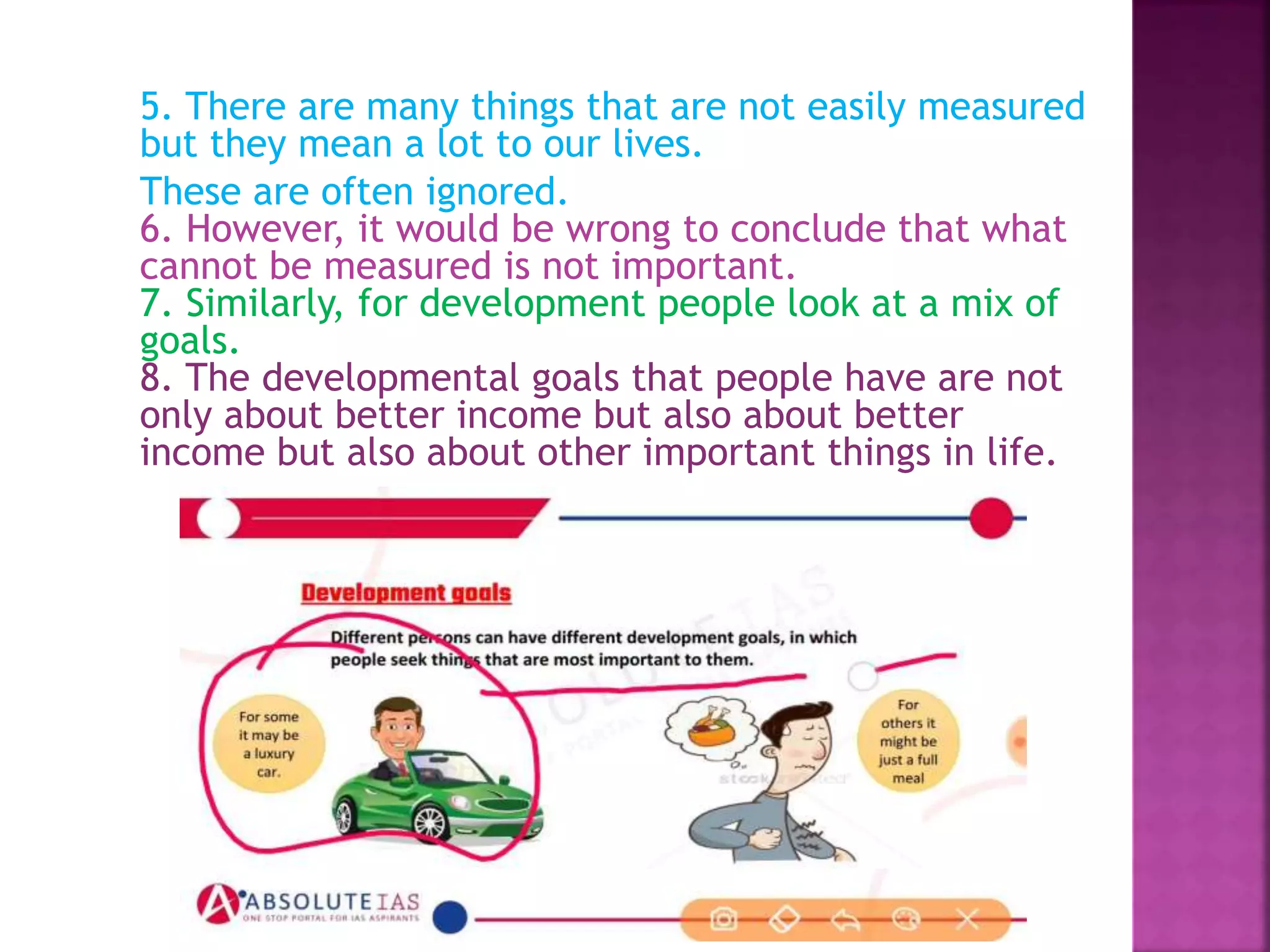
(i) Different persons can have different
developmental goals.
(ii) What may be developed for one may not be
developed for the other. It may even be
destructive for the other.
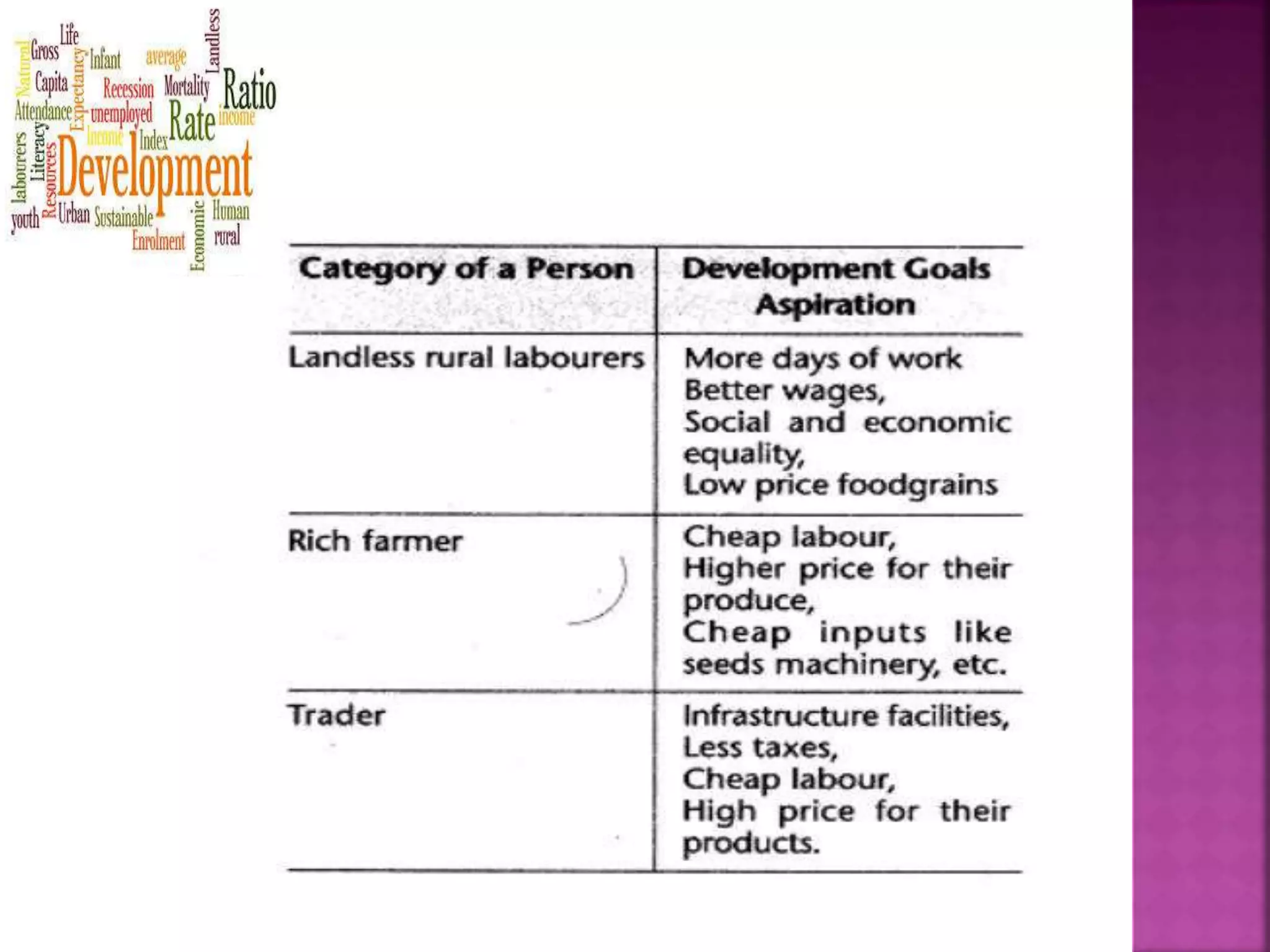
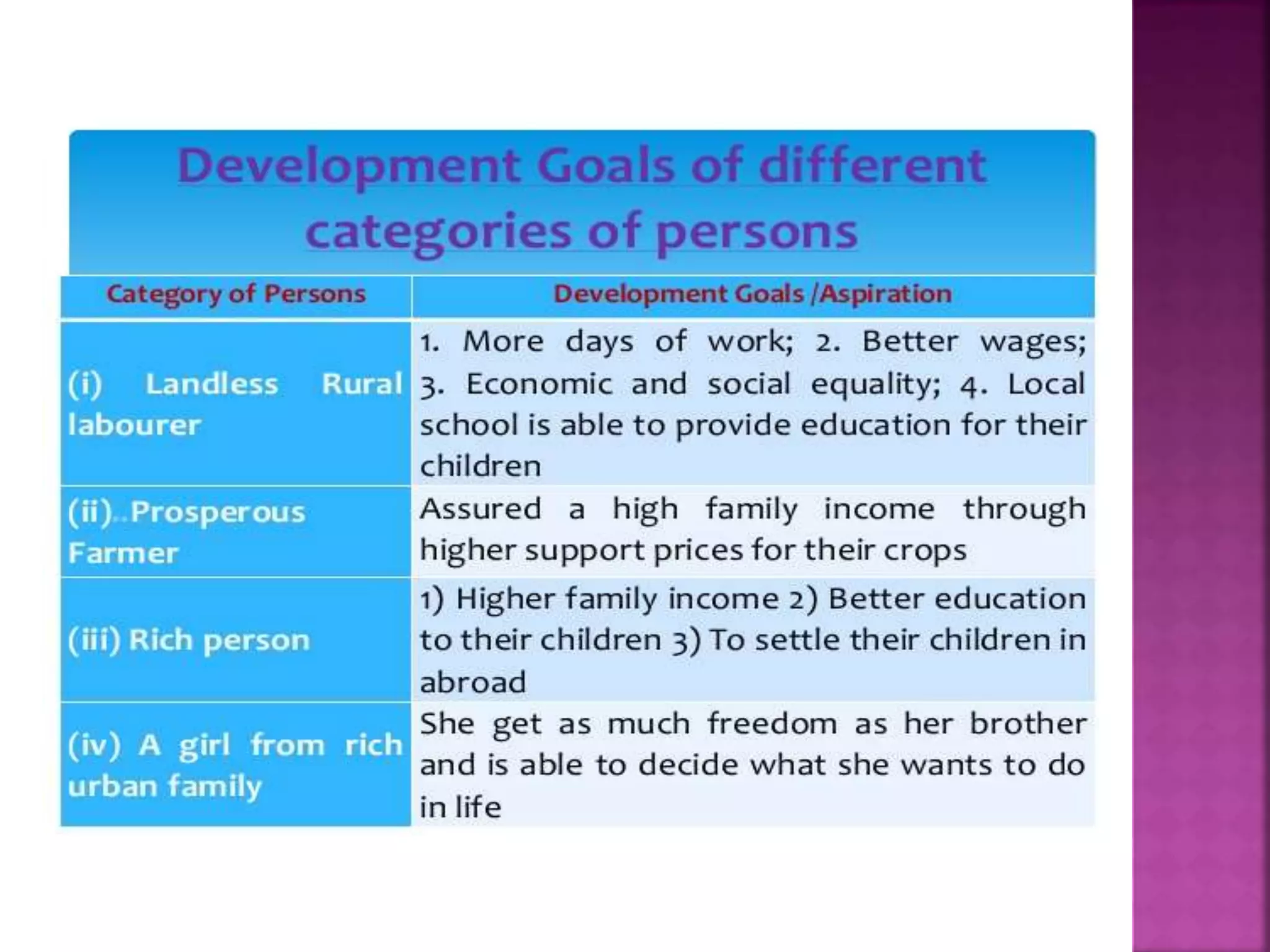
1. What people desire are regular work, better
wages and decent price for their crops or other
products that they produce. In other words, they
want more income.
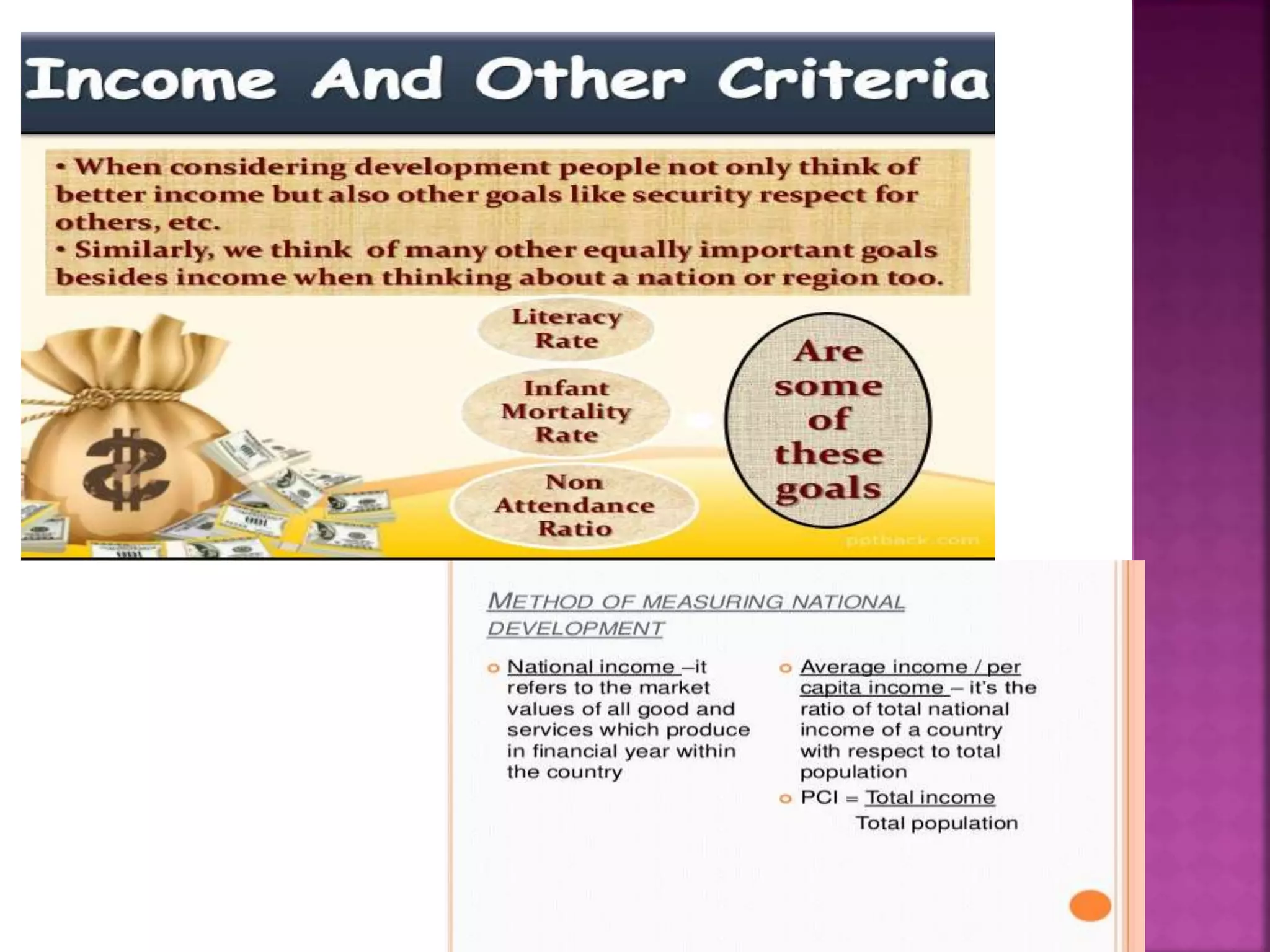
2. People also seek things like equal treatment,
freedom, security, and respect for others.
3. In some cases, these may be more important
than more income or more consumption because
material goods are not all that you need to live.
4. Money, or material things that one can buy with
it, is one of the factors on which our life depends
on non-material things mentioned above.
5. There are many things that are not easily measured
but they mean a lot to our lives.
These are often ignored.
6. However, it would be wrong to conclude that what
cannot be measured is not important.
7. Similarly, for development people look at a mix of
goals.
8. The developmental goals that people have are not
only about better income but also about better
income but also about other important things in life.
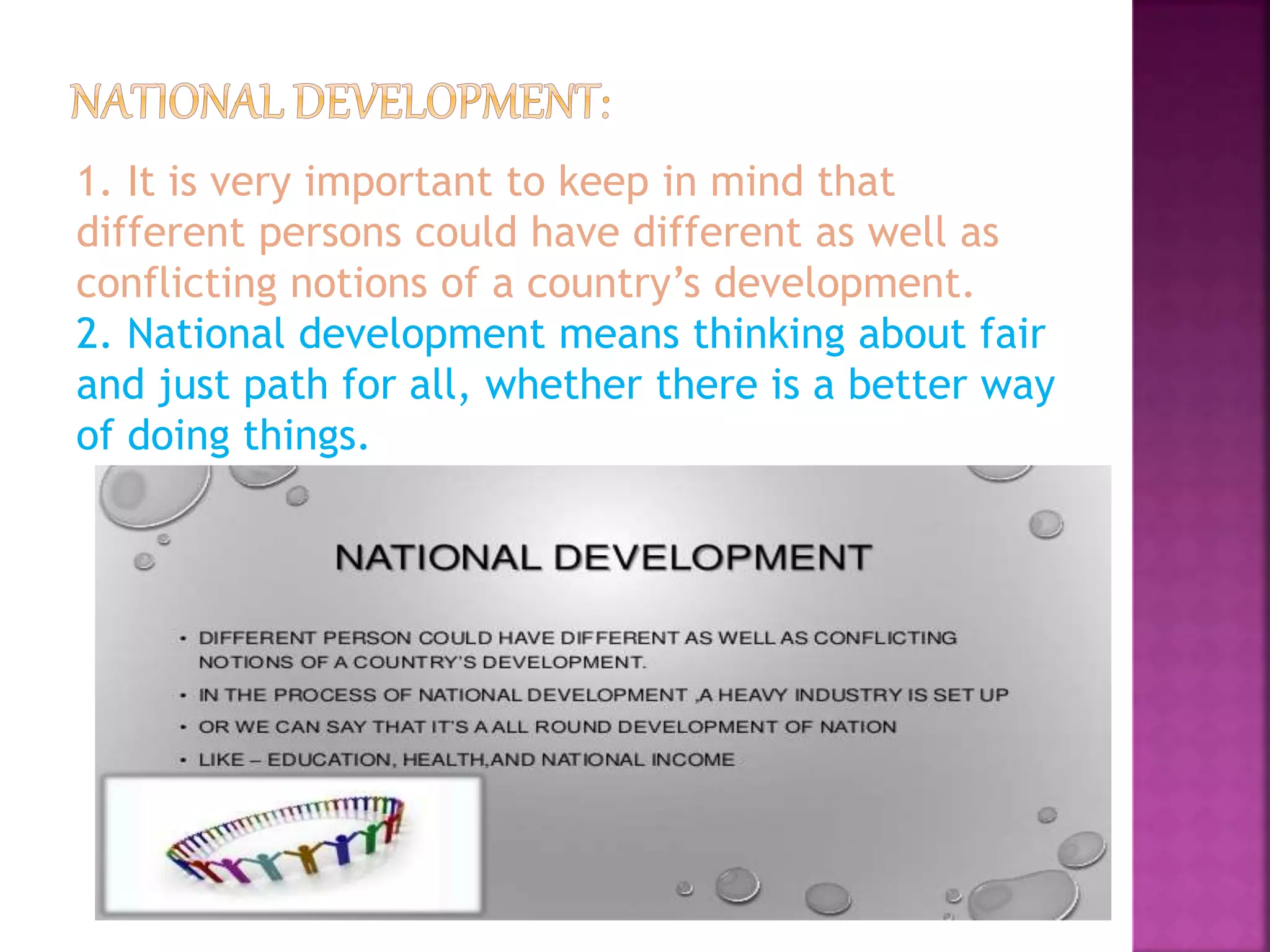
1. It is very important to keep in mind that
different persons could have different as well as
conflicting notions of a country’s development.
2. National development means thinking about fair
and just path for all, whether there is a better way
of doing things.
1. Usually, we take one or more important
characteristics of persons and compare them
based on these characteristics.
2. For comparing countries, their income is
considered to be one of the most important
attributes.
3. Countries with higher income are more
developed than others with less income.
4. The income of the country is the income of
all the residents of the country. This gives us
the total income of the country.
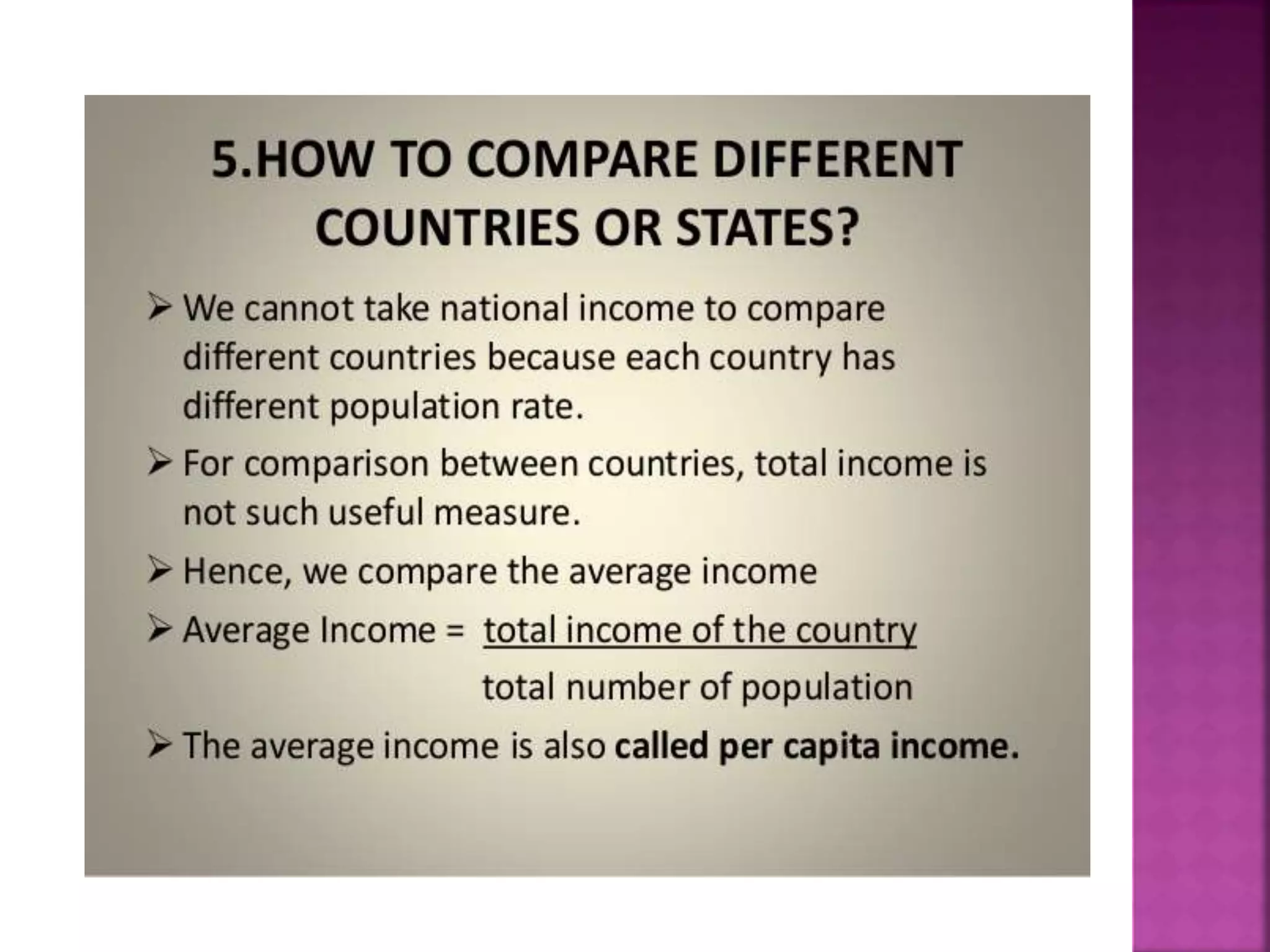
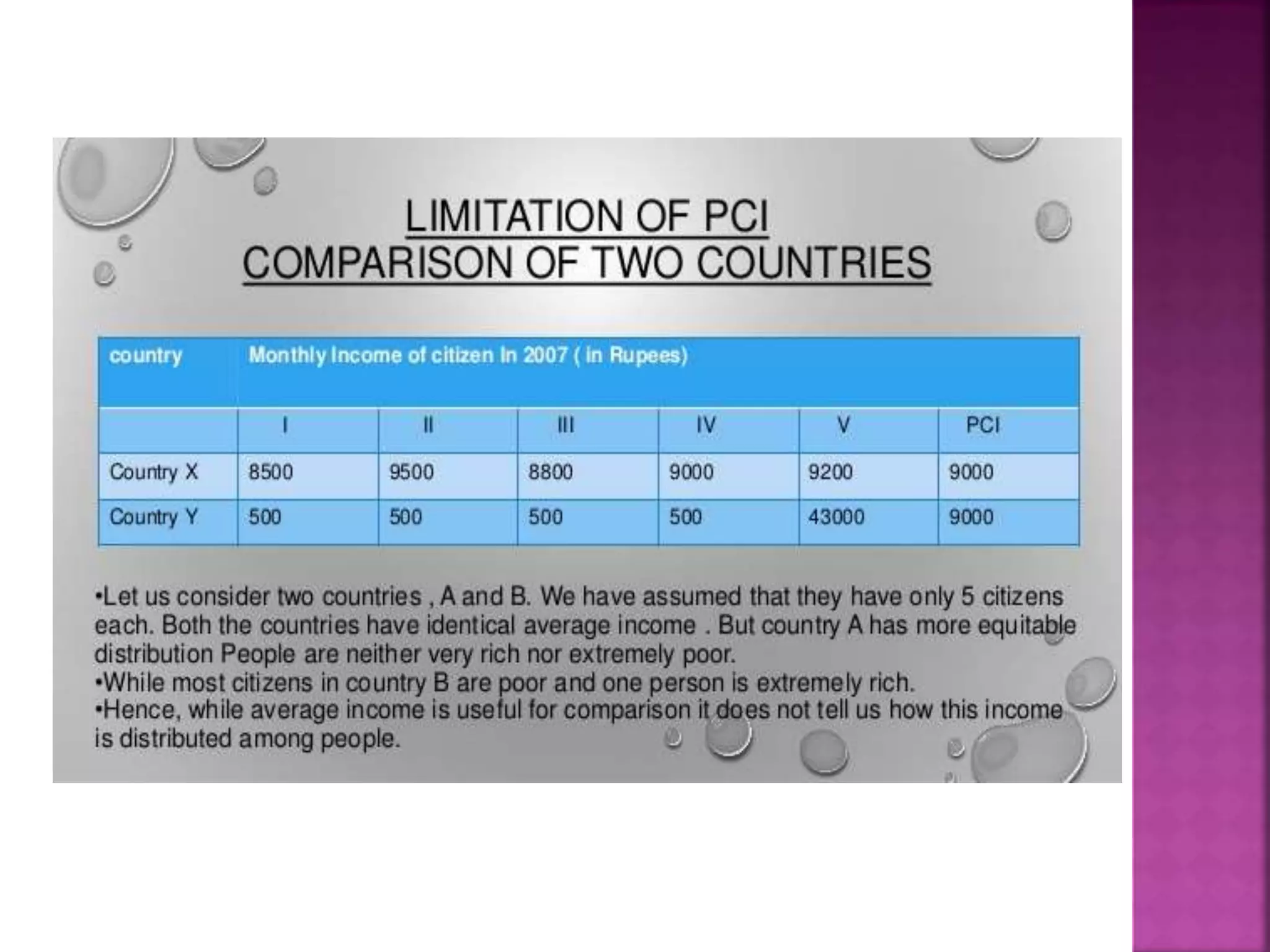
5. For comparison between countries, total
income is not such useful measure.
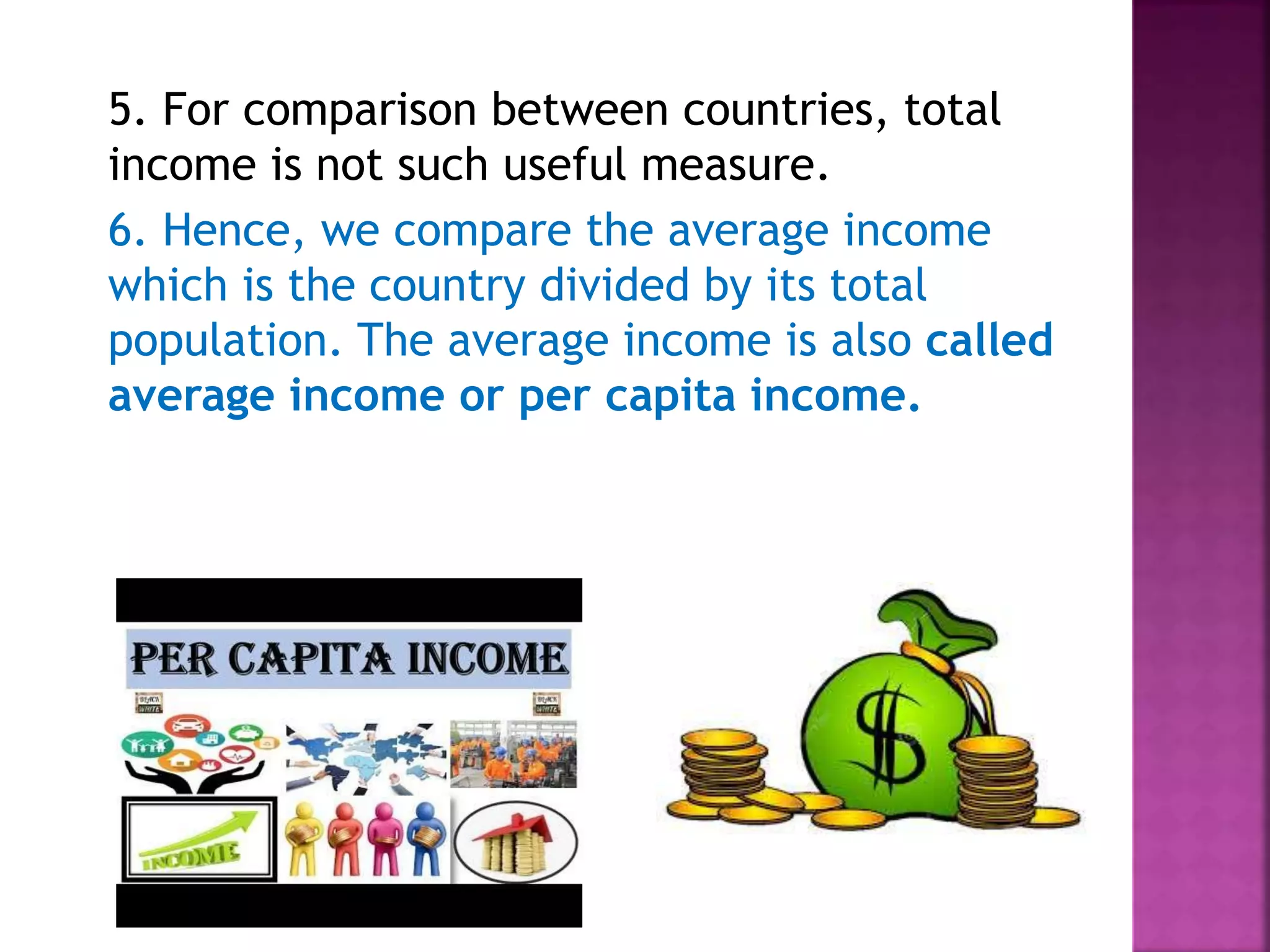
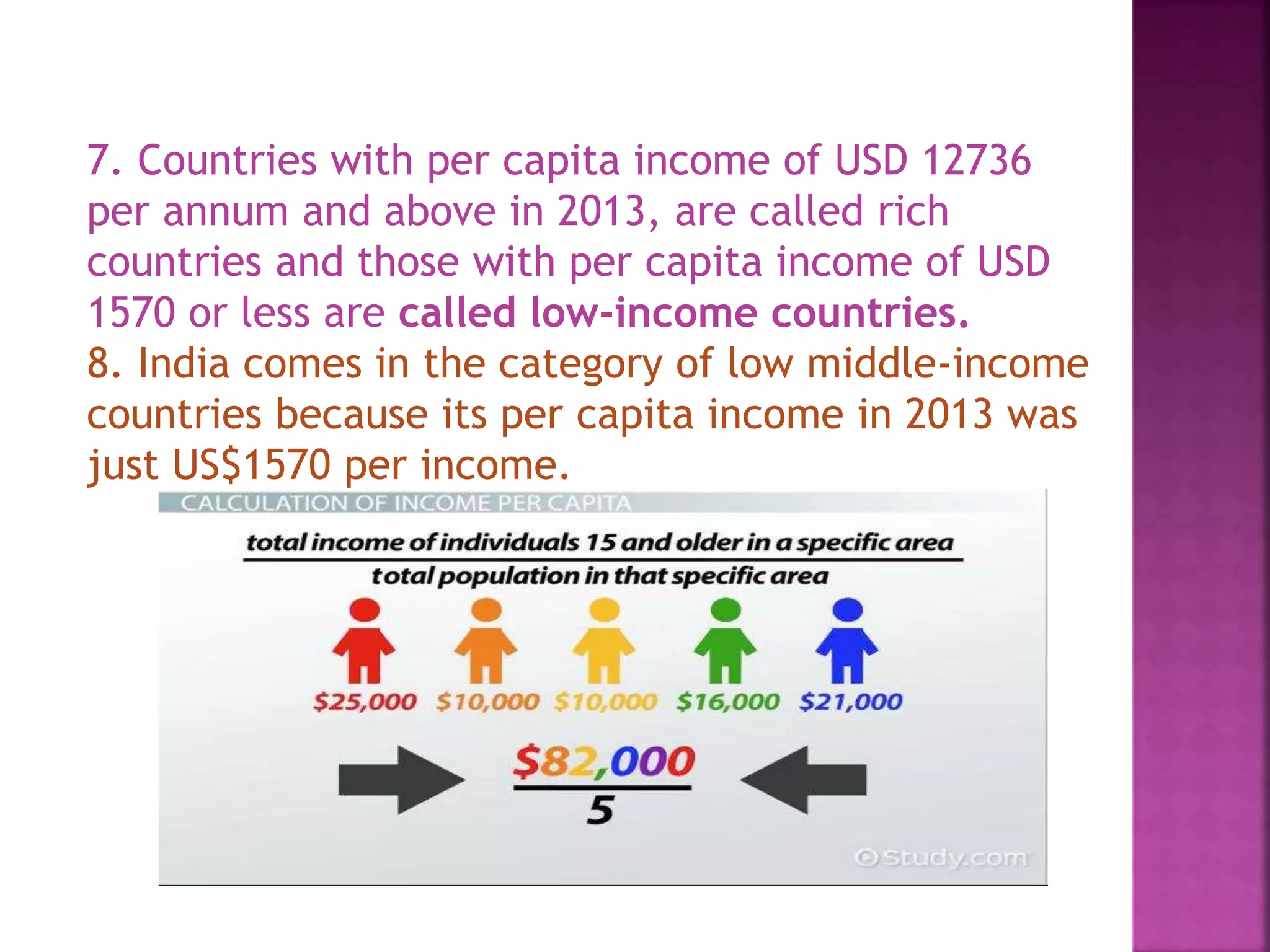
6. Hence, we compare the average income
which is the country divided by its total
population. The average income is also called
average income or per capita income.
7. Countries with per capita income of USD 12736
per annum and above in 2013, are called rich
countries and those with per capita income of USD
1570 or less are called low-income countries.
8. India comes in the category of low middle-income
countries because its per capita income in 2013 was
just US$1570 per income.
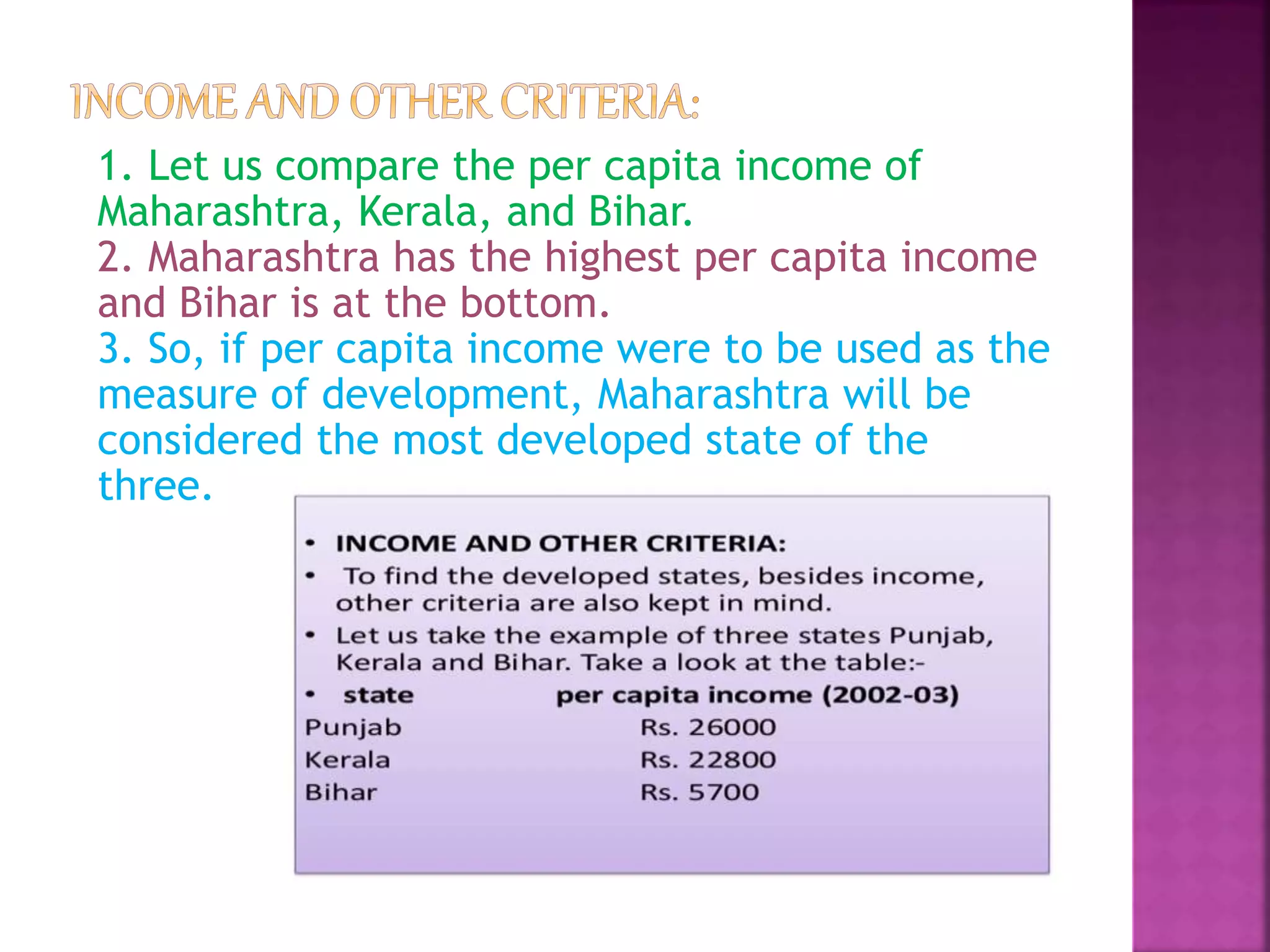
1. Let us compare the per capita income of
Maharashtra, Kerala, and Bihar.
2. Maharashtra has the highest per capita income
and Bihar is at the bottom.
3. So, if per capita income were to be used as the
measure of development, Maharashtra will be
considered the most developed state of the
three.
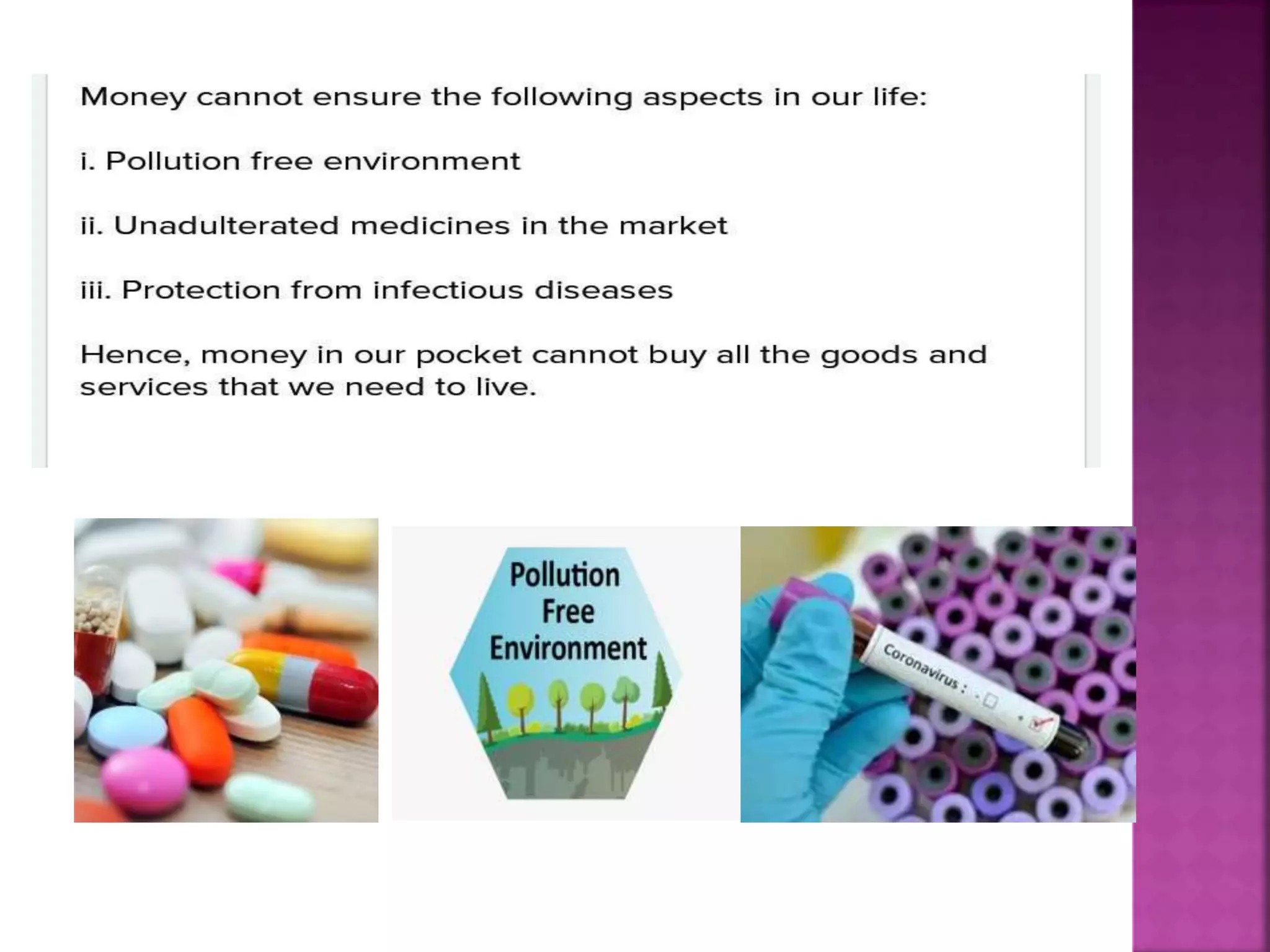
1. Money in your pocket cannot buy all the
goods and services that you may need to live
well.
2. Income by itself is not a completely
adequate indicator of material goods and
services that citizens are able to use.
3. Normally, your money cannot buy the
pollution-free environment or ensure that you
get unadulterated medicines unless you can
afford to shift to a community that already has
all these things.
4. Money may also not be able to protect you
from infectious disease unless the whole of
your community takes preventive steps.
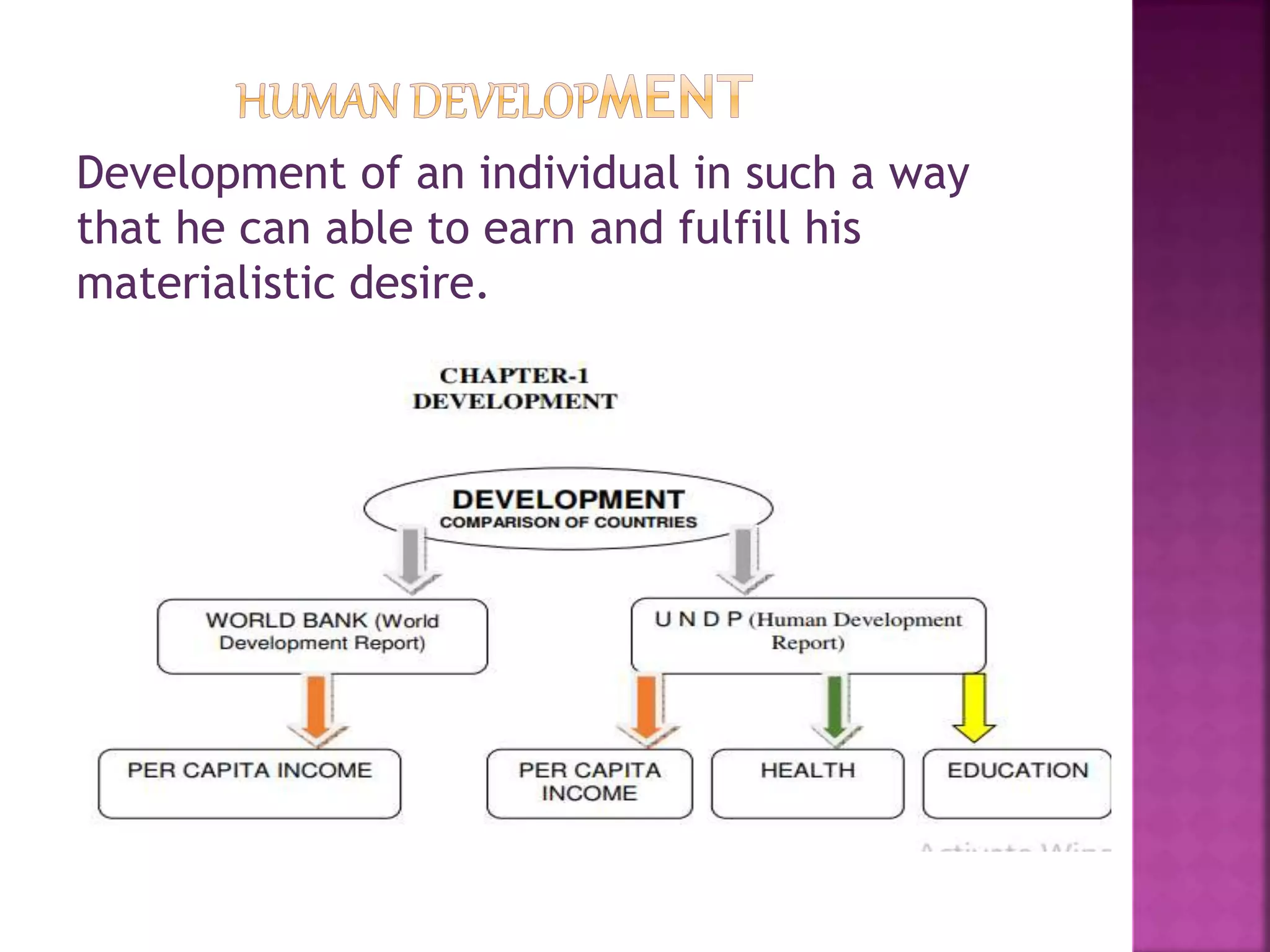
Development of an individual in such a way
that he can able to earn and fulfill his
materialistic desire.
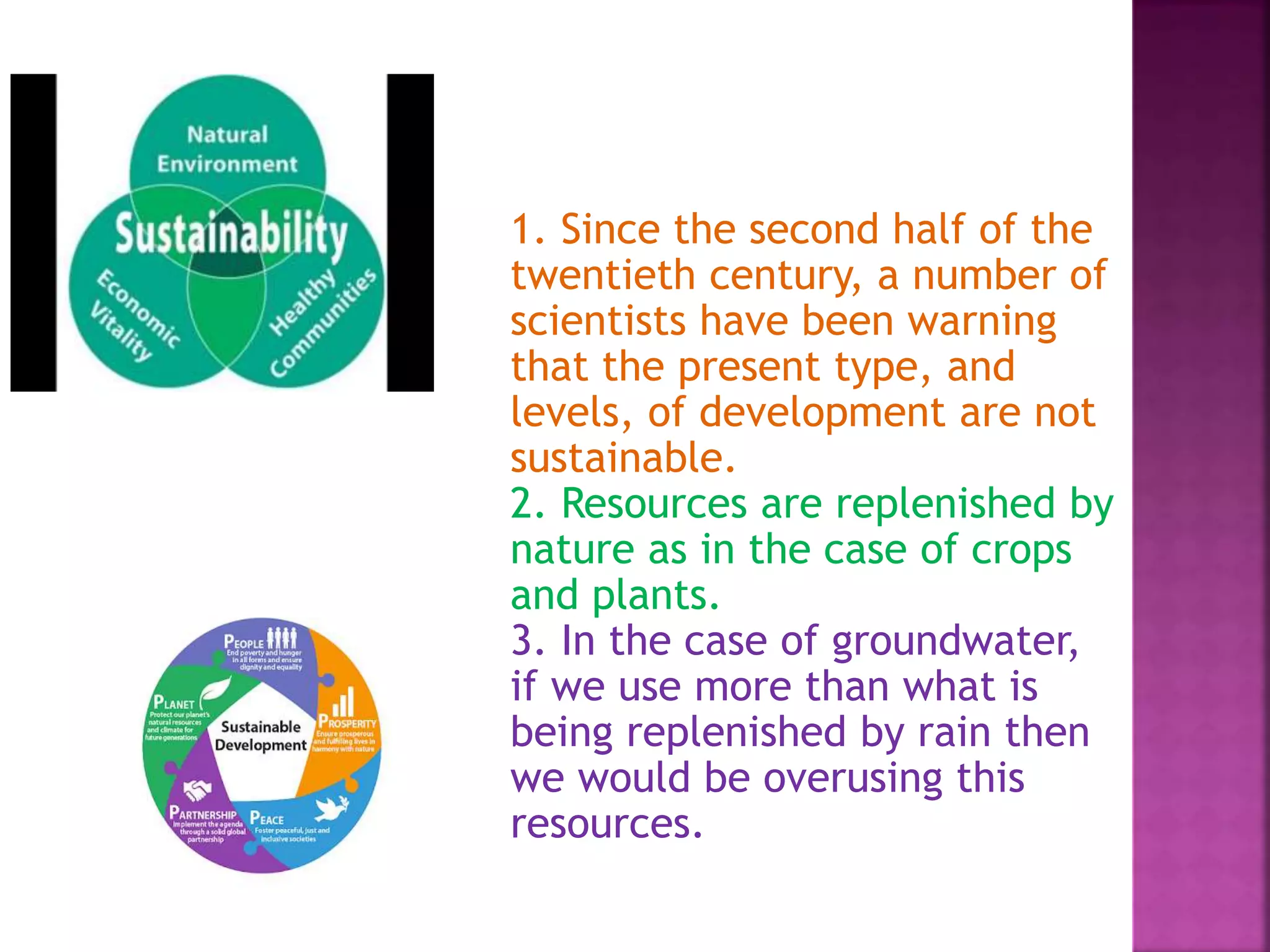
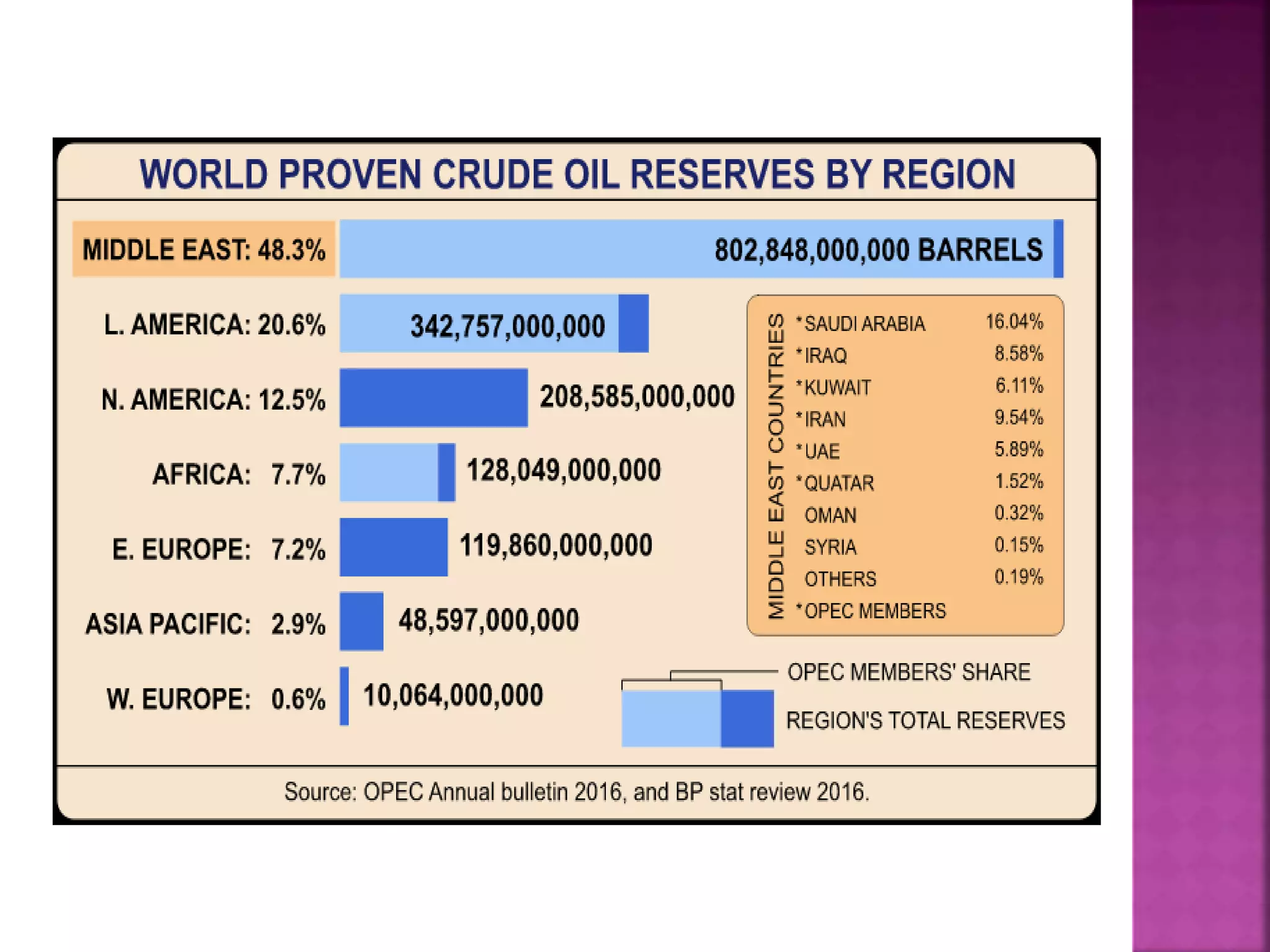
1. Since the second half of the
twentieth century, a number of
scientists have been warning
that the present type, and
levels, of development are not
sustainable.
2. Resources are replenished by
nature as in the case of crops
and plants.
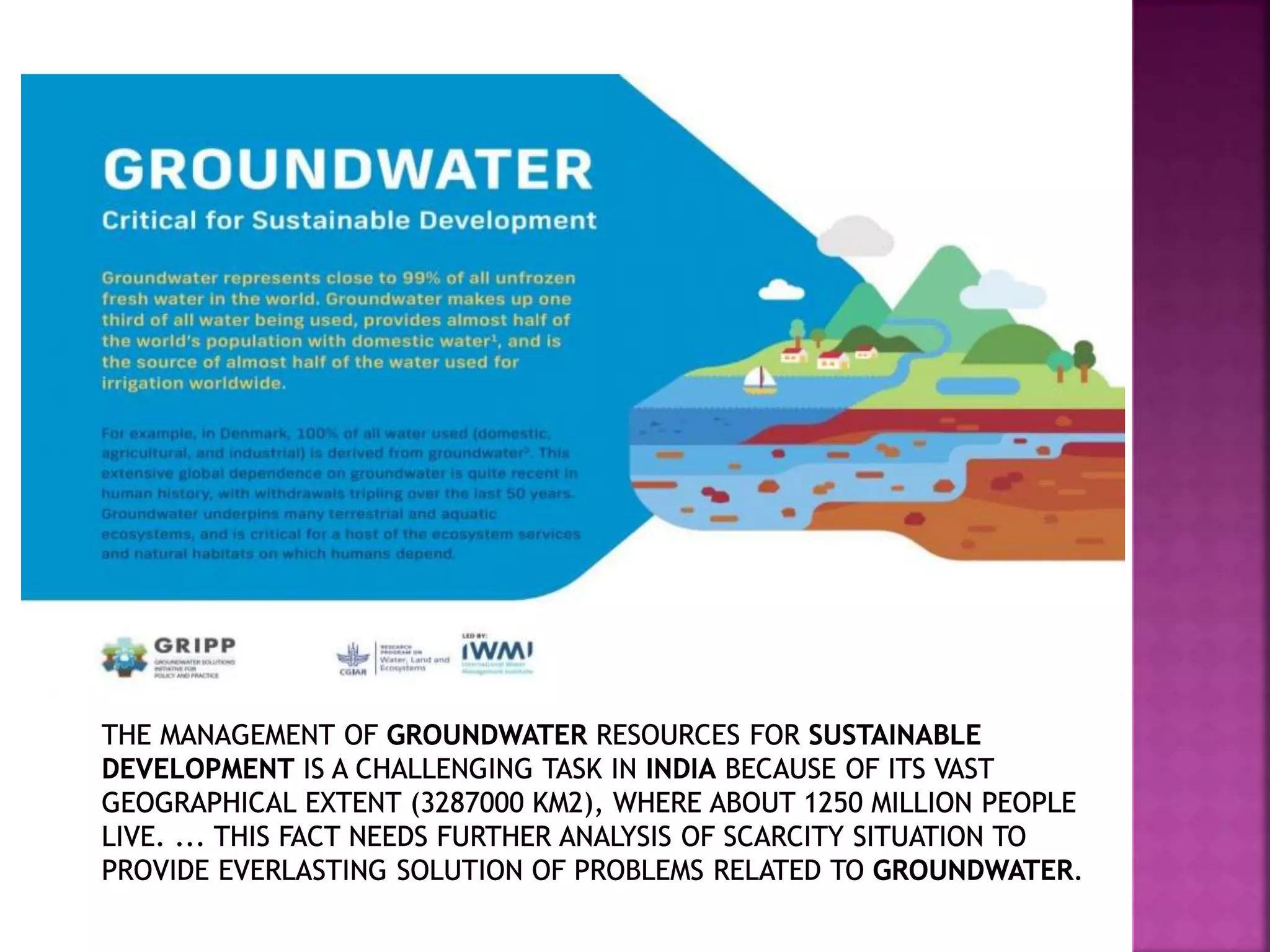
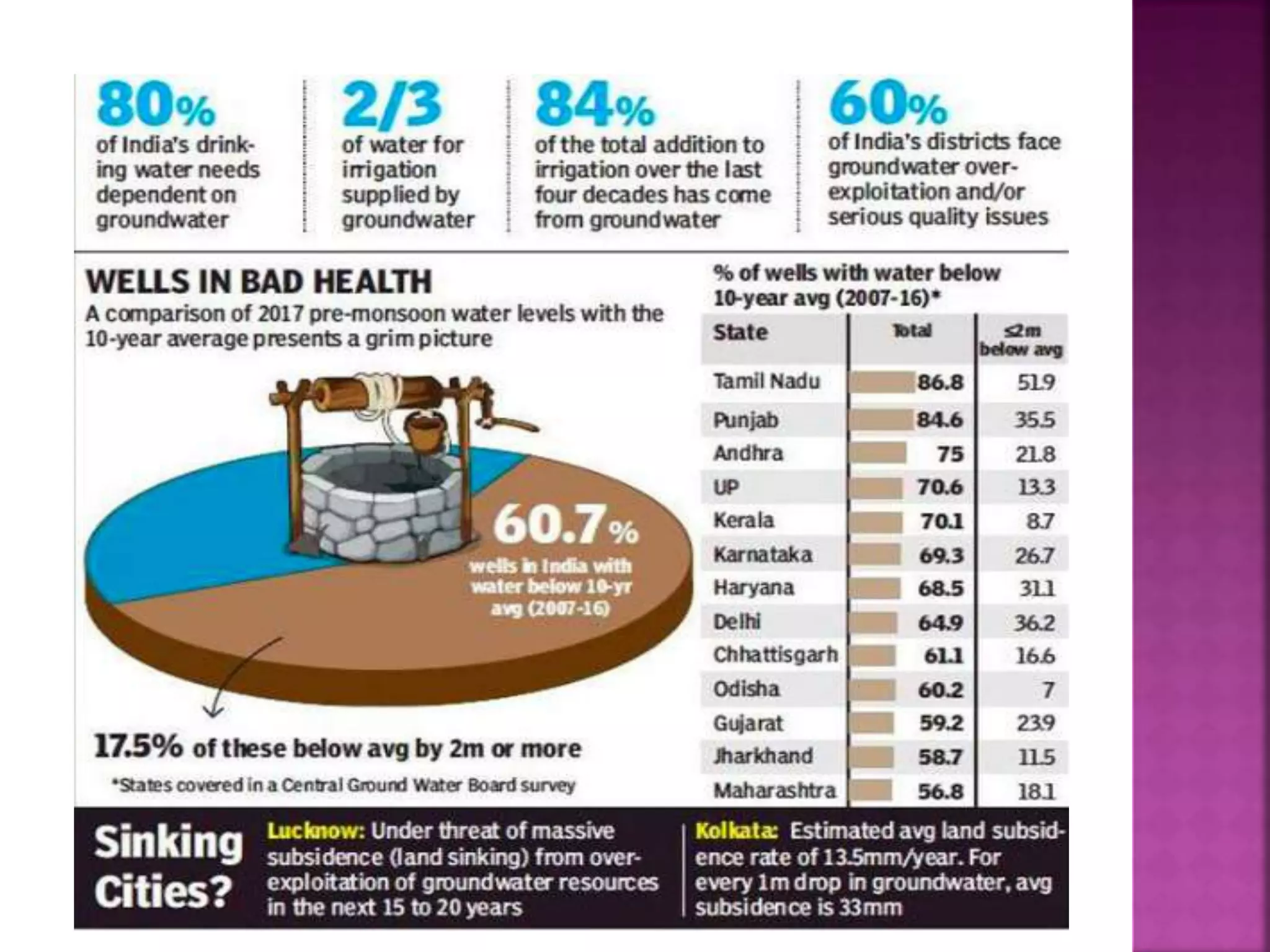
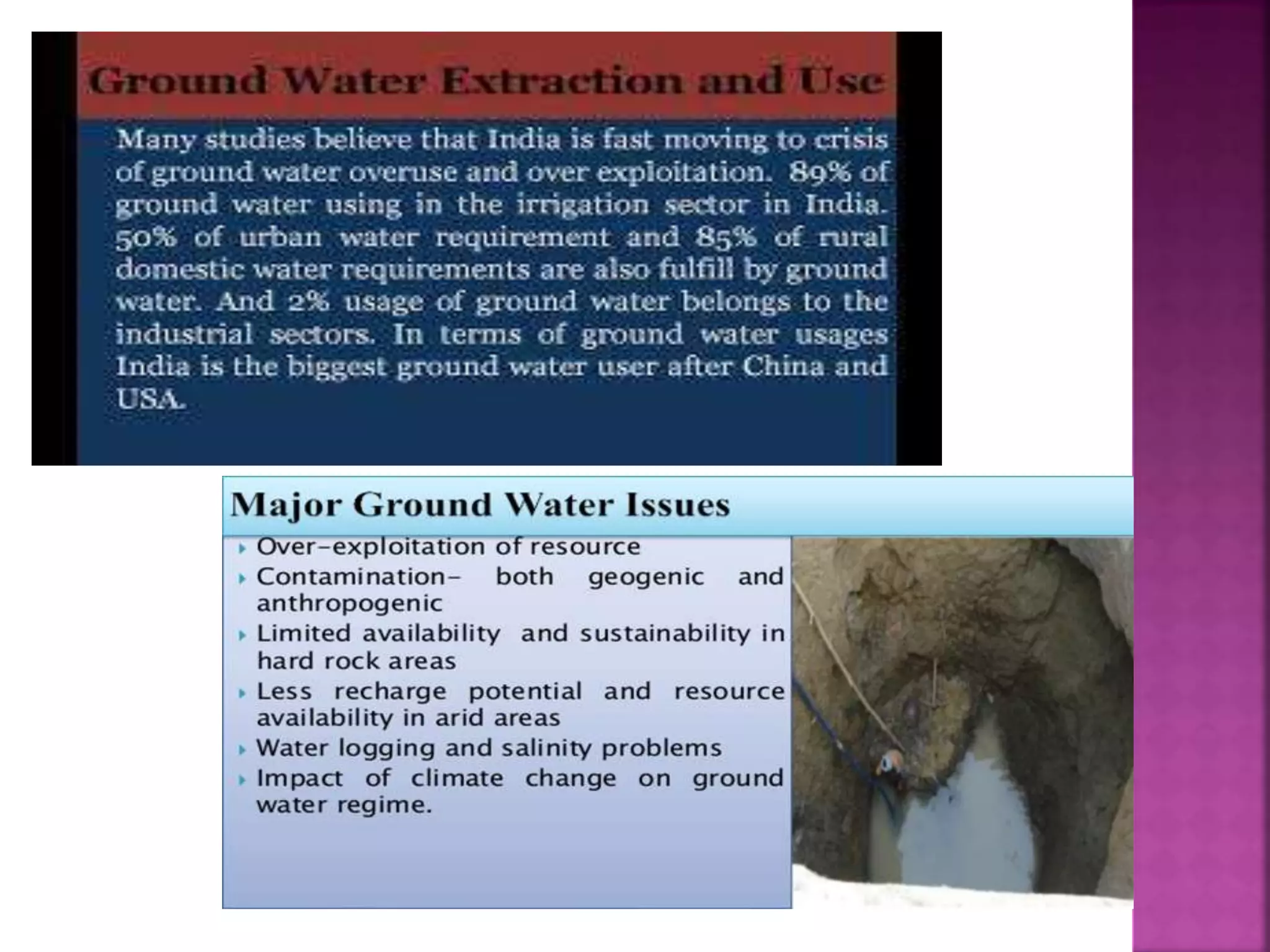
3. In the case of groundwater,
if we use more than what is
being replenished by rain then
we would be overusing this
resources.
By: GEOGRAPHY
DEPARTMENT
dpsn

Eco development ch 1

  • 1.
  • 2.
    1. The ideaof development or progress has always been with us. 2. We have aspirations or desires about what we would like to do and how we would like to live. 3. In this chapter, we shall make a beginning for understanding development. 4. It is only through a democratic political process that these hopes and possibilities can be achieved in real life.
  • 3.
    1. People seekthings that are most important for them, i.e., that which can fulfill their aspirations or desires. 2. In fact, at times, two persons or groups of persons may seek things which are conflicting. 3. So two things are quite clear: (i) Different persons can have different developmental goals. (ii) What may be developed for one may not be developed for the other. It may even be destructive for the other.
  • 6.
    1. What peopledesire are regular work, better wages and decent price for their crops or other products that they produce. In other words, they want more income. 2. People also seek things like equal treatment, freedom, security, and respect for others. 3. In some cases, these may be more important than more income or more consumption because material goods are not all that you need to live. 4. Money, or material things that one can buy with it, is one of the factors on which our life depends on non-material things mentioned above.
  • 7.
    5. There aremany things that are not easily measured but they mean a lot to our lives. These are often ignored. 6. However, it would be wrong to conclude that what cannot be measured is not important. 7. Similarly, for development people look at a mix of goals. 8. The developmental goals that people have are not only about better income but also about better income but also about other important things in life.
  • 8.
    1. It isvery important to keep in mind that different persons could have different as well as conflicting notions of a country’s development. 2. National development means thinking about fair and just path for all, whether there is a better way of doing things.
  • 9.
    1. Usually, wetake one or more important characteristics of persons and compare them based on these characteristics. 2. For comparing countries, their income is considered to be one of the most important attributes. 3. Countries with higher income are more developed than others with less income. 4. The income of the country is the income of all the residents of the country. This gives us the total income of the country.
  • 10.
    5. For comparisonbetween countries, total income is not such useful measure. 6. Hence, we compare the average income which is the country divided by its total population. The average income is also called average income or per capita income.
  • 13.
    7. Countries withper capita income of USD 12736 per annum and above in 2013, are called rich countries and those with per capita income of USD 1570 or less are called low-income countries. 8. India comes in the category of low middle-income countries because its per capita income in 2013 was just US$1570 per income.
  • 14.
    1. Let uscompare the per capita income of Maharashtra, Kerala, and Bihar. 2. Maharashtra has the highest per capita income and Bihar is at the bottom. 3. So, if per capita income were to be used as the measure of development, Maharashtra will be considered the most developed state of the three.
  • 16.
    1. Money inyour pocket cannot buy all the goods and services that you may need to live well. 2. Income by itself is not a completely adequate indicator of material goods and services that citizens are able to use. 3. Normally, your money cannot buy the pollution-free environment or ensure that you get unadulterated medicines unless you can afford to shift to a community that already has all these things. 4. Money may also not be able to protect you from infectious disease unless the whole of your community takes preventive steps.
  • 18.
    Development of anindividual in such a way that he can able to earn and fulfill his materialistic desire.
  • 24.
    1. Since thesecond half of the twentieth century, a number of scientists have been warning that the present type, and levels, of development are not sustainable. 2. Resources are replenished by nature as in the case of crops and plants. 3. In the case of groundwater, if we use more than what is being replenished by rain then we would be overusing this resources.
  • 30.