Group 2
Marcelina G.
Nikola L.
Karolina M.
Amelia P.
Izan Manuel H. L.
Jacqueline Ainara M. G.
Paula M. L.
Mishel Noemi Michael M.
Aysha Rodríguez G.
Karen Rodríguez P.
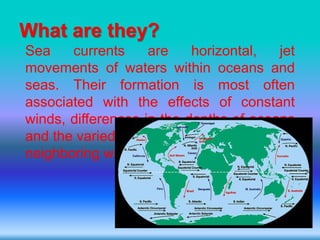
What are they?
Sea currents are horizontal, jet
movements of waters within oceans and
seas. Their formation is most often
associated with the effects of constant
winds, differences in the depths of oceans
and the varied location of the water level in
neighboring waters.
The Coriolis Force effects the
currents
The directions of the sea currents
induced by constant winds are often
significantly deflected due to the
Coriolis force, sometimes up to 45 in
relation to the wind direction.
Sea currents in the northern and
southern hemispheres
The distribution of lands and seas also has a
great impact on their course. In the northern
hemisphere, up to moderate latitudes, sea
currents form large circulation cells, the water
moves clockwise. In the southern hemisphere
and in the high latitudes of the northern
hemisphere, the movement of water takes
place in the opposite direction.
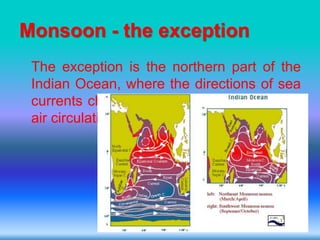
Monsoon - the exception
The exception is the northern part of the
Indian Ocean, where the directions of sea
currents change seasonally with monsoon
air circulation.
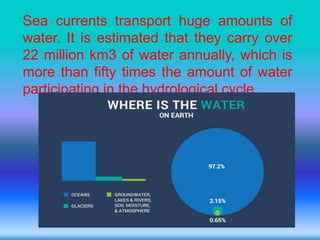
Sea currents transport huge amounts of
water. It is estimated that they carry over
22 million km3 of water annually, which is
more than fifty times the amount of water
participating in the hydrological cycle.
Types of sea currents
The distribution of sea currents is
based on a comparison of the
temperature of the waters they carry
with the temperature of the
surrounding waters.
Surface currents are formed under
the influence of constant winds
(mainly trade winds).
Deep sea currents are created as a
Surface currents
Deep sea currents
Classification of the sea currents
by the temperature of the carried
waters:
- warm currents - with a temperature
of current carrying water greater than
the temperature of the surrounding
water. Direction of flow: they flow from
lower to higher latitudes.
- cold currents - with the
temperature of current carried less
than the temperature of the
surrounding water. Direction of flow:
The course of currents
depends on:
- the Coriolis force - which causes the
currents to deviate from the correct
direction: to the right in the northern
hemisphere and to the left in the
southern hemisphere
- land and sea locations
- the outline of the continent's
coastline
- the surface of the ocean floor
Sea currents affect:
- sea water salinity
- oxygen content in sea water
- the color of sea water
- transparency
- climate - warm currents cause a rise
in temperature and evaporation and
cold currents vice versa (El Nino -
affects the weather around the world)
Currents affect the climate
Sea currents are one of the basic factors
affecting the Earth's climate. They transfer
huge amounts of heat to higher latitudes,
helping to reduce temperature differences
between the tropics and polar zones. Warm
sea currents have improved climate
conditions in Europe and other regions of the
world. Central Europe lies in the same
latitudes as the Labrador peninsula with a
much cooler climate. Heating by sea currents
facilitates access to ports in the cold zone,
e.g. Murmansk in Russia. Thanks to the
Murmansk in winter
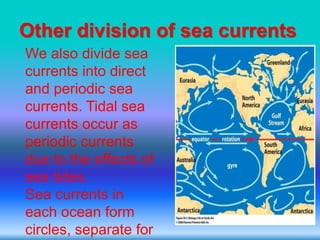
Other division of sea currents
We also divide sea
currents into direct
and periodic sea
currents. Tidal sea
currents occur as
periodic currents
due to the effects of
sea tides.
Sea currents in
each ocean form
circles, separate for
In the hot and warm zone on the west side of the
oceans, and on the east side of the continents,
currents flow from the equator towards the
poles, so they are thermal currents (e.g. Kuro-
Siwo, Mozambique, Brazilian). However, on the
eastern side of the oceans, i.e. on the western
coasts of the continents, the currents flow
towards the equator, and therefore are cold
currents (e.g. California, Canary, and Benguel).
In the moderate zone, the opposite is true. Cold
currents along the eastern coast of the
continents (e.g. Labradowski Current, Ojasiwo),
along the western warm currents (e.g. Alaska
Current or Gulf Current).

Sea currents by group 2

  • 1.
    Group 2 Marcelina G. NikolaL. Karolina M. Amelia P. Izan Manuel H. L. Jacqueline Ainara M. G. Paula M. L. Mishel Noemi Michael M. Aysha Rodríguez G. Karen Rodríguez P.
  • 2.
    What are they? Seacurrents are horizontal, jet movements of waters within oceans and seas. Their formation is most often associated with the effects of constant winds, differences in the depths of oceans and the varied location of the water level in neighboring waters.
  • 3.
    The Coriolis Forceeffects the currents The directions of the sea currents induced by constant winds are often significantly deflected due to the Coriolis force, sometimes up to 45 in relation to the wind direction.
  • 4.
    Sea currents inthe northern and southern hemispheres The distribution of lands and seas also has a great impact on their course. In the northern hemisphere, up to moderate latitudes, sea currents form large circulation cells, the water moves clockwise. In the southern hemisphere and in the high latitudes of the northern hemisphere, the movement of water takes place in the opposite direction.
  • 6.
    Monsoon - theexception The exception is the northern part of the Indian Ocean, where the directions of sea currents change seasonally with monsoon air circulation.
  • 7.
    Sea currents transporthuge amounts of water. It is estimated that they carry over 22 million km3 of water annually, which is more than fifty times the amount of water participating in the hydrological cycle.
  • 8.
    Types of seacurrents The distribution of sea currents is based on a comparison of the temperature of the waters they carry with the temperature of the surrounding waters. Surface currents are formed under the influence of constant winds (mainly trade winds). Deep sea currents are created as a
  • 9.
  • 10.
  • 11.
    Classification of thesea currents by the temperature of the carried waters: - warm currents - with a temperature of current carrying water greater than the temperature of the surrounding water. Direction of flow: they flow from lower to higher latitudes. - cold currents - with the temperature of current carried less than the temperature of the surrounding water. Direction of flow:
  • 12.
    The course ofcurrents depends on: - the Coriolis force - which causes the currents to deviate from the correct direction: to the right in the northern hemisphere and to the left in the southern hemisphere - land and sea locations - the outline of the continent's coastline - the surface of the ocean floor
  • 13.
    Sea currents affect: -sea water salinity - oxygen content in sea water - the color of sea water - transparency - climate - warm currents cause a rise in temperature and evaporation and cold currents vice versa (El Nino - affects the weather around the world)
  • 14.
    Currents affect theclimate Sea currents are one of the basic factors affecting the Earth's climate. They transfer huge amounts of heat to higher latitudes, helping to reduce temperature differences between the tropics and polar zones. Warm sea currents have improved climate conditions in Europe and other regions of the world. Central Europe lies in the same latitudes as the Labrador peninsula with a much cooler climate. Heating by sea currents facilitates access to ports in the cold zone, e.g. Murmansk in Russia. Thanks to the
  • 15.
  • 16.
    Other division ofsea currents We also divide sea currents into direct and periodic sea currents. Tidal sea currents occur as periodic currents due to the effects of sea tides. Sea currents in each ocean form circles, separate for
  • 17.
    In the hotand warm zone on the west side of the oceans, and on the east side of the continents, currents flow from the equator towards the poles, so they are thermal currents (e.g. Kuro- Siwo, Mozambique, Brazilian). However, on the eastern side of the oceans, i.e. on the western coasts of the continents, the currents flow towards the equator, and therefore are cold currents (e.g. California, Canary, and Benguel). In the moderate zone, the opposite is true. Cold currents along the eastern coast of the continents (e.g. Labradowski Current, Ojasiwo), along the western warm currents (e.g. Alaska Current or Gulf Current).