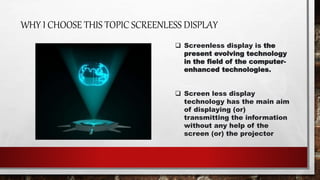
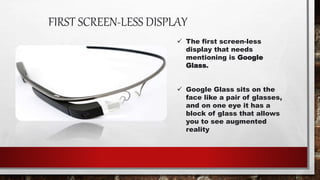
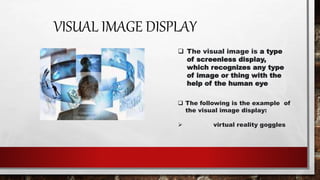
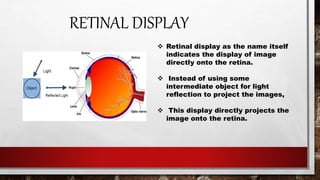
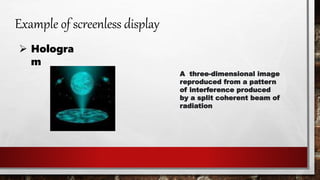
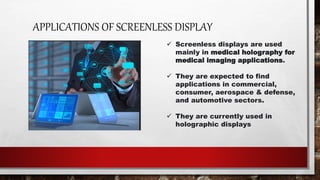
This document discusses screenless displays, which aim to display or transmit information without using a screen or projector. It describes several types of screenless displays including visual image displays, retinal displays, and synaptic interfaces. Visual image displays recognize images through the eye, retinal displays project images directly onto the retina, and synaptic interfaces send information directly to the brain. Examples of screenless displays mentioned are Google Glass and holograms. Screenless displays are used in medical imaging and have potential applications in various sectors. Advantages include accurate colors, high resolution, and low power; disadvantages are the cost and limited availability currently.