SCREENLESS 
DISPLAY 
our imaginations dressed into reality 
Presented By, 
Vikas Kumar 
Under the guidance of 
Mr. Gajanand Sharma
WHAT IS SCREENLESS DISPLAY? 
 Screenless display is the present evolving technology in the field of 
the computer-enhanced technologies. 
 It is going to be the one of the greatest technological development in 
the coming future years. 
 Several patents are still working on this new emerging technology 
which can change the whole spectacular view of the screenless 
displays. 
 Screen less display technology has the main aim of displaying (or) 
transmitting the information without any help of the screen (or) the 
projector. 
 Screen less displays have become a new rage of development for the 
next GEN-X. 
 Screenless videos describe systems for transmitting visual information 
from a video source without the use of the screen.
ORIGIN OF SCREENLESS DISPLAY 
• Reto Meier predicts that 10 years from now we will be able to get 
transparent LCD patches that will adhere to our eyeglasses and 20 years 
from now we’ll have contact lenses that project images directly onto our 
retinas and that we will be able to interface with computers through mind 
control. 
• The most profound effect will come from the development of the synaptic 
interface technology. This technology will allow people who are visually 
impaired to see just as the hearing impaired are able to hear through 
cochlear implants.
FIRST SCREEN-LESS DISPLAY 
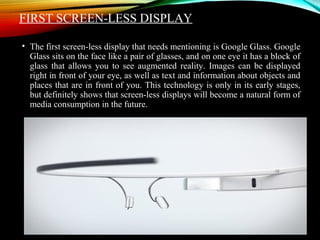
• The first screen-less display that needs mentioning is Google Glass. Google 
Glass sits on the face like a pair of glasses, and on one eye it has a block of 
glass that allows you to see augmented reality. Images can be displayed 
right in front of your eye, as well as text and information about objects and 
places that are in front of you. This technology is only in its early stages, 
but definitely shows that screen-less displays will become a natural form of 
media consumption in the future.
THE SIXTHSENSE TECHNOLOGY 
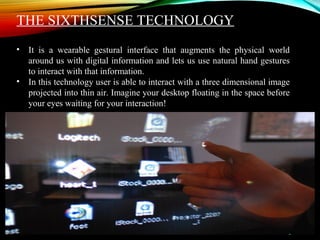
• It is a wearable gestural interface that augments the physical world 
around us with digital information and lets us use natural hand gestures 
to interact with that information. 
• In this technology user is able to interact with a three dimensional image 
projected into thin air. Imagine your desktop floating in the space before 
your eyes waiting for your interaction!
TECHNOLOGY USED IN SCREENLESS DISPLAY 
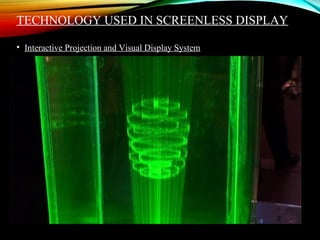
• Interactive Projection and Visual Display System 
The biggest impact in screenless technology has been seen in the use of optical 
technology. Optical technology enables personal screenless displays by 
projecting images and data from computers, DVD players, or VCRs into the 
viewer's eye, displaying them in the visual field of the viewer. 
For example, Microvision Inc. has created helmet mounted displays in which an 
Army tank commander can view the surrounding area from topside while still 
viewing a translucent map that floats a couple of feet away.
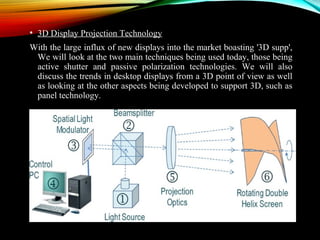
• 3D Display Projection Technology 
With the large influx of new displays into the market boasting '3D supp', 
We will look at the two main techniques being used today, those being 
active shutter and passive polarization technologies. We will also 
discuss the trends in desktop displays from a 3D point of view as well 
as looking at the other aspects being developed to support 3D, such as 
panel technology.
TYPES OF DISPLAYS 
Screenless computing systems can be divided into three groups: 
• Visual Image 
• Retinal Projection 
• Synaptic Interface/Brain Computer Interface
VISUAL IMAGE 
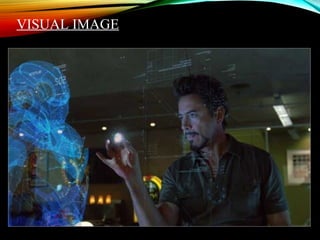
• Any screenless image that the eye can perceive. A hologram is the most common 
example of visual image screenless display 
• Holography— is a technique that allows the light scattered from an object to be 
recorded and later reconstructed so that it appears as if the object is in the same 
position relative to the recording medium as it was when recorded. The image 
changes as the position and orientation of the viewing system changes in exactly the 
same way as if the object were still present, thus making the recorded image 
(hologram) appears three dimensional.
Projection Window 
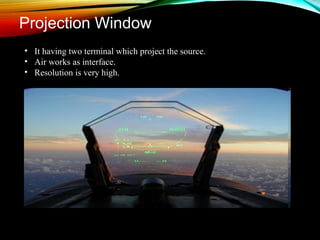
• It having two terminal which project the source. 
• Air works as interface. 
• Resolution is very high.
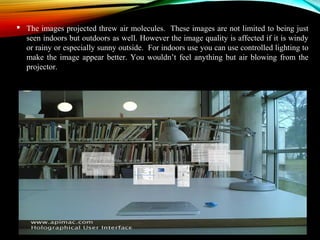
 The images projected threw air molecules. These images are not limited to being just 
seen indoors but outdoors as well. However the image quality is affected if it is windy 
or rainy or especially sunny outside. For indoors use you can use controlled lighting to 
make the image appear better. You wouldn’t feel anything but air blowing from the 
projector.
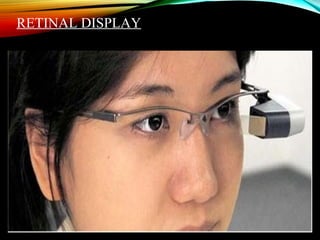
RETINAL DISPLAY 
 Another screenless display type is a retinal display. With a retinal display light is not 
reflected off an immediate object, like in a visual image, but it is projected directly onto 
the retina. This can be handy in that one is not limited by physical screen size Because 
there is no immediate object to be viewed, retinal display can be used to keep things 
such as financial information safe from snooping eyes. The image can take up the 
entire field of vision. We’ve seen the potential of retinal displays in movies like 
Terminator.
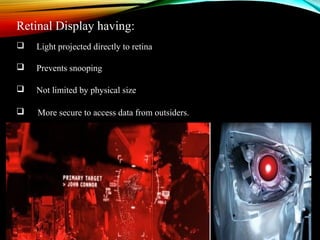
Retinal Display having: 
 Light projected directly to retina 
 Prevents snooping 
 Not limited by physical size 
 More secure to access data from outsiders.
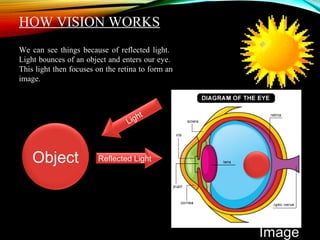
HOW VISION WORKS 
We can see things because of reflected light. 
Light bounces of an object and enters our eye. 
This light then focuses on the retina to form an 
image. 
Light 
Object Reflected Light
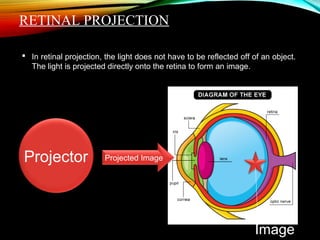
RETINAL PROJECTION 
 In retinal projection, the light does not have to be reflected off of an object. 
The light is projected directly onto the retina to form an image. 
Projector Projected Image 
Image
SYNAPTIC INTERFACE 
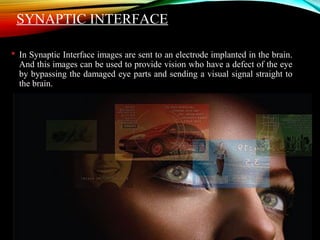
 In Synaptic Interface images are sent to an electrode implanted in the brain. 
And this images can be used to provide vision who have a defect of the eye 
by bypassing the damaged eye parts and sending a visual signal straight to 
the brain. 
Synaptic Interface having:- 
• Brain Computer Interface or BCI 
• cochlear implant for the eyes 
• No light projection 
• Image sent straight to brain
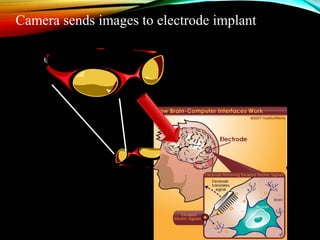
Camera sends images to electrode implant
Advantages and disadvantages of the technology 
• Low power requirements 
• Higher resolution images 
• Greater portability 
• Wider angle of view 
• More accurate color 
• Greater brightness and better contrast 
• Ability to present 3D images 
• Ability to present far-point images 
• Lower costs
AFFECTS OF SCREENLESS DISPLAY 
• Screenless display technology is likely to affect:- 
• Lighting and projection technologies 
• Software development/design 
• Lifestyles of the visually impaired 
• Career opportunities for the visually impaired
THANK YOU

Screenless Display PPT

  • 1.
    SCREENLESS DISPLAY ourimaginations dressed into reality Presented By, Vikas Kumar Under the guidance of Mr. Gajanand Sharma
  • 2.
    WHAT IS SCREENLESSDISPLAY?  Screenless display is the present evolving technology in the field of the computer-enhanced technologies.  It is going to be the one of the greatest technological development in the coming future years.  Several patents are still working on this new emerging technology which can change the whole spectacular view of the screenless displays.  Screen less display technology has the main aim of displaying (or) transmitting the information without any help of the screen (or) the projector.  Screen less displays have become a new rage of development for the next GEN-X.  Screenless videos describe systems for transmitting visual information from a video source without the use of the screen.
  • 3.
    ORIGIN OF SCREENLESSDISPLAY • Reto Meier predicts that 10 years from now we will be able to get transparent LCD patches that will adhere to our eyeglasses and 20 years from now we’ll have contact lenses that project images directly onto our retinas and that we will be able to interface with computers through mind control. • The most profound effect will come from the development of the synaptic interface technology. This technology will allow people who are visually impaired to see just as the hearing impaired are able to hear through cochlear implants.
  • 4.
    FIRST SCREEN-LESS DISPLAY • The first screen-less display that needs mentioning is Google Glass. Google Glass sits on the face like a pair of glasses, and on one eye it has a block of glass that allows you to see augmented reality. Images can be displayed right in front of your eye, as well as text and information about objects and places that are in front of you. This technology is only in its early stages, but definitely shows that screen-less displays will become a natural form of media consumption in the future.
  • 5.
    THE SIXTHSENSE TECHNOLOGY • It is a wearable gestural interface that augments the physical world around us with digital information and lets us use natural hand gestures to interact with that information. • In this technology user is able to interact with a three dimensional image projected into thin air. Imagine your desktop floating in the space before your eyes waiting for your interaction!
  • 6.
    TECHNOLOGY USED INSCREENLESS DISPLAY • Interactive Projection and Visual Display System The biggest impact in screenless technology has been seen in the use of optical technology. Optical technology enables personal screenless displays by projecting images and data from computers, DVD players, or VCRs into the viewer's eye, displaying them in the visual field of the viewer. For example, Microvision Inc. has created helmet mounted displays in which an Army tank commander can view the surrounding area from topside while still viewing a translucent map that floats a couple of feet away.
  • 7.
    • 3D DisplayProjection Technology With the large influx of new displays into the market boasting '3D supp', We will look at the two main techniques being used today, those being active shutter and passive polarization technologies. We will also discuss the trends in desktop displays from a 3D point of view as well as looking at the other aspects being developed to support 3D, such as panel technology.
  • 8.
    TYPES OF DISPLAYS Screenless computing systems can be divided into three groups: • Visual Image • Retinal Projection • Synaptic Interface/Brain Computer Interface
  • 9.
    VISUAL IMAGE •Any screenless image that the eye can perceive. A hologram is the most common example of visual image screenless display • Holography— is a technique that allows the light scattered from an object to be recorded and later reconstructed so that it appears as if the object is in the same position relative to the recording medium as it was when recorded. The image changes as the position and orientation of the viewing system changes in exactly the same way as if the object were still present, thus making the recorded image (hologram) appears three dimensional.
  • 10.
    Projection Window •It having two terminal which project the source. • Air works as interface. • Resolution is very high.
  • 11.
     The imagesprojected threw air molecules. These images are not limited to being just seen indoors but outdoors as well. However the image quality is affected if it is windy or rainy or especially sunny outside. For indoors use you can use controlled lighting to make the image appear better. You wouldn’t feel anything but air blowing from the projector.
  • 12.
    RETINAL DISPLAY Another screenless display type is a retinal display. With a retinal display light is not reflected off an immediate object, like in a visual image, but it is projected directly onto the retina. This can be handy in that one is not limited by physical screen size Because there is no immediate object to be viewed, retinal display can be used to keep things such as financial information safe from snooping eyes. The image can take up the entire field of vision. We’ve seen the potential of retinal displays in movies like Terminator.
  • 13.
    Retinal Display having:  Light projected directly to retina  Prevents snooping  Not limited by physical size  More secure to access data from outsiders.
  • 14.
    HOW VISION WORKS We can see things because of reflected light. Light bounces of an object and enters our eye. This light then focuses on the retina to form an image. Light Object Reflected Light
  • 15.
    RETINAL PROJECTION In retinal projection, the light does not have to be reflected off of an object. The light is projected directly onto the retina to form an image. Projector Projected Image Image
  • 16.
    SYNAPTIC INTERFACE In Synaptic Interface images are sent to an electrode implanted in the brain. And this images can be used to provide vision who have a defect of the eye by bypassing the damaged eye parts and sending a visual signal straight to the brain. Synaptic Interface having:- • Brain Computer Interface or BCI • cochlear implant for the eyes • No light projection • Image sent straight to brain
  • 17.
    Camera sends imagesto electrode implant
  • 18.
    Advantages and disadvantagesof the technology • Low power requirements • Higher resolution images • Greater portability • Wider angle of view • More accurate color • Greater brightness and better contrast • Ability to present 3D images • Ability to present far-point images • Lower costs
  • 19.
    AFFECTS OF SCREENLESSDISPLAY • Screenless display technology is likely to affect:- • Lighting and projection technologies • Software development/design • Lifestyles of the visually impaired • Career opportunities for the visually impaired
  • 20.

Editor's Notes

  • #6 Screenless display is the emerging display technology. In these examples you see that the user is able to interact with a three dimensional image projected into thin air. <Click for last image> Imagine your desktop floating in the space before your eyes waiting for your interaction! There are three main types of screenless displays that we will share with you today.
  • #10 A screenless display that is visible to anyone who is looking can be projected as a hologram or onto a clear surface like the windshield of a car or aircraft. Visual Image Any screenless image that the eye can perceive. A hologram is the most common example of visual image screenless display. Arguably, virtual reality goggles (which consist of two small screens but are nonetheless sufficiently different from traditional computer screens to be considered screenless­) and Heads-up-display in jet fighters (which display images on the clear cockpit window) also are included in Visual Image category. In all of these cases, light is reflected off some intermediate object (hologram, LCD panel, or cockpit window) before it reaches the retina. In the case of LCD panels the light is refracted from the back of the panel, but is nonetheless a reflected source. Holography—is a technique that allows the light scattered from an object to be recorded and later reconstructed so that it appears as if the object is in the same position relative to the recording medium as it was when recorded. The image changes as the position and orientation of the viewing system changes in exactly the same way as if the object were still present, thus making the recorded image (hologram) appears three dimensional May bring more jobs to the movie business
  • #12 This photos show how the images you are seeing do not rely on surfaces of any kind. The are images projected threw air molecules. These images are not limited to being just seen indoors but outdoors as well. However the image quality is affected if it is windy or rainy or especially sunny outside. For indoors use you can use controlled lighting to make the image appear better. You wouldn’t feel anything but air blowing from the projector
  • #13 Another screenless display type is a retinal display. With a retinal display light is not reflected off an immediate object, like in a visual image, but it is projected directly onto the retina. This can be handy in that one is not limited by physical screen size Because there is no immediate object to be viewed, retinal display can be used to keep things such as financial information safe from snooping eyes. The image can take up the entire field of vision. We’ve seen the potential of retinal displays in movies like Terminator. For a flesh-and-blood person the device can be as simple as eyeglasses.
  • #15 We can see things because of reflected light. Light bounces off of an object and enters our eye. This light then focuses on the retina to form an image.
  • #16 In retinal projection, the light does not have to be reflected off of an object. The light is projected directly onto the retina to form an image.
  • #17 Achieved only in horseshoe crabs. Similar to a cochlear implant, which is a device use to give fair hearing to those without, that receives audio signals and bypasses the damaged portions of the ear and send the sound straight to the brain. Could be used to give vision to the impaired in the near future. The Geordie LaForge character (played by LaVar Burton) in Star Trek: The Next Generation wore such a device.
  • #18 A camera that might be incorporated into eyeglasses picks up images. These images are sent to an electrode implanted in the brain. The brain can then interpret these signals, thus creating artificial sight. This can be used to provide vision who have a defect of the eye by bypassing the damaged eye parts and sending a visual signal straight to the brain.
  • #20 Futurist Reto Meier predicts that 10 years from now we will be able to get transparent LCD patches that will adhere to our eyeglasses and 20 years from now we’ll have contact lenses that project images directly onto our retinas and that we will be able to interface with computers through mind control. We don’t know about that but the screenless display technologies are sure to affect related technologies related to lighting and projection. Software will have to be designed to work with the new display technology and output will have to be geared to brighter, more contrasted colors to aid visibility. The most profound effect will come from the development of the synaptic interface technology. This technology will allow people who are visually impaired to see just as the hearing impaired are able to hear through cochlear implants. Imagine a visually impaired person gaining the freedom to drive again! This will also remove occupational limitations of the visually impaired.