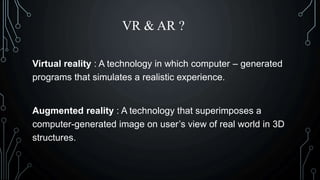
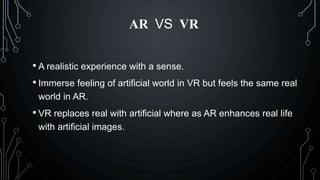
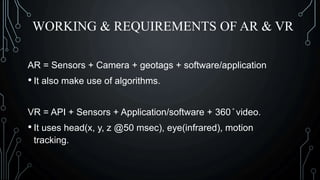
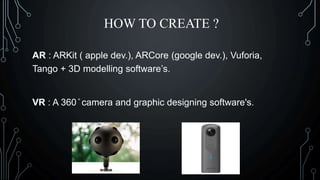
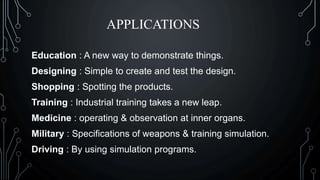
VR creates realistic simulated experiences using computer-generated programs, while AR superimposes computer images onto the real world. VR replaces reality with virtual images and immerses the user, whereas AR enhances reality. AR uses sensors, cameras, geotags and software on devices like smartphones and tablets. VR requires head and eye tracking sensors along with HMDs and uses 360 degree video and APIs. Both technologies can be created using development platforms and software and have applications in education, design, shopping, training, medicine, military and more.





![Getting Started with Apache Spark: Big Data Made Simple [Free Meetup]](https://cdn.slidesharecdn.com/ss_thumbnails/apachesparkgettingstarted-260203175547-8361bcc3-thumbnail.jpg?width=640&height=640&fit=bounds)

