Scope and Application of
Consumer Behaviour
Introduction
 The term consumer behavior, individual buyer
behavior, end-user behavior, and consumer
buying behavior all stand for the same.
Consumer behavior is the study of how
individuals, groups, and organizations select
buy, use, and dispose of goods and services,
ideas, or experiences to satisfy their needs and
wants. Consumer behavior may be defined as
the decision process and physical activity
individuals engage in when evaluating,
acquiring, using, or disposing of goods and
services.
Introduction
Introduction
 According to Belch and
Belch “consumer behavior is the process
and activities people engage in when
searching for, selecting, purchasing,
using, evaluating and disposing of
products and services so as to satisfy
their needs and desires”.
Nature of consumer behaviour
 Consumer behavior refers to the actions and
decisions made by individuals and households when
purchasing goods and services. Understanding
consumer behavior is crucial for businesses because
it allows them to develop effective marketing
strategies and products that meet the needs and
preferences of their target audience. The nature of
consumer behavior is multidisciplinary and involves
various factors that influence the decision-making
process of consumers.
Nature of consumer behaviour
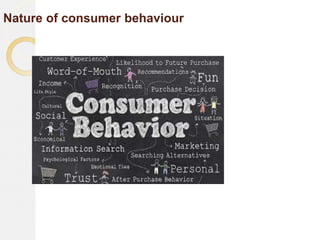
 These factors include cultural, social, personal, and
psychological factors. Cultural factors refer to the
values, beliefs, and customs that influence the
behavior of individuals in a particular society. Social
factors include family, friends, and other social
networks that influence consumer behavior. Personal
factors include age, gender, income, and lifestyle,
while psychological factors refer to the attitudes,
beliefs, and perceptions of individuals.
Cultural Factors
 Cultural factors are the values, beliefs, and customs
that influence the behavior of individuals in a particular
society. Cultural factors can include things like
language, religion, social norms, and even cuisine.
For example, in some cultures, it may be customary to
purchase gold jewelry as a symbol of wealth and
status. In other cultures, the use of certain products
may be restricted or prohibited due to religious beliefs.
Social Factors
 Social factors include family, friends, and other social
networks that influence consumer behavior. People
often make purchasing decisions based on the
opinions and recommendations of those around them.
For example, a person may choose to purchase a
product based on a recommendation from a friend or
family member.
Personal Factors
 Personal factors refer to characteristics that are
unique to an individual, such as age, gender, income,
and lifestyle. These factors can influence a person’s
purchasing decisions in various ways. For example,
younger consumers may be more likely to purchase
trendy or fashionable products, while older consumers
may prioritize durability and quality.
Psychological Factors
 Psychological factors refer to the attitudes, beliefs,
and perceptions of individuals. These factors can
include things like motivation, personality, and
perception of risk. For example, a person may choose
to purchase a particular product because they believe
it will make them feel happier or more confident.
Overall, the nature of consumer behavior is complex and
influenced by various factors. Understanding these
factors can help businesses develop effective marketing
strategies and products that meet the needs and
preferences of their target audience.
SCOPE OF CONSUMER BEHAVIOR
 Consumer behavior is a crucial aspect of marketing
that involves understanding the needs, preferences,
and decision-making processes of consumers. The
scope of consumer behavior is broad and
encompasses various aspects of marketing, such as
product development, pricing, promotion, and
distribution.
Product Development
 By understanding consumer behavior, businesses can
develop products that meet the needs and
preferences of their target customers. This includes
identifying the features and benefits that are most
important to customers and designing products that
align with these preferences. Consumer behavior
research can also help businesses identify gaps in the
market and opportunities for innovation.
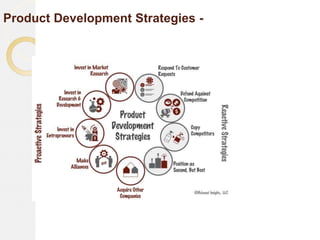
Product Development Strategies -
Pricing
 Effective pricing strategies require an understanding
of consumer behavior. By analyzing consumer
behavior data, businesses can identify the price points
that are most likely to be accepted by their target
audience. This includes considering factors like
consumer demographics, purchasing habits, and
perceptions of value.
Promotion
 Advertising and promotion techniques are developed
based on the behavior of the target audience. By
analyzing consumer behavior data, businesses can
identify the most effective communication channels
and messaging strategies for their products. This
includes considering factors like consumer
demographics, media consumption habits, and
purchasing behavior.
Distribution
 Identifying the best distribution channels for their
products is another key aspect of consumer behavior.
By analyzing consumer behavior data, businesses can
identify the most effective distribution channels for
their target audience. This includes considering
factors like consumer purchasing habits, geographic
location, and online behavior. Overall, the scope of
consumer behavior is broad and includes various
aspects of marketing. By understanding consumer
behavior, businesses can develop effective strategies
that meet the needs and preferences of their target
audience, which can lead to increased sales and
profitability.
IMPORTANCE OF CONSUMER BEHAVIOUR
 Consumer behavior is an important aspect of
marketing that helps businesses understand their
target customers. By studying consumer behavior,
businesses can identify what motivates customers to
buy their products or services, which can help them
develop effective marketing strategies. There are
several reasons why consumer behavior is important
for businesses:
Understanding Customer Needs
 One of the primary reasons why consumer behavior is
important is because it helps businesses understand
the needs and preferences of their target customers.
By analyzing consumer behavior data, businesses can
identify the features and benefits that are most
important to customers, which can inform product
development and marketing strategies.
Developing Effective Marketing Strategies
 Effective marketing strategies require an
understanding of consumer behavior. By analyzing
consumer behavior data, businesses can identify the
most effective communication channels and
messaging strategies for their target audience. This
can help businesses develop advertising and
promotion techniques that resonate with their target
audience, leading to increased sales and profitability.
Identifying Opportunities for Growth
 Analyzing consumer behavior data can also help
businesses identify opportunities for growth. By
identifying gaps in the market and understanding
consumer needs and preferences, businesses can
develop innovative products and services that meet
the needs of their target audience. This can help
businesses stay ahead of their competitors and
increase their market share.
Enhancing Customer Satisfaction
 By understanding consumer behavior, businesses can
also enhance customer satisfaction. By identifying the
features and benefits that are most important to
customers, businesses can develop products and
services that meet their needs and preferences. This
can lead to increased customer loyalty and positive
word-of-mouth, which can help businesses attract new
customers and increase their customer base
APPLICATION OF CONSUMER BEHAVIOUR
 Lets try and find application of consumer behviour by
most simplest ways:
Analyzing market opportunity
 Consumer behavior study help in identifying the
unfulfilled needs and wants of consumers. This
requires examining the friends and conditions
operating in the Marketplace, consumer’s lifestyle,
income levels, and energy influences. This may reveal
unsatisfied needs and wants. Mosquito repellents
have been marketed in response to a genuine and
unfulfilled consumer need.
Selecting the target market
 Review of market opportunities often helps in
identifying district consumer segments with very
distinct and unique wants and needs. Identifying these
groups, behave and how they make purchase
decisions enable the marketer to design and market
products or services particularly suited to their wants
and needs. For example, please sleep revealed that
many existing and potential shampoo users did not
want to buy shampoo fax price at rate 60 for more and
would rather prefer a low price package containing
enough quantity for one or two washers. This finding
LED companies to introduce the shampoos sachet,
which become a good seller.
Marketing-mix decisions
 Once unsatisfied needs and wants are identified, the
marketer has to determine the right mix of product,
price, distribution, and promotion. Where too,
consumer behavior study is very helpful in finding
answers to too many perplexing questions. The
factors of marketing mix decisions are: i) product ii)
price iii) promotion iv) distribution
Use in social and nonprofits marketing
 Consumer behavior studies are useful to design
marketing strategies by social, governmental, and not
for profit organizations to make their programs more
effective such as family planning, awareness about
AIDS.
‘Consumer behavior’ is a vital aspect of marketing
that helps businesses develop effective strategies to
attract and retain customers. By understanding the
nature and scope of consumer behavior, businesses
can identify opportunities for growth and develop
products and services that meet the needs and
preferences of their target customers.
Thank You

Scope and Application of Consumer Behaviour.ppt

  • 1.
    Scope and Applicationof Consumer Behaviour
  • 3.
    Introduction  The termconsumer behavior, individual buyer behavior, end-user behavior, and consumer buying behavior all stand for the same. Consumer behavior is the study of how individuals, groups, and organizations select buy, use, and dispose of goods and services, ideas, or experiences to satisfy their needs and wants. Consumer behavior may be defined as the decision process and physical activity individuals engage in when evaluating, acquiring, using, or disposing of goods and services.
  • 4.
  • 5.
    Introduction  According toBelch and Belch “consumer behavior is the process and activities people engage in when searching for, selecting, purchasing, using, evaluating and disposing of products and services so as to satisfy their needs and desires”.
  • 6.
    Nature of consumerbehaviour  Consumer behavior refers to the actions and decisions made by individuals and households when purchasing goods and services. Understanding consumer behavior is crucial for businesses because it allows them to develop effective marketing strategies and products that meet the needs and preferences of their target audience. The nature of consumer behavior is multidisciplinary and involves various factors that influence the decision-making process of consumers.
  • 7.
  • 8.
    Nature of consumerbehaviour  These factors include cultural, social, personal, and psychological factors. Cultural factors refer to the values, beliefs, and customs that influence the behavior of individuals in a particular society. Social factors include family, friends, and other social networks that influence consumer behavior. Personal factors include age, gender, income, and lifestyle, while psychological factors refer to the attitudes, beliefs, and perceptions of individuals.
  • 9.
    Cultural Factors  Culturalfactors are the values, beliefs, and customs that influence the behavior of individuals in a particular society. Cultural factors can include things like language, religion, social norms, and even cuisine. For example, in some cultures, it may be customary to purchase gold jewelry as a symbol of wealth and status. In other cultures, the use of certain products may be restricted or prohibited due to religious beliefs.
  • 10.
    Social Factors  Socialfactors include family, friends, and other social networks that influence consumer behavior. People often make purchasing decisions based on the opinions and recommendations of those around them. For example, a person may choose to purchase a product based on a recommendation from a friend or family member.
  • 11.
    Personal Factors  Personalfactors refer to characteristics that are unique to an individual, such as age, gender, income, and lifestyle. These factors can influence a person’s purchasing decisions in various ways. For example, younger consumers may be more likely to purchase trendy or fashionable products, while older consumers may prioritize durability and quality.
  • 12.
    Psychological Factors  Psychologicalfactors refer to the attitudes, beliefs, and perceptions of individuals. These factors can include things like motivation, personality, and perception of risk. For example, a person may choose to purchase a particular product because they believe it will make them feel happier or more confident. Overall, the nature of consumer behavior is complex and influenced by various factors. Understanding these factors can help businesses develop effective marketing strategies and products that meet the needs and preferences of their target audience.
  • 13.
    SCOPE OF CONSUMERBEHAVIOR  Consumer behavior is a crucial aspect of marketing that involves understanding the needs, preferences, and decision-making processes of consumers. The scope of consumer behavior is broad and encompasses various aspects of marketing, such as product development, pricing, promotion, and distribution.
  • 14.
    Product Development  Byunderstanding consumer behavior, businesses can develop products that meet the needs and preferences of their target customers. This includes identifying the features and benefits that are most important to customers and designing products that align with these preferences. Consumer behavior research can also help businesses identify gaps in the market and opportunities for innovation.
  • 15.
  • 16.
    Pricing  Effective pricingstrategies require an understanding of consumer behavior. By analyzing consumer behavior data, businesses can identify the price points that are most likely to be accepted by their target audience. This includes considering factors like consumer demographics, purchasing habits, and perceptions of value.
  • 17.
    Promotion  Advertising andpromotion techniques are developed based on the behavior of the target audience. By analyzing consumer behavior data, businesses can identify the most effective communication channels and messaging strategies for their products. This includes considering factors like consumer demographics, media consumption habits, and purchasing behavior.
  • 18.
    Distribution  Identifying thebest distribution channels for their products is another key aspect of consumer behavior. By analyzing consumer behavior data, businesses can identify the most effective distribution channels for their target audience. This includes considering factors like consumer purchasing habits, geographic location, and online behavior. Overall, the scope of consumer behavior is broad and includes various aspects of marketing. By understanding consumer behavior, businesses can develop effective strategies that meet the needs and preferences of their target audience, which can lead to increased sales and profitability.
  • 19.
    IMPORTANCE OF CONSUMERBEHAVIOUR  Consumer behavior is an important aspect of marketing that helps businesses understand their target customers. By studying consumer behavior, businesses can identify what motivates customers to buy their products or services, which can help them develop effective marketing strategies. There are several reasons why consumer behavior is important for businesses:
  • 20.
    Understanding Customer Needs One of the primary reasons why consumer behavior is important is because it helps businesses understand the needs and preferences of their target customers. By analyzing consumer behavior data, businesses can identify the features and benefits that are most important to customers, which can inform product development and marketing strategies.
  • 21.
    Developing Effective MarketingStrategies  Effective marketing strategies require an understanding of consumer behavior. By analyzing consumer behavior data, businesses can identify the most effective communication channels and messaging strategies for their target audience. This can help businesses develop advertising and promotion techniques that resonate with their target audience, leading to increased sales and profitability.
  • 22.
    Identifying Opportunities forGrowth  Analyzing consumer behavior data can also help businesses identify opportunities for growth. By identifying gaps in the market and understanding consumer needs and preferences, businesses can develop innovative products and services that meet the needs of their target audience. This can help businesses stay ahead of their competitors and increase their market share.
  • 23.
    Enhancing Customer Satisfaction By understanding consumer behavior, businesses can also enhance customer satisfaction. By identifying the features and benefits that are most important to customers, businesses can develop products and services that meet their needs and preferences. This can lead to increased customer loyalty and positive word-of-mouth, which can help businesses attract new customers and increase their customer base
  • 24.
    APPLICATION OF CONSUMERBEHAVIOUR  Lets try and find application of consumer behviour by most simplest ways:
  • 25.
    Analyzing market opportunity Consumer behavior study help in identifying the unfulfilled needs and wants of consumers. This requires examining the friends and conditions operating in the Marketplace, consumer’s lifestyle, income levels, and energy influences. This may reveal unsatisfied needs and wants. Mosquito repellents have been marketed in response to a genuine and unfulfilled consumer need.
  • 26.
    Selecting the targetmarket  Review of market opportunities often helps in identifying district consumer segments with very distinct and unique wants and needs. Identifying these groups, behave and how they make purchase decisions enable the marketer to design and market products or services particularly suited to their wants and needs. For example, please sleep revealed that many existing and potential shampoo users did not want to buy shampoo fax price at rate 60 for more and would rather prefer a low price package containing enough quantity for one or two washers. This finding LED companies to introduce the shampoos sachet, which become a good seller.
  • 27.
    Marketing-mix decisions  Onceunsatisfied needs and wants are identified, the marketer has to determine the right mix of product, price, distribution, and promotion. Where too, consumer behavior study is very helpful in finding answers to too many perplexing questions. The factors of marketing mix decisions are: i) product ii) price iii) promotion iv) distribution
  • 28.
    Use in socialand nonprofits marketing  Consumer behavior studies are useful to design marketing strategies by social, governmental, and not for profit organizations to make their programs more effective such as family planning, awareness about AIDS. ‘Consumer behavior’ is a vital aspect of marketing that helps businesses develop effective strategies to attract and retain customers. By understanding the nature and scope of consumer behavior, businesses can identify opportunities for growth and develop products and services that meet the needs and preferences of their target customers.
  • 29.