EVOLUTION OF CONSUMER
BEHAVIOUR
Consumer decision making
Models
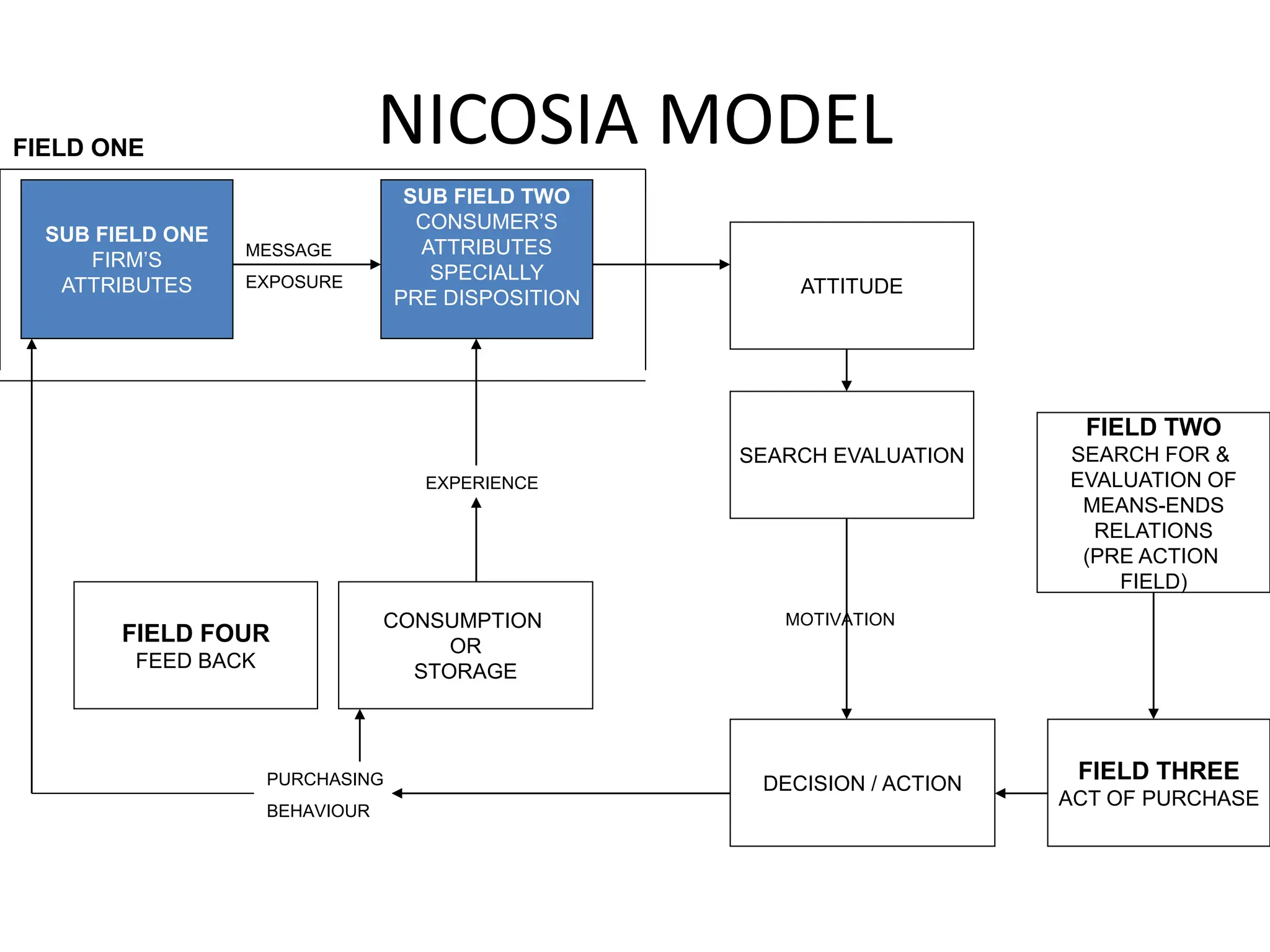
NICOSIA MODEL
SUB FIELD ONE
FIRM’S
ATTRIBUTES
SUB FIELD TWO
CONSUMER’S
ATTRIBUTES
SPECIALLY
PRE DISPOSITION
ATTITUDE
SEARCH EVALUATION
DECISION / ACTION
CONSUMPTION
OR
STORAGE
FIELD FOUR
FEED BACK
FIELD TWO
SEARCH FOR &
EVALUATION OF
MEANS-ENDS
RELATIONS
(PRE ACTION
FIELD)
FIELD THREE
ACT OF PURCHASE
MESSAGE
EXPOSURE
MOTIVATION
PURCHASING
BEHAVIOUR
EXPERIENCE
FIELD ONE
LIMITATIONS
• Incomplete in a number of aspects, very reductionist
• Variables in the model have not been clearly defined
• A number of assumptions have been made that question the
validity of this model, for instance:
 What type of consumer are we talking about?
 The company and the consumer have an existing relationship?
What type?
 Is this for a new product?
 Is this the first exchange the consumer has had with the
producer?
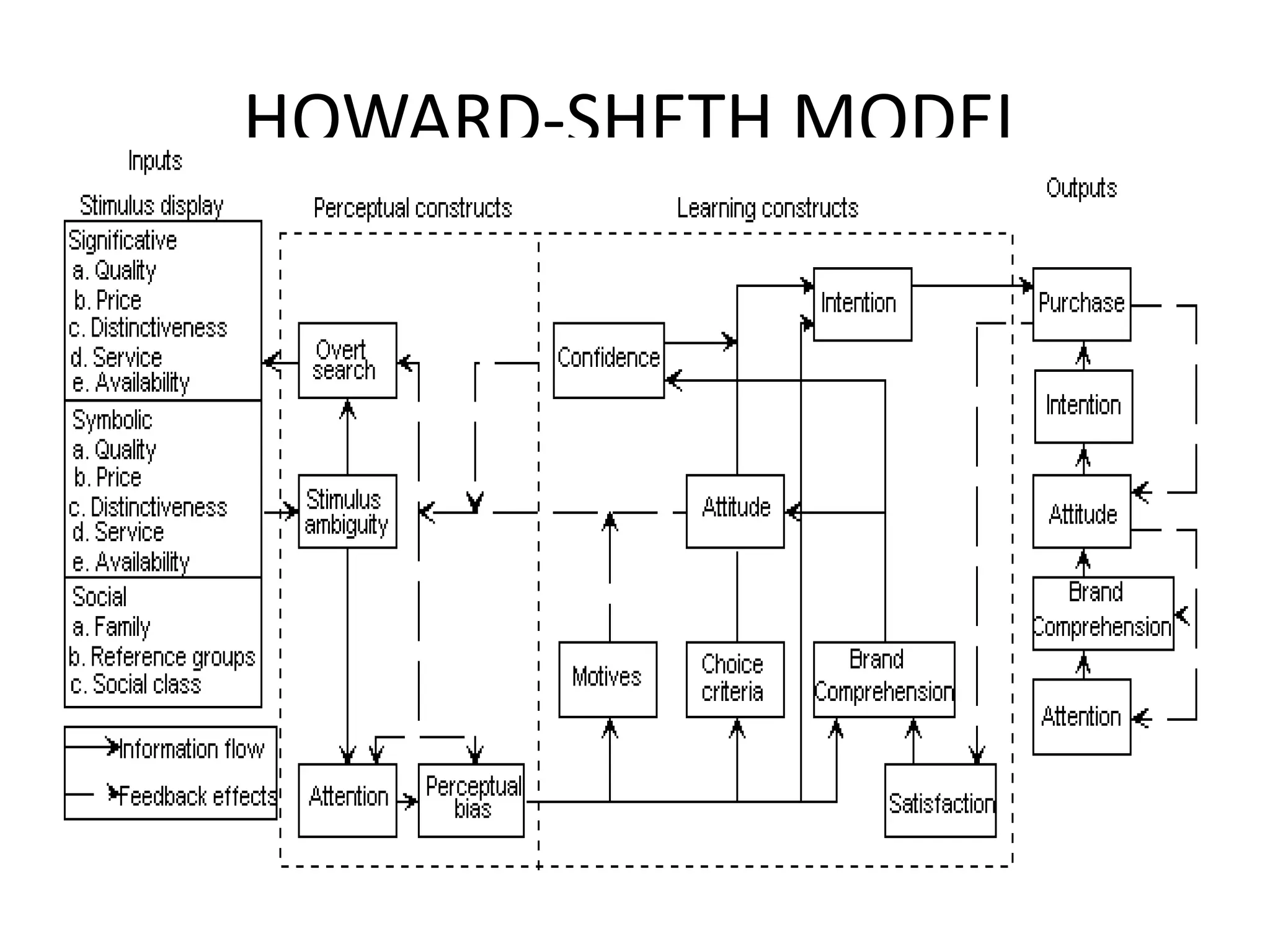
HOWARD-SHETH MODEL
• ASSUMPTIONS:
 Consumer behaviour is a rational exercise in purchase
problem solving
 It is a systematic & orderly approach caused by inputs like
stimuli & results like output
o This model is based upon the theory that what happens
between the receipt of stimuli ie: input and its action ie:
output is consumer behaviour
HOWARD-SHETH MODEL
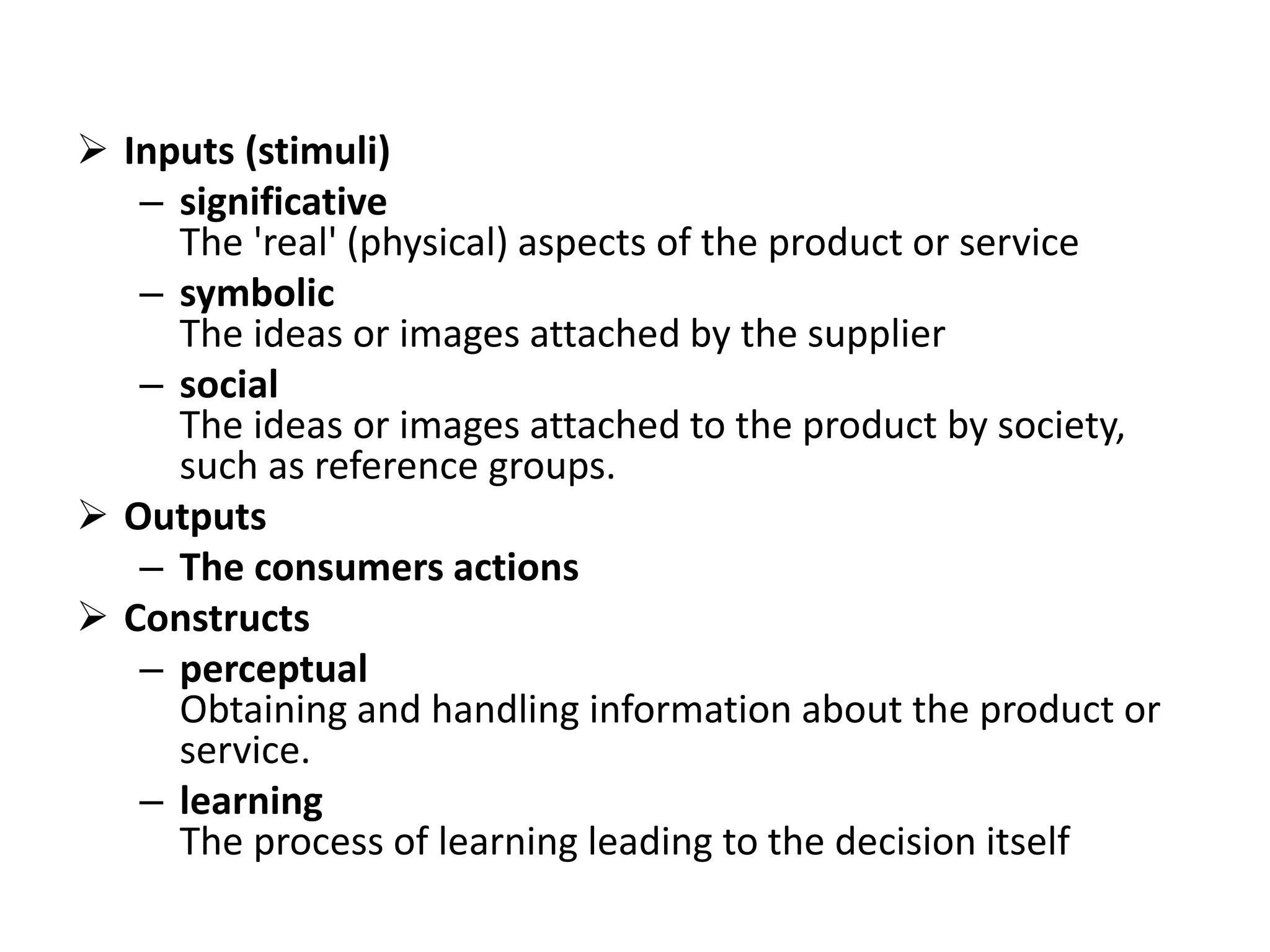
 Inputs (stimuli)
– significative
The 'real' (physical) aspects of the product or service
– symbolic
The ideas or images attached by the supplier
– social
The ideas or images attached to the product by society,
such as reference groups.
 Outputs
– The consumers actions
 Constructs
– perceptual
Obtaining and handling information about the product or
service.
– learning
The process of learning leading to the decision itself
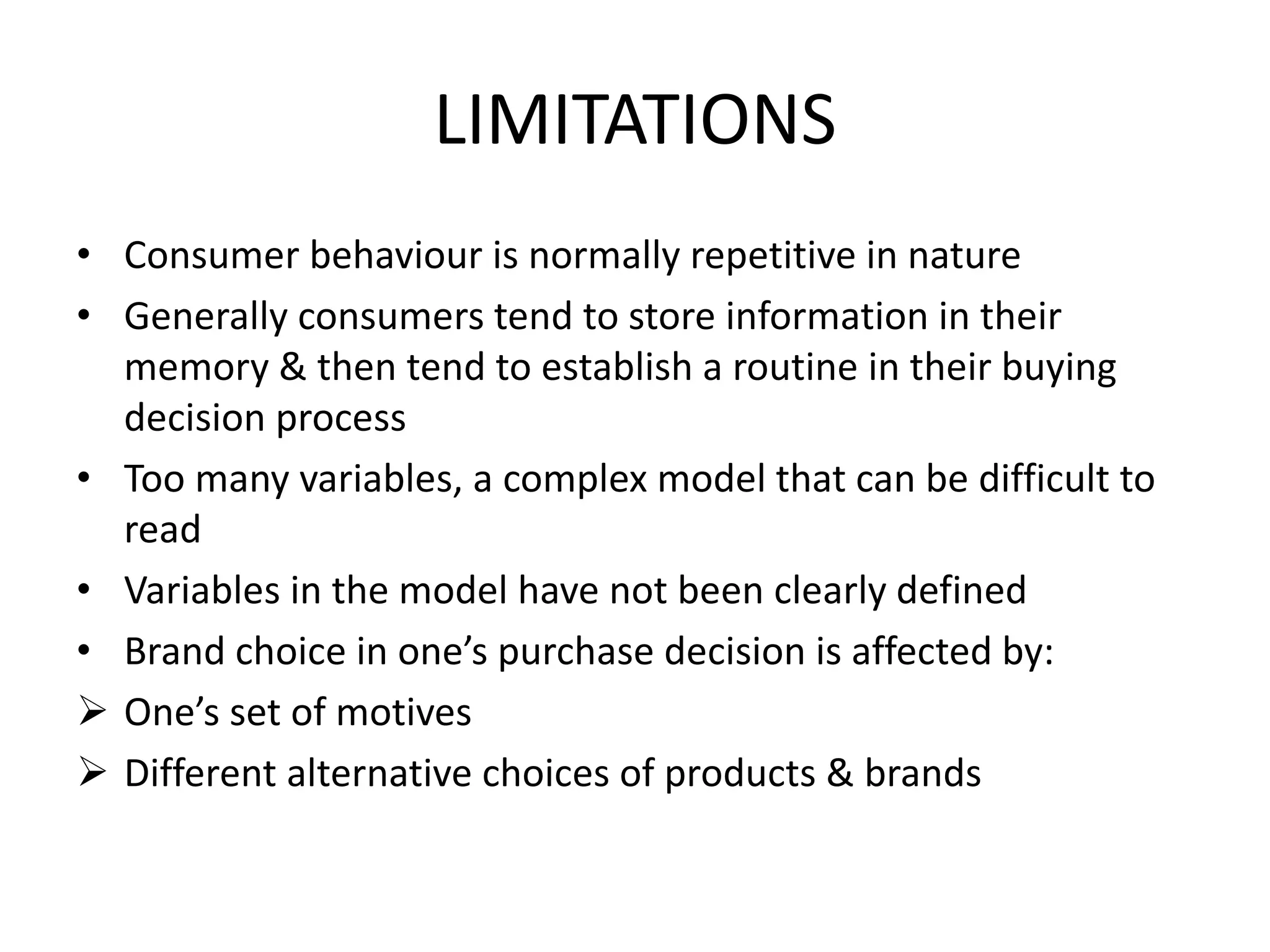
LIMITATIONS
• Consumer behaviour is normally repetitive in nature
• Generally consumers tend to store information in their
memory & then tend to establish a routine in their buying
decision process
• Too many variables, a complex model that can be difficult to
read
• Variables in the model have not been clearly defined
• Brand choice in one’s purchase decision is affected by:
 One’s set of motives
 Different alternative choices of products & brands
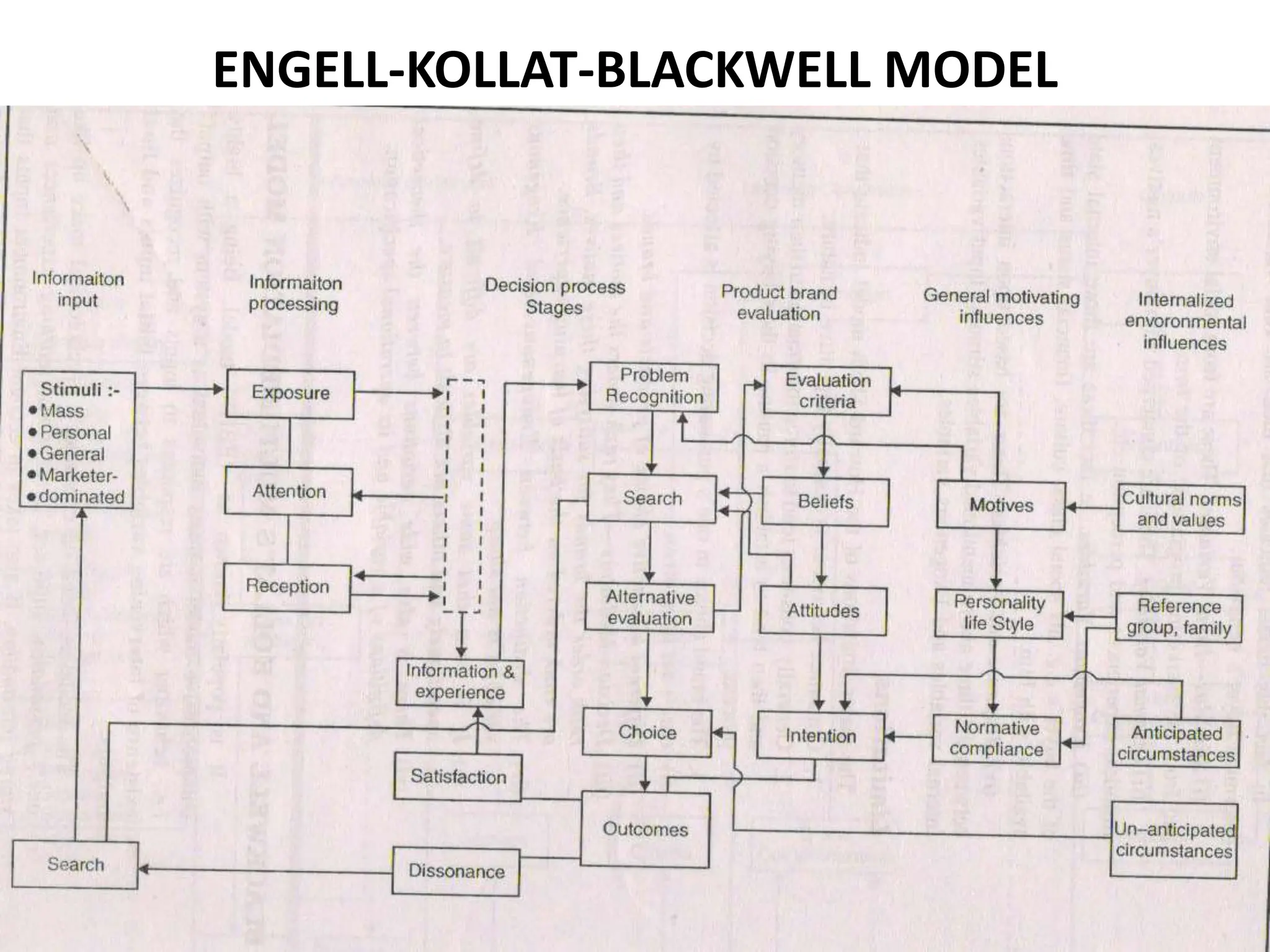
ENGELL-KOLLAT-BLACKWELL MODEL
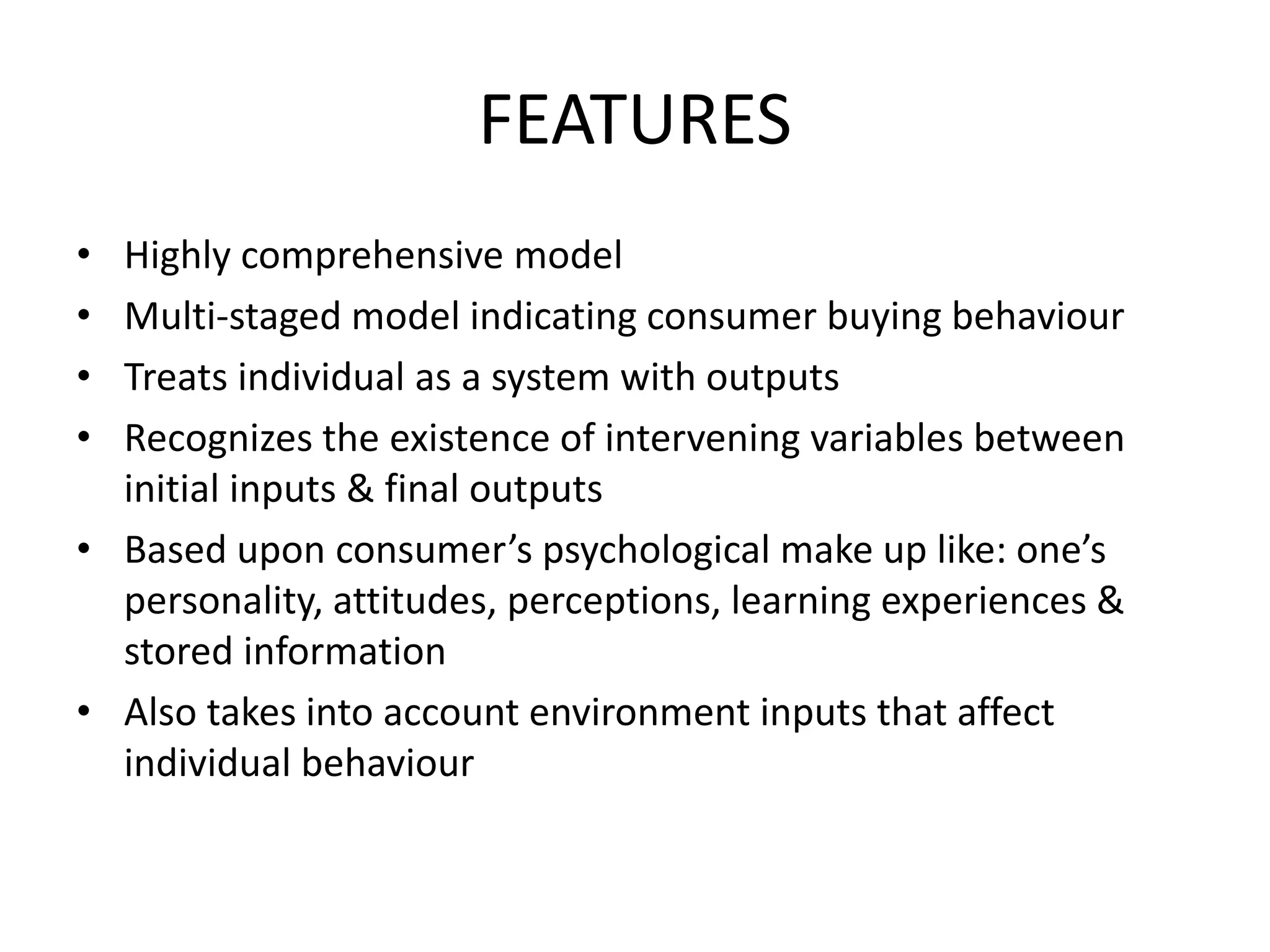
FEATURES
• Highly comprehensive model
• Multi-staged model indicating consumer buying behaviour
• Treats individual as a system with outputs
• Recognizes the existence of intervening variables between
initial inputs & final outputs
• Based upon consumer’s psychological make up like: one’s
personality, attitudes, perceptions, learning experiences &
stored information
• Also takes into account environment inputs that affect
individual behaviour
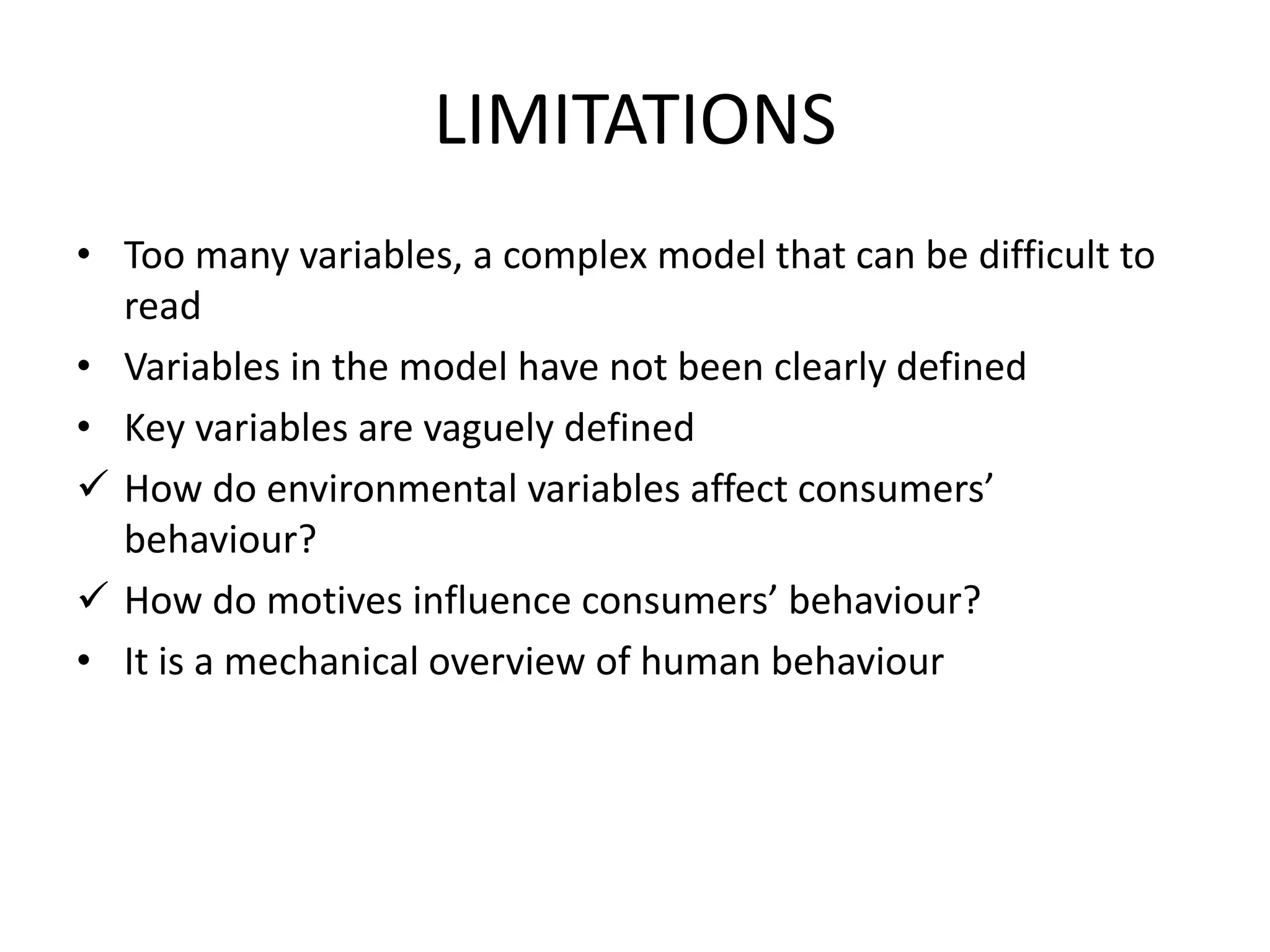
LIMITATIONS
• Too many variables, a complex model that can be difficult to
read
• Variables in the model have not been clearly defined
• Key variables are vaguely defined
 How do environmental variables affect consumers’
behaviour?
 How do motives influence consumers’ behaviour?
• It is a mechanical overview of human behaviour

Consumer Behaviour and the evolutionary aspects

  • 1.
  • 2.
    NICOSIA MODEL SUB FIELDONE FIRM’S ATTRIBUTES SUB FIELD TWO CONSUMER’S ATTRIBUTES SPECIALLY PRE DISPOSITION ATTITUDE SEARCH EVALUATION DECISION / ACTION CONSUMPTION OR STORAGE FIELD FOUR FEED BACK FIELD TWO SEARCH FOR & EVALUATION OF MEANS-ENDS RELATIONS (PRE ACTION FIELD) FIELD THREE ACT OF PURCHASE MESSAGE EXPOSURE MOTIVATION PURCHASING BEHAVIOUR EXPERIENCE FIELD ONE
  • 3.
    LIMITATIONS • Incomplete ina number of aspects, very reductionist • Variables in the model have not been clearly defined • A number of assumptions have been made that question the validity of this model, for instance:  What type of consumer are we talking about?  The company and the consumer have an existing relationship? What type?  Is this for a new product?  Is this the first exchange the consumer has had with the producer?
  • 4.
    HOWARD-SHETH MODEL • ASSUMPTIONS: Consumer behaviour is a rational exercise in purchase problem solving  It is a systematic & orderly approach caused by inputs like stimuli & results like output o This model is based upon the theory that what happens between the receipt of stimuli ie: input and its action ie: output is consumer behaviour
  • 5.
  • 6.
     Inputs (stimuli) –significative The 'real' (physical) aspects of the product or service – symbolic The ideas or images attached by the supplier – social The ideas or images attached to the product by society, such as reference groups.  Outputs – The consumers actions  Constructs – perceptual Obtaining and handling information about the product or service. – learning The process of learning leading to the decision itself
  • 7.
    LIMITATIONS • Consumer behaviouris normally repetitive in nature • Generally consumers tend to store information in their memory & then tend to establish a routine in their buying decision process • Too many variables, a complex model that can be difficult to read • Variables in the model have not been clearly defined • Brand choice in one’s purchase decision is affected by:  One’s set of motives  Different alternative choices of products & brands
  • 8.
  • 9.
    FEATURES • Highly comprehensivemodel • Multi-staged model indicating consumer buying behaviour • Treats individual as a system with outputs • Recognizes the existence of intervening variables between initial inputs & final outputs • Based upon consumer’s psychological make up like: one’s personality, attitudes, perceptions, learning experiences & stored information • Also takes into account environment inputs that affect individual behaviour
  • 10.
    LIMITATIONS • Too manyvariables, a complex model that can be difficult to read • Variables in the model have not been clearly defined • Key variables are vaguely defined  How do environmental variables affect consumers’ behaviour?  How do motives influence consumers’ behaviour? • It is a mechanical overview of human behaviour