Scleroderma  Prepared by Dr. R MUSA
57 years male Systemic sclerosis  for three & half years C/O:   pain in both knee & bottom of his foot Early morning stiffness at both legs Unable to walk (use wheelchair) Medical History: Chronic Renal failure Hypertension treated with ACE inhibitor&Amlodipin Dysphagia & dyspepsia treated with lansoprazole Anaemia treated with erythropoietin Raynaud's  Marrow dysplasia
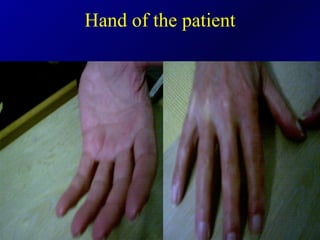
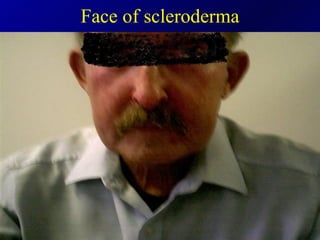
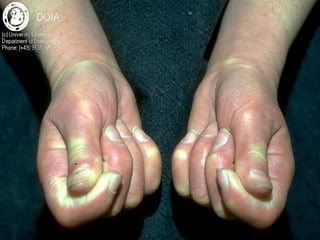
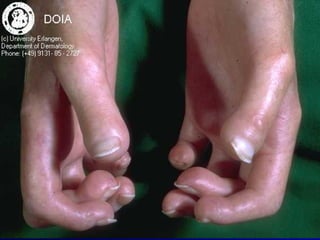
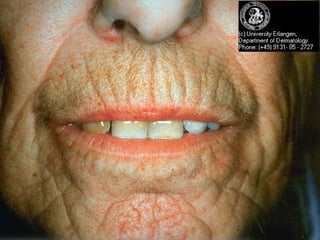
continue Social/H:  patient live alone in house his sister help him in shopping (can not left heavy bag). Non smoker, do not drink. O/E:  patient have tight skin over both hands extend up to the elbow. Also the face are involved around the mouth but mild. He said it was worse than this before he had spontaneous improvement with use of the wax and physiotherapy
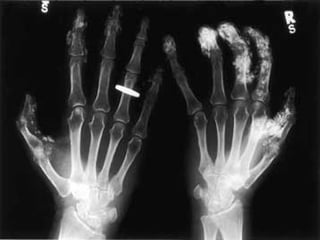
Hand of the patient
Face of scleroderma
Current management Regular Physiotherapy & wax Routine management of his renal failure anaemia &  Dysphagia. At one stage he was considered for (TGFB1) trial Transforming growth factor B 1 But b/c of his renal failure & marrow dysplasia he was roleed + out.
Assessment needed Regular U&E and urine test for protein FBC Echocardiogram CXR
Scleroderma Scleroderma: It is a term which includes a heterogenous group of limited and systemic conditions causing hardening of the skin. Systemic sclerosis: It is an extension of the disease process which implies involvement of both skin and other sites, particularly central internal organs.
Scleroderma Types: Localized:   The localized forms are Morphea and Linear, which affect only the skin (and sometimes the underlying tissues) but do not affect the internal organs Systemic:   The systemic forms of Scleroderma cause fibrosis (scar tissue) to be formed in the skin and/or internal organs. The fibrosis eventually causes the involved skin or organs to harden
Juvenile scleroderma Scleroderma reported in children since 1880
Scleroderma Incidence 4.5 to 12 New cases / million population /year Disease with Female Preponderence Over all Male to female ratio 1:3 Reproductive age   1:8
Scleroderma Initiating factors are not known Numerous environmental agents (PVC) Drugs (Bleomycin, Pentezocine) Defective immunoregulation Autoantibodies Cellular autoimmunity  Genetics,  fetal cells , and viruses   Etiology
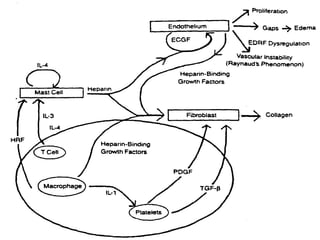
Scleroderma Pathogenesis: Uncontrolled and irreversible proliferation of normal connective tissue along with striking vascular changes Collagen Proteoglycans Fibronectin Laminin
 
Scleroderma Clinical  Features: Fibrous thickening affects skin, muscles, joints, tendons, nervous system and certain internal organs especially esophagus, intestinal tract, lungs and kidneys
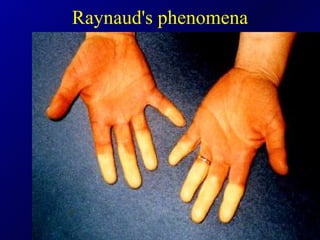
Raynaud's phenomena


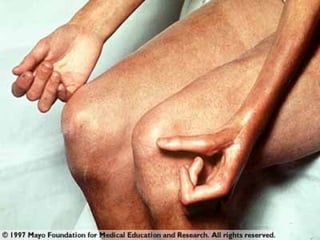
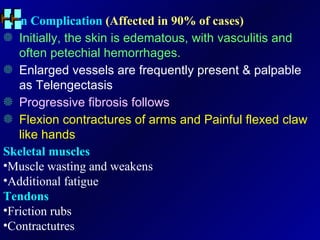
Skin Complication  (Affected in 90% of cases) Initially, the skin is edematous, with vasculitis and often petechial hemorrhages. Enlarged vessels are frequently present & palpable as Telengectasis Progressive fibrosis follows Flexion contractures of arms and Painful flexed claw like hands Skeletal muscles Muscle wasting and weakens Additional fatigue Tendons Friction rubs Contractutres
 
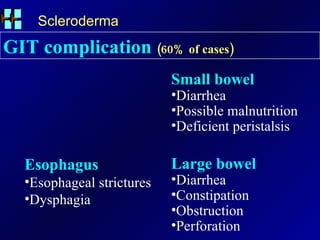
Scleroderma Esophagus Esophageal strictures Dysphagia Small bowel Diarrhea Possible malnutrition Deficient peristalsis Large bowel Diarrhea Constipation Obstruction Perforation GIT complication   (60% of cases)
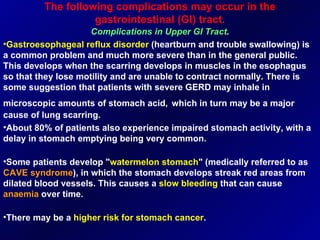
The following complications may occur in the gastrointestinal (GI) tract. Complications in Upper GI Tract . Gastroesophageal reflux disorder  (heartburn and trouble swallowing) is a common problem and much more severe than in the general public. This develops when the scarring develops in muscles in the esophagus so that they lose motility and are unable to contract normally. There is some suggestion that patients with severe GERD may inhale in microscopic amounts of stomach acid,   which in turn may be a major cause of lung scarring. About 80% of patients also experience impaired stomach activity, with a delay in stomach emptying being very common. Some patients develop " watermelon stomach " (medically referred to as  CAVE syndrome ), in which the stomach develops streak red areas from dilated blood vessels. This causes a  slow bleeding  that can cause  anaemia  over time. There may be a  higher risk for stomach cancer .
Complications in the Lower GI Tract.   Complications in the lower tract can develop but are  uncommon.  They can include the following: Scarring  can cause  obstruction  and  constipation . In rare cases, constipation can become so severe that the bowel becomes perforated, which can be life threatening. Scarring can also impair intestinal absorption of fats ( malabsorption ). This can lead to bacteria proliferation that causes watery  diarrhoea . Fecal incontinence  (the inability to control bowel movements) may be more common than studies indicate, since patients are reluctant to report it.  Many patients, however, have few or even no lower gastrointestinal symptoms
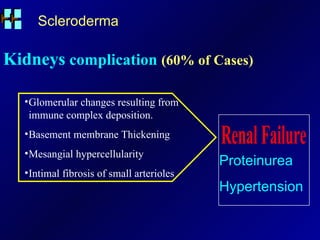
Scleroderma Kidneys  complication  (60% of Cases) Glomerular changes resulting from immune complex deposition. Basement membrane Thickening Mesangial hypercellularity Intimal fibrosis of small arterioles Renal Failure Proteinurea Hypertension
Kidney involvement Signs of kidney involvement, proteinurea and mild hypertension, are common. The degree of severity depends on whether it is acute or chronic. Slow Progression.  The typical course of scleroderma in the kidney is a slow progression that may produce some damage but does not usually require dialysis. Renal Crisis .  The most serious.It occurs in about 20% of patients with diffuse scleroderma, usually early in the course of the disease. This syndrome includes a life threatening condition called  malignant   hypertension , a sudden increase in blood pressure that can cause rapidly progressive kidney failure.
Scleroderma Lungs  complication  (20% of cases) Dyspnoea Pulmonary hypertension Respiratory Failure Diffuse Interstitial Pneumonitis and Fibrosis Honeycomb Lung
Lung problems are usually  the most serious complications  of systemic scleroderma. They are now the leading cause of death in scleroderma  Two major lung conditions associated with scleroderma, pulmonary fibrosis and pulmonary hypertension can occur either together or independently. Pulmonary Fibrosis .  Scleroderma in the lung causes scarring (pulmonary fibrosis). Pulmonary fibrosis occurs in up to 80% of patients, although the progression is very slow and patients respond with a wide range of symptoms: Some patients may not even experience symptoms. When it progresses, patients develop a dry cough, shortness of breath, and reduced exercise capacity. Severe pulmonary fibrosis  occurs in about  16%  of patients with diffuse scleroderma. About half of these patients experience the most profound changes  within the first three years . In such cases, lung function declines rapidly over that period and then slows down.  One of the most serious complications of pulmonary fibrosis is i nterstitial   lung disease , which causes a decline in lung function and breathing difficulties. This condition also places the patient at higher risk  for lung   cancer . (One study suggested that this condition may be due to severe dysfunction in the esophagus that causes patients  to aspirate  tiny amounts of stomach acid.)
continue This condition  may be fatal . In one study, 70% of patients who developed severe kidney problems did so within the first three years of the diagnosis of scleroderma. Until recently renal crisis was the most common cause of death in scleroderma. Aggressive treatment with anti-hypertensive drugs, particularly those known as  angiotensin-converting enzyme   (ACE) inhibitors , is proving to be very successful in reducing this risk. Once the condition is successfully treated,  recurrence is rare .
Heart involvement Although many patients with even limited scleroderma have some sort of functional heart problem, most patients, even those with diffuse scleroderma, do not have severe heart conditions. Fibrosis of the Heart   The most direct effect that scleroderma has on the heart. It may be very mild or it can cause pain, lower blood pressure. it  increases the risk for heart rhythm disturbances ,  congestive heart failure  and  pericarditis . Fortunately, severe complications are uncommon and occur in only about 15% of patients with diffuse scleroderma. As with other serious organ complications, they are more likely to  occur within three years of the onset of the disease . Effects of Pulmonary Hypertension .  Pulmonary hypertension and kidney problems associated with scleroderma can also affect the heart.
Scleroderma Proper diagnosis of Scleroderma is often long and difficult, since it is a rare disease which few doctors are well-versed in, and in the early stages it may resemble many other connective tissue diseases, such as SLE, Polymyositis, and Rheumatoid Arthritis etc …….
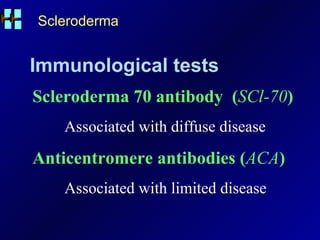
Scleroderma Immunological tests Scleroderma 70 antibody  ( SCl-70 ) Associated with diffuse disease Anticentromere antibodies ( ACA ) Associated with limited disease
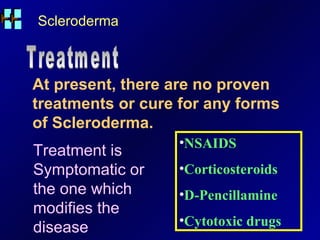
Scleroderma At present, there are no proven treatments or cure for any forms of Scleroderma.  Treatment NSAIDS Corticosteroids D-Pencillamine Cytotoxic drugs Treatment is Symptomatic or the one which modifies the disease
Scleroderma Anaesthetic Problems in Scleroderma Fibrosed skin along with vasoconstriction makes venous access difficult. Hard skin and contractures interfere with blood pressure and pulse oxymetric  monitoring Difficult intubation and increased risk for aspiration due to esophageal sphincters incompetence Anaesthetic risks are increased due to visceral involvement Smaller doses of local anesthetics should be used in regional analgesia because many patients with Scleroderma exhibit prolonged sensory and motor blockade
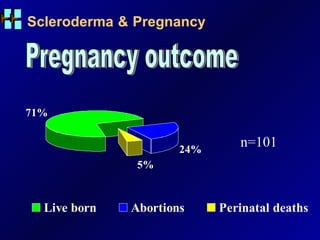
Scleroderma & Pregnancy Will Pregnancy be possible ? It is possible that  patients with Scleroderma can achieve pregnancy although there is increased sub-fertility in such patients. There are conflicting reports about the increased abortion rate.
Scleroderma   &   Pregnancy Pregnancy outcome n=101
Scleroderma society
Causes of PAH  ( WHO classification ) 1- Pulmonary arterial hypertension Primary PAH   *Sporadic *Familial (up to 25 %) Secondary PAH   *CT diseases, scleroderma,*HIV,  *congenital heart diseases, Anorexigens *portopulmonary H,primary PH of newborn 2- Pulmonary venous Hypertension: *Lt Heart disease, *Lt Vent. Dysfunction, pulmonary veno-occlusive diseases. 3- Disorders of the respiratory system: COPD,interstitial lung diseases. 4- Chronic thromboembolic PH: 5- Disorders directly affecting pulmonary vasculature
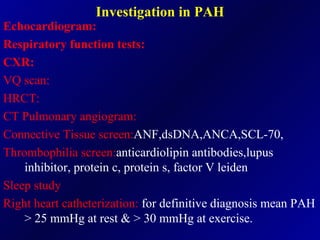
Investigation in PAH Echocardiogram: Respiratory function tests: CXR: VQ scan: HRCT: CT Pulmonary angiogram: Connective Tissue screen: ANF,dsDNA,ANCA,SCL-70, Thrombophilia screen: anticardiolipin antibodies,lupus inhibitor, protein c, protein s, factor V leiden Sleep study Right heart catheterization:  for definitive diagnosis mean PAH > 25 mmHg at rest & > 30 mmHg at exercise.
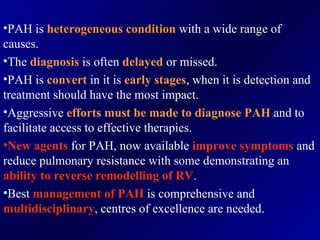
PAH is  heterogeneous condition  with a wide range of causes. The  diagnosis   is often  delayed   or missed. PAH is  convert   in it is  early stages , when it is detection and treatment should have the most impact. Aggressive  efforts must be made to diagnose PAH  and to facilitate access to effective therapies. New agents  for PAH, now available  improve symptoms  and reduce pulmonary resistance with some demonstrating an  ability to reverse remodelling   of RV . Best  management of PAH  is comprehensive and  multidisciplinary , centres of excellence are needed.
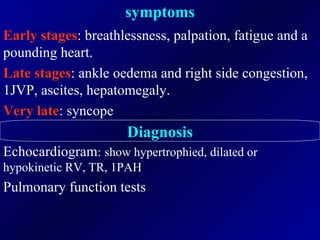
symptoms Early stages : breathlessness, palpation, fatigue and a pounding heart. Late stages : ankle oedema and right side congestion, 1JVP, ascites, hepatomegaly.  Very late : syncope Echocardiogram :   show hypertrophied, dilated or hypokinetic RV, TR, 1PAH Pulmonary function tests Diagnosis
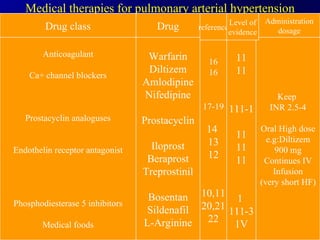
Medical therapies for pulmonary arterial hypertension Anticoagulant Ca+ channel blockers Prostacyclin analoguses Endothelin receptor antagonist Phosphodiesterase 5 inhibitors Medical foods Drug class Warfarin Diltizem Amlodipine Nifedipine Prostacyclin Iloprost Beraprost Treprostinil Bosentan Sildenafil L-Arginine Drug 16 16 17-19 14  13 12 10,11 20,21 22 reference 11 11 111-1 11 11 11 1  111-3 1V Keep  INR 2.5-4 Oral High dose e.g:Diltizem 900 mg Continues IV Infusion (very short HF) Level of evidence Administration dosage
Rheumatology Quiz
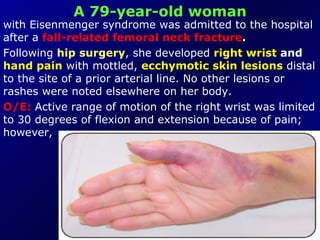
A 79-year-old woman with Eisenmenger syndrome was admitted to the hospital after a  fall-related femoral neck   fracture .   Following  hip surgery , she developed  right wrist  and   hand pain  with mottled,  ecchymotic skin lesions  distal to the site of a prior arterial line. No other lesions or rashes were noted elsewhere on her body.  O/E:  Active range of motion of the right wrist was limited to 30 degrees of flexion and extension because of pain; however,
X Ray:  radiographs of the wrist and hand showed no fractures.  Laboratory tests:  were significant for a slight eosinophilia and negative blood cultures. A continuous wave Doppler examination of the hand was unremarkable.  What’s your diagnosis? •  Paradoxical embolism • Radial artery dissection • Catheter-related infection • Catheter-associated vascular insufficiency
Catheter-associated vascular insufficiency
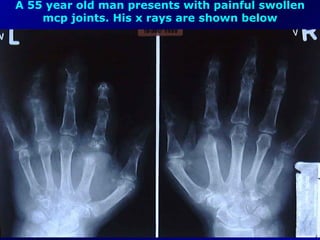
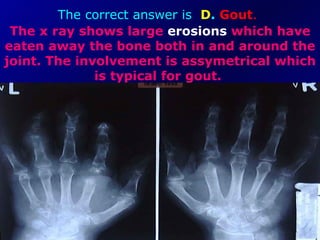
A 55 year old man presents with painful swollen mcp joints. His x rays are shown below
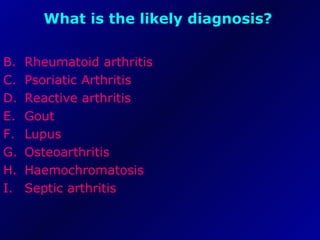
What is the likely diagnosis?   Rheumatoid arthritis  Psoriatic Arthritis  Reactive arthritis  Gout  Lupus  Osteoarthritis  Haemochromatosis  Septic arthritis
The correct answer is   D .  Gout .   The x ray shows large  erosions  which have eaten away the bone both in and around the joint. The involvement is assymetrical which is typical for gout.
A 26 year old woman complains of diffuse swelling and stiffness in the fingers.  She admits to  Raynaud’s phenomenon  since childhood.  Blood tests  reveal normal FBC, ESR and CRP.  Rheumatoid factors are  negative . ANA is positive 1:640, centromeric pattern .
The most likely diagnosis is?  Reactive arthritis  Systemic Lupus erythematous  Ankylosing Spondylitis  Rheumatoid arthritis  Primary Sjögren’s syndrome  Osteoarthritis  Scleroderma  Psoriatic arthritis
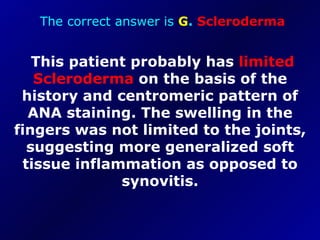
The correct answer is  G .  Scleroderma This patient probably has  limited   Scleroderma  on the basis of the history and centromeric pattern of ANA staining. The swelling in the fingers was not limited to the joints, suggesting more generalized soft tissue inflammation as opposed to synovitis.
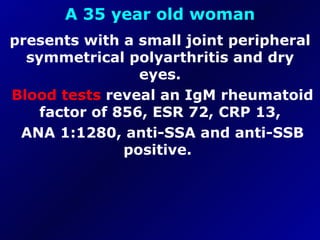
A 35 year old woman presents with a small joint peripheral symmetrical polyarthritis and dry eyes. Blood tests  reveal an IgM rheumatoid factor of 856, ESR 72, CRP 13, ANA 1:1280, anti-SSA and anti-SSB positive.
The most likely diagnosis is?  Reactive arthritis  Systemic Lupus erythematous  Ankylosing Spondylitis  Rheumatoid arthritis  Primary Sjögren’s syndrome  Osteoarthritis  Scleroderma  Psoriatic arthritis
The correct answer is  E .  Primary Sj ö gren's syndrome . Although the patient has a small joint symmetrical polyarthritis and positive rheumatoid factor, the strongly positive ANA and positive anti-SSA and SSB point towards a connective tissue disease. Note the discrepancy between ESR and CRP which is also suggestive of connective tissue disease rather than RA.
A 22 year old man presents with  pain  and  stiffness  in the  lumbar spine  which is worse in the morning. In the past he has had episodes on unilateral upper buttock pain and plantar fasciitis .  The most likely diagnosis is?   Reactive arthritis  Systemic Lupus erythematous  Ankylosing Spondylitis  Rheumatoid arthritis  Primary Sjögren’s syndrome  Osteoarthritis  Scleroderma  Psoriatic arthritis
The correct answer is  C .  Ankylosing Spondylitis The history  suggests inflammatory involvement of the spine and sacroiliac joints, and  enthesitis  of the  plantar fascia . In the absence a history of diarrhoea, urethitis, psoriasis or peripheral joint inflammation, other  spondyloarthropathies are less likely .
 

Scleroderma

  • 1.
    Scleroderma Preparedby Dr. R MUSA
  • 2.
    57 years maleSystemic sclerosis for three & half years C/O: pain in both knee & bottom of his foot Early morning stiffness at both legs Unable to walk (use wheelchair) Medical History: Chronic Renal failure Hypertension treated with ACE inhibitor&Amlodipin Dysphagia & dyspepsia treated with lansoprazole Anaemia treated with erythropoietin Raynaud's Marrow dysplasia
  • 3.
    continue Social/H: patient live alone in house his sister help him in shopping (can not left heavy bag). Non smoker, do not drink. O/E: patient have tight skin over both hands extend up to the elbow. Also the face are involved around the mouth but mild. He said it was worse than this before he had spontaneous improvement with use of the wax and physiotherapy
  • 4.
    Hand of thepatient
  • 5.
  • 6.
    Current management RegularPhysiotherapy & wax Routine management of his renal failure anaemia & Dysphagia. At one stage he was considered for (TGFB1) trial Transforming growth factor B 1 But b/c of his renal failure & marrow dysplasia he was roleed + out.
  • 7.
    Assessment needed RegularU&E and urine test for protein FBC Echocardiogram CXR
  • 8.
    Scleroderma Scleroderma: Itis a term which includes a heterogenous group of limited and systemic conditions causing hardening of the skin. Systemic sclerosis: It is an extension of the disease process which implies involvement of both skin and other sites, particularly central internal organs.
  • 9.
    Scleroderma Types: Localized: The localized forms are Morphea and Linear, which affect only the skin (and sometimes the underlying tissues) but do not affect the internal organs Systemic: The systemic forms of Scleroderma cause fibrosis (scar tissue) to be formed in the skin and/or internal organs. The fibrosis eventually causes the involved skin or organs to harden
  • 10.
    Juvenile scleroderma Sclerodermareported in children since 1880
  • 11.
    Scleroderma Incidence 4.5to 12 New cases / million population /year Disease with Female Preponderence Over all Male to female ratio 1:3 Reproductive age 1:8
  • 12.
    Scleroderma Initiating factorsare not known Numerous environmental agents (PVC) Drugs (Bleomycin, Pentezocine) Defective immunoregulation Autoantibodies Cellular autoimmunity Genetics, fetal cells , and viruses Etiology
  • 13.
    Scleroderma Pathogenesis: Uncontrolledand irreversible proliferation of normal connective tissue along with striking vascular changes Collagen Proteoglycans Fibronectin Laminin
  • 14.
  • 15.
    Scleroderma Clinical Features: Fibrous thickening affects skin, muscles, joints, tendons, nervous system and certain internal organs especially esophagus, intestinal tract, lungs and kidneys
  • 16.
  • 17.
  • 18.
  • 19.
  • 20.
  • 21.
    Skin Complication (Affected in 90% of cases) Initially, the skin is edematous, with vasculitis and often petechial hemorrhages. Enlarged vessels are frequently present & palpable as Telengectasis Progressive fibrosis follows Flexion contractures of arms and Painful flexed claw like hands Skeletal muscles Muscle wasting and weakens Additional fatigue Tendons Friction rubs Contractutres
  • 22.
  • 23.
    Scleroderma Esophagus Esophagealstrictures Dysphagia Small bowel Diarrhea Possible malnutrition Deficient peristalsis Large bowel Diarrhea Constipation Obstruction Perforation GIT complication (60% of cases)
  • 24.
    The following complicationsmay occur in the gastrointestinal (GI) tract. Complications in Upper GI Tract . Gastroesophageal reflux disorder (heartburn and trouble swallowing) is a common problem and much more severe than in the general public. This develops when the scarring develops in muscles in the esophagus so that they lose motility and are unable to contract normally. There is some suggestion that patients with severe GERD may inhale in microscopic amounts of stomach acid, which in turn may be a major cause of lung scarring. About 80% of patients also experience impaired stomach activity, with a delay in stomach emptying being very common. Some patients develop " watermelon stomach " (medically referred to as CAVE syndrome ), in which the stomach develops streak red areas from dilated blood vessels. This causes a slow bleeding that can cause anaemia over time. There may be a higher risk for stomach cancer .
  • 25.
    Complications in theLower GI Tract. Complications in the lower tract can develop but are uncommon. They can include the following: Scarring can cause obstruction and constipation . In rare cases, constipation can become so severe that the bowel becomes perforated, which can be life threatening. Scarring can also impair intestinal absorption of fats ( malabsorption ). This can lead to bacteria proliferation that causes watery diarrhoea . Fecal incontinence (the inability to control bowel movements) may be more common than studies indicate, since patients are reluctant to report it. Many patients, however, have few or even no lower gastrointestinal symptoms
  • 26.
    Scleroderma Kidneys complication (60% of Cases) Glomerular changes resulting from immune complex deposition. Basement membrane Thickening Mesangial hypercellularity Intimal fibrosis of small arterioles Renal Failure Proteinurea Hypertension
  • 27.
    Kidney involvement Signsof kidney involvement, proteinurea and mild hypertension, are common. The degree of severity depends on whether it is acute or chronic. Slow Progression. The typical course of scleroderma in the kidney is a slow progression that may produce some damage but does not usually require dialysis. Renal Crisis . The most serious.It occurs in about 20% of patients with diffuse scleroderma, usually early in the course of the disease. This syndrome includes a life threatening condition called malignant hypertension , a sudden increase in blood pressure that can cause rapidly progressive kidney failure.
  • 28.
    Scleroderma Lungs complication (20% of cases) Dyspnoea Pulmonary hypertension Respiratory Failure Diffuse Interstitial Pneumonitis and Fibrosis Honeycomb Lung
  • 29.
    Lung problems areusually the most serious complications of systemic scleroderma. They are now the leading cause of death in scleroderma Two major lung conditions associated with scleroderma, pulmonary fibrosis and pulmonary hypertension can occur either together or independently. Pulmonary Fibrosis . Scleroderma in the lung causes scarring (pulmonary fibrosis). Pulmonary fibrosis occurs in up to 80% of patients, although the progression is very slow and patients respond with a wide range of symptoms: Some patients may not even experience symptoms. When it progresses, patients develop a dry cough, shortness of breath, and reduced exercise capacity. Severe pulmonary fibrosis occurs in about 16% of patients with diffuse scleroderma. About half of these patients experience the most profound changes within the first three years . In such cases, lung function declines rapidly over that period and then slows down. One of the most serious complications of pulmonary fibrosis is i nterstitial lung disease , which causes a decline in lung function and breathing difficulties. This condition also places the patient at higher risk for lung cancer . (One study suggested that this condition may be due to severe dysfunction in the esophagus that causes patients to aspirate tiny amounts of stomach acid.)
  • 30.
    continue This condition may be fatal . In one study, 70% of patients who developed severe kidney problems did so within the first three years of the diagnosis of scleroderma. Until recently renal crisis was the most common cause of death in scleroderma. Aggressive treatment with anti-hypertensive drugs, particularly those known as angiotensin-converting enzyme (ACE) inhibitors , is proving to be very successful in reducing this risk. Once the condition is successfully treated, recurrence is rare .
  • 31.
    Heart involvement Althoughmany patients with even limited scleroderma have some sort of functional heart problem, most patients, even those with diffuse scleroderma, do not have severe heart conditions. Fibrosis of the Heart The most direct effect that scleroderma has on the heart. It may be very mild or it can cause pain, lower blood pressure. it increases the risk for heart rhythm disturbances , congestive heart failure and pericarditis . Fortunately, severe complications are uncommon and occur in only about 15% of patients with diffuse scleroderma. As with other serious organ complications, they are more likely to occur within three years of the onset of the disease . Effects of Pulmonary Hypertension . Pulmonary hypertension and kidney problems associated with scleroderma can also affect the heart.
  • 32.
    Scleroderma Proper diagnosisof Scleroderma is often long and difficult, since it is a rare disease which few doctors are well-versed in, and in the early stages it may resemble many other connective tissue diseases, such as SLE, Polymyositis, and Rheumatoid Arthritis etc …….
  • 33.
    Scleroderma Immunological testsScleroderma 70 antibody ( SCl-70 ) Associated with diffuse disease Anticentromere antibodies ( ACA ) Associated with limited disease
  • 34.
    Scleroderma At present,there are no proven treatments or cure for any forms of Scleroderma. Treatment NSAIDS Corticosteroids D-Pencillamine Cytotoxic drugs Treatment is Symptomatic or the one which modifies the disease
  • 35.
    Scleroderma Anaesthetic Problemsin Scleroderma Fibrosed skin along with vasoconstriction makes venous access difficult. Hard skin and contractures interfere with blood pressure and pulse oxymetric monitoring Difficult intubation and increased risk for aspiration due to esophageal sphincters incompetence Anaesthetic risks are increased due to visceral involvement Smaller doses of local anesthetics should be used in regional analgesia because many patients with Scleroderma exhibit prolonged sensory and motor blockade
  • 36.
    Scleroderma & PregnancyWill Pregnancy be possible ? It is possible that patients with Scleroderma can achieve pregnancy although there is increased sub-fertility in such patients. There are conflicting reports about the increased abortion rate.
  • 37.
    Scleroderma & Pregnancy Pregnancy outcome n=101
  • 38.
  • 39.
    Causes of PAH ( WHO classification ) 1- Pulmonary arterial hypertension Primary PAH *Sporadic *Familial (up to 25 %) Secondary PAH *CT diseases, scleroderma,*HIV, *congenital heart diseases, Anorexigens *portopulmonary H,primary PH of newborn 2- Pulmonary venous Hypertension: *Lt Heart disease, *Lt Vent. Dysfunction, pulmonary veno-occlusive diseases. 3- Disorders of the respiratory system: COPD,interstitial lung diseases. 4- Chronic thromboembolic PH: 5- Disorders directly affecting pulmonary vasculature
  • 40.
    Investigation in PAHEchocardiogram: Respiratory function tests: CXR: VQ scan: HRCT: CT Pulmonary angiogram: Connective Tissue screen: ANF,dsDNA,ANCA,SCL-70, Thrombophilia screen: anticardiolipin antibodies,lupus inhibitor, protein c, protein s, factor V leiden Sleep study Right heart catheterization: for definitive diagnosis mean PAH > 25 mmHg at rest & > 30 mmHg at exercise.
  • 41.
    PAH is heterogeneous condition with a wide range of causes. The diagnosis is often delayed or missed. PAH is convert in it is early stages , when it is detection and treatment should have the most impact. Aggressive efforts must be made to diagnose PAH and to facilitate access to effective therapies. New agents for PAH, now available improve symptoms and reduce pulmonary resistance with some demonstrating an ability to reverse remodelling of RV . Best management of PAH is comprehensive and multidisciplinary , centres of excellence are needed.
  • 42.
    symptoms Early stages: breathlessness, palpation, fatigue and a pounding heart. Late stages : ankle oedema and right side congestion, 1JVP, ascites, hepatomegaly. Very late : syncope Echocardiogram : show hypertrophied, dilated or hypokinetic RV, TR, 1PAH Pulmonary function tests Diagnosis
  • 43.
    Medical therapies forpulmonary arterial hypertension Anticoagulant Ca+ channel blockers Prostacyclin analoguses Endothelin receptor antagonist Phosphodiesterase 5 inhibitors Medical foods Drug class Warfarin Diltizem Amlodipine Nifedipine Prostacyclin Iloprost Beraprost Treprostinil Bosentan Sildenafil L-Arginine Drug 16 16 17-19 14 13 12 10,11 20,21 22 reference 11 11 111-1 11 11 11 1 111-3 1V Keep INR 2.5-4 Oral High dose e.g:Diltizem 900 mg Continues IV Infusion (very short HF) Level of evidence Administration dosage
  • 44.
  • 45.
    A 79-year-old womanwith Eisenmenger syndrome was admitted to the hospital after a fall-related femoral neck fracture . Following hip surgery , she developed right wrist and hand pain with mottled, ecchymotic skin lesions distal to the site of a prior arterial line. No other lesions or rashes were noted elsewhere on her body. O/E: Active range of motion of the right wrist was limited to 30 degrees of flexion and extension because of pain; however,
  • 46.
    X Ray: radiographs of the wrist and hand showed no fractures. Laboratory tests: were significant for a slight eosinophilia and negative blood cultures. A continuous wave Doppler examination of the hand was unremarkable. What’s your diagnosis? • Paradoxical embolism • Radial artery dissection • Catheter-related infection • Catheter-associated vascular insufficiency
  • 47.
  • 48.
    A 55 yearold man presents with painful swollen mcp joints. His x rays are shown below
  • 49.
    What is thelikely diagnosis? Rheumatoid arthritis Psoriatic Arthritis Reactive arthritis Gout Lupus Osteoarthritis Haemochromatosis Septic arthritis
  • 50.
    The correct answeris  D . Gout . The x ray shows large erosions which have eaten away the bone both in and around the joint. The involvement is assymetrical which is typical for gout.
  • 51.
    A 26 yearold woman complains of diffuse swelling and stiffness in the fingers. She admits to Raynaud’s phenomenon since childhood. Blood tests reveal normal FBC, ESR and CRP. Rheumatoid factors are negative . ANA is positive 1:640, centromeric pattern .
  • 52.
    The most likelydiagnosis is? Reactive arthritis Systemic Lupus erythematous Ankylosing Spondylitis Rheumatoid arthritis Primary Sjögren’s syndrome Osteoarthritis Scleroderma Psoriatic arthritis
  • 53.
    The correct answeris G . Scleroderma This patient probably has limited Scleroderma on the basis of the history and centromeric pattern of ANA staining. The swelling in the fingers was not limited to the joints, suggesting more generalized soft tissue inflammation as opposed to synovitis.
  • 54.
    A 35 yearold woman presents with a small joint peripheral symmetrical polyarthritis and dry eyes. Blood tests reveal an IgM rheumatoid factor of 856, ESR 72, CRP 13, ANA 1:1280, anti-SSA and anti-SSB positive.
  • 55.
    The most likelydiagnosis is? Reactive arthritis Systemic Lupus erythematous Ankylosing Spondylitis Rheumatoid arthritis Primary Sjögren’s syndrome Osteoarthritis Scleroderma Psoriatic arthritis
  • 56.
    The correct answeris E . Primary Sj ö gren's syndrome . Although the patient has a small joint symmetrical polyarthritis and positive rheumatoid factor, the strongly positive ANA and positive anti-SSA and SSB point towards a connective tissue disease. Note the discrepancy between ESR and CRP which is also suggestive of connective tissue disease rather than RA.
  • 57.
    A 22 yearold man presents with pain and stiffness in the lumbar spine which is worse in the morning. In the past he has had episodes on unilateral upper buttock pain and plantar fasciitis . The most likely diagnosis is? Reactive arthritis Systemic Lupus erythematous Ankylosing Spondylitis Rheumatoid arthritis Primary Sjögren’s syndrome Osteoarthritis Scleroderma Psoriatic arthritis
  • 58.
    The correct answeris C . Ankylosing Spondylitis The history suggests inflammatory involvement of the spine and sacroiliac joints, and enthesitis of the plantar fascia . In the absence a history of diarrhoea, urethitis, psoriasis or peripheral joint inflammation, other spondyloarthropathies are less likely .
  • 59.