Inflammatory mediators Dr Chris Corrigan Reader/Consultant GKT School of Medicine
Mediators of Inflammation Cytokines Chemokines Lipid mediators (leukotrienes, prostaglandins) Neuropeptides Endothelin and NO
Cytokines
Cytokines (1) Soluble (glyco)proteins produced by leucocytes and other cell types Chemical communicators between cells, but usually not end effector molecules Bind to specific receptors on the surface of target cells Most are growth/differentiation factors for haematopoietic cells; some have systemic effects
Cytokines (2) Pleiotropicitiy and redundancy of functional effects Tend to mediate localised effects (very short half-life in circulation), although some act systemically Receptors typically comprise two or more polypeptide chains which can be grouped into families
Cytokines (3) Act not singly but in patterns Typically , any one cytokine will affect the expression of other cytokines and/or their receptors Problem of implicating particular cytokines in disease processes: Correlation with disease severity Use of agonists and antagonists
Regulation of cytokine expression  Constitutive (steady state haematopoiesis, e.g. M-CSF, G-CSF, SCF, IL-6) Stored pre-synthesised: In granules (e.g. GM-CSF, TGF-  On membranes (e.g. TNF-  ) Complexed to extracellular matrix (e.g. TGF-  ) Most are not constitutively expressed but synthesised rapidly in response to stimulation and/or other cytokines
Other cytokine control mechanisms Processing (cleavage, precursors) Sequestration Soluble binding proteins (including soluble receptors) Naturally occurring antagonists (IL-1RA) Modulation of receptors
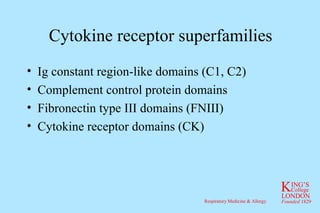
Cytokine receptor superfamilies Ig constant region-like domains (C1, C2) Complement control protein domains Fibronectin type III domains (FNIII) Cytokine receptor domains (CK)
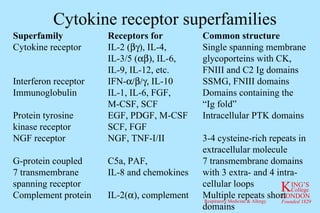
Cytokine receptor superfamilies Superfamily Receptors for Common structure Cytokine receptor IL-2 (  ), IL-4, Single spanning membrane IL-3/5 (  ), IL-6, glycoporteins with CK, IL-9, IL-12, etc. FNIII and C2 Ig domains Interferon receptor IFN-  , IL-10 SSMG, FNIII domains Immunoglobulin IL-1, IL-6, FGF, Domains containing the M-CSF, SCF “Ig fold” Protein tyrosine EGF, PDGF, M-CSF Intracellular PTK domains kinase receptor SCF, FGF NGF receptor NGF, TNF-I/II 3-4 cysteine-rich repeats in extracellular molecule G-protein coupled C5a, PAF,  7 transmembrane domains 7 transmembrane IL-8 and chemokines with 3 extra- and 4 intra- spanning receptor cellular loops Complement protein IL-2(  ), complement Multiple repeats short  domains
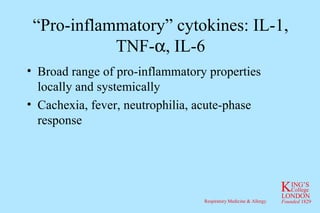
“Pro-inflammatory” cytokines: IL-1, TNF-  , IL-6 Broad range of pro-inflammatory properties locally and systemically Cachexia, fever, neutrophilia, acute-phase response
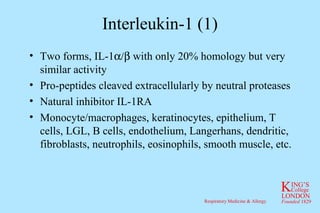
Interleukin-1 (1) Two forms, IL-1   with only 20% homology but very similar activity Pro-peptides cleaved extracellularly by neutral proteases Natural inhibitor IL-1RA Monocyte/macrophages, keratinocytes, epithelium, T cells, LGL, B cells, endothelium, Langerhans, dendritic, fibroblasts, neutrophils, eosinophils, smooth muscle, etc.
Interleukin-1 (2) Stimuli: toxins, haemaggluitinins, C5a, TNF-  , antigen-specific T cell contact Two receptors IL-RI/II (Ig superfamily) on leucocytes, dendritic, fibroblast, neural, endothelium, etc.
Interleukin-1 (3) Effects: Haematopoiesis Cytostatic to tumour cells; enhances cell-mediated tumour killing Other cytokines: IL-6, IL-8, TNF-  , etc. Fever, acute phase response T cell proliferation following antigen-specific activation Development of pre-B cells
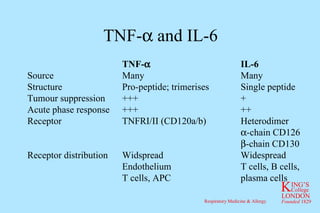
TNF-   and IL-6 TNF-  IL-6 Source Many Many Structure Pro-peptide; trimerises Single peptide Tumour suppression +++ + Acute phase response +++ ++ Receptor TNFRI/II (CD120a/b) Heterodimer  -chain CD126  -chain CD130 Receptor distribution Widspread Widespread Endothelium T cells, B cells, T cells, APC plasma cells
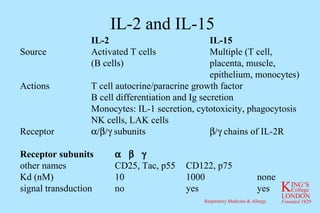
IL-2 and IL-15 IL-2 IL-15 Source Activated T cells Multiple (T cell, (B cells) placenta, muscle, epithelium, monocytes) Actions T cell autocrine/paracrine growth factor B cell differentiation and Ig secretion Monocytes: IL-1 secretion, cytotoxicity, phagocytosis NK cells, LAK cells Receptor   subunits   chains of IL-2R Receptor subunits  other names CD25, Tac, p55 CD122, p75 Kd (nM) 10 1000 none signal transduction no yes yes
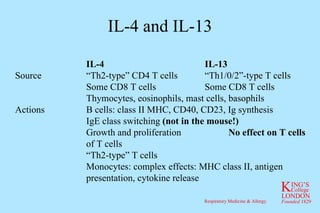
IL-4 and IL-13 IL-4 IL-13 Source “Th2-type” CD4 T cells “Th1/0/2”-type T cells Some CD8 T cells Some CD8 T cells Thymocytes, eosinophils, mast cells, basophils Actions B cells: class II MHC, CD40, CD23, Ig synthesis IgE class switching  (not in the mouse!) Growth and proliferation No effect on T cells of T cells “ Th2-type” T cells Monocytes: complex effects: MHC class II, antigen presentation, cytokine release
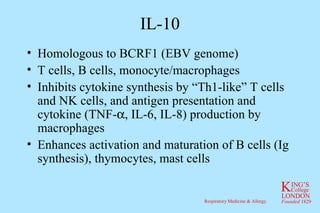
IL-10 Homologous to BCRF1 (EBV genome) T cells, B cells, monocyte/macrophages Inhibits cytokine synthesis by “Th1-like” T cells and NK cells, and antigen presentation and cytokine (TNF-  , IL-6, IL-8) production by macrophages Enhances activation and maturation of B cells (Ig synthesis), thymocytes, mast cells
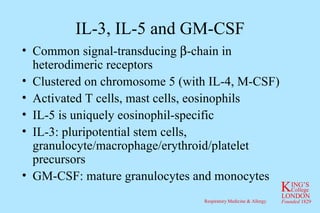
IL-3, IL-5 and GM-CSF Common signal-transducing   -chain in heterodimeric receptors Clustered on chromosome 5 (with IL-4, M-CSF) Activated T cells, mast cells, eosinophils IL-5 is uniquely eosinophil-specific IL-3: pluripotential stem cells, granulocyte/macrophage/erythroid/platelet precursors GM-CSF: mature granulocytes and monocytes
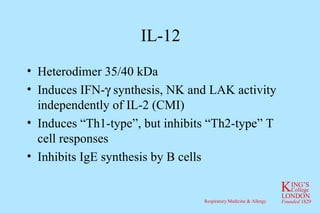
IL-12 Heterodimer 35/40 kDa Induces IFN-   synthesis, NK and LAK activity independently of IL-2 (CMI) Induces “Th1-type”, but inhibits “Th2-type” T cell responses Inhibits IgE synthesis by B cells
Interferon-  T cells and NK cells Antiparallel homodimer Receptor: single transmembrane protein with accessory protein. Expressed on T/B cells, APC, granulocytes, epithelial cells, endothelial cells, tumour cells Inhibits viral replication Activates macrophages: tumoricidal, microbicidal, IL-1, IL-6, TNF-  Class II MHC expression Prototype “Th1-type” cytokine
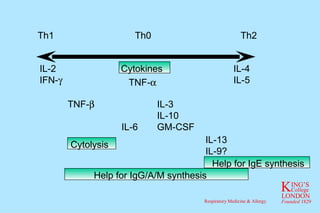
Th1 Th2 IL-2 IFN-  IL-4 IL-5 TNF-  IL-6 IL-3 IL-10 GM-CSF IL-13 IL-9? Cytolysis Help for IgE synthesis Help for IgG/A/M synthesis Th0 TNF-  Cytokines
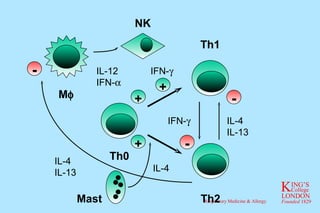
IFN-  IL-4 IL-13 Th1 Th2 Th0 IL-12 IFN-  IFN-  NK IL-4 IL-13 Mast IL-4 - - M  + - + +
Interleukin-18 Actions Growth of T cells and NK cells with production of IFN-  , TNF-  Synergises with IL-12 to induce IL-18R on T cells and activated B cells causing IFN-   release and inhibition of IgE synthesis Sources Monocyte/macrophages, intestinal epithelial cells, osteoblasts
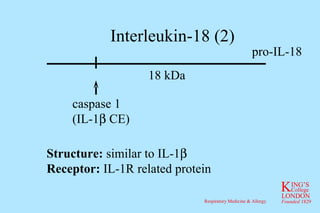
Interleukin-18 (2) pro-IL-18 18 kDa caspase 1 (IL-1   CE) Structure:  similar to IL-1  Receptor:  IL-1R related protein
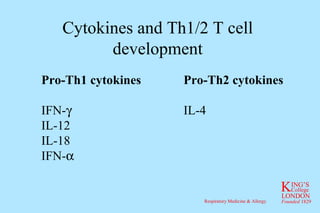
Cytokines and Th1/2 T cell development Pro-Th1 cytokines Pro-Th2 cytokines IFN-  IL-4 IL-12 IL-18 IFN- 
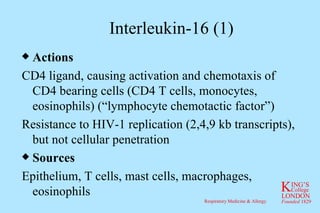
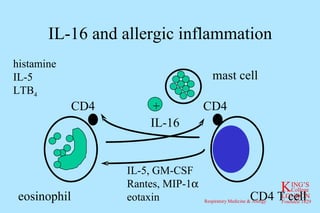
Interleukin-16 (1) Actions CD4 ligand, causing activation and chemotaxis of CD4 bearing cells (CD4 T cells, monocytes, eosinophils) (“lymphocyte chemotactic factor”) Resistance to HIV-1 replication (2,4,9 kb transcripts), but not cellular penetration Sources Epithelium, T cells, mast cells, macrophages, eosinophils
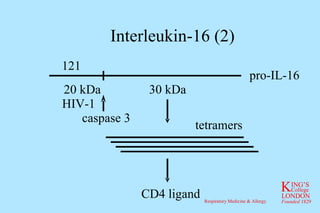
Interleukin-16 (2) 20 kDa 30 kDa pro-IL-16 caspase 3 121 HIV-1 tetramers CD4 ligand
IL-16 and allergic inflammation mast cell IL-5, GM-CSF Rantes, MIP-1  eotaxin IL-16 histamine IL-5 LTB 4 + eosinophil CD4 T cell CD4 CD4
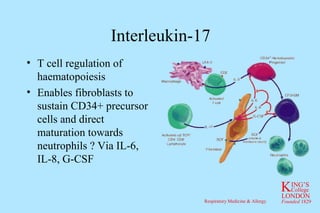
Interleukin-17 T cell regulation of haematopoiesis Enables fibroblasts to sustain CD34+ precursor cells and direct maturation towards neutrophils ? Via IL-6, IL-8, G-CSF
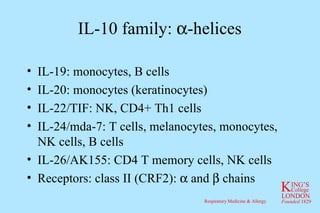
IL-10 family:   -helices IL-19: monocytes, B cells IL-20: monocytes (keratinocytes) IL-22/TIF: NK, CD4+ Th1 cells IL-24/mda-7: T cells, melanocytes, monocytes, NK cells, B cells IL-26/AK155: CD4 T memory cells, NK cells Receptors: class II (CRF2):    and    chains
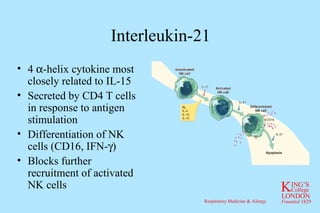
Interleukin-21 4   -helix cytokine most closely related to IL-15 Secreted by CD4 T cells in response to antigen stimulation Differentiation of NK cells (CD16, IFN-  ) Blocks further recruitment of activated NK cells
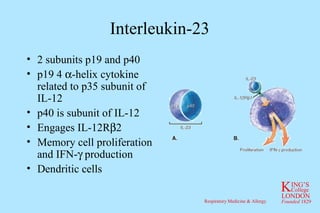
Interleukin-23 2 subunits p19 and p40 p19 4   -helix cytokine related to p35 subunit of IL-12 p40 is subunit of IL-12 Engages IL-12R  2 Memory cell proliferation and IFN-   production Dendritic cells
Chemokines
Chemokines Small MW (8-10 kDa) peptides: mediators of acute inflammatory responses Chemotactic cytokines Chemoattraction, activation, diapedesis of granulocytes (also T cells/monocytes) Angiogenic Bind to heparin and stromal proteoglycans IgE-independent basophil degranulation
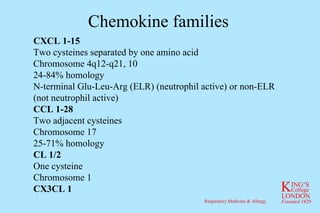
Chemokine families CXCL 1-15 Two cysteines separated by one amino acid Chromosome 4q12-q21, 10 24-84% homology N-terminal Glu-Leu-Arg (ELR) (neutrophil active) or non-ELR (not neutrophil active) CCL 1-28 Two adjacent cysteines Chromosome 17 25-71% homology CL 1/2 One cysteine Chromosome 1 CX3CL 1
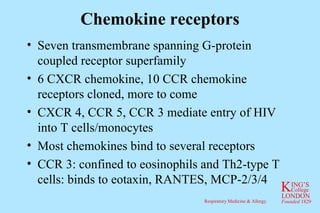
Chemokine receptors Seven transmembrane spanning G-protein coupled receptor superfamily 6 CXCR chemokine, 10 CCR chemokine receptors cloned, more to come CXCR 4, CCR 5, CCR 3 mediate entry of HIV into T cells/monocytes Most chemokines bind to several receptors CCR 3: confined to eosinophils and Th2-type T cells: binds to eotaxin, RANTES, MCP-2/3/4
Chemokine receptors G-protein coupled, 7 transmembrane spanning Chemokine selectivity and range of expression on leukocytes overlap extensively Some constitutive, some inducible, some susceptible to down-regulation
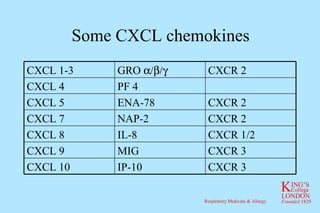
CXCL chemokines Neutrophil chemotaxis (IL-8 most potent) T cell chemotaxis (e.g. IL-8 CD8+ T cells) Neutrophil activation Suppress (IL-8, GRO-  , PF4) or stimulate (SDF-1) myeloid colony formation Stimulate (ELR subgroup) or suppress (non-ELR subgroup) angiogenesis Fibroblast collagen synthesis (CTAP III) Post-translational modification, e.g. PBP and NAP-2
Some CXCL chemokines CXCR 3 IP-10 CXCL 10 CXCR 3 MIG CXCL 9 CXCR 1/2 IL-8 CXCL 8 CXCR 2 NAP-2 CXCL 7 CXCR 2 ENA-78 CXCL 5  PF 4 CXCL 4 CXCR 2 GRO   CXCL 1-3
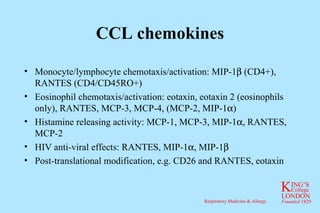
CCL chemokines Monocyte/lymphocyte chemotaxis/activation: MIP-1  (CD4+), RANTES (CD4/CD45RO+) Eosinophil chemotaxis/activation: eotaxin, eotaxin 2 (eosinophils only), RANTES, MCP-3, MCP-4, (MCP-2, MIP-1  ) Histamine releasing activity: MCP-1, MCP-3, MIP-1  , RANTES, MCP-2 HIV anti-viral effects: RANTES, MIP-1  , MIP-1  Post-translational modification, e.g. CD26 and RANTES, eotaxin
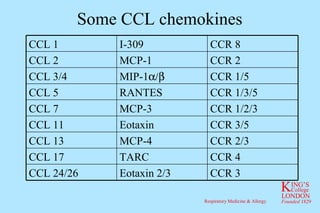
Some CCL chemokines CCR 3 Eotaxin 2/3 CCL 24/26 CCR 4 TARC CCL 17 CCR 2/3 MCP-4 CCL 13 CCR 3/5 Eotaxin CCL 11 CCR 1/2/3 MCP-3 CCL 7 CCR 1/3/5 RANTES CCL 5 CCR 1/5 MIP-1  CCL 3/4 CCR 2 MCP-1 CCL 2 CCR 8 I-309 CCL 1
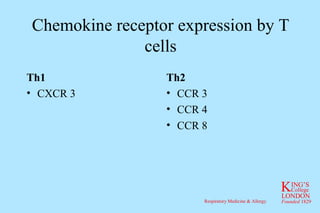
Chemokine receptor expression by T cells Th1 CXCR 3 Th2 CCR 3 CCR 4 CCR 8
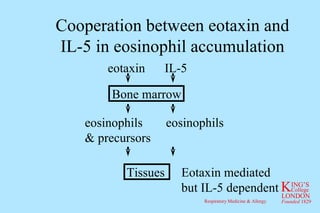
Cooperation between eotaxin and IL-5 in eosinophil accumulation eotaxin IL-5 eosinophils & precursors eosinophils Eotaxin mediated but IL-5 dependent Bone marrow Tissues
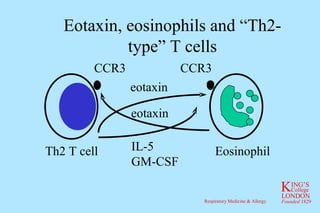
Eotaxin, eosinophils and “Th2-type” T cells Th2 T cell Eosinophil CCR3 CCR3 eotaxin eotaxin IL-5 GM-CSF
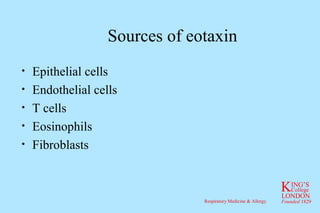
Sources of eotaxin Epithelial cells Endothelial cells T cells Eosinophils Fibroblasts
Lipid mediators (leukotrienes, prostaglandins)
Leukotrienes and prostanoids Ubiquitous oxygenated fatty acids Physiological functions: temperature regulation, coagulation, parturition, blood pressure Newly formed mediators
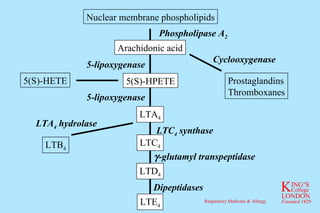
5(S)-HETE Prostaglandins Thromboxanes LTB 4 Nuclear membrane phospholipids 5(S)-HPETE LTA 4 LTC 4 LTD 4 Arachidonic acid LTE 4 Phospholipase A 2 5-lipoxygenase 5-lipoxygenase LTA 4  hydrolase  -glutamyl transpeptidase LTC 4  synthase Dipeptidases Cyclooxygenase
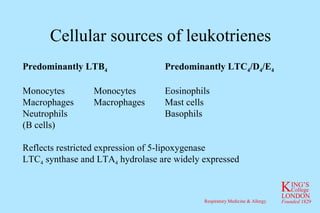
Cellular sources of leukotrienes Predominantly LTB 4 Predominantly LTC 4 /D 4 /E 4 Monocytes Monocytes Eosinophils Macrophages Macrophages Mast cells Neutrophils Basophils (B cells) Reflects restricted expression of 5-lipoxygenase LTC 4  synthase and LTA 4  hydrolase are widely expressed
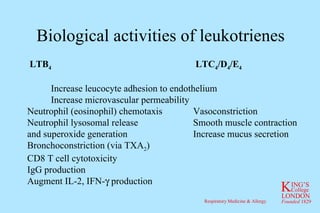
Biological activities of leukotrienes LTB 4  LTC 4 /D 4 /E 4 Increase leucocyte adhesion to endothelium Increase microvascular permeability Neutrophil (eosinophil) chemotaxis Vasoconstriction Neutrophil lysosomal release Smooth muscle contraction and superoxide generation Increase mucus secretion Bronchoconstriction (via TXA 2 ) CD8 T cell cytotoxicity IgG production Augment IL-2, IFN-   production
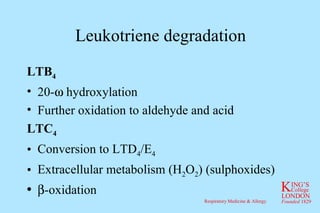
Leukotriene degradation LTB 4 20-   hydroxylation Further oxidation to aldehyde and acid LTC 4 Conversion to LTD 4 /E 4 Extracellular metabolism (H 2 O 2 ) (sulphoxides)  -oxidation
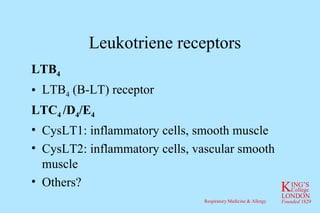
Leukotriene receptors LTB 4 LTB 4  (B-LT) receptor LTC 4  /D 4 /E 4 CysLT1: inflammatory cells, smooth muscle CysLT2: inflammatory cells, vascular smooth muscle Others?
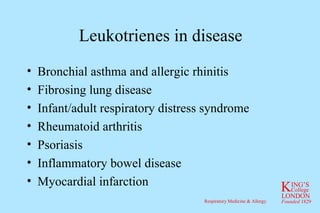
Leukotrienes in disease Bronchial asthma and allergic rhinitis Fibrosing lung disease Infant/adult respiratory distress syndrome Rheumatoid arthritis Psoriasis Inflammatory bowel disease Myocardial infarction
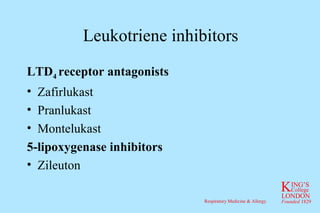
Leukotriene inhibitors LTD 4  receptor antagonists Zafirlukast Pranlukast Montelukast 5-lipoxygenase inhibitors Zileuton
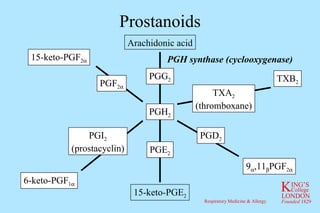
Prostanoids Arachidonic acid 15-keto-PGE 2 PGG 2 PGH 2 PGE 2 PGH synthase (cyclooxygenase) 15-keto-PGF 2  PGF 2  6-keto-PGF 1  PGI 2 (prostacyclin) TXB 2 TXA 2 (thromboxane) 9  ,11  PGF 2  PGD 2
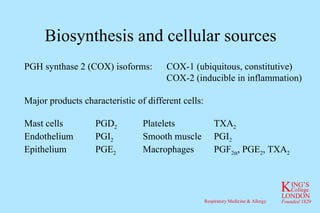
Biosynthesis and cellular sources PGH synthase 2 (COX) isoforms: COX-1 (ubiquitous, constitutive) COX-2 (inducible in inflammation) Major products characteristic of different cells: Mast cells PGD 2 Platelets TXA 2 Endothelium PGI 2 Smooth muscle PGI 2 Epithelium PGE 2 Macrophages PGF 2  , PGE 2 , TXA 2
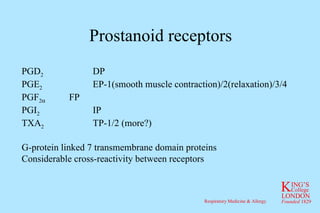
Prostanoid receptors PGD 2 DP PGE 2 EP-1(smooth muscle contraction)/2(relaxation)/3/4 PGF 2  FP PGI 2 IP TXA 2 TP-1/2 (more?) G-protein linked 7 transmembrane domain proteins Considerable cross-reactivity between receptors
Prostanoids: pro-inflammatory actions Pain Swelling Vascular engorgement Smooth muscle contraction/relaxation
Neuropeptides
Tachykinins Substance P (SP), neurokinin A/B Neuropeptide K (NPK), NP-  Found in neurons in the CNS only (NKB), or in the CNS and peripheral nerves (SP, NKA) Somatic sensory (C-fibre) nerves Sensitive to capsaicin
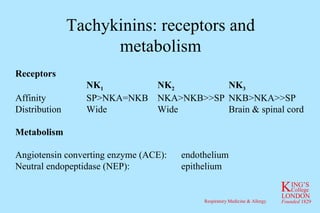
Tachykinins: receptors and metabolism Receptors NK 1 NK 2 NK 3 Affinity SP>NKA=NKB NKA>NKB>>SP NKB>NKA>>SP Distribution Wide Wide Brain & spinal cord Metabolism Angiotensin converting enzyme (ACE):  endothelium Neutral endopeptidase (NEP):  epithelium
Tachykinins: inflammatory efects Non-adrenergic, non-cholinergic (NANC) effects of peripheral nerve stimulation Direct or via axon reflexes: “neurogenic inflammation” Smooth muscle contraction, plasma leakage, mucus secretion, vasodilatation Mast cell degranulation (SP) Priming and adherence of granulocytes
Calcitonin gene-related peptide (CGRP)  -CGRP (separate gene)  -CGRP (alternative splicing of calcitonin gene) Widely distributed in peripheral neurones Metabolised by mast cell tryptase and chymase (also NEP) High-affinity binding sites in vascular smooth muscle
CGRP: pro-inflammatory effects Relaxation of smooth muscle, particularly large and small blood vessels, mediated via NO release Enhances, but does not cause vascular leakage Increases neutrophil adherence, inhibits T cell proliferation
Other neuropeptides Vasoactive intestinal peptide (VIP) VIP-related peptides (PHM, PHV, helodermin, helospectins) Neuropeptide tyrosine Opioids Gastrin-releasing peptide Galanin
Other possible effects of neuropeptides Pain and hyperalgesia Smooth muscle contraction Vascular leakage Arthritis: pain, fibroblast and synoviocyte proliferation
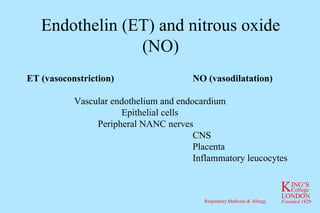
Endothelin (ET) and nitrous oxide (NO) ET (vasoconstriction) NO (vasodilatation) Vascular endothelium and endocardium Epithelial cells Peripheral NANC nerves CNS Placenta Inflammatory leucocytes
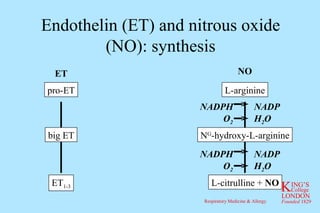
Endothelin (ET) and nitrous oxide (NO): synthesis ET NO pro-ET ET 1-3 L-arginine L-citrulline +  NO N G -hydroxy-L-arginine big ET NADPH NADP O 2 H 2 O NADPH NADP O 2 H 2 O
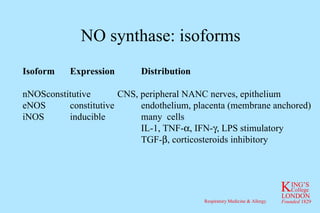
NO synthase: isoforms Isoform Expression Distribution nNOS constitutive CNS, peripheral NANC nerves, epithelium eNOS constitutive endothelium, placenta (membrane anchored) iNOS inducible many  cells IL-1, TNF-  , IFN-  , LPS stimulatory TGF-  , corticosteroids inhibitory
ET and NO: signalling ET 7 transmembrane domain receptor coupled to G-protein Activates PLC and PKC, AP-1, gene expression NO Acts by local diffusion Binds to haem moiety of guanylyl cyclase, elevating cGMP Non-specific cytotoxic/cytostatic effects: forms peroxynitrate which binds to Fe 2+
Mediators of Inflammation Cytokines Chemokines Lipid mediators (leukotrienes, prostaglandins) Neuropeptides Endothelin and NO

Inflammatory Mediators Corrigan

  • 1.
    Inflammatory mediators DrChris Corrigan Reader/Consultant GKT School of Medicine
  • 2.
    Mediators of InflammationCytokines Chemokines Lipid mediators (leukotrienes, prostaglandins) Neuropeptides Endothelin and NO
  • 3.
  • 4.
    Cytokines (1) Soluble(glyco)proteins produced by leucocytes and other cell types Chemical communicators between cells, but usually not end effector molecules Bind to specific receptors on the surface of target cells Most are growth/differentiation factors for haematopoietic cells; some have systemic effects
  • 5.
    Cytokines (2) Pleiotropicitiyand redundancy of functional effects Tend to mediate localised effects (very short half-life in circulation), although some act systemically Receptors typically comprise two or more polypeptide chains which can be grouped into families
  • 6.
    Cytokines (3) Actnot singly but in patterns Typically , any one cytokine will affect the expression of other cytokines and/or their receptors Problem of implicating particular cytokines in disease processes: Correlation with disease severity Use of agonists and antagonists
  • 7.
    Regulation of cytokineexpression Constitutive (steady state haematopoiesis, e.g. M-CSF, G-CSF, SCF, IL-6) Stored pre-synthesised: In granules (e.g. GM-CSF, TGF-  On membranes (e.g. TNF-  ) Complexed to extracellular matrix (e.g. TGF-  ) Most are not constitutively expressed but synthesised rapidly in response to stimulation and/or other cytokines
  • 8.
    Other cytokine controlmechanisms Processing (cleavage, precursors) Sequestration Soluble binding proteins (including soluble receptors) Naturally occurring antagonists (IL-1RA) Modulation of receptors
  • 9.
    Cytokine receptor superfamiliesIg constant region-like domains (C1, C2) Complement control protein domains Fibronectin type III domains (FNIII) Cytokine receptor domains (CK)
  • 10.
    Cytokine receptor superfamiliesSuperfamily Receptors for Common structure Cytokine receptor IL-2 (  ), IL-4, Single spanning membrane IL-3/5 (  ), IL-6, glycoporteins with CK, IL-9, IL-12, etc. FNIII and C2 Ig domains Interferon receptor IFN-  , IL-10 SSMG, FNIII domains Immunoglobulin IL-1, IL-6, FGF, Domains containing the M-CSF, SCF “Ig fold” Protein tyrosine EGF, PDGF, M-CSF Intracellular PTK domains kinase receptor SCF, FGF NGF receptor NGF, TNF-I/II 3-4 cysteine-rich repeats in extracellular molecule G-protein coupled C5a, PAF, 7 transmembrane domains 7 transmembrane IL-8 and chemokines with 3 extra- and 4 intra- spanning receptor cellular loops Complement protein IL-2(  ), complement Multiple repeats short domains
  • 11.
    “Pro-inflammatory” cytokines: IL-1,TNF-  , IL-6 Broad range of pro-inflammatory properties locally and systemically Cachexia, fever, neutrophilia, acute-phase response
  • 12.
    Interleukin-1 (1) Twoforms, IL-1  with only 20% homology but very similar activity Pro-peptides cleaved extracellularly by neutral proteases Natural inhibitor IL-1RA Monocyte/macrophages, keratinocytes, epithelium, T cells, LGL, B cells, endothelium, Langerhans, dendritic, fibroblasts, neutrophils, eosinophils, smooth muscle, etc.
  • 13.
    Interleukin-1 (2) Stimuli:toxins, haemaggluitinins, C5a, TNF-  , antigen-specific T cell contact Two receptors IL-RI/II (Ig superfamily) on leucocytes, dendritic, fibroblast, neural, endothelium, etc.
  • 14.
    Interleukin-1 (3) Effects:Haematopoiesis Cytostatic to tumour cells; enhances cell-mediated tumour killing Other cytokines: IL-6, IL-8, TNF-  , etc. Fever, acute phase response T cell proliferation following antigen-specific activation Development of pre-B cells
  • 15.
    TNF-  and IL-6 TNF-  IL-6 Source Many Many Structure Pro-peptide; trimerises Single peptide Tumour suppression +++ + Acute phase response +++ ++ Receptor TNFRI/II (CD120a/b) Heterodimer  -chain CD126  -chain CD130 Receptor distribution Widspread Widespread Endothelium T cells, B cells, T cells, APC plasma cells
  • 16.
    IL-2 and IL-15IL-2 IL-15 Source Activated T cells Multiple (T cell, (B cells) placenta, muscle, epithelium, monocytes) Actions T cell autocrine/paracrine growth factor B cell differentiation and Ig secretion Monocytes: IL-1 secretion, cytotoxicity, phagocytosis NK cells, LAK cells Receptor  subunits  chains of IL-2R Receptor subunits  other names CD25, Tac, p55 CD122, p75 Kd (nM) 10 1000 none signal transduction no yes yes
  • 17.
    IL-4 and IL-13IL-4 IL-13 Source “Th2-type” CD4 T cells “Th1/0/2”-type T cells Some CD8 T cells Some CD8 T cells Thymocytes, eosinophils, mast cells, basophils Actions B cells: class II MHC, CD40, CD23, Ig synthesis IgE class switching (not in the mouse!) Growth and proliferation No effect on T cells of T cells “ Th2-type” T cells Monocytes: complex effects: MHC class II, antigen presentation, cytokine release
  • 18.
    IL-10 Homologous toBCRF1 (EBV genome) T cells, B cells, monocyte/macrophages Inhibits cytokine synthesis by “Th1-like” T cells and NK cells, and antigen presentation and cytokine (TNF-  , IL-6, IL-8) production by macrophages Enhances activation and maturation of B cells (Ig synthesis), thymocytes, mast cells
  • 19.
    IL-3, IL-5 andGM-CSF Common signal-transducing  -chain in heterodimeric receptors Clustered on chromosome 5 (with IL-4, M-CSF) Activated T cells, mast cells, eosinophils IL-5 is uniquely eosinophil-specific IL-3: pluripotential stem cells, granulocyte/macrophage/erythroid/platelet precursors GM-CSF: mature granulocytes and monocytes
  • 20.
    IL-12 Heterodimer 35/40kDa Induces IFN-  synthesis, NK and LAK activity independently of IL-2 (CMI) Induces “Th1-type”, but inhibits “Th2-type” T cell responses Inhibits IgE synthesis by B cells
  • 21.
    Interferon-  Tcells and NK cells Antiparallel homodimer Receptor: single transmembrane protein with accessory protein. Expressed on T/B cells, APC, granulocytes, epithelial cells, endothelial cells, tumour cells Inhibits viral replication Activates macrophages: tumoricidal, microbicidal, IL-1, IL-6, TNF-  Class II MHC expression Prototype “Th1-type” cytokine
  • 22.
    Th1 Th2 IL-2IFN-  IL-4 IL-5 TNF-  IL-6 IL-3 IL-10 GM-CSF IL-13 IL-9? Cytolysis Help for IgE synthesis Help for IgG/A/M synthesis Th0 TNF-  Cytokines
  • 23.
    IFN-  IL-4IL-13 Th1 Th2 Th0 IL-12 IFN-  IFN-  NK IL-4 IL-13 Mast IL-4 - - M  + - + +
  • 24.
    Interleukin-18 Actions Growthof T cells and NK cells with production of IFN-  , TNF-  Synergises with IL-12 to induce IL-18R on T cells and activated B cells causing IFN-  release and inhibition of IgE synthesis Sources Monocyte/macrophages, intestinal epithelial cells, osteoblasts
  • 25.
    Interleukin-18 (2) pro-IL-1818 kDa caspase 1 (IL-1  CE) Structure: similar to IL-1  Receptor: IL-1R related protein
  • 26.
    Cytokines and Th1/2T cell development Pro-Th1 cytokines Pro-Th2 cytokines IFN-  IL-4 IL-12 IL-18 IFN- 
  • 27.
    Interleukin-16 (1) ActionsCD4 ligand, causing activation and chemotaxis of CD4 bearing cells (CD4 T cells, monocytes, eosinophils) (“lymphocyte chemotactic factor”) Resistance to HIV-1 replication (2,4,9 kb transcripts), but not cellular penetration Sources Epithelium, T cells, mast cells, macrophages, eosinophils
  • 28.
    Interleukin-16 (2) 20kDa 30 kDa pro-IL-16 caspase 3 121 HIV-1 tetramers CD4 ligand
  • 29.
    IL-16 and allergicinflammation mast cell IL-5, GM-CSF Rantes, MIP-1  eotaxin IL-16 histamine IL-5 LTB 4 + eosinophil CD4 T cell CD4 CD4
  • 30.
    Interleukin-17 T cellregulation of haematopoiesis Enables fibroblasts to sustain CD34+ precursor cells and direct maturation towards neutrophils ? Via IL-6, IL-8, G-CSF
  • 31.
    IL-10 family:  -helices IL-19: monocytes, B cells IL-20: monocytes (keratinocytes) IL-22/TIF: NK, CD4+ Th1 cells IL-24/mda-7: T cells, melanocytes, monocytes, NK cells, B cells IL-26/AK155: CD4 T memory cells, NK cells Receptors: class II (CRF2):  and  chains
  • 32.
    Interleukin-21 4  -helix cytokine most closely related to IL-15 Secreted by CD4 T cells in response to antigen stimulation Differentiation of NK cells (CD16, IFN-  ) Blocks further recruitment of activated NK cells
  • 33.
    Interleukin-23 2 subunitsp19 and p40 p19 4  -helix cytokine related to p35 subunit of IL-12 p40 is subunit of IL-12 Engages IL-12R  2 Memory cell proliferation and IFN-  production Dendritic cells
  • 34.
  • 35.
    Chemokines Small MW(8-10 kDa) peptides: mediators of acute inflammatory responses Chemotactic cytokines Chemoattraction, activation, diapedesis of granulocytes (also T cells/monocytes) Angiogenic Bind to heparin and stromal proteoglycans IgE-independent basophil degranulation
  • 36.
    Chemokine families CXCL1-15 Two cysteines separated by one amino acid Chromosome 4q12-q21, 10 24-84% homology N-terminal Glu-Leu-Arg (ELR) (neutrophil active) or non-ELR (not neutrophil active) CCL 1-28 Two adjacent cysteines Chromosome 17 25-71% homology CL 1/2 One cysteine Chromosome 1 CX3CL 1
  • 37.
    Chemokine receptors Seventransmembrane spanning G-protein coupled receptor superfamily 6 CXCR chemokine, 10 CCR chemokine receptors cloned, more to come CXCR 4, CCR 5, CCR 3 mediate entry of HIV into T cells/monocytes Most chemokines bind to several receptors CCR 3: confined to eosinophils and Th2-type T cells: binds to eotaxin, RANTES, MCP-2/3/4
  • 38.
    Chemokine receptors G-proteincoupled, 7 transmembrane spanning Chemokine selectivity and range of expression on leukocytes overlap extensively Some constitutive, some inducible, some susceptible to down-regulation
  • 39.
    CXCL chemokines Neutrophilchemotaxis (IL-8 most potent) T cell chemotaxis (e.g. IL-8 CD8+ T cells) Neutrophil activation Suppress (IL-8, GRO-  , PF4) or stimulate (SDF-1) myeloid colony formation Stimulate (ELR subgroup) or suppress (non-ELR subgroup) angiogenesis Fibroblast collagen synthesis (CTAP III) Post-translational modification, e.g. PBP and NAP-2
  • 40.
    Some CXCL chemokinesCXCR 3 IP-10 CXCL 10 CXCR 3 MIG CXCL 9 CXCR 1/2 IL-8 CXCL 8 CXCR 2 NAP-2 CXCL 7 CXCR 2 ENA-78 CXCL 5 PF 4 CXCL 4 CXCR 2 GRO  CXCL 1-3
  • 41.
    CCL chemokines Monocyte/lymphocytechemotaxis/activation: MIP-1  (CD4+), RANTES (CD4/CD45RO+) Eosinophil chemotaxis/activation: eotaxin, eotaxin 2 (eosinophils only), RANTES, MCP-3, MCP-4, (MCP-2, MIP-1  ) Histamine releasing activity: MCP-1, MCP-3, MIP-1  , RANTES, MCP-2 HIV anti-viral effects: RANTES, MIP-1  , MIP-1  Post-translational modification, e.g. CD26 and RANTES, eotaxin
  • 42.
    Some CCL chemokinesCCR 3 Eotaxin 2/3 CCL 24/26 CCR 4 TARC CCL 17 CCR 2/3 MCP-4 CCL 13 CCR 3/5 Eotaxin CCL 11 CCR 1/2/3 MCP-3 CCL 7 CCR 1/3/5 RANTES CCL 5 CCR 1/5 MIP-1  CCL 3/4 CCR 2 MCP-1 CCL 2 CCR 8 I-309 CCL 1
  • 43.
    Chemokine receptor expressionby T cells Th1 CXCR 3 Th2 CCR 3 CCR 4 CCR 8
  • 44.
    Cooperation between eotaxinand IL-5 in eosinophil accumulation eotaxin IL-5 eosinophils & precursors eosinophils Eotaxin mediated but IL-5 dependent Bone marrow Tissues
  • 45.
    Eotaxin, eosinophils and“Th2-type” T cells Th2 T cell Eosinophil CCR3 CCR3 eotaxin eotaxin IL-5 GM-CSF
  • 46.
    Sources of eotaxinEpithelial cells Endothelial cells T cells Eosinophils Fibroblasts
  • 47.
  • 48.
    Leukotrienes and prostanoidsUbiquitous oxygenated fatty acids Physiological functions: temperature regulation, coagulation, parturition, blood pressure Newly formed mediators
  • 49.
    5(S)-HETE Prostaglandins ThromboxanesLTB 4 Nuclear membrane phospholipids 5(S)-HPETE LTA 4 LTC 4 LTD 4 Arachidonic acid LTE 4 Phospholipase A 2 5-lipoxygenase 5-lipoxygenase LTA 4 hydrolase  -glutamyl transpeptidase LTC 4 synthase Dipeptidases Cyclooxygenase
  • 50.
    Cellular sources ofleukotrienes Predominantly LTB 4 Predominantly LTC 4 /D 4 /E 4 Monocytes Monocytes Eosinophils Macrophages Macrophages Mast cells Neutrophils Basophils (B cells) Reflects restricted expression of 5-lipoxygenase LTC 4 synthase and LTA 4 hydrolase are widely expressed
  • 51.
    Biological activities ofleukotrienes LTB 4 LTC 4 /D 4 /E 4 Increase leucocyte adhesion to endothelium Increase microvascular permeability Neutrophil (eosinophil) chemotaxis Vasoconstriction Neutrophil lysosomal release Smooth muscle contraction and superoxide generation Increase mucus secretion Bronchoconstriction (via TXA 2 ) CD8 T cell cytotoxicity IgG production Augment IL-2, IFN-  production
  • 52.
    Leukotriene degradation LTB4 20-  hydroxylation Further oxidation to aldehyde and acid LTC 4 Conversion to LTD 4 /E 4 Extracellular metabolism (H 2 O 2 ) (sulphoxides)  -oxidation
  • 53.
    Leukotriene receptors LTB4 LTB 4 (B-LT) receptor LTC 4 /D 4 /E 4 CysLT1: inflammatory cells, smooth muscle CysLT2: inflammatory cells, vascular smooth muscle Others?
  • 54.
    Leukotrienes in diseaseBronchial asthma and allergic rhinitis Fibrosing lung disease Infant/adult respiratory distress syndrome Rheumatoid arthritis Psoriasis Inflammatory bowel disease Myocardial infarction
  • 55.
    Leukotriene inhibitors LTD4 receptor antagonists Zafirlukast Pranlukast Montelukast 5-lipoxygenase inhibitors Zileuton
  • 56.
    Prostanoids Arachidonic acid15-keto-PGE 2 PGG 2 PGH 2 PGE 2 PGH synthase (cyclooxygenase) 15-keto-PGF 2  PGF 2  6-keto-PGF 1  PGI 2 (prostacyclin) TXB 2 TXA 2 (thromboxane) 9  ,11  PGF 2  PGD 2
  • 57.
    Biosynthesis and cellularsources PGH synthase 2 (COX) isoforms: COX-1 (ubiquitous, constitutive) COX-2 (inducible in inflammation) Major products characteristic of different cells: Mast cells PGD 2 Platelets TXA 2 Endothelium PGI 2 Smooth muscle PGI 2 Epithelium PGE 2 Macrophages PGF 2  , PGE 2 , TXA 2
  • 58.
    Prostanoid receptors PGD2 DP PGE 2 EP-1(smooth muscle contraction)/2(relaxation)/3/4 PGF 2  FP PGI 2 IP TXA 2 TP-1/2 (more?) G-protein linked 7 transmembrane domain proteins Considerable cross-reactivity between receptors
  • 59.
    Prostanoids: pro-inflammatory actionsPain Swelling Vascular engorgement Smooth muscle contraction/relaxation
  • 60.
  • 61.
    Tachykinins Substance P(SP), neurokinin A/B Neuropeptide K (NPK), NP-  Found in neurons in the CNS only (NKB), or in the CNS and peripheral nerves (SP, NKA) Somatic sensory (C-fibre) nerves Sensitive to capsaicin
  • 62.
    Tachykinins: receptors andmetabolism Receptors NK 1 NK 2 NK 3 Affinity SP>NKA=NKB NKA>NKB>>SP NKB>NKA>>SP Distribution Wide Wide Brain & spinal cord Metabolism Angiotensin converting enzyme (ACE): endothelium Neutral endopeptidase (NEP): epithelium
  • 63.
    Tachykinins: inflammatory efectsNon-adrenergic, non-cholinergic (NANC) effects of peripheral nerve stimulation Direct or via axon reflexes: “neurogenic inflammation” Smooth muscle contraction, plasma leakage, mucus secretion, vasodilatation Mast cell degranulation (SP) Priming and adherence of granulocytes
  • 64.
    Calcitonin gene-related peptide(CGRP)  -CGRP (separate gene)  -CGRP (alternative splicing of calcitonin gene) Widely distributed in peripheral neurones Metabolised by mast cell tryptase and chymase (also NEP) High-affinity binding sites in vascular smooth muscle
  • 65.
    CGRP: pro-inflammatory effectsRelaxation of smooth muscle, particularly large and small blood vessels, mediated via NO release Enhances, but does not cause vascular leakage Increases neutrophil adherence, inhibits T cell proliferation
  • 66.
    Other neuropeptides Vasoactiveintestinal peptide (VIP) VIP-related peptides (PHM, PHV, helodermin, helospectins) Neuropeptide tyrosine Opioids Gastrin-releasing peptide Galanin
  • 67.
    Other possible effectsof neuropeptides Pain and hyperalgesia Smooth muscle contraction Vascular leakage Arthritis: pain, fibroblast and synoviocyte proliferation
  • 68.
    Endothelin (ET) andnitrous oxide (NO) ET (vasoconstriction) NO (vasodilatation) Vascular endothelium and endocardium Epithelial cells Peripheral NANC nerves CNS Placenta Inflammatory leucocytes
  • 69.
    Endothelin (ET) andnitrous oxide (NO): synthesis ET NO pro-ET ET 1-3 L-arginine L-citrulline + NO N G -hydroxy-L-arginine big ET NADPH NADP O 2 H 2 O NADPH NADP O 2 H 2 O
  • 70.
    NO synthase: isoformsIsoform Expression Distribution nNOS constitutive CNS, peripheral NANC nerves, epithelium eNOS constitutive endothelium, placenta (membrane anchored) iNOS inducible many cells IL-1, TNF-  , IFN-  , LPS stimulatory TGF-  , corticosteroids inhibitory
  • 71.
    ET and NO:signalling ET 7 transmembrane domain receptor coupled to G-protein Activates PLC and PKC, AP-1, gene expression NO Acts by local diffusion Binds to haem moiety of guanylyl cyclase, elevating cGMP Non-specific cytotoxic/cytostatic effects: forms peroxynitrate which binds to Fe 2+
  • 72.
    Mediators of InflammationCytokines Chemokines Lipid mediators (leukotrienes, prostaglandins) Neuropeptides Endothelin and NO