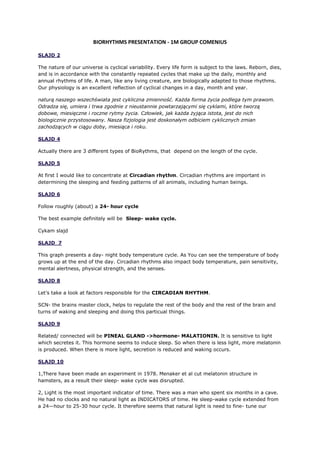
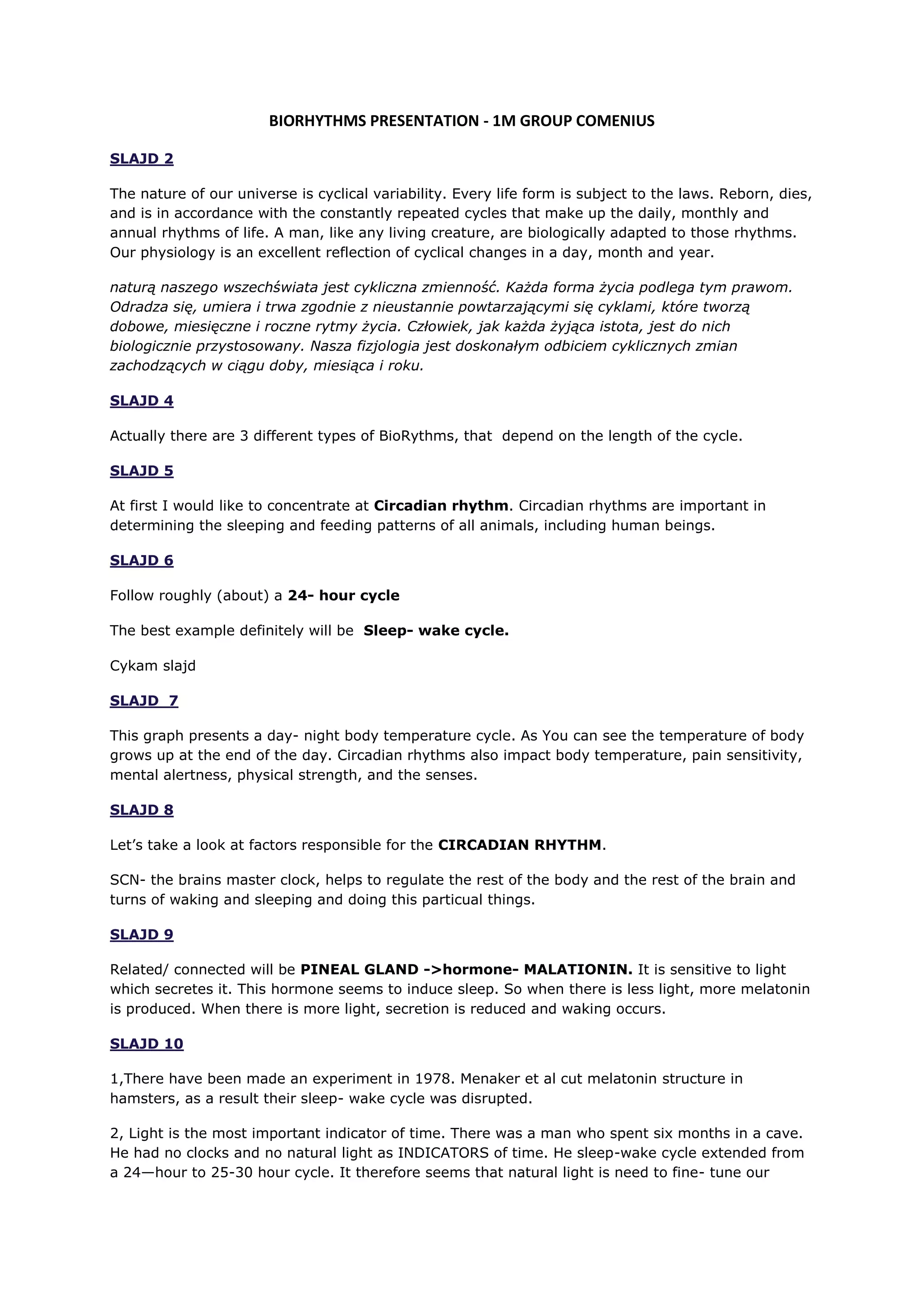
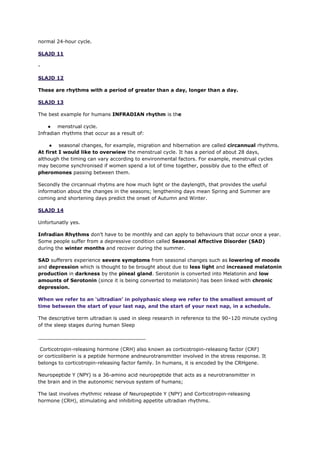
This document discusses different biological rhythms in humans, including circadian, infradian, and ultradian rhythms. Circadian rhythms, like the sleep-wake cycle, occur over approximately 24 hours and are regulated by the brain's suprachiasmatic nucleus and the pineal gland's production of melatonin in response to light. Infradian rhythms have periods longer than a day, such as the menstrual cycle. Ultradian rhythms have periods shorter than a day and influence appetite through hormones like neuropeptide Y and corticotropin-releasing hormone. Disruptions to these natural rhythms can cause issues like seasonal affective disorder.