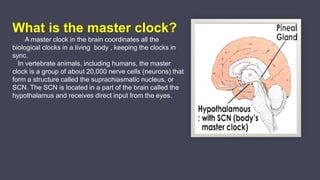
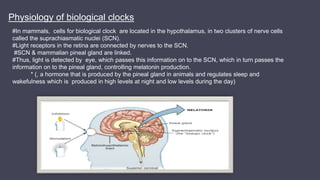
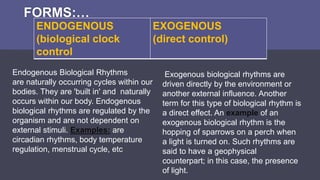
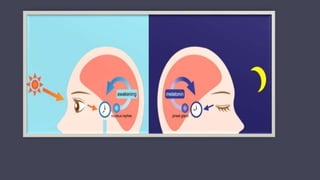
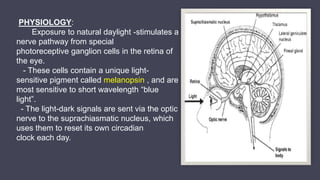
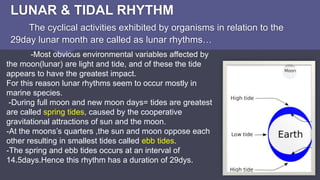
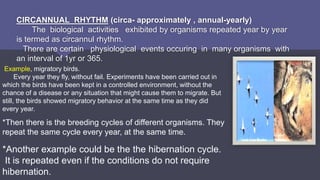
The biological clock controls periodic functions in living organisms like sleep cycles and photosynthesis. The suprachiasmatic nucleus acts as the master clock in the brain, keeping other biological clocks in sync and resetting them daily in response to light, temperature, and other cues. Circadian rhythms occur over 24 hours, like sleep-wake cycles, while circannual rhythms repeat yearly like bird migration. Lunar and tidal rhythms are influenced by the moon's phases. Photoperiodism refers to behavioral responses to changes in daily light/dark cycles and influences plant flowering and animal reproduction. Disruptions to biological clocks can cause disorders like jet lag.