Downloaded 122 times

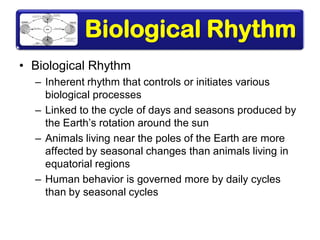
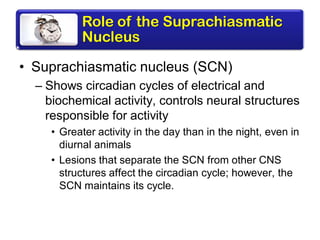
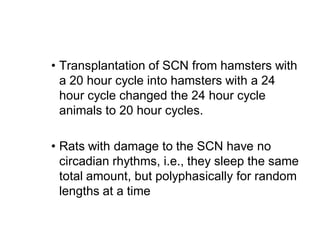
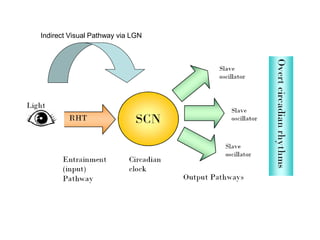
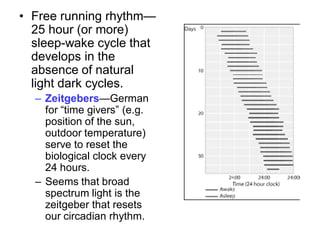
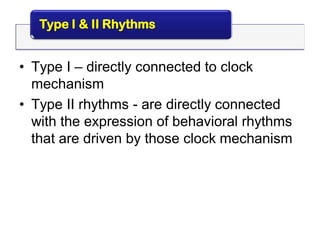
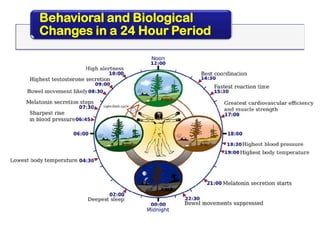
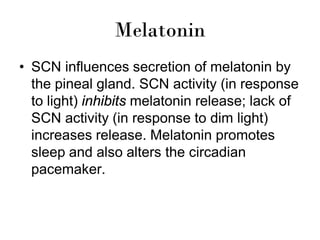
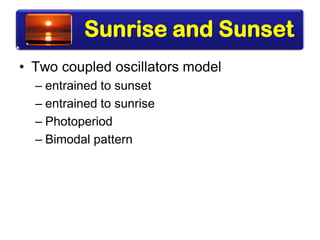
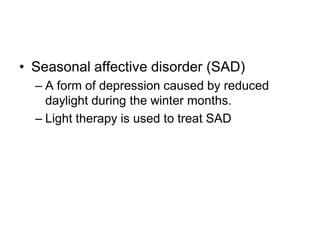
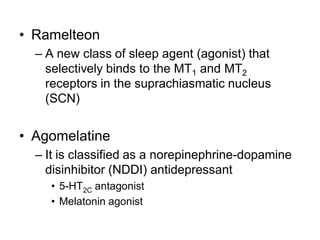
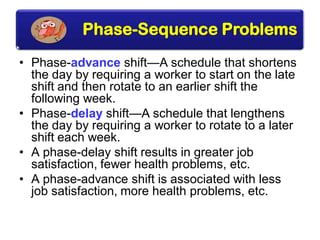
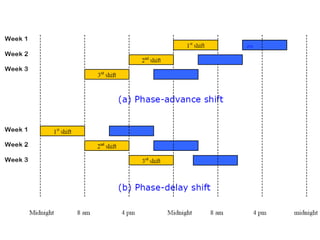
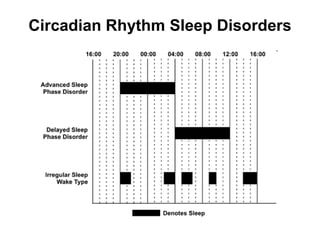

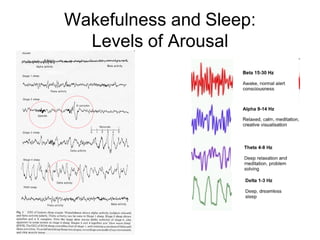
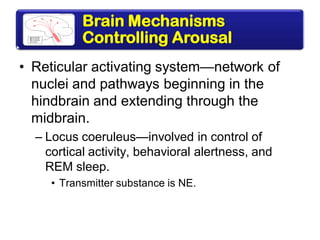
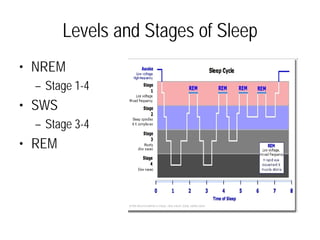
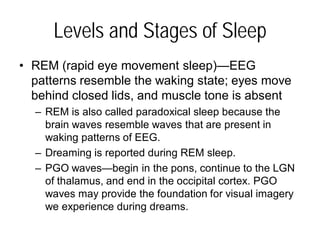
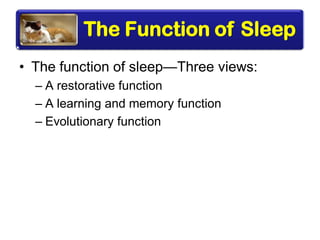
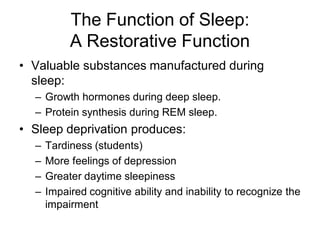
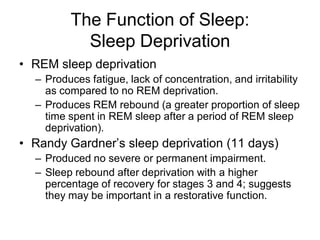
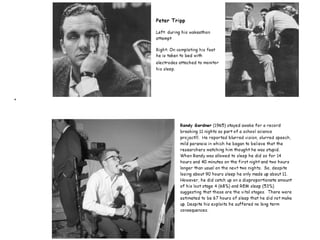
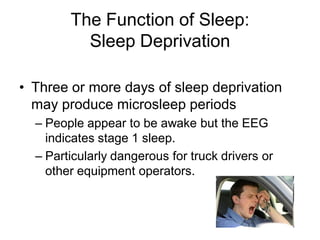
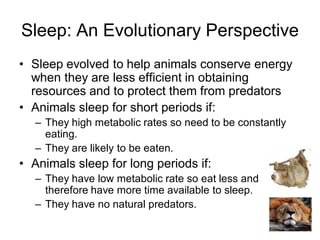
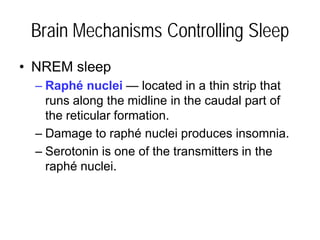
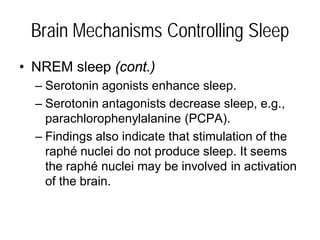
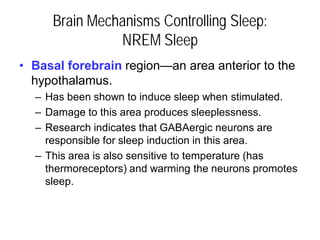
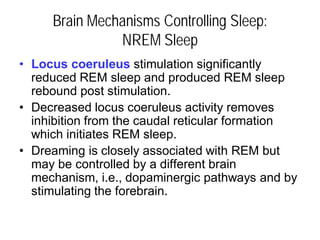
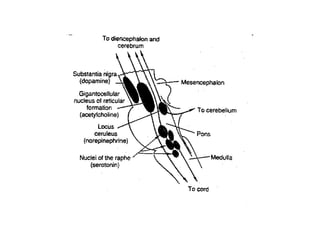
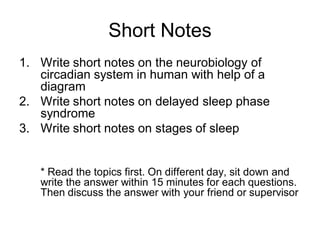

1. The suprachiasmatic nucleus (SCN) in the hypothalamus acts as the brain's master circadian clock, controlling daily rhythms. It receives light input from the retina and synchronizes circadian rhythms throughout the body. Lesions to the SCN eliminate circadian rhythms. 2. Delayed sleep phase syndrome involves a later-than-normal circadian rhythm, making falling asleep very difficult before midnight or later. It is treated with light therapy and strict sleep schedules. 3. Sleep has two types - NREM and REM sleep. NREM sleep has four stages, with the deepest being stage 4. REM sleep involves rapid


![Kesejahteraan Emosi di Tempat Kerja [2020]](https://cdn.slidesharecdn.com/ss_thumbnails/kesejahteraanemosi2020-200905072541-thumbnail.jpg?width=640&height=640&fit=bounds)
![Somatic Symptom and Related Disorders [2020]](https://cdn.slidesharecdn.com/ss_thumbnails/ssrdv1-200526002841-thumbnail.jpg?width=640&height=640&fit=bounds)
![Neurocognitive Disorders [2020]](https://cdn.slidesharecdn.com/ss_thumbnails/ncd2020v2-200526001756-thumbnail.jpg?width=640&height=640&fit=bounds)


![Non-delusional Morbid Jealousy [2019]](https://cdn.slidesharecdn.com/ss_thumbnails/56201795113132228753-190801100249-thumbnail.jpg?width=640&height=640&fit=bounds)


