Solution Focussed
Approaches to Helping:
               Scaling
           Nathan Loynes
Scaling Questions

Steve De Shazer (1940 -2005)
Co-founder of the solution focussed
 approach with Insoo Kim Berg.
After asking a client “what is better since
 last time?” The client said “I’m nearly a 10
 now”.
Hence, numbers used to understand
 development
Benefits

Easy to use
Focus on change
Focus on clients phenomenological
 existence (Like Person Centred)
Broad application
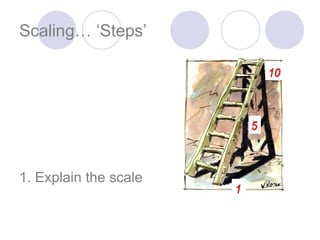
Scaling… ‘Steps’


1. Explain the scale
Alternative scales:
Where are we now?


                2. The current position
Like a jigsaw…


      3. Establish a platform:
        Find out what has
        already worked.
Vision
         Visualise a higher
          position; describe
          how things will look.
Success and Strengths

 5. Identify earlier
 success – what
 happened?
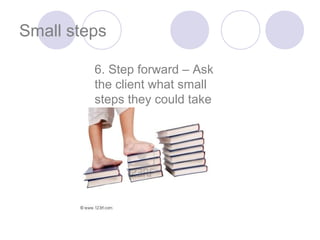
Small steps

         6. Step forward – Ask
         the client what small
         steps they could take
Types of Scale

Success scale
Motivational scale
Confidence scale
Independence scale
Conclusion
Being a cognitively flexible mentor might mean
 that at times you have cause to employ solution
 focussed techniques. This might be when:
Discussions of the problem are creating
 stagnation and or frustration.
The mentee is in a contemplative stage of
 considering the benefits of change.
You are being motivational (interviewing).
You are empowering the mentee to employ
 divergent thinking and offer their own solutions
 that are more likely to succeed than mentor led
 solutions.

Scaling

  • 1.
    Solution Focussed Approaches toHelping: Scaling Nathan Loynes
  • 2.
    Scaling Questions Steve DeShazer (1940 -2005) Co-founder of the solution focussed approach with Insoo Kim Berg. After asking a client “what is better since last time?” The client said “I’m nearly a 10 now”. Hence, numbers used to understand development
  • 3.
    Benefits Easy to use Focuson change Focus on clients phenomenological existence (Like Person Centred) Broad application
  • 4.
  • 5.
  • 6.
    Where are wenow? 2. The current position
  • 7.
    Like a jigsaw… 3. Establish a platform: Find out what has already worked.
  • 8.
    Vision Visualise a higher position; describe how things will look.
  • 9.
    Success and Strengths 5. Identify earlier success – what happened?
  • 10.
    Small steps 6. Step forward – Ask the client what small steps they could take
  • 11.
    Types of Scale Successscale Motivational scale Confidence scale Independence scale
  • 12.
    Conclusion Being a cognitivelyflexible mentor might mean that at times you have cause to employ solution focussed techniques. This might be when: Discussions of the problem are creating stagnation and or frustration. The mentee is in a contemplative stage of considering the benefits of change. You are being motivational (interviewing). You are empowering the mentee to employ divergent thinking and offer their own solutions that are more likely to succeed than mentor led solutions.