PRESENTATION : TWO BRAND
SUCCESSFUL & FAILURE
Submitted by:
FALGUN DAVE (1510)
DHAIRYA JHALA (1520)
ABHISHEK KALBALIA (1522)
NAVIN MEHTA (1531)
PAYAL PANDEY (1534)
RISHI RATHOD (1548)
ANAMIKA KEWALRAMANI (1562)
Submitted To:
Prof DHRUV BRAHMBHATT
Gujarat Law Society’s
School of Management
N. R. Institute of Business Management
(PGDM Program)
Failure Product-Nokia
Introduction- It all began for Nokia when Fredrik
Idestam built a paper mill back in 1865. He built another
factory near Nokianvirta River, Finland, the place whose
first five words gave the company its name "Nokia".
Between the years of 1865 and 1967 Nokia was
recognized as a vital industrial machine; though further
expansion needed a merger with a cable company and
another merger with a rubber firm to set up the Nokia
Corporation. This was the beginning of the move to
electronics production by the company. The mobile
phone era for Nokia began in 1981 when the first ever
international mobile phone network was built called the
Nordic Mobile Telephone (NMT)
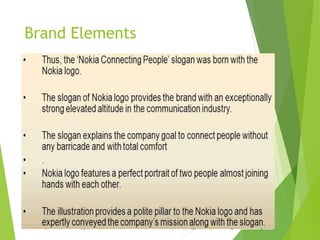
Brand Elements
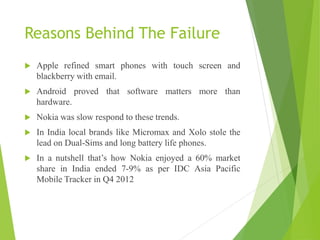
Reasons Behind The Failure
 Apple refined smart phones with touch screen and
blackberry with email.
 Android proved that software matters more than
hardware.
 Nokia was slow respond to these trends.
 In India local brands like Micromax and Xolo stole the
lead on Dual-Sims and long battery life phones.
 In a nutshell that’s how Nokia enjoyed a 60% market
share in India ended 7-9% as per IDC Asia Pacific
Mobile Tracker in Q4 2012
Old Strategy
 Nokia is licensing the Nokia brand to other manufacturers. In
the case of the Nokia N1 tablet, the rights to manufacture the
device is with Foxconn, the company that manufactures
devices for popular companies, Including the Apple iPhone
 Nokia currently cannot license its brand for smart phones
because of its agreement with Microsoft. The agreement
prohibits Nokia from using the Nokia name on any smartphone
before 2016.
 Nokia has clearly announced its intent to license the Nokia
name for smartphones. So you will be able to get a Nokia
smartphone within a few years, but it won't be manufactured by
Nokia.
Relaunch Strategy
 Nokia CEO Rajeev Suri seems to have finally given up on
saying that his company will not return to the smartphone
market. Following one denial last year and another in April of
this year, Suri now says the company is in fact planning on
putting its name on new smartphones starting in 2016.
 There is a catch, however. Nokia will use the same strategy for
its re-entry in the smartphone space as it did for creating
the N1 tablet. Namely, while the Finns will design the devices
and the company's name will be used, Nokia won't actually be
producing the handsets
 Since the N1 tablet runs Android, we assume future Nokia-
branded phones will go the same route. While Microsoft hasn't
been able to grab any significant smartphone market share after
acquiring Nokia's mobile business, maybe Nokia itself will
once again rise in that space even without any production
capacity of its own.
Conclusion
 From Technology perspective, Nokia did not deliver as
per expectations based on previous performance
 From the Strategy perspective, though Nokia did
eventually come up with nice lucrative products, it lost
in the race against time due to poor strategies and sly
competition.
 From the organizational and people perspective, the new
CEO’s attitude and competency proved to be fatal for the
company.
 The entire Rubik of Organization , people and strategy
failed to deliver for Nokia.
Successful Product Samsung
 Samsung Electronics Co., Ltd. is a South Korean
multinational electronics company headquartered in
Suwon, South Korea
 Samsung has long been a major manufacturer of
electronic components such as lithium-ion batteries,
semiconductors, chips, flash memory and hard drive
devices
 It is currently one of the world's largest manufacturers of
mobile phones and smartphones fueled by the popularity
of its Samsung Galaxy line of Devices.
 The Company is also a major vendor of tablet
computers, particularly its Android-powered Samsung
Galaxy Tab collection, and is generally regarded as
pioneering the phablet market through the Samsung
Galaxy Note family of devices.
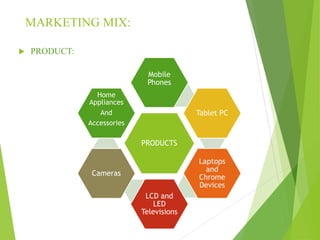
MARKETING MIX:
 PRODUCT:
PRODUCTS
Mobile
Phones
Tablet PC
Laptops
and
Chrome
Devices
LCD and
LED
Televisions
Cameras
Home
Appliances
And
Accessories
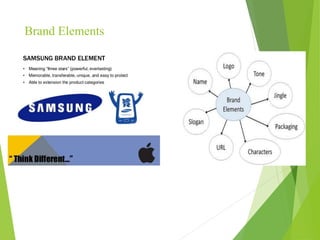
Brand Elements
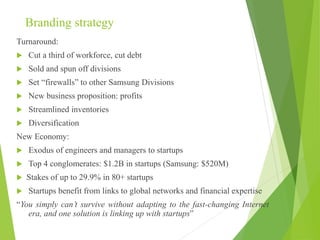
Branding strategy
Turnaround:
 Cut a third of workforce, cut debt
 Sold and spun off divisions
 Set “firewalls” to other Samsung Divisions
 New business proposition: profits
 Streamlined inventories
 Diversification
New Economy:
 Exodus of engineers and managers to startups
 Top 4 conglomerates: $1.2B in startups (Samsung: $520M)
 Stakes of up to 29.9% in 80+ startups
 Startups benefit from links to global networks and financial expertise
“You simply can’t survive without adapting to the fast-changing Internet
era, and one solution is linking up with startups”
Reason Behind For Success
Digital Vision: “A Company that leads the digital convergence revolution”
 Brand power, logistics, IP:
 High-margin products
 Create value chain that integrates competencies of all areas
 Customer and market oriented
 Global network by function
 Performance evaluation and compensation system
Digital Vision:
 Innovation, meeting challenges and creativity
 Target debt-to-equity ratio: 50%
 R&D: 7% of total revenues
 Overseas partners:
 Joint R&D projects
 Technology transfer arrangements
 Joint investments
Conclusion
Samsung is a famous global company. It has manufactured
electronics goods and other concrete goods. It is a well-known
brand because of its service, excellent employees, Innovative
reliable product.
A responsible approach to business and global citizenship and
globalization with partners and customers. Samsung is taking the
world in progressive direction for new generations.
So It is trying to be the best brand in the field of electronics
materials in the world by improving its size , price quality,
capacity or power of the devices.

Samsung and nokia

  • 1.
    PRESENTATION : TWOBRAND SUCCESSFUL & FAILURE Submitted by: FALGUN DAVE (1510) DHAIRYA JHALA (1520) ABHISHEK KALBALIA (1522) NAVIN MEHTA (1531) PAYAL PANDEY (1534) RISHI RATHOD (1548) ANAMIKA KEWALRAMANI (1562) Submitted To: Prof DHRUV BRAHMBHATT Gujarat Law Society’s School of Management N. R. Institute of Business Management (PGDM Program)
  • 2.
    Failure Product-Nokia Introduction- Itall began for Nokia when Fredrik Idestam built a paper mill back in 1865. He built another factory near Nokianvirta River, Finland, the place whose first five words gave the company its name "Nokia". Between the years of 1865 and 1967 Nokia was recognized as a vital industrial machine; though further expansion needed a merger with a cable company and another merger with a rubber firm to set up the Nokia Corporation. This was the beginning of the move to electronics production by the company. The mobile phone era for Nokia began in 1981 when the first ever international mobile phone network was built called the Nordic Mobile Telephone (NMT)
  • 3.
  • 4.
    Reasons Behind TheFailure  Apple refined smart phones with touch screen and blackberry with email.  Android proved that software matters more than hardware.  Nokia was slow respond to these trends.  In India local brands like Micromax and Xolo stole the lead on Dual-Sims and long battery life phones.  In a nutshell that’s how Nokia enjoyed a 60% market share in India ended 7-9% as per IDC Asia Pacific Mobile Tracker in Q4 2012
  • 5.
    Old Strategy  Nokiais licensing the Nokia brand to other manufacturers. In the case of the Nokia N1 tablet, the rights to manufacture the device is with Foxconn, the company that manufactures devices for popular companies, Including the Apple iPhone  Nokia currently cannot license its brand for smart phones because of its agreement with Microsoft. The agreement prohibits Nokia from using the Nokia name on any smartphone before 2016.  Nokia has clearly announced its intent to license the Nokia name for smartphones. So you will be able to get a Nokia smartphone within a few years, but it won't be manufactured by Nokia.
  • 6.
    Relaunch Strategy  NokiaCEO Rajeev Suri seems to have finally given up on saying that his company will not return to the smartphone market. Following one denial last year and another in April of this year, Suri now says the company is in fact planning on putting its name on new smartphones starting in 2016.  There is a catch, however. Nokia will use the same strategy for its re-entry in the smartphone space as it did for creating the N1 tablet. Namely, while the Finns will design the devices and the company's name will be used, Nokia won't actually be producing the handsets  Since the N1 tablet runs Android, we assume future Nokia- branded phones will go the same route. While Microsoft hasn't been able to grab any significant smartphone market share after acquiring Nokia's mobile business, maybe Nokia itself will once again rise in that space even without any production capacity of its own.
  • 7.
    Conclusion  From Technologyperspective, Nokia did not deliver as per expectations based on previous performance  From the Strategy perspective, though Nokia did eventually come up with nice lucrative products, it lost in the race against time due to poor strategies and sly competition.  From the organizational and people perspective, the new CEO’s attitude and competency proved to be fatal for the company.  The entire Rubik of Organization , people and strategy failed to deliver for Nokia.
  • 8.
    Successful Product Samsung Samsung Electronics Co., Ltd. is a South Korean multinational electronics company headquartered in Suwon, South Korea  Samsung has long been a major manufacturer of electronic components such as lithium-ion batteries, semiconductors, chips, flash memory and hard drive devices  It is currently one of the world's largest manufacturers of mobile phones and smartphones fueled by the popularity of its Samsung Galaxy line of Devices.  The Company is also a major vendor of tablet computers, particularly its Android-powered Samsung Galaxy Tab collection, and is generally regarded as pioneering the phablet market through the Samsung Galaxy Note family of devices.
  • 9.
    MARKETING MIX:  PRODUCT: PRODUCTS Mobile Phones TabletPC Laptops and Chrome Devices LCD and LED Televisions Cameras Home Appliances And Accessories
  • 10.
  • 11.
    Branding strategy Turnaround:  Cuta third of workforce, cut debt  Sold and spun off divisions  Set “firewalls” to other Samsung Divisions  New business proposition: profits  Streamlined inventories  Diversification New Economy:  Exodus of engineers and managers to startups  Top 4 conglomerates: $1.2B in startups (Samsung: $520M)  Stakes of up to 29.9% in 80+ startups  Startups benefit from links to global networks and financial expertise “You simply can’t survive without adapting to the fast-changing Internet era, and one solution is linking up with startups”
  • 12.
    Reason Behind ForSuccess Digital Vision: “A Company that leads the digital convergence revolution”  Brand power, logistics, IP:  High-margin products  Create value chain that integrates competencies of all areas  Customer and market oriented  Global network by function  Performance evaluation and compensation system Digital Vision:  Innovation, meeting challenges and creativity  Target debt-to-equity ratio: 50%  R&D: 7% of total revenues  Overseas partners:  Joint R&D projects  Technology transfer arrangements  Joint investments
  • 13.
    Conclusion Samsung is afamous global company. It has manufactured electronics goods and other concrete goods. It is a well-known brand because of its service, excellent employees, Innovative reliable product. A responsible approach to business and global citizenship and globalization with partners and customers. Samsung is taking the world in progressive direction for new generations. So It is trying to be the best brand in the field of electronics materials in the world by improving its size , price quality, capacity or power of the devices.