NOKIA @ PRESENT
 Nokia CEO Rajeev Suri confirmed the return
of the Nokia brand to smartphones in June
2015 through a licensing strategy, and the
formation of HMD Global was finally
announced in May 2016.
 Soon, you'll be able to buy a Nokia again, 18
months after Microsoft quietly ... bias and not
influenced by billionaire owners or
shareholders.
BRAND
Introduction
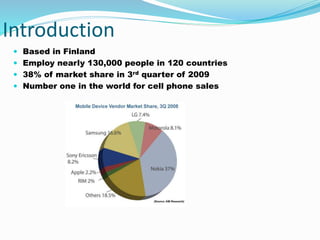
 Based in Finland
 Employ nearly 130,000 people in 120 countries
 38% of market share in 3rd quarter of 2009
 Number one in the world for cell phone sales
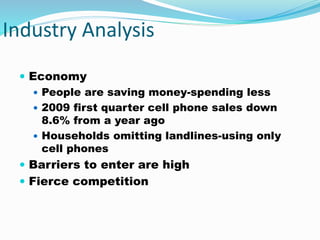
Industry Analysis
 Economy
 People are saving money-spending less
 2009 first quarter cell phone sales down
8.6% from a year ago
 Households omitting landlines-using only
cell phones
 Barriers to enter are high
 Fierce competition
History
 Started as a paper mill in 1865
 Near bankruptcy after World War One-joined
with rubber works and cable works
 First electronic device-pulse analyzer
 Kept diversifying product line-eventually
producing radios, TVs, and computers
 1992-changed strategy and focused only on
telecommunications
Industry cont.
 Companies struggling to expand
 Nearly billion people own a cell phone
 Motorola went from 2nd largest to 5th largest
in 2007
 Health risks are threatening to industry as
a whole
 No proven facts that cell phones cause
cancer
 On-going studies conducted
Weaknesses
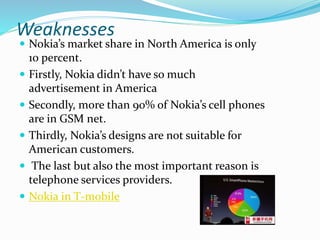
 Nokia’s market share in North America is only
10 percent.
 Firstly, Nokia didn’t have so much
advertisement in America
 Secondly, more than 90% of Nokia’s cell phones
are in GSM net.
 Thirdly, Nokia’s designs are not suitable for
American customers.
 The last but also the most important reason is
telephone services providers.
 Nokia in T-mobile
Opportunities
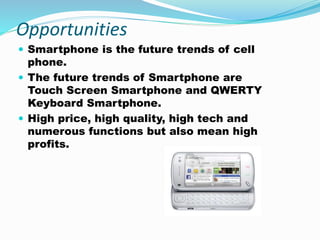
 Smartphone is the future trends of cell
phone.
 The future trends of Smartphone are
Touch Screen Smartphone and QWERTY
Keyboard Smartphone.
 High price, high quality, high tech and
numerous functions but also mean high
profits.
Threats
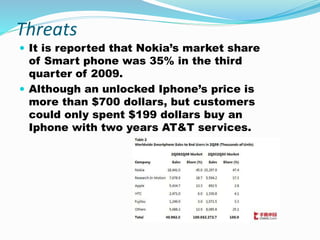
 It is reported that Nokia’s market share
of Smart phone was 35% in the third
quarter of 2009.
 Although an unlocked Iphone’s price is
more than $700 dollars, but customers
could only spent $199 dollars buy an
Iphone with two years AT&T services.
Current Situation
 Great Reputation
 New Attempts
 New Competitors
 Great Advantage on Market share
Nokia in Europe
 The Emergence of Competitors
 Intellectual Property Disputes
 Concern on Expanding Business
Presented by
SABARISH N S
RA1952001020004

Sabrish

  • 2.
    NOKIA @ PRESENT Nokia CEO Rajeev Suri confirmed the return of the Nokia brand to smartphones in June 2015 through a licensing strategy, and the formation of HMD Global was finally announced in May 2016.  Soon, you'll be able to buy a Nokia again, 18 months after Microsoft quietly ... bias and not influenced by billionaire owners or shareholders.
  • 3.
  • 4.
    Introduction  Based inFinland  Employ nearly 130,000 people in 120 countries  38% of market share in 3rd quarter of 2009  Number one in the world for cell phone sales
  • 5.
    Industry Analysis  Economy People are saving money-spending less  2009 first quarter cell phone sales down 8.6% from a year ago  Households omitting landlines-using only cell phones  Barriers to enter are high  Fierce competition
  • 6.
    History  Started asa paper mill in 1865  Near bankruptcy after World War One-joined with rubber works and cable works  First electronic device-pulse analyzer  Kept diversifying product line-eventually producing radios, TVs, and computers  1992-changed strategy and focused only on telecommunications
  • 7.
    Industry cont.  Companiesstruggling to expand  Nearly billion people own a cell phone  Motorola went from 2nd largest to 5th largest in 2007  Health risks are threatening to industry as a whole  No proven facts that cell phones cause cancer  On-going studies conducted
  • 8.
    Weaknesses  Nokia’s marketshare in North America is only 10 percent.  Firstly, Nokia didn’t have so much advertisement in America  Secondly, more than 90% of Nokia’s cell phones are in GSM net.  Thirdly, Nokia’s designs are not suitable for American customers.  The last but also the most important reason is telephone services providers.  Nokia in T-mobile
  • 9.
    Opportunities  Smartphone isthe future trends of cell phone.  The future trends of Smartphone are Touch Screen Smartphone and QWERTY Keyboard Smartphone.  High price, high quality, high tech and numerous functions but also mean high profits.
  • 10.
    Threats  It isreported that Nokia’s market share of Smart phone was 35% in the third quarter of 2009.  Although an unlocked Iphone’s price is more than $700 dollars, but customers could only spent $199 dollars buy an Iphone with two years AT&T services.
  • 11.
    Current Situation  GreatReputation  New Attempts  New Competitors  Great Advantage on Market share
  • 12.
    Nokia in Europe The Emergence of Competitors  Intellectual Property Disputes  Concern on Expanding Business
  • 13.
    Presented by SABARISH NS RA1952001020004