SALVIA OFFICINALIS
(LAMILACEAE)
Pharmacognostic Features
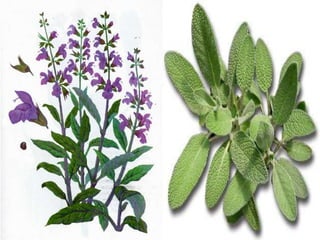
 Botanical Origin: Salvia Officinalis.L
 Family:Lamilaceae
 Urdu name: Sefakus (Sepakass), Sathi
 English name: Salvia, sage
 Part used: Leaves, whole herb
 Chemical Constituents
1. Monoterpenes
α-pinene, β-pinene, camphor, Borneole,
1,8-cineole, thujone
2. Diterpenes
Crypyotanshinone, carnosol, Ursolic acid
3. Triterpenes
Oleanolic acid, Uvaol, Betulinic acid
4. Phenolic Acid
Lithospermate B, Rosemary acid, Salvianolic acid
A & B
5. Flavonoids
Apigenin, Hispidine
Pharmacological actions
 Anti diarrheal activity
o It has anti spasmodic effect on GIT by inhibiting its
motility by precense of some muscle relaxants by
the action of voltage sensitive K+ channels.
 Treatment of obesity and overweight
o Methanolic extract inhibits pancreatic lipase & thus
prevents triglyceride and fatty acid production &
prevents obesity.
 Treatment of Alzheimer's disease
o Extract of Salvia Officinalis inhibits Acetyl
cholinesterase that inhibits Acetyl choline & thus
treats Alzheimer's disease.
 Treatment of cancer
o Salvia officinalis extract inhibits angiogenesis and
inhibits metastasis thus inhibits abnormal growth of
cells.
 Sedative
o Some salvia components affect on GABA receptor in
brain causing opening of ion channels resulting in
increase in polarity of neurons & reduction in
ratability.
 Symptoms of menupause
o These include insomnia, headache & palpitations.
Salvia helps to adjust estrogen level & thus is used to
treat above described problems.
 Anti-diabetic
o Salvia improves HDL|LDL ratio & reduces insulin
resistance & reduces size of adipose tissues.
Solubility
 Some ingredients like some acidic components are
extracted by water.
 While some phenolic compounds such as
Carnosol, Carnosinic acid, rosmarinic acid, &
rosmanol epirosmanol are extracted by ethanol.
Side Effects
o Thujone causes neurotoxicity
o Seizures
o Adverse effect to liver
o Lower blood pressure
o Dizziness
o During pregnancy lead to miscarriage
Dosage
 For Alzheimer’s disease – 1 gm/day
 On skin cream having 23 mg/gm
 Sage tea 300 ml/twice a day for diabetes
Drug Interactions
 With anti diabetics like Glipizides cause
hypoglycemia and if used for long time lead to
coma.
 Anti-convulsants like Phenobarbital velporoic acid
decrease their effectiveness by interacting with
chemical in brain.
 Its interaction with Sedative and analgesic
increase their effect too much sleeping and too
much drowsiness.
References
o www.naturafoundation.co.uk/monografie/Salvia_offi
cinalis_extract.html
 www.ncbi.nlm.nih.gov/pmc/articles/PMC4003706/
 www.japsonline.com/admin/php/uploads/975_pdf.p
df
 www.ncbi.nlm.nih.gov/pmc/articles/PMC4003706/
 www.drug.com
 www.botanical.com

Salvia officinalis

  • 1.
  • 3.
    Pharmacognostic Features  BotanicalOrigin: Salvia Officinalis.L  Family:Lamilaceae  Urdu name: Sefakus (Sepakass), Sathi  English name: Salvia, sage  Part used: Leaves, whole herb  Chemical Constituents 1. Monoterpenes α-pinene, β-pinene, camphor, Borneole, 1,8-cineole, thujone
  • 4.
    2. Diterpenes Crypyotanshinone, carnosol,Ursolic acid 3. Triterpenes Oleanolic acid, Uvaol, Betulinic acid 4. Phenolic Acid Lithospermate B, Rosemary acid, Salvianolic acid A & B 5. Flavonoids Apigenin, Hispidine
  • 5.
    Pharmacological actions  Antidiarrheal activity o It has anti spasmodic effect on GIT by inhibiting its motility by precense of some muscle relaxants by the action of voltage sensitive K+ channels.  Treatment of obesity and overweight o Methanolic extract inhibits pancreatic lipase & thus prevents triglyceride and fatty acid production & prevents obesity.  Treatment of Alzheimer's disease o Extract of Salvia Officinalis inhibits Acetyl cholinesterase that inhibits Acetyl choline & thus treats Alzheimer's disease.
  • 6.
     Treatment ofcancer o Salvia officinalis extract inhibits angiogenesis and inhibits metastasis thus inhibits abnormal growth of cells.  Sedative o Some salvia components affect on GABA receptor in brain causing opening of ion channels resulting in increase in polarity of neurons & reduction in ratability.  Symptoms of menupause o These include insomnia, headache & palpitations. Salvia helps to adjust estrogen level & thus is used to treat above described problems.  Anti-diabetic o Salvia improves HDL|LDL ratio & reduces insulin resistance & reduces size of adipose tissues.
  • 7.
    Solubility  Some ingredientslike some acidic components are extracted by water.  While some phenolic compounds such as Carnosol, Carnosinic acid, rosmarinic acid, & rosmanol epirosmanol are extracted by ethanol. Side Effects o Thujone causes neurotoxicity o Seizures o Adverse effect to liver o Lower blood pressure o Dizziness o During pregnancy lead to miscarriage
  • 8.
    Dosage  For Alzheimer’sdisease – 1 gm/day  On skin cream having 23 mg/gm  Sage tea 300 ml/twice a day for diabetes Drug Interactions  With anti diabetics like Glipizides cause hypoglycemia and if used for long time lead to coma.  Anti-convulsants like Phenobarbital velporoic acid decrease their effectiveness by interacting with chemical in brain.  Its interaction with Sedative and analgesic increase their effect too much sleeping and too much drowsiness.
  • 9.
    References o www.naturafoundation.co.uk/monografie/Salvia_offi cinalis_extract.html  www.ncbi.nlm.nih.gov/pmc/articles/PMC4003706/ www.japsonline.com/admin/php/uploads/975_pdf.p df  www.ncbi.nlm.nih.gov/pmc/articles/PMC4003706/  www.drug.com  www.botanical.com