SALIVA
DR VANISHREE.M
DEPARTMENT OF ORAL PATHOLOGY
Saliva
CONTENTS
• Introduction.
• Salivary glands and its main features.
• Blood supply and nerve supply of salivary glands.
• Composition of saliva.
• Factors affecting composition of saliva.
• Methods of collection of saliva.
• Properties of saliva.
• Secretion of saliva.
• Conditions that affect salivation.
• Formation of saliva.
• Functions of saliva.
• Clinical considerations.
• Salivary substitutes.
• Interaction of salivary components with the bacterial
surface.
• Effects of aging on salivary secretion.
• Sialography.
• Saliva As A Diagnostic Fluid.
• Conclusion.
• Refrences.
INTRODUCTION
“Saliva lacks the drama of blood, the emotion of tears
and toil of sweat but it still remains one of the most
important fluids in the human body”
IRWIN MANDEL (DDS)
What is saliva?
• The term saliva refers to the mixed fluid in the mouth
in contact with the teeth and oral mucosa, which is
often called ‘whole saliva’.
• Composed of more than 99% water and less than 1%
solids,mostly electrolytes and proteins,the latter
giving saliva its characteristic viscosity.
• Normally the daily production of whole saliva ranges
from 0.5 to 1.0 litres.
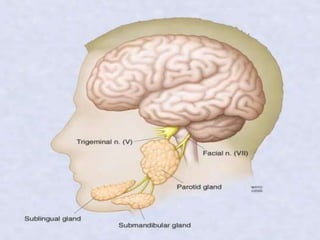
SALIVARY GLANDS
• Exocrine glands
• Two types-
1) Major salivary glands-
- Parotid.
- Submandibular.
- Sublingual.
2) Minor salivary glands-
- Labial and buccal glands.
- Glossopalatine glands.
- Palatine glands.
-Lingual glands.
DEVELOPMENT OF SALIVARY GLANDS
Stages of Development
• Divided into 6 stages-
Stage I – Bud formation.
Stage II – Formation and growth of epithelial cord.
Stage III – Initiation of branching in terminal parts of
epithelial cord and continuation of glandular
differentiation.
Stage IV – Dichotomous branching of epithelial cord
and lobule formation.
Stage V – Canalization of presumptive ducts.
Stage VI – Cytodifferentiation.
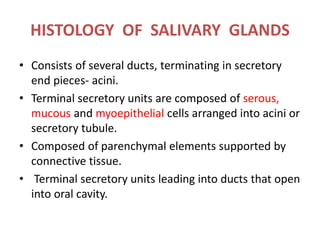
HISTOLOGY OF SALIVARY GLANDS
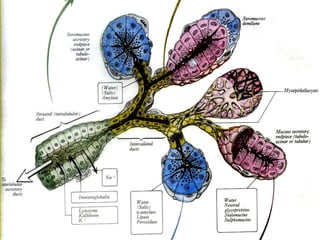
• Consists of several ducts, terminating in secretory
end pieces- acini.
• Terminal secretory units are composed of serous,
mucous and myoepithelial cells arranged into acini or
secretory tubule.
• Composed of parenchymal elements supported by
connective tissue.
• Terminal secretory units leading into ducts that open
into oral cavity.
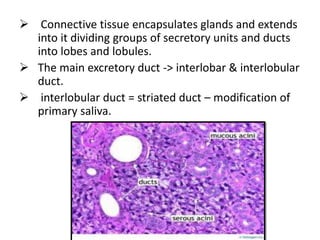
 Connective tissue encapsulates glands and extends
into it dividing groups of secretory units and ducts
into lobes and lobules.
 The main excretory duct -> interlobar & interlobular
duct.
 interlobular duct = striated duct – modification of
primary saliva.
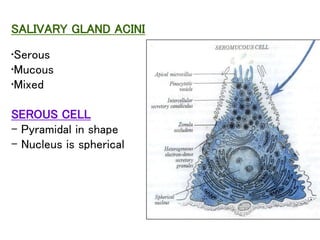
SALIVARY GLAND ACINI
•Serous
•Mucous
•Mixed
SEROUS CELL
- Pyramidal in shape
- Nucleus is spherical
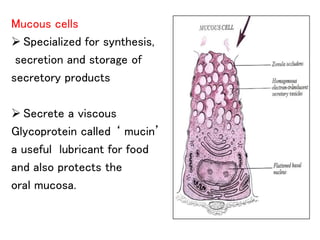
Mucous cells
 Specialized for synthesis,
secretion and storage of
secretory products
 Secrete a viscous
Glycoprotein called ‘ mucin’
a useful lubricant for food
and also protects the
oral mucosa.
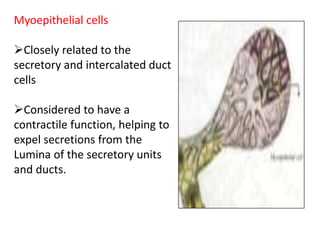
Myoepithelial cells
Closely related to the
secretory and intercalated duct
cells
Considered to have a
contractile function, helping to
expel secretions from the
Lumina of the secretory units
and ducts.
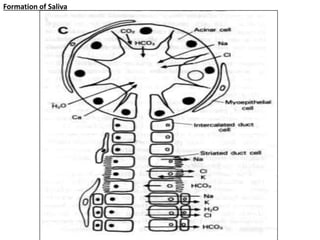
DUCT SYSTEM CELLS
• Classified as Intercalated, Striated and excretory
 INTERCALATED DUCT CELLS
- Connect acinar secretions to the rest of the gland
- not involved in the modification of electrolytes
 STRIATED CELLS
- electrolyte regulation in resorbing sodium
 EXCRETORY DUCT CELLS
- sodium resorption and secreting potassium
- last part of the duct network before the saliva reaches
the oral cavity.
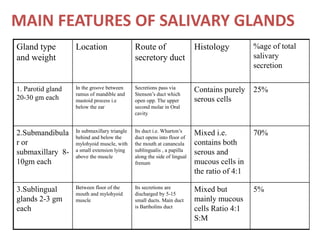
MAIN FEATURES OF SALIVARY GLANDS
Gland type
and weight
Location Route of
secretory duct
Histology %age of total
salivary
secretion
1. Parotid gland
20-30 gm each
In the groove between
ramus of mandible and
mastoid process i.e
below the ear
Secretions pass via
Stenson’s duct which
open opp. The upper
second molar in Oral
cavity
Contains purely
serous cells
25%
2.Submandibula
r or
submaxillary 8-
10gm each
In submaxillary triangle
behind and below the
mylohyoid muscle, with
a small extension lying
above the muscle
Its duct i.e. Wharton’s
duct opens into floor of
the mouth at canancula
sublingualis , a papilla
along the side of lingual
frenum
Mixed i.e.
contains both
serous and
mucous cells in
the ratio of 4:1
70%
3.Sublingual
glands 2-3 gm
each
Between floor of the
mouth and mylohyoid
muscle
Its secretions are
discharged by 5-15
small ducts. Main duct
is Bartholins duct
Mixed but
mainly mucous
cells Ratio 4:1
S:M
5%
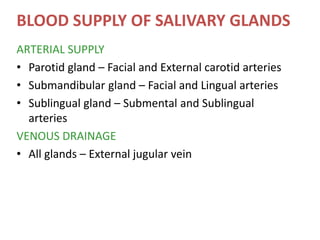
BLOOD SUPPLY OF SALIVARY GLANDS
ARTERIAL SUPPLY
• Parotid gland – Facial and External carotid arteries
• Submandibular gland – Facial and Lingual arteries
• Sublingual gland – Submental and Sublingual
arteries
VENOUS DRAINAGE
• All glands – External jugular vein
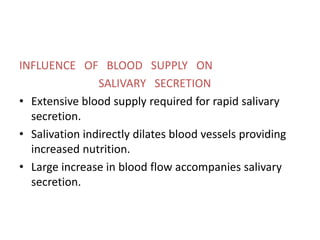
INFLUENCE OF BLOOD SUPPLY ON
SALIVARY SECRETION
• Extensive blood supply required for rapid salivary
secretion.
• Salivation indirectly dilates blood vessels providing
increased nutrition.
• Large increase in blood flow accompanies salivary
secretion.
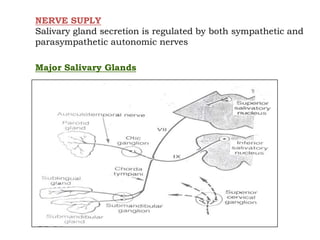
NERVE SUPLY
Salivary gland secretion is regulated by both sympathetic and
parasympathetic autonomic nerves
Major Salivary Glands
Minor Salivary Glands
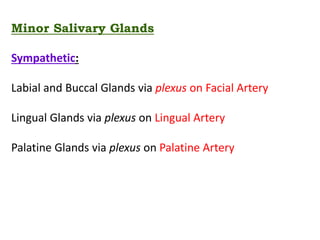
Sympathetic:
Labial and Buccal Glands via plexus on Facial Artery
Lingual Glands via plexus on Lingual Artery
Palatine Glands via plexus on Palatine Artery
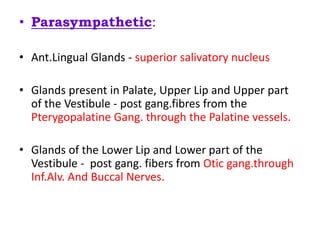
• Parasympathetic:
• Ant.Lingual Glands - superior salivatory nucleus
• Glands present in Palate, Upper Lip and Upper part
of the Vestibule - post gang.fibres from the
Pterygopalatine Gang. through the Palatine vessels.
• Glands of the Lower Lip and Lower part of the
Vestibule - post gang. fibers from Otic gang.through
Inf.Alv. And Buccal Nerves.
COMPOSITION OF SALIVA
• Dilute aqueous solution present in the oral
environment.
• 99% of this hypotonic fluid is Water
• Remaining 1% consists of dissolved organic and
inorganic constituents
ORGANIC
CONSTITUENTS
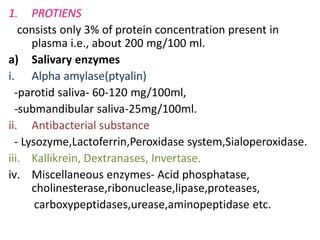
1. PROTIENS
consists only 3% of protein concentration present in
plasma i.e., about 200 mg/100 ml.
a) Salivary enzymes
i. Alpha amylase(ptyalin)
-parotid saliva- 60-120 mg/100ml,
-submandibular saliva-25mg/100ml.
ii. Antibacterial substance
- Lysozyme,Lactoferrin,Peroxidase system,Sialoperoxidase.
iii. Kallikrein, Dextranases, Invertase.
iv. Miscellaneous enzymes- Acid phosphatase,
cholinesterase,ribonuclease,lipase,proteases,
carboxypeptidases,urease,aminopeptidase etc.
b) Immunoglobulins
- IgA, IgG, IgM.
c) Proteins synthesized within the glands
- Factor VII ( Pro-activator )
- Factor VIII ( Anti haemophilic globulin )
- Factor IX ( Christmas factor )
- Platelet factor
d) Glycoproteins
- MG1 and MG2 ( Submandibular and
Sublingual saliva)
- Proline rich glycoproteins ( Parotid saliva)
e) Other Polypeptides
- Statherin
- Sialin
II. BLOOD GROUP SUBSTANCES
III . HORMONES
- Parotin
- Nerve growth factor
IV. CARBOHYDRATES
-glucose, 0.5-1 mg/100 ml in parotid saliva
-hexose, small amounts of hexosamine and sialic acid in
submandibular saliva
V. LIPIDS
- diglycerides, triglycerides cholesterol and cholesterol
esters
- phospholipids
- corticosteroids
VI. NITROGEN CONTAINING COMPOUNDS
VII. UREA
- 12-20 mg/100ml
VIII. WATER-SOLUBLE VITAMINS
INORGANIC CONSTITUENTS
a) Sodium (0-80mg/100ml)
b) Potassium (60-100mg/100ml)
c) Calcium (2-11mg/100ml)
d) Phosphate (6-71mg/100ml)
e) Chloride (50-100mg/100ml)
f) Fluoride (.01-.04mg/100ml)
g) Bicarbonate (0-40mg/100ml)
h) Thiocyanate ( 2mg )
i) Hydrogen ion (Ph range is 5.0-8.0)
CELLS OF SALIVA
- Yeast cells
- Bacteria
- Protozoa
- Polymorphonuclear leukocytes
- Desquamated epithelial cells
GASES DISSOLVED IN SALIVA
- Oxygen ( 0.18- .25 vol% )
- Nitrogen ( 0.9 vol% )
- Carbon dioxide ( 10-20 vol% in unstimulated
saliva )
FACTORS AFFECTING COMPOSITION
1. Flow rate
2. Differential gland contributions
3. Duration of the stimulus
4. Nature of the stimulus
5. Diet
6. Hormones
7. Fatigue
8. Plasma concentration
9. Other factors
- pregnancy, genetic polymorphism, antigenic
stimulus, exercise, drugs and various diseases.
METHODS OF COLLECTING SALIVA FROM
DIFFERENT GLANDS
• Carlson-Crittendon cannula used for collecting
parotid saliva
• A Segregator used for collecting saliva from
submandibular and sublingual glands
• Most commonly used techniques for measuring
unstimulated salivary flow rate are :-
1) Draining method
2) Spitting method
3) Suction method
4) Swab method
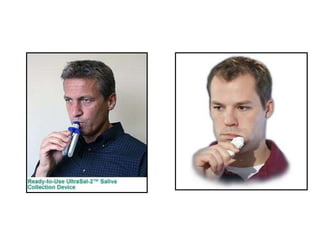
• Two collection methods used to determine
stimulated salivary flow rate :-
1) Masticatory method
2) Gustatory method
PROPERTIES OF SALIVA
1) Consistency : Slightly cloudy
2) Reaction : Usually slightly acidic
3) PH : 5-8
4) Specific gravity : 1.0024 – 1.0061
5) Freezing point : 0.07 – 0.34 degree Celsius
6) Flow rate : 0.02ml/minute at rest to 7ml/minute
or more when stimulated.
7) Buffering power of saliva
-The carbonic acid/bicarbonate system
- The phosphate buffer system
- The salivary proteins
SECRETION OF SALIVA
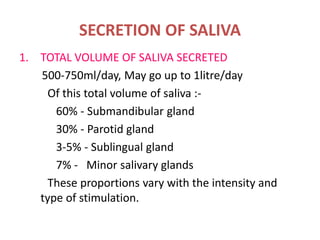
1. TOTAL VOLUME OF SALIVA SECRETED
500-750ml/day, May go up to 1litre/day
Of this total volume of saliva :-
60% - Submandibular gland
30% - Parotid gland
3-5% - Sublingual gland
7% - Minor salivary glands
These proportions vary with the intensity and
type of stimulation.
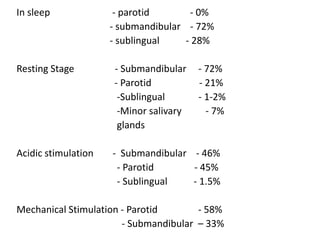
In sleep - parotid - 0%
- submandibular - 72%
- sublingual - 28%
Resting Stage - Submandibular - 72%
- Parotid - 21%
-Sublingual - 1-2%
-Minor salivary - 7%
glands
Acidic stimulation - Submandibular - 46%
- Parotid - 45%
- Sublingual - 1.5%
Mechanical Stimulation - Parotid - 58%
- Submandibular – 33%
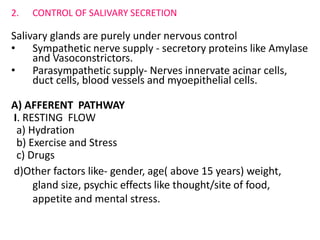
2. CONTROL OF SALIVARY SECRETION
Salivary glands are purely under nervous control
• Sympathetic nerve supply - secretory proteins like Amylase
and Vasoconstrictors.
• Parasympathetic supply- Nerves innervate acinar cells,
duct cells, blood vessels and myoepithelial cells.
A) AFFERENT PATHWAY
I. RESTING FLOW
a) Hydration
b) Exercise and Stress
c) Drugs
d)Other factors like- gender, age( above 15 years) weight,
gland size, psychic effects like thought/site of food,
appetite and mental stress.
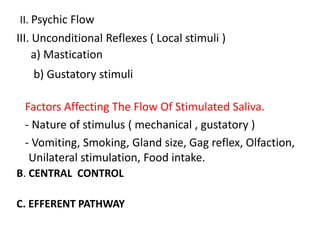
II. Psychic Flow
III. Unconditional Reflexes ( Local stimuli )
a) Mastication
b) Gustatory stimuli
Factors Affecting The Flow Of Stimulated Saliva.
- Nature of stimulus ( mechanical , gustatory )
- Vomiting, Smoking, Gland size, Gag reflex, Olfaction,
Unilateral stimulation, Food intake.
B. CENTRAL CONTROL
C. EFFERENT PATHWAY
CONDITIONS THAT AFFECT SALIVATION
Physiologic
• Taste, Surface texture, Dehydration, Age, Emotion
Pathologic conditions that increase salivation
• Digestive tract irritants, Ill – fitting dentures /
Inadequate interocclusal distance, Vitamin
deficiency, Trauma from surgery.
Pathologic conditions that decrease salivation
• Senile atrophy of the salivary glands, Irradiation
therapy, Diseases of the brainstem, Diabetes
mellitus / insipidus,Diarrhoea, Acute infectious
diseases.
DRUGS THAT INCREASE SALIVATION
• Cholinesterase inhibitors
Example- prostigmine
• Adrenergic stimulating drugs
Example- epinephrine
• Sialogogues
Example- pilocarpine
DRUGS THAT DECREASE SALIVATION
• Antihistamines, Drugs for peptic ulcer,
Antihypertensives, Antipsychotics,
Antiparkinsonian drugs, Antianxiety agents,
Antidepressants, Antisialogogues, Diuretics,
Decongestants.
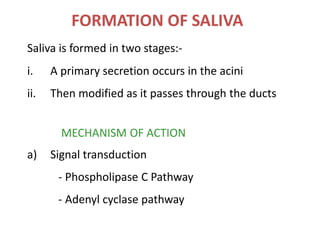
FORMATION OF SALIVA
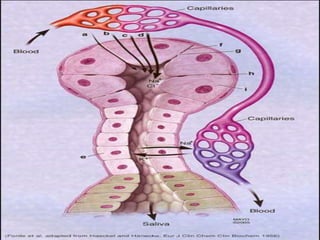
Saliva is formed in two stages:-
i. A primary secretion occurs in the acini
ii. Then modified as it passes through the ducts
MECHANISM OF ACTION
a) Signal transduction
- Phospholipase C Pathway
- Adenyl cyclase pathway
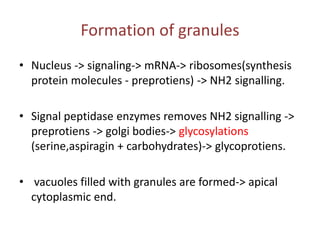
Formation of granules
• Nucleus -> signaling-> mRNA-> ribosomes(synthesis
protein molecules - preprotiens) -> NH2 signalling.
• Signal peptidase enzymes removes NH2 signalling ->
preprotiens -> golgi bodies-> glycosylations
(serine,aspiragin + carbohydrates)-> glycoprotiens.
• vacuoles filled with granules are formed-> apical
cytoplasmic end.
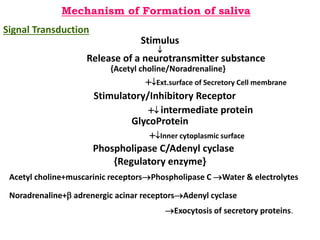
Mechanism of Formation of saliva
Signal Transduction
Stimulus

Release of a neurotransmitter substance
{Acetyl choline/Noradrenaline}
Ext.surface of Secretory Cell membrane
Stimulatory/Inhibitory Receptor
 intermediate protein
GlycoProtein
Inner cytoplasmic surface
Phospholipase C/Adenyl cyclase
{Regulatory enzyme}
Acetyl choline+muscarinic receptorsPhospholipase C Water & electrolytes
Noradrenaline+ adrenergic acinar receptorsAdenyl cyclase
Exocytosis of secretory proteins.
Formation of Saliva
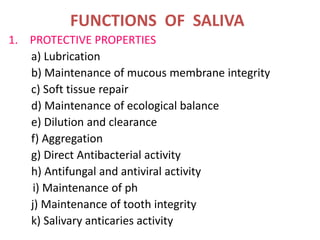
FUNCTIONS OF SALIVA
1. PROTECTIVE PROPERTIES
a) Lubrication
b) Maintenance of mucous membrane integrity
c) Soft tissue repair
d) Maintenance of ecological balance
e) Dilution and clearance
f) Aggregation
g) Direct Antibacterial activity
h) Antifungal and antiviral activity
i) Maintenance of ph
j) Maintenance of tooth integrity
k) Salivary anticaries activity
2) DIGESTION
3) TASTE
4) EXCRETION
5) WATER BALANCE
6) SALIVARY DIAGNOSIS
7) ORAL HYGIENE
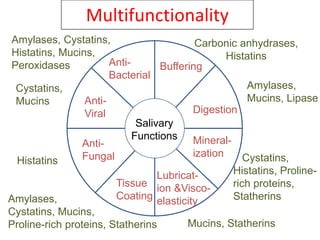
Multifunctionality
Salivary
Functions
Anti-
Bacterial
Buffering
Digestion
Mineral-
ization
Lubricat-
ion &Visco-
elasticity
Tissue
Coating
Anti-
Fungal
Anti-
Viral
Carbonic anhydrases,
Histatins
Amylases,
Mucins, Lipase
Cystatins,
Histatins, Proline-
rich proteins,
Statherins
Mucins, Statherins
Amylases,
Cystatins, Mucins,
Proline-rich proteins, Statherins
Histatins
Cystatins,
Mucins
Amylases, Cystatins,
Histatins, Mucins,
Peroxidases
CLINICAL
CONSIDERATIONS
ANOMALIES OF THE SALIVARY GLANDS
I. Developmental
Aberrant Salivary Glands
Aplasia and Hyperplasia
II.Obstructive conditions
Sialolithiasis
Mucocele
Necrotizing Sialometaplasia
iii. Inflammatory Diseases
Viral: Mumps, H.I.V. Associated
Bacterial: Sialadenitis
IV.Neoplastic Diseases
Benign
Malignant
Epithelial
Mesenchymal
V.Degenerative Conditions
Sjogren’s Syndrome
Ionizing Radiation
VI.Xerostomia
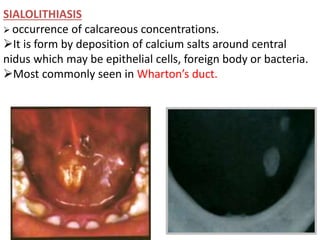
SIALOLITHIASIS
 occurrence of calcareous concentrations.
It is form by deposition of calcium salts around central
nidus which may be epithelial cells, foreign body or bacteria.
Most commonly seen in Wharton’s duct.
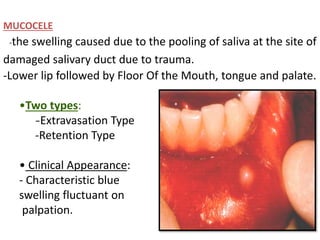
MUCOCELE
-the swelling caused due to the pooling of saliva at the site of
damaged salivary duct due to trauma.
-Lower lip followed by Floor Of the Mouth, tongue and palate.
•Two types:
-Extravasation Type
-Retention Type
• Clinical Appearance:
- Characteristic blue
swelling fluctuant on
palpation.
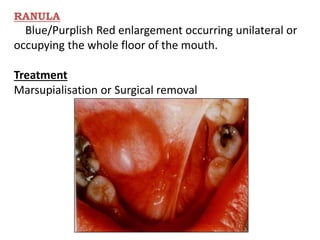
RANULA
Blue/Purplish Red enlargement occurring unilateral or
occupying the whole floor of the mouth.
Treatment
Marsupialisation or Surgical removal
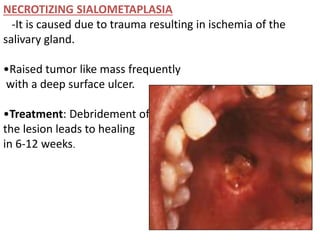
NECROTIZING SIALOMETAPLASIA
-It is caused due to trauma resulting in ischemia of the
salivary gland.
•Raised tumor like mass frequently
with a deep surface ulcer.
•Treatment: Debridement of
the lesion leads to healing
in 6-12 weeks.
INFLAMMATORY DISORDERS
Characterized by painful bilateral/unilateral swellings of the
affected glands esp. while eating food or opening the mouth.
Viral: Mumps- Paramyxovirus.
H.I.V.Associated: Kaposi’s Sarcoma and Lymphoma.
Bacterial Sialadenitis: Staph.aureus,Strep.viridans.
Allergic Sialadenitis: Phenothiazine .
TREATMENT: Symptomatic/Antibiotics/Surgical drainage.
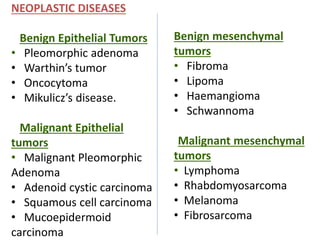
NEOPLASTIC DISEASES
Benign Epithelial Tumors
• Pleomorphic adenoma
• Warthin’s tumor
• Oncocytoma
• Mikulicz’s disease.
Malignant Epithelial
tumors
• Malignant Pleomorphic
Adenoma
• Adenoid cystic carcinoma
• Squamous cell carcinoma
• Mucoepidermoid
carcinoma
Benign mesenchymal
tumors
• Fibroma
• Lipoma
• Haemangioma
• Schwannoma
Malignant mesenchymal
tumors
• Lymphoma
• Rhabdomyosarcoma
• Melanoma
• Fibrosarcoma
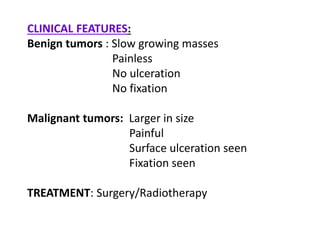
CLINICAL FEATURES:
Benign tumors : Slow growing masses
Painless
No ulceration
No fixation
Malignant tumors: Larger in size
Painful
Surface ulceration seen
Fixation seen
TREATMENT: Surgery/Radiotherapy
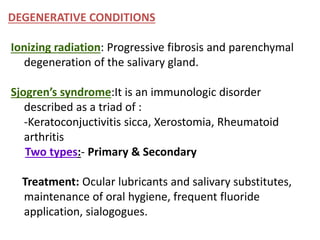
DEGENERATIVE CONDITIONS
Ionizing radiation: Progressive fibrosis and parenchymal
degeneration of the salivary gland.
Sjogren’s syndrome:It is an immunologic disorder
described as a triad of :
-Keratoconjuctivitis sicca, Xerostomia, Rheumatoid
arthritis
Two types:- Primary & Secondary
Treatment: Ocular lubricants and salivary substitutes,
maintenance of oral hygiene, frequent fluoride
application, sialogogues.
Saliva provides an easily available non-invasive
diagnostic medium for a wide range of diseases and
clinical situations.
Diagnosis of salivary gland dysfunction can be made by
Sialometry
The most common subjective complaint resulting from
salivary gland dysfunction is Xerostomia(dry mouth).
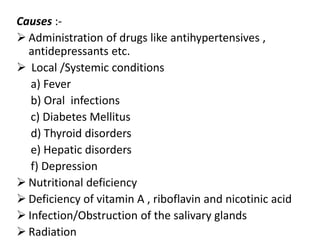
Causes :-
 Administration of drugs like antihypertensives ,
antidepressants etc.
 Local /Systemic conditions
a) Fever
b) Oral infections
c) Diabetes Mellitus
d) Thyroid disorders
e) Hepatic disorders
f) Depression
 Nutritional deficiency
 Deficiency of vitamin A , riboflavin and nicotinic acid
 Infection/Obstruction of the salivary glands
 Radiation
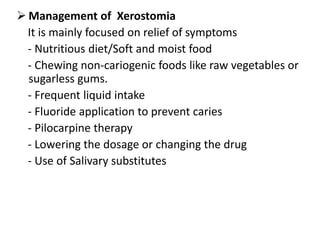
 Management of Xerostomia
It is mainly focused on relief of symptoms
- Nutritious diet/Soft and moist food
- Chewing non-cariogenic foods like raw vegetables or
sugarless gums.
- Frequent liquid intake
- Fluoride application to prevent caries
- Pilocarpine therapy
- Lowering the dosage or changing the drug
- Use of Salivary substitutes
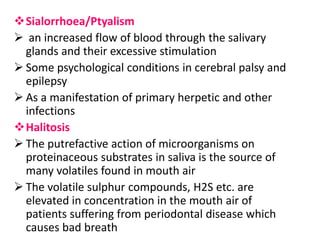
Sialorrhoea/Ptyalism
 an increased flow of blood through the salivary
glands and their excessive stimulation
 Some psychological conditions in cerebral palsy and
epilepsy
 As a manifestation of primary herpetic and other
infections
Halitosis
 The putrefactive action of microorganisms on
proteinaceous substrates in saliva is the source of
many volatiles found in mouth air
 The volatile sulphur compounds, H2S etc. are
elevated in concentration in the mouth air of
patients suffering from periodontal disease which
causes bad breath
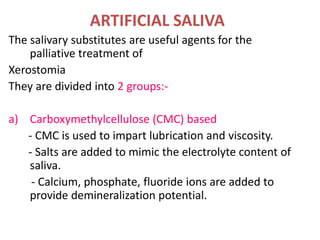
ARTIFICIAL SALIVA
The salivary substitutes are useful agents for the
palliative treatment of
Xerostomia
They are divided into 2 groups:-
a) Carboxymethylcellulose (CMC) based
- CMC is used to impart lubrication and viscosity.
- Salts are added to mimic the electrolyte content of
saliva.
- Calcium, phosphate, fluoride ions are added to
provide demineralization potential.
b) Mucin based
- They have the lowest contact angle and the best
wetting properties on the oral mucosa
- Their rheological properties are more comparable to
that of natural saliva
- These salivary substitutes are available in the form
of sprays and lozenges.
SIALGOGUES AND ANTISIALGOGUES
Sialgogues- Drugs which stimulate salivation
- Also called as cholinergic drugs or parasympa-
- thetomimetic drugs
Classified as :
1) Esters of choline i.e. acetyl choline, metacholine.
2) Cholinomimetic alkaloid i.e. pilocarpine
3) Cholinesterase inhibitors e.g., neostigmine,
organophosphoric compounds
Antisialgogues – They are parasympathetic or cholinergic
blocking agents include atropine and its
related alkaloids obtained from the plant.
INTERACTION OF SALIVARY COMPONENTS
WITH THE BACTERIAL SURFACE
 Many studies have demonstrated that salivary
components interact selectively with bacteria to form
a “salivary-bacterial pellicle”
 More recently it has been realized that salivary
components may block microbial adhesion to host
surfaces.
 Considering the number of bacterial species in the oral
cavity(>500) and the number of components in
saliva(>70), the potential number of permutations of
saliva-bacterium interactions is surprising.
 The interaction of salivary molecules with bacteria
may be of four kinds:-
* Promotion of microbial clearance from the oral
cavity by agglutination or steric hindrance
* Promotion of adhesion to the host surface
* Direct killing of microbes
* Providing substrates for microbial nutrition and
growth
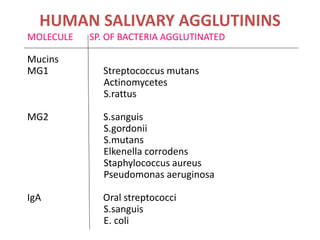
HUMAN SALIVARY AGGLUTININS
MOLECULE SP. OF BACTERIA AGGLUTINATED
Mucins
MG1 Streptococcus mutans
Actinomycetes
S.rattus
MG2 S.sanguis
S.gordonii
S.mutans
Elkenella corrodens
Staphylococcus aureus
Pseudomonas aeruginosa
IgA Oral streptococci
S.sanguis
E. coli
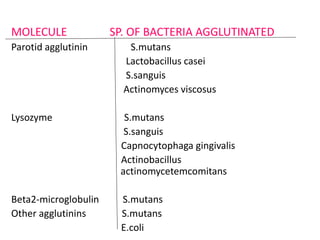
MOLECULE SP. OF BACTERIA AGGLUTINATED
Parotid agglutinin S.mutans
Lactobacillus casei
S.sanguis
Actinomyces viscosus
Lysozyme S.mutans
S.sanguis
Capnocytophaga gingivalis
Actinobacillus
actinomycetemcomitans
Beta2-microglobulin S.mutans
Other agglutinins S.mutans
E.coli
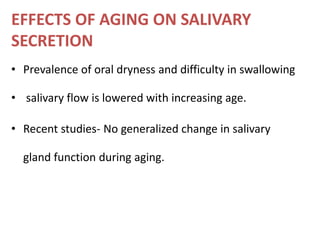
EFFECTS OF AGING ON SALIVARY
SECRETION
• Prevalence of oral dryness and difficulty in swallowing
• salivary flow is lowered with increasing age.
• Recent studies- No generalized change in salivary
gland function during aging.
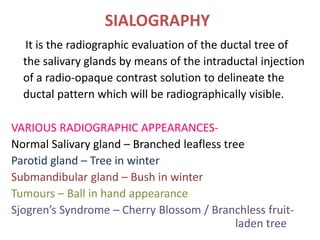
SIALOGRAPHY
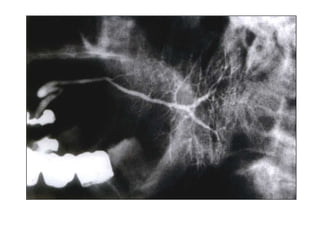
It is the radiographic evaluation of the ductal tree of
the salivary glands by means of the intraductal injection
of a radio-opaque contrast solution to delineate the
ductal pattern which will be radiographically visible.
VARIOUS RADIOGRAPHIC APPEARANCES-
Normal Salivary gland – Branched leafless tree
Parotid gland – Tree in winter
Submandibular gland – Bush in winter
Tumours – Ball in hand appearance
Sjogren’s Syndrome – Cherry Blossom / Branchless fruit-
laden tree
Saliva:A Diagnostic Fluid
• ADVANTAGES:
• non-invasive
• limited training
• no special equipment
• potentially valuable for children and older adults
• cost-effective
• eliminates the risk of infection
• screening of large populations
HISTORY
Historical ‘background
 Diagnostic value of saliva was recognized by
ancient judicial community who employed the
absence of salivary flow as the basis of a lie detector
test.
Testing of saliva production
• Unstimulated production – collection of saliva into
container during 15 min
• Stimulated production – collection of saliva during 5
min of chewing 1g paraffin
• Unstimulated whole saliva flow rates of <0.1 ml/min.
• Stimulated whole saliva flow rate’s of <1.0 ml/min
• Considered abnormally low & indicative of marked
salivary hypofunction.
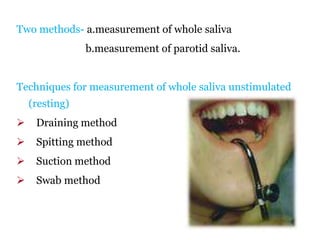
Two methods- a.measurement of whole saliva
b.measurement of parotid saliva.
Techniques for measurement of whole saliva unstimulated
(resting)
 Draining method
 Spitting method
 Suction method
 Swab method
Techniques for collection stimulated
whole saliva
Masticatory method (standardized piece of paraffin used)
Gustatory method(1% to 6% citric acid used )
The spitting method for estimating resting flow and
masticatory method with paraffin chewing for stimulating
saliva for measuring flow rates are reliable.
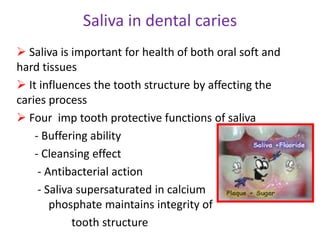
Saliva in dental caries
 Saliva is important for health of both oral soft and
hard tissues
 It influences the tooth structure by affecting the
caries process
 Four imp tooth protective functions of saliva
- Buffering ability
- Cleansing effect
- Antibacterial action
- Saliva supersaturated in calcium
phosphate maintains integrity of
tooth structure
Saliva in periodontal disease
Saliva contains
 Proteins of host origin : Enzymes Immunoglobulins
 Phenotypic markers : Epithelial keratin's
 Hormones : Cortisol
 Bacteria and bacteria products.
SALIVA IN VIRAL INFECTIONS
 Ig capture radio immune assay {GACRIA}of igA,igG and
igM antibody level can also be used In viral diagnosis and
screening.
 Parrt et al; {1990}have shown the application of this
method for salivary monitoring of hepatitis A and B
Infection and rubella.
 Saliva based test are used in diagnostic and
epidemiological studies of herpes viruses .hepatitis B virus
,EB virus .and entamoeba histolytica infection
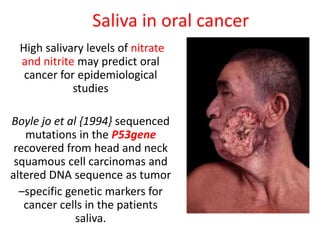
Saliva in oral cancer
High salivary levels of nitrate
and nitrite may predict oral
cancer for epidemiological
studies
Boyle jo et al {1994} sequenced
mutations in the P53gene
recovered from head and neck
squamous cell carcinomas and
altered DNA sequence as tumor
–specific genetic markers for
cancer cells in the patients
saliva.
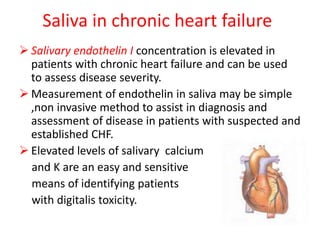
Saliva in chronic heart failure
 Salivary endothelin I concentration is elevated in
patients with chronic heart failure and can be used
to assess disease severity.
 Measurement of endothelin in saliva may be simple
,non invasive method to assist in diagnosis and
assessment of disease in patients with suspected and
established CHF.
 Elevated levels of salivary calcium
and K are an easy and sensitive
means of identifying patients
with digitalis toxicity.
Saliva in Sjogren’s syndrome
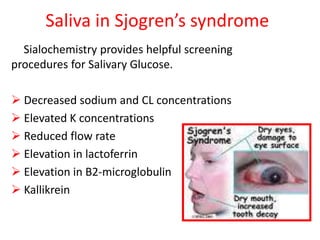
Sialochemistry provides helpful screening
procedures for Salivary Glucose.
 Decreased sodium and CL concentrations
 Elevated K concentrations
 Reduced flow rate
 Elevation in lactoferrin
 Elevation in B2-microglobulin
 Kallikrein
Saliva in down syndrome
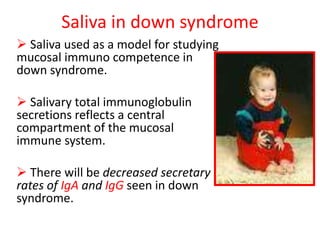
 Saliva used as a model for studying
mucosal immuno competence in
down syndrome.
 Salivary total immunoglobulin
secretions reflects a central
compartment of the mucosal
immune system.
 There will be decreased secretary
rates of IgA and IgG seen in down
syndrome.
Drugs currently monitored in saliva
 FDA approved orasure oral specimen
collection system to be sensitive and
specific kit.
 Detects any of the NIDA-5drugs that is
marijuana, cocaine, methamphetamine, opiates
and phencyclidine hydrochloride using a single
orasure specimen.
Role of saliva in smoking
Salivary thiocyanate concentration is higher in smokers
than in nonsmokers
 Using levels of nicotine in air and salivary nicotine levels,
we can calculate risk level of passive smoking in the work
place.
Role of saliva in alcohol
The US department of transportation
recently approved a versatile and
alternative method with saliva to
determine the immediate quantitative
blood alcohol concentration
An enzymatic reaction occurs based
on the enzymatic oxidation of alcohol
to acetaldehyde by alcohol
dehydrogenase.
Saliva In elderly
Studies of age related changes
in the composition of salivary secretions
suggest that there are slight changes
In the protective capacity of salivary
IgA antibodies which make elderly
people more susceptible to oral
bacterial and fungal infections,
such as root caries and candidasis.
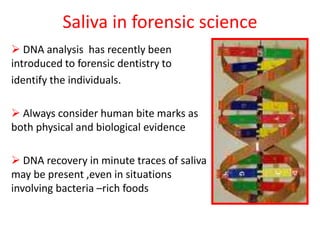
Saliva in forensic science
 DNA analysis has recently been
introduced to forensic dentistry to
identify the individuals.
 Always consider human bite marks as
both physical and biological evidence
 DNA recovery in minute traces of saliva
may be present ,even in situations
involving bacteria –rich foods
Recent advances in diagnostic
technology
 The development of micro electromechanical
system{MEMS} and nanoelectromechanical system
{NEMS} biosensors exhibit high levels of sensitivity and
specificity for analyte detection ,
down to the single molecule level.
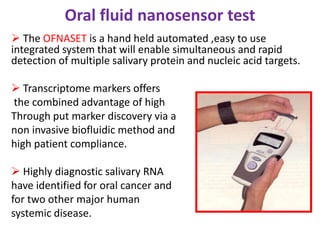
Oral fluid nanosensor test
 The OFNASET is a hand held automated ,easy to use
integrated system that will enable simultaneous and rapid
detection of multiple salivary protein and nucleic acid targets.
 Transcriptome markers offers
the combined advantage of high
Through put marker discovery via a
non invasive biofluidic method and
high patient compliance.
 Highly diagnostic salivary RNA
have identified for oral cancer and
for two other major human
systemic disease.
CONCLUSION
Saliva is a complex fluid produced by a number of
specialized glands which discharge into the oral cavity. It
plays a major role in the maintenance of the health of
an individual. And it has many applications as a
diagnostic fluid.
REFRENCES
• Antonio nanci. Tencate’s Oral Histology: Development,
Structure, and Function. Elsevier. Missouri. 7th
ed.p.290-317.
• B.K.B. Berkovitz. Oral anatomy, Histology, and
Embryology. mosby.Edinburgh.3rd ed.p.256-268.
• Orban’s Oral histology and Embryology. Elsevier.
Churchill livingstone.12th ed.p.258-280.
• David H.Cormack. Ham’s Histology. J.B Lippincott
company. Philadelphia.9th ed.p.489-490.
• Brad W. Neville et al. Oral and Maxillofacial Pathology.
Saunders.Missouri.3rd ed.p.453-451.
• Praveen Kudva et al. Role of Saliva as a Diagnostic Tool
in Periodontal Disease. Archives of Dental Sciences.
2010;1:(1). 21-25.
• Effects of Saliva on Dental Caries;J Am Dent Assoc
2008;139;11s-17s.
• William V. Giannobile et al. Saliva as a diagnostic tool for
periodontal disease: current state and future directions.
Periodontology 2009;50(1):52-64.
• YU-HSIANG LEE. Saliva: An emerging biofluid for early
detection of diseases. American Journal of
Dentistry.2009;22(4): 241-248.
• Llena-Puy C. The role of saliva in maintaining oral health
and as an aid to diagnosis. Med Oral Patol Oral Cir Bucal
2006;11:E449-55.
• J.M. Lee, E. Garon, and D.T. Wong. Salivary diagnostics.
Orthod Craniofac Res.2009;12(3):206-211.
• David T. Wong. Salivary diagnostics powered by
nanotechnologies, proteomics and genomics. JADA
2006;137:313-321.
• Silvia Chiappin. Saliva specimen: A new laboratory tool
for diagnostic and basic investigation. Clinica Chimica
Acta 2007;383:30–40.
Thank you

SALIVA.pptx

  • 1.
  • 2.
  • 3.
    CONTENTS • Introduction. • Salivaryglands and its main features. • Blood supply and nerve supply of salivary glands. • Composition of saliva. • Factors affecting composition of saliva. • Methods of collection of saliva. • Properties of saliva. • Secretion of saliva. • Conditions that affect salivation. • Formation of saliva. • Functions of saliva.
  • 4.
    • Clinical considerations. •Salivary substitutes. • Interaction of salivary components with the bacterial surface. • Effects of aging on salivary secretion. • Sialography. • Saliva As A Diagnostic Fluid. • Conclusion. • Refrences.
  • 5.
    INTRODUCTION “Saliva lacks thedrama of blood, the emotion of tears and toil of sweat but it still remains one of the most important fluids in the human body” IRWIN MANDEL (DDS)
  • 6.
    What is saliva? •The term saliva refers to the mixed fluid in the mouth in contact with the teeth and oral mucosa, which is often called ‘whole saliva’. • Composed of more than 99% water and less than 1% solids,mostly electrolytes and proteins,the latter giving saliva its characteristic viscosity. • Normally the daily production of whole saliva ranges from 0.5 to 1.0 litres.
  • 7.
    SALIVARY GLANDS • Exocrineglands • Two types- 1) Major salivary glands- - Parotid. - Submandibular. - Sublingual. 2) Minor salivary glands- - Labial and buccal glands. - Glossopalatine glands. - Palatine glands. -Lingual glands.
  • 9.
    DEVELOPMENT OF SALIVARYGLANDS Stages of Development • Divided into 6 stages- Stage I – Bud formation. Stage II – Formation and growth of epithelial cord. Stage III – Initiation of branching in terminal parts of epithelial cord and continuation of glandular differentiation. Stage IV – Dichotomous branching of epithelial cord and lobule formation. Stage V – Canalization of presumptive ducts. Stage VI – Cytodifferentiation.
  • 10.
    HISTOLOGY OF SALIVARYGLANDS • Consists of several ducts, terminating in secretory end pieces- acini. • Terminal secretory units are composed of serous, mucous and myoepithelial cells arranged into acini or secretory tubule. • Composed of parenchymal elements supported by connective tissue. • Terminal secretory units leading into ducts that open into oral cavity.
  • 11.
     Connective tissueencapsulates glands and extends into it dividing groups of secretory units and ducts into lobes and lobules.  The main excretory duct -> interlobar & interlobular duct.  interlobular duct = striated duct – modification of primary saliva.
  • 12.
    SALIVARY GLAND ACINI •Serous •Mucous •Mixed SEROUSCELL - Pyramidal in shape - Nucleus is spherical
  • 13.
    Mucous cells  Specializedfor synthesis, secretion and storage of secretory products  Secrete a viscous Glycoprotein called ‘ mucin’ a useful lubricant for food and also protects the oral mucosa.
  • 14.
    Myoepithelial cells Closely relatedto the secretory and intercalated duct cells Considered to have a contractile function, helping to expel secretions from the Lumina of the secretory units and ducts.
  • 15.
    DUCT SYSTEM CELLS •Classified as Intercalated, Striated and excretory  INTERCALATED DUCT CELLS - Connect acinar secretions to the rest of the gland - not involved in the modification of electrolytes  STRIATED CELLS - electrolyte regulation in resorbing sodium  EXCRETORY DUCT CELLS - sodium resorption and secreting potassium - last part of the duct network before the saliva reaches the oral cavity.
  • 17.
    MAIN FEATURES OFSALIVARY GLANDS Gland type and weight Location Route of secretory duct Histology %age of total salivary secretion 1. Parotid gland 20-30 gm each In the groove between ramus of mandible and mastoid process i.e below the ear Secretions pass via Stenson’s duct which open opp. The upper second molar in Oral cavity Contains purely serous cells 25% 2.Submandibula r or submaxillary 8- 10gm each In submaxillary triangle behind and below the mylohyoid muscle, with a small extension lying above the muscle Its duct i.e. Wharton’s duct opens into floor of the mouth at canancula sublingualis , a papilla along the side of lingual frenum Mixed i.e. contains both serous and mucous cells in the ratio of 4:1 70% 3.Sublingual glands 2-3 gm each Between floor of the mouth and mylohyoid muscle Its secretions are discharged by 5-15 small ducts. Main duct is Bartholins duct Mixed but mainly mucous cells Ratio 4:1 S:M 5%
  • 18.
    BLOOD SUPPLY OFSALIVARY GLANDS ARTERIAL SUPPLY • Parotid gland – Facial and External carotid arteries • Submandibular gland – Facial and Lingual arteries • Sublingual gland – Submental and Sublingual arteries VENOUS DRAINAGE • All glands – External jugular vein
  • 19.
    INFLUENCE OF BLOODSUPPLY ON SALIVARY SECRETION • Extensive blood supply required for rapid salivary secretion. • Salivation indirectly dilates blood vessels providing increased nutrition. • Large increase in blood flow accompanies salivary secretion.
  • 20.
    NERVE SUPLY Salivary glandsecretion is regulated by both sympathetic and parasympathetic autonomic nerves Major Salivary Glands
  • 21.
    Minor Salivary Glands Sympathetic: Labialand Buccal Glands via plexus on Facial Artery Lingual Glands via plexus on Lingual Artery Palatine Glands via plexus on Palatine Artery
  • 22.
    • Parasympathetic: • Ant.LingualGlands - superior salivatory nucleus • Glands present in Palate, Upper Lip and Upper part of the Vestibule - post gang.fibres from the Pterygopalatine Gang. through the Palatine vessels. • Glands of the Lower Lip and Lower part of the Vestibule - post gang. fibers from Otic gang.through Inf.Alv. And Buccal Nerves.
  • 23.
    COMPOSITION OF SALIVA •Dilute aqueous solution present in the oral environment. • 99% of this hypotonic fluid is Water • Remaining 1% consists of dissolved organic and inorganic constituents
  • 24.
  • 25.
    1. PROTIENS consists only3% of protein concentration present in plasma i.e., about 200 mg/100 ml. a) Salivary enzymes i. Alpha amylase(ptyalin) -parotid saliva- 60-120 mg/100ml, -submandibular saliva-25mg/100ml. ii. Antibacterial substance - Lysozyme,Lactoferrin,Peroxidase system,Sialoperoxidase. iii. Kallikrein, Dextranases, Invertase. iv. Miscellaneous enzymes- Acid phosphatase, cholinesterase,ribonuclease,lipase,proteases, carboxypeptidases,urease,aminopeptidase etc.
  • 26.
    b) Immunoglobulins - IgA,IgG, IgM. c) Proteins synthesized within the glands - Factor VII ( Pro-activator ) - Factor VIII ( Anti haemophilic globulin ) - Factor IX ( Christmas factor ) - Platelet factor d) Glycoproteins - MG1 and MG2 ( Submandibular and Sublingual saliva) - Proline rich glycoproteins ( Parotid saliva) e) Other Polypeptides - Statherin - Sialin
  • 27.
    II. BLOOD GROUPSUBSTANCES III . HORMONES - Parotin - Nerve growth factor IV. CARBOHYDRATES -glucose, 0.5-1 mg/100 ml in parotid saliva -hexose, small amounts of hexosamine and sialic acid in submandibular saliva V. LIPIDS - diglycerides, triglycerides cholesterol and cholesterol esters - phospholipids - corticosteroids VI. NITROGEN CONTAINING COMPOUNDS VII. UREA - 12-20 mg/100ml VIII. WATER-SOLUBLE VITAMINS
  • 28.
    INORGANIC CONSTITUENTS a) Sodium(0-80mg/100ml) b) Potassium (60-100mg/100ml) c) Calcium (2-11mg/100ml) d) Phosphate (6-71mg/100ml) e) Chloride (50-100mg/100ml) f) Fluoride (.01-.04mg/100ml) g) Bicarbonate (0-40mg/100ml) h) Thiocyanate ( 2mg ) i) Hydrogen ion (Ph range is 5.0-8.0)
  • 29.
    CELLS OF SALIVA -Yeast cells - Bacteria - Protozoa - Polymorphonuclear leukocytes - Desquamated epithelial cells GASES DISSOLVED IN SALIVA - Oxygen ( 0.18- .25 vol% ) - Nitrogen ( 0.9 vol% ) - Carbon dioxide ( 10-20 vol% in unstimulated saliva )
  • 30.
    FACTORS AFFECTING COMPOSITION 1.Flow rate 2. Differential gland contributions 3. Duration of the stimulus 4. Nature of the stimulus 5. Diet 6. Hormones 7. Fatigue 8. Plasma concentration 9. Other factors - pregnancy, genetic polymorphism, antigenic stimulus, exercise, drugs and various diseases.
  • 31.
    METHODS OF COLLECTINGSALIVA FROM DIFFERENT GLANDS • Carlson-Crittendon cannula used for collecting parotid saliva • A Segregator used for collecting saliva from submandibular and sublingual glands • Most commonly used techniques for measuring unstimulated salivary flow rate are :- 1) Draining method 2) Spitting method 3) Suction method 4) Swab method
  • 32.
    • Two collectionmethods used to determine stimulated salivary flow rate :- 1) Masticatory method 2) Gustatory method
  • 33.
    PROPERTIES OF SALIVA 1)Consistency : Slightly cloudy 2) Reaction : Usually slightly acidic 3) PH : 5-8 4) Specific gravity : 1.0024 – 1.0061 5) Freezing point : 0.07 – 0.34 degree Celsius 6) Flow rate : 0.02ml/minute at rest to 7ml/minute or more when stimulated. 7) Buffering power of saliva -The carbonic acid/bicarbonate system - The phosphate buffer system - The salivary proteins
  • 34.
    SECRETION OF SALIVA 1.TOTAL VOLUME OF SALIVA SECRETED 500-750ml/day, May go up to 1litre/day Of this total volume of saliva :- 60% - Submandibular gland 30% - Parotid gland 3-5% - Sublingual gland 7% - Minor salivary glands These proportions vary with the intensity and type of stimulation.
  • 35.
    In sleep -parotid - 0% - submandibular - 72% - sublingual - 28% Resting Stage - Submandibular - 72% - Parotid - 21% -Sublingual - 1-2% -Minor salivary - 7% glands Acidic stimulation - Submandibular - 46% - Parotid - 45% - Sublingual - 1.5% Mechanical Stimulation - Parotid - 58% - Submandibular – 33%
  • 36.
    2. CONTROL OFSALIVARY SECRETION Salivary glands are purely under nervous control • Sympathetic nerve supply - secretory proteins like Amylase and Vasoconstrictors. • Parasympathetic supply- Nerves innervate acinar cells, duct cells, blood vessels and myoepithelial cells. A) AFFERENT PATHWAY I. RESTING FLOW a) Hydration b) Exercise and Stress c) Drugs d)Other factors like- gender, age( above 15 years) weight, gland size, psychic effects like thought/site of food, appetite and mental stress.
  • 37.
    II. Psychic Flow III.Unconditional Reflexes ( Local stimuli ) a) Mastication b) Gustatory stimuli Factors Affecting The Flow Of Stimulated Saliva. - Nature of stimulus ( mechanical , gustatory ) - Vomiting, Smoking, Gland size, Gag reflex, Olfaction, Unilateral stimulation, Food intake. B. CENTRAL CONTROL C. EFFERENT PATHWAY
  • 38.
    CONDITIONS THAT AFFECTSALIVATION Physiologic • Taste, Surface texture, Dehydration, Age, Emotion Pathologic conditions that increase salivation • Digestive tract irritants, Ill – fitting dentures / Inadequate interocclusal distance, Vitamin deficiency, Trauma from surgery. Pathologic conditions that decrease salivation • Senile atrophy of the salivary glands, Irradiation therapy, Diseases of the brainstem, Diabetes mellitus / insipidus,Diarrhoea, Acute infectious diseases.
  • 39.
    DRUGS THAT INCREASESALIVATION • Cholinesterase inhibitors Example- prostigmine • Adrenergic stimulating drugs Example- epinephrine • Sialogogues Example- pilocarpine DRUGS THAT DECREASE SALIVATION • Antihistamines, Drugs for peptic ulcer, Antihypertensives, Antipsychotics, Antiparkinsonian drugs, Antianxiety agents, Antidepressants, Antisialogogues, Diuretics, Decongestants.
  • 40.
    FORMATION OF SALIVA Salivais formed in two stages:- i. A primary secretion occurs in the acini ii. Then modified as it passes through the ducts MECHANISM OF ACTION a) Signal transduction - Phospholipase C Pathway - Adenyl cyclase pathway
  • 42.
    Formation of granules •Nucleus -> signaling-> mRNA-> ribosomes(synthesis protein molecules - preprotiens) -> NH2 signalling. • Signal peptidase enzymes removes NH2 signalling -> preprotiens -> golgi bodies-> glycosylations (serine,aspiragin + carbohydrates)-> glycoprotiens. • vacuoles filled with granules are formed-> apical cytoplasmic end.
  • 43.
    Mechanism of Formationof saliva Signal Transduction Stimulus  Release of a neurotransmitter substance {Acetyl choline/Noradrenaline} Ext.surface of Secretory Cell membrane Stimulatory/Inhibitory Receptor  intermediate protein GlycoProtein Inner cytoplasmic surface Phospholipase C/Adenyl cyclase {Regulatory enzyme} Acetyl choline+muscarinic receptorsPhospholipase C Water & electrolytes Noradrenaline+ adrenergic acinar receptorsAdenyl cyclase Exocytosis of secretory proteins.
  • 44.
  • 45.
    FUNCTIONS OF SALIVA 1.PROTECTIVE PROPERTIES a) Lubrication b) Maintenance of mucous membrane integrity c) Soft tissue repair d) Maintenance of ecological balance e) Dilution and clearance f) Aggregation g) Direct Antibacterial activity h) Antifungal and antiviral activity i) Maintenance of ph j) Maintenance of tooth integrity k) Salivary anticaries activity
  • 46.
    2) DIGESTION 3) TASTE 4)EXCRETION 5) WATER BALANCE 6) SALIVARY DIAGNOSIS 7) ORAL HYGIENE
  • 47.
    Multifunctionality Salivary Functions Anti- Bacterial Buffering Digestion Mineral- ization Lubricat- ion &Visco- elasticity Tissue Coating Anti- Fungal Anti- Viral Carbonic anhydrases, Histatins Amylases, Mucins,Lipase Cystatins, Histatins, Proline- rich proteins, Statherins Mucins, Statherins Amylases, Cystatins, Mucins, Proline-rich proteins, Statherins Histatins Cystatins, Mucins Amylases, Cystatins, Histatins, Mucins, Peroxidases
  • 48.
  • 49.
    ANOMALIES OF THESALIVARY GLANDS I. Developmental Aberrant Salivary Glands Aplasia and Hyperplasia II.Obstructive conditions Sialolithiasis Mucocele Necrotizing Sialometaplasia iii. Inflammatory Diseases Viral: Mumps, H.I.V. Associated Bacterial: Sialadenitis
  • 50.
  • 51.
    SIALOLITHIASIS  occurrence ofcalcareous concentrations. It is form by deposition of calcium salts around central nidus which may be epithelial cells, foreign body or bacteria. Most commonly seen in Wharton’s duct.
  • 52.
    MUCOCELE -the swelling causeddue to the pooling of saliva at the site of damaged salivary duct due to trauma. -Lower lip followed by Floor Of the Mouth, tongue and palate. •Two types: -Extravasation Type -Retention Type • Clinical Appearance: - Characteristic blue swelling fluctuant on palpation.
  • 53.
    RANULA Blue/Purplish Red enlargementoccurring unilateral or occupying the whole floor of the mouth. Treatment Marsupialisation or Surgical removal
  • 54.
    NECROTIZING SIALOMETAPLASIA -It iscaused due to trauma resulting in ischemia of the salivary gland. •Raised tumor like mass frequently with a deep surface ulcer. •Treatment: Debridement of the lesion leads to healing in 6-12 weeks.
  • 55.
    INFLAMMATORY DISORDERS Characterized bypainful bilateral/unilateral swellings of the affected glands esp. while eating food or opening the mouth. Viral: Mumps- Paramyxovirus. H.I.V.Associated: Kaposi’s Sarcoma and Lymphoma. Bacterial Sialadenitis: Staph.aureus,Strep.viridans. Allergic Sialadenitis: Phenothiazine . TREATMENT: Symptomatic/Antibiotics/Surgical drainage.
  • 56.
    NEOPLASTIC DISEASES Benign EpithelialTumors • Pleomorphic adenoma • Warthin’s tumor • Oncocytoma • Mikulicz’s disease. Malignant Epithelial tumors • Malignant Pleomorphic Adenoma • Adenoid cystic carcinoma • Squamous cell carcinoma • Mucoepidermoid carcinoma Benign mesenchymal tumors • Fibroma • Lipoma • Haemangioma • Schwannoma Malignant mesenchymal tumors • Lymphoma • Rhabdomyosarcoma • Melanoma • Fibrosarcoma
  • 57.
    CLINICAL FEATURES: Benign tumors: Slow growing masses Painless No ulceration No fixation Malignant tumors: Larger in size Painful Surface ulceration seen Fixation seen TREATMENT: Surgery/Radiotherapy
  • 58.
    DEGENERATIVE CONDITIONS Ionizing radiation:Progressive fibrosis and parenchymal degeneration of the salivary gland. Sjogren’s syndrome:It is an immunologic disorder described as a triad of : -Keratoconjuctivitis sicca, Xerostomia, Rheumatoid arthritis Two types:- Primary & Secondary Treatment: Ocular lubricants and salivary substitutes, maintenance of oral hygiene, frequent fluoride application, sialogogues.
  • 59.
    Saliva provides aneasily available non-invasive diagnostic medium for a wide range of diseases and clinical situations. Diagnosis of salivary gland dysfunction can be made by Sialometry The most common subjective complaint resulting from salivary gland dysfunction is Xerostomia(dry mouth).
  • 60.
    Causes :-  Administrationof drugs like antihypertensives , antidepressants etc.  Local /Systemic conditions a) Fever b) Oral infections c) Diabetes Mellitus d) Thyroid disorders e) Hepatic disorders f) Depression  Nutritional deficiency  Deficiency of vitamin A , riboflavin and nicotinic acid  Infection/Obstruction of the salivary glands  Radiation
  • 61.
     Management ofXerostomia It is mainly focused on relief of symptoms - Nutritious diet/Soft and moist food - Chewing non-cariogenic foods like raw vegetables or sugarless gums. - Frequent liquid intake - Fluoride application to prevent caries - Pilocarpine therapy - Lowering the dosage or changing the drug - Use of Salivary substitutes
  • 62.
    Sialorrhoea/Ptyalism  an increasedflow of blood through the salivary glands and their excessive stimulation  Some psychological conditions in cerebral palsy and epilepsy  As a manifestation of primary herpetic and other infections Halitosis  The putrefactive action of microorganisms on proteinaceous substrates in saliva is the source of many volatiles found in mouth air  The volatile sulphur compounds, H2S etc. are elevated in concentration in the mouth air of patients suffering from periodontal disease which causes bad breath
  • 63.
    ARTIFICIAL SALIVA The salivarysubstitutes are useful agents for the palliative treatment of Xerostomia They are divided into 2 groups:- a) Carboxymethylcellulose (CMC) based - CMC is used to impart lubrication and viscosity. - Salts are added to mimic the electrolyte content of saliva. - Calcium, phosphate, fluoride ions are added to provide demineralization potential.
  • 64.
    b) Mucin based -They have the lowest contact angle and the best wetting properties on the oral mucosa - Their rheological properties are more comparable to that of natural saliva - These salivary substitutes are available in the form of sprays and lozenges.
  • 65.
    SIALGOGUES AND ANTISIALGOGUES Sialgogues-Drugs which stimulate salivation - Also called as cholinergic drugs or parasympa- - thetomimetic drugs Classified as : 1) Esters of choline i.e. acetyl choline, metacholine. 2) Cholinomimetic alkaloid i.e. pilocarpine 3) Cholinesterase inhibitors e.g., neostigmine, organophosphoric compounds Antisialgogues – They are parasympathetic or cholinergic blocking agents include atropine and its related alkaloids obtained from the plant.
  • 66.
    INTERACTION OF SALIVARYCOMPONENTS WITH THE BACTERIAL SURFACE  Many studies have demonstrated that salivary components interact selectively with bacteria to form a “salivary-bacterial pellicle”  More recently it has been realized that salivary components may block microbial adhesion to host surfaces.  Considering the number of bacterial species in the oral cavity(>500) and the number of components in saliva(>70), the potential number of permutations of saliva-bacterium interactions is surprising.
  • 67.
     The interactionof salivary molecules with bacteria may be of four kinds:- * Promotion of microbial clearance from the oral cavity by agglutination or steric hindrance * Promotion of adhesion to the host surface * Direct killing of microbes * Providing substrates for microbial nutrition and growth
  • 68.
    HUMAN SALIVARY AGGLUTININS MOLECULESP. OF BACTERIA AGGLUTINATED Mucins MG1 Streptococcus mutans Actinomycetes S.rattus MG2 S.sanguis S.gordonii S.mutans Elkenella corrodens Staphylococcus aureus Pseudomonas aeruginosa IgA Oral streptococci S.sanguis E. coli
  • 69.
    MOLECULE SP. OFBACTERIA AGGLUTINATED Parotid agglutinin S.mutans Lactobacillus casei S.sanguis Actinomyces viscosus Lysozyme S.mutans S.sanguis Capnocytophaga gingivalis Actinobacillus actinomycetemcomitans Beta2-microglobulin S.mutans Other agglutinins S.mutans E.coli
  • 70.
    EFFECTS OF AGINGON SALIVARY SECRETION • Prevalence of oral dryness and difficulty in swallowing • salivary flow is lowered with increasing age. • Recent studies- No generalized change in salivary gland function during aging.
  • 71.
    SIALOGRAPHY It is theradiographic evaluation of the ductal tree of the salivary glands by means of the intraductal injection of a radio-opaque contrast solution to delineate the ductal pattern which will be radiographically visible. VARIOUS RADIOGRAPHIC APPEARANCES- Normal Salivary gland – Branched leafless tree Parotid gland – Tree in winter Submandibular gland – Bush in winter Tumours – Ball in hand appearance Sjogren’s Syndrome – Cherry Blossom / Branchless fruit- laden tree
  • 73.
    Saliva:A Diagnostic Fluid •ADVANTAGES: • non-invasive • limited training • no special equipment • potentially valuable for children and older adults • cost-effective • eliminates the risk of infection • screening of large populations
  • 74.
    HISTORY Historical ‘background  Diagnosticvalue of saliva was recognized by ancient judicial community who employed the absence of salivary flow as the basis of a lie detector test.
  • 75.
    Testing of salivaproduction • Unstimulated production – collection of saliva into container during 15 min • Stimulated production – collection of saliva during 5 min of chewing 1g paraffin • Unstimulated whole saliva flow rates of <0.1 ml/min. • Stimulated whole saliva flow rate’s of <1.0 ml/min • Considered abnormally low & indicative of marked salivary hypofunction.
  • 76.
    Two methods- a.measurementof whole saliva b.measurement of parotid saliva. Techniques for measurement of whole saliva unstimulated (resting)  Draining method  Spitting method  Suction method  Swab method
  • 77.
    Techniques for collectionstimulated whole saliva Masticatory method (standardized piece of paraffin used) Gustatory method(1% to 6% citric acid used ) The spitting method for estimating resting flow and masticatory method with paraffin chewing for stimulating saliva for measuring flow rates are reliable.
  • 79.
    Saliva in dentalcaries  Saliva is important for health of both oral soft and hard tissues  It influences the tooth structure by affecting the caries process  Four imp tooth protective functions of saliva - Buffering ability - Cleansing effect - Antibacterial action - Saliva supersaturated in calcium phosphate maintains integrity of tooth structure
  • 80.
    Saliva in periodontaldisease Saliva contains  Proteins of host origin : Enzymes Immunoglobulins  Phenotypic markers : Epithelial keratin's  Hormones : Cortisol  Bacteria and bacteria products.
  • 81.
    SALIVA IN VIRALINFECTIONS  Ig capture radio immune assay {GACRIA}of igA,igG and igM antibody level can also be used In viral diagnosis and screening.  Parrt et al; {1990}have shown the application of this method for salivary monitoring of hepatitis A and B Infection and rubella.  Saliva based test are used in diagnostic and epidemiological studies of herpes viruses .hepatitis B virus ,EB virus .and entamoeba histolytica infection
  • 82.
    Saliva in oralcancer High salivary levels of nitrate and nitrite may predict oral cancer for epidemiological studies Boyle jo et al {1994} sequenced mutations in the P53gene recovered from head and neck squamous cell carcinomas and altered DNA sequence as tumor –specific genetic markers for cancer cells in the patients saliva.
  • 83.
    Saliva in chronicheart failure  Salivary endothelin I concentration is elevated in patients with chronic heart failure and can be used to assess disease severity.  Measurement of endothelin in saliva may be simple ,non invasive method to assist in diagnosis and assessment of disease in patients with suspected and established CHF.  Elevated levels of salivary calcium and K are an easy and sensitive means of identifying patients with digitalis toxicity.
  • 84.
    Saliva in Sjogren’ssyndrome Sialochemistry provides helpful screening procedures for Salivary Glucose.  Decreased sodium and CL concentrations  Elevated K concentrations  Reduced flow rate  Elevation in lactoferrin  Elevation in B2-microglobulin  Kallikrein
  • 85.
    Saliva in downsyndrome  Saliva used as a model for studying mucosal immuno competence in down syndrome.  Salivary total immunoglobulin secretions reflects a central compartment of the mucosal immune system.  There will be decreased secretary rates of IgA and IgG seen in down syndrome.
  • 86.
    Drugs currently monitoredin saliva  FDA approved orasure oral specimen collection system to be sensitive and specific kit.  Detects any of the NIDA-5drugs that is marijuana, cocaine, methamphetamine, opiates and phencyclidine hydrochloride using a single orasure specimen.
  • 87.
    Role of salivain smoking Salivary thiocyanate concentration is higher in smokers than in nonsmokers  Using levels of nicotine in air and salivary nicotine levels, we can calculate risk level of passive smoking in the work place.
  • 88.
    Role of salivain alcohol The US department of transportation recently approved a versatile and alternative method with saliva to determine the immediate quantitative blood alcohol concentration An enzymatic reaction occurs based on the enzymatic oxidation of alcohol to acetaldehyde by alcohol dehydrogenase.
  • 89.
    Saliva In elderly Studiesof age related changes in the composition of salivary secretions suggest that there are slight changes In the protective capacity of salivary IgA antibodies which make elderly people more susceptible to oral bacterial and fungal infections, such as root caries and candidasis.
  • 90.
    Saliva in forensicscience  DNA analysis has recently been introduced to forensic dentistry to identify the individuals.  Always consider human bite marks as both physical and biological evidence  DNA recovery in minute traces of saliva may be present ,even in situations involving bacteria –rich foods
  • 91.
    Recent advances indiagnostic technology  The development of micro electromechanical system{MEMS} and nanoelectromechanical system {NEMS} biosensors exhibit high levels of sensitivity and specificity for analyte detection , down to the single molecule level.
  • 92.
    Oral fluid nanosensortest  The OFNASET is a hand held automated ,easy to use integrated system that will enable simultaneous and rapid detection of multiple salivary protein and nucleic acid targets.  Transcriptome markers offers the combined advantage of high Through put marker discovery via a non invasive biofluidic method and high patient compliance.  Highly diagnostic salivary RNA have identified for oral cancer and for two other major human systemic disease.
  • 93.
    CONCLUSION Saliva is acomplex fluid produced by a number of specialized glands which discharge into the oral cavity. It plays a major role in the maintenance of the health of an individual. And it has many applications as a diagnostic fluid.
  • 94.
    REFRENCES • Antonio nanci.Tencate’s Oral Histology: Development, Structure, and Function. Elsevier. Missouri. 7th ed.p.290-317. • B.K.B. Berkovitz. Oral anatomy, Histology, and Embryology. mosby.Edinburgh.3rd ed.p.256-268. • Orban’s Oral histology and Embryology. Elsevier. Churchill livingstone.12th ed.p.258-280. • David H.Cormack. Ham’s Histology. J.B Lippincott company. Philadelphia.9th ed.p.489-490. • Brad W. Neville et al. Oral and Maxillofacial Pathology. Saunders.Missouri.3rd ed.p.453-451.
  • 95.
    • Praveen Kudvaet al. Role of Saliva as a Diagnostic Tool in Periodontal Disease. Archives of Dental Sciences. 2010;1:(1). 21-25. • Effects of Saliva on Dental Caries;J Am Dent Assoc 2008;139;11s-17s. • William V. Giannobile et al. Saliva as a diagnostic tool for periodontal disease: current state and future directions. Periodontology 2009;50(1):52-64. • YU-HSIANG LEE. Saliva: An emerging biofluid for early detection of diseases. American Journal of Dentistry.2009;22(4): 241-248.
  • 96.
    • Llena-Puy C.The role of saliva in maintaining oral health and as an aid to diagnosis. Med Oral Patol Oral Cir Bucal 2006;11:E449-55. • J.M. Lee, E. Garon, and D.T. Wong. Salivary diagnostics. Orthod Craniofac Res.2009;12(3):206-211. • David T. Wong. Salivary diagnostics powered by nanotechnologies, proteomics and genomics. JADA 2006;137:313-321. • Silvia Chiappin. Saliva specimen: A new laboratory tool for diagnostic and basic investigation. Clinica Chimica Acta 2007;383:30–40.
  • 97.