Good Morning…
PRESENTATION BY: Dr. Mohamed Abdul Haleem
2nd Year Perio PG
KVG Dental college & Hospital,
Sullia.
CONTENTS
1. Introduction
2. Classification of salivary gland
3. Composition of saliva
4. Functions of saliva
5. Properties of saliva
6. Anatomy of salivary gland
7. Salivary gland structure
8. Formation of saliva
9. Collection of saliva
CONTENTS
10.Conditions affecting salivation
11.Salivary markers for periodontal diagnosis
12.Role of salivary enzymes
13.Salivary hormones
14.Saliva as a future diagnostic fluid
15.Biomarker
16.Classification of biomarker
17.Salivary substitutes
18.Conclusion
19.References
INTRODUCTION
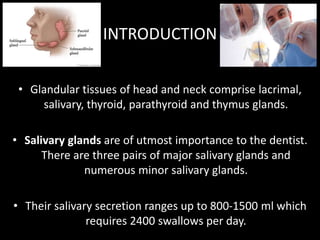
• Glandular tissues of head and neck comprise lacrimal,
salivary, thyroid, parathyroid and thymus glands.
• Salivary glands are of utmost importance to the dentist.
There are three pairs of major salivary glands and
numerous minor salivary glands.
• Their salivary secretion ranges up to 800-1500 ml which
requires 2400 swallows per day.
INTRODUCTION
• The oral environment to a large degree is regulated by
saliva.
• Saliva with its unique properties have been implicated not
only in dentistry but also in various other fields of medicine
as a potential diagnostic tool.
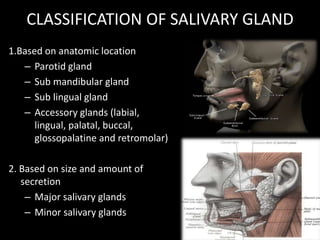
CLASSIFICATION OF SALIVARY GLAND
1.Based on anatomic location
– Parotid gland
– Sub mandibular gland
– Sub lingual gland
– Accessory glands (labial,
lingual, palatal, buccal,
glossopalatine and retromolar)
2. Based on size and amount of
secretion
– Major salivary glands
– Minor salivary glands
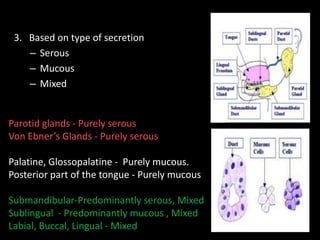
3. Based on type of secretion
– Serous
– Mucous
– Mixed
Parotid glands - Purely serous
Von Ebner’s Glands - Purely serous
Palatine, Glossopalatine - Purely mucous.
Posterior part of the tongue - Purely mucous
Submandibular-Predominantly serous, Mixed
Sublingual - Predominantly mucous , Mixed
Labial, Buccal, Lingual - Mixed
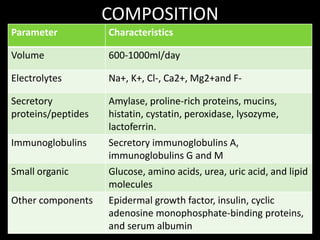
COMPOSITION
Parameter Characteristics
Volume 600-1000ml/day
Electrolytes Na+, K+, Cl-, Ca2+, Mg2+and F-
Secretory
proteins/peptides
Amylase, proline-rich proteins, mucins,
histatin, cystatin, peroxidase, lysozyme,
lactoferrin.
Immunoglobulins Secretory immunoglobulins A,
immunoglobulins G and M
Small organic Glucose, amino acids, urea, uric acid, and lipid
molecules
Other components Epidermal growth factor, insulin, cyclic
adenosine monophosphate-binding proteins,
and serum albumin
• Saliva is made up of approx. 99% of water.
• Organic components
Protein
200mg/100ml.
enzymes, immunoglobulins, mucins,
traces of albumin and polypeptides
and glycopeptides.
-amylase{Ptyalin}
60-120 mg/100 ml in parotid.
25 mg/100ml in submandibular.
Immunoglobulins
Ig A
Ig G
Ig M
Anti bacterial substances
Lysosyme
Lactoferrin
Sialoperoxidase
Glycoproteins
Proline rich glycoprotein
seen in parotid saliva.
Other compounds
Siatherin
Sialin
Free amino acids
Urea
Glucose
• Inorganic constituents
Sodium
Potassium
Chloride
Bicarbonate
Calcium
Phosphorus
Flouride
Thiocyanate
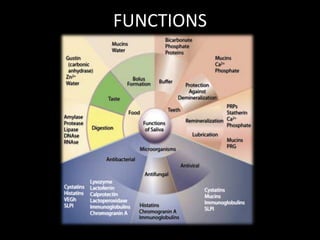
FUNCTIONS
PROPERTIES OF SALIVA
• Consistency : Slightly cloudy due to
presence of mucins and other cells
• PH : Usually slightly acidic (5-8), On
standing or boiling, it loses Co2 and
becomes alkaline
• Specific gravity : 1.0024 – 1.0061
• Freezing point :0.07 – 0.34 degree
Celsius
• Osmotic pressure : ( 700-1000m
osmol/litre )
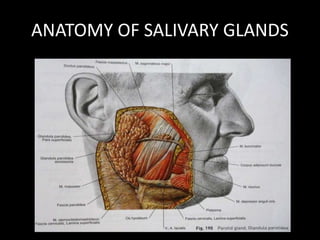
ANATOMY OF SALIVARY GLANDS
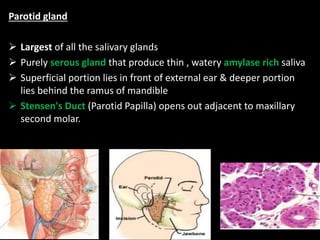
Parotid gland
 Largest of all the salivary glands
 Purely serous gland that produce thin , watery amylase rich saliva
 Superficial portion lies in front of external ear & deeper portion
lies behind the ramus of mandible
 Stensen's Duct (Parotid Papilla) opens out adjacent to maxillary
second molar.
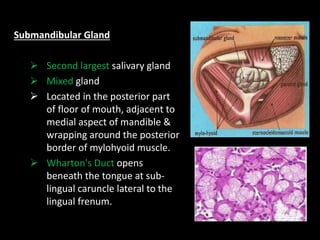
Submandibular Gland
 Second largest salivary gland
 Mixed gland
 Located in the posterior part
of floor of mouth, adjacent to
medial aspect of mandible &
wrapping around the posterior
border of mylohyoid muscle.
 Wharton's Duct opens
beneath the tongue at sub-
lingual caruncle lateral to the
lingual frenum.
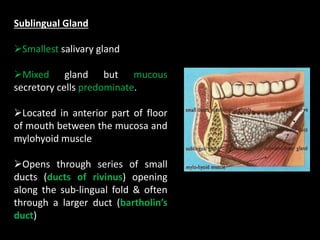
Sublingual Gland
Smallest salivary gland
Mixed gland but mucous
secretory cells predominate.
Located in anterior part of floor
of mouth between the mucosa and
mylohyoid muscle
Opens through series of small
ducts (ducts of rivinus) opening
along the sub-lingual fold & often
through a larger duct (bartholin’s
duct)
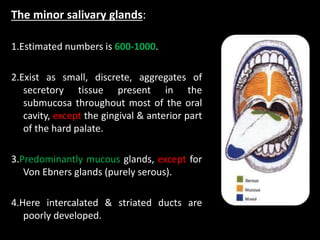
The minor salivary glands:
1.Estimated numbers is 600-1000.
2.Exist as small, discrete, aggregates of
secretory tissue present in the
submucosa throughout most of the oral
cavity, except the gingival & anterior part
of the hard palate.
3.Predominantly mucous glands, except for
Von Ebners glands (purely serous).
4.Here intercalated & striated ducts are
poorly developed.
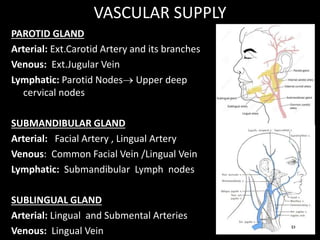
VASCULAR SUPPLY
PAROTID GLAND
Arterial: Ext.Carotid Artery and its branches
Venous: Ext.Jugular Vein
Lymphatic: Parotid Nodes Upper deep
cervical nodes
SUBMANDIBULAR GLAND
Arterial: Facial Artery , Lingual Artery
Venous: Common Facial Vein /Lingual Vein
Lymphatic: Submandibular Lymph nodes
SUBLINGUAL GLAND
Arterial: Lingual and Submental Arteries
Venous: Lingual Vein
INNERVATION
Parasympathetic
innervation to major
salivary glands
 Otic ganglion suplies the
parotid gland.
 Submandibular ganglion
supplies the other major
glands.
Sympathetic innervation
Promotes the flow of
saliva and stimulates
muscle contraction at
salivary ducts
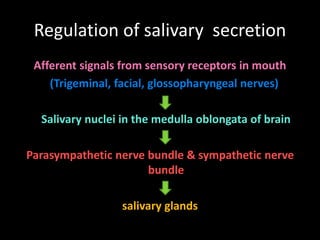
Regulation of salivary secretion
Afferent signals from sensory receptors in mouth
(Trigeminal, facial, glossopharyngeal nerves)
Salivary nuclei in the medulla oblongata of brain
Parasympathetic nerve bundle & sympathetic nerve
bundle
salivary glands
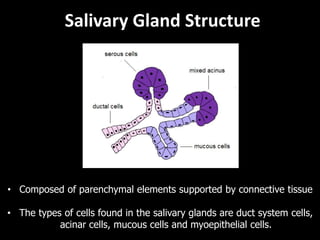
Salivary Gland Structure
• Composed of parenchymal elements supported by connective tissue
• The types of cells found in the salivary glands are duct system cells,
acinar cells, mucous cells and myoepithelial cells.
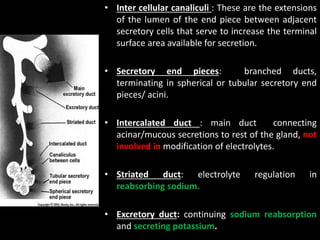
• Inter cellular canaliculi : These are the extensions
of the lumen of the end piece between adjacent
secretory cells that serve to increase the terminal
surface area available for secretion.
• Secretory end pieces: branched ducts,
terminating in spherical or tubular secretory end
pieces/ acini.
• Intercalated duct : main duct connecting
acinar/mucous secretions to rest of the gland, not
involved in modification of electrolytes.
• Striated duct: electrolyte regulation in
reabsorbing sodium.
• Excretory duct: continuing sodium reabsorption
and secreting potassium.
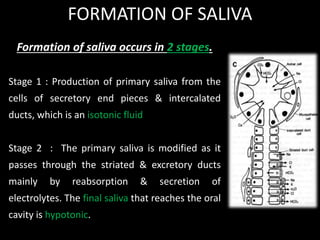
FORMATION OF SALIVA
Formation of saliva occurs in 2 stages.
Stage 1 : Production of primary saliva from the
cells of secretory end pieces & intercalated
ducts, which is an isotonic fluid
Stage 2 : The primary saliva is modified as it
passes through the striated & excretory ducts
mainly by reabsorption & secretion of
electrolytes. The final saliva that reaches the oral
cavity is hypotonic.
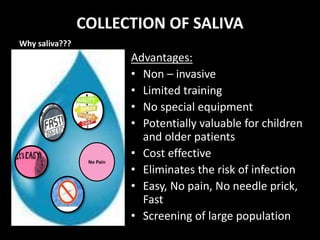
Why saliva???
Advantages:
• Non – invasive
• Limited training
• No special equipment
• Potentially valuable for children
and older patients
• Cost effective
• Eliminates the risk of infection
• Easy, No pain, No needle prick,
Fast
• Screening of large population
No Pain
COLLECTION OF SALIVA
University of Southern California School of Dentistry
guidelines
• Unstimulated whole saliva collection always should precede
stimulated whole saliva collection.
• The patient is advised to refrain from intake of any food or beverage
(water exempted) one hour before the test session.
• Smoking, chewing gum and intake of coffee also are prohibited
during this hour.
• The subject is advised to rinse his or her mouth several times with
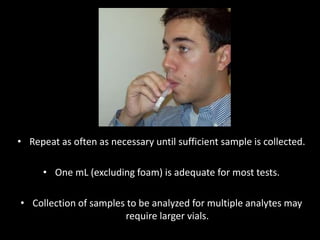
distilled water and then to relax for five minutes.
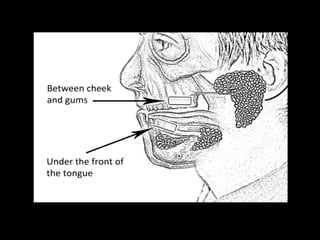
• Keep his mouth slightly open and allow saliva to drain into the tube.
• Should last for five minutes
Unstimulated flow
• Resting salivary flow―no external stimulus
oTypically 0.2 mL – 0.3 mL per minute
oLess than 0.1 mL per minute means the person has
hyposalivation
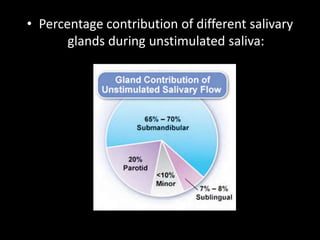
• Percentage contribution of different salivary
glands during unstimulated saliva:
Stimulated Flow
• Response to a stimulus - usually taste,
chewing or medication
oTypically 1.5 mL – 2 mL per minute
oLess than 0.7 mL per minute is considered
hyposalivation
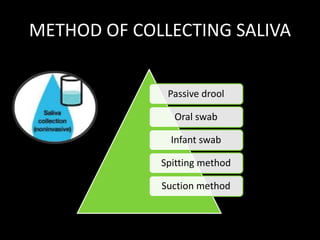
METHOD OF COLLECTING SALIVA
Passive drool
Oral swab
Infant swab
Spitting method
Suction method
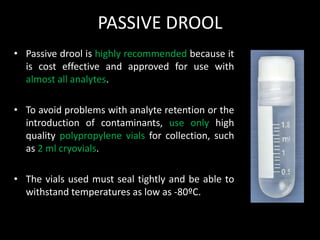
PASSIVE DROOL
• Passive drool is highly recommended because it
is cost effective and approved for use with
almost all analytes.
• To avoid problems with analyte retention or the
introduction of contaminants, use only high
quality polypropylene vials for collection, such
as 2 ml cryovials.
• The vials used must seal tightly and be able to
withstand temperatures as low as -80ºC.
• Repeat as often as necessary until sufficient sample is collected.
• One mL (excluding foam) is adequate for most tests.
• Collection of samples to be analyzed for multiple analytes may
require larger vials.
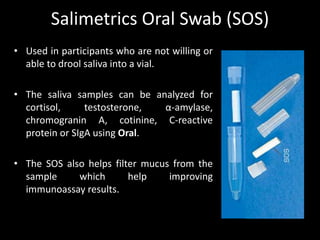
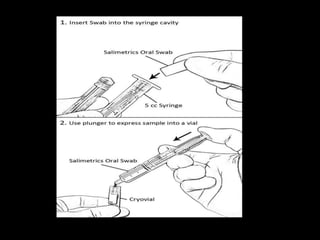
Salimetrics Oral Swab (SOS)
• Used in participants who are not willing or
able to drool saliva into a vial.
• The saliva samples can be analyzed for
cortisol, testosterone, α-amylase,
chromogranin A, cotinine, C-reactive
protein or SIgA using Oral.
• The SOS also helps filter mucus from the
sample which help improving
immunoassay results.
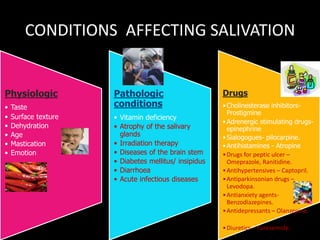
CONDITIONS AFFECTING SALIVATION
Physiologic
• Taste
• Surface texture
• Dehydration
• Age
• Mastication
• Emotion
Pathologic
conditions
• Vitamin deficiency
• Atrophy of the salivary
glands
• Irradiation therapy
• Diseases of the brain stem
• Diabetes mellitus/ insipidus
• Diarrhoea
• Acute infectious diseases
Drugs
•Cholinesterase inhibitors-
Prostigmine
•Adrenergic stimulating drugs-
epinephrine
•Sialogogues- pilocarpine.
•Antihistamines - Atropine
•Drugs for peptic ulcer –
Omeprazole, Ranitidine.
•Antihypertensives – Captopril.
•Antiparkinsonian drugs –
Levodopa.
•Antianxiety agents-
Benzodiazepines.
•Antidepressants – Olanzepine.
•Diuretics – Furesemide.
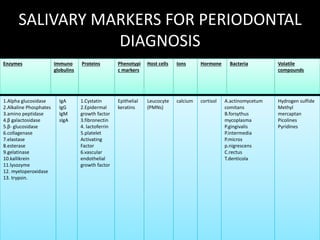
SALIVARY MARKERS FOR PERIODONTAL
DIAGNOSIS
Enzymes Immuno
globulins
Proteins Phenotypi
c markers
Host cells Ions Hormone Bacteria Volatile
compounds
1.Alpha glucosidase
2.Alkaline Phosphates
3.amino peptidase
4.β galactosidase
5.β- glucosidase
6.collagenase
7.elastase
8.esterase
9.gelatinase
10.kallikrein
11.lysozyme
12. myeloperoxidase
13. trypsin.
IgA
IgG
IgM
sIgA
1.Cystatin
2.Epidermal
growth factor
3.fibronectin
4. lactoferrin
5.platelet
Activating
Factor
6.vascular
endothelial
growth factor
Epithelial
keratins
Leucocyte
(PMNs)
calcium cortisol A.actinomycetum
comitans
B.forsythus
mycoplasma
P.gingivalis
P.intermedia
P.micros
p.nigrescens
C.rectus
T.denticola
Hydrogen sulfide
Methyl
mercaptan
Picolines
Pyridines
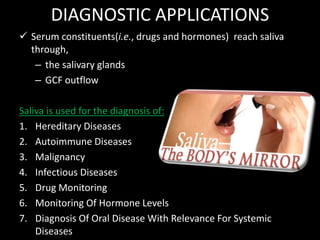
DIAGNOSTIC APPLICATIONS
 Serum constituents(i.e., drugs and hormones) reach saliva
through,
– the salivary glands
– GCF outflow
Saliva is used for the diagnosis of:
1. Hereditary Diseases
2. Autoimmune Diseases
3. Malignancy
4. Infectious Diseases
5. Drug Monitoring
6. Monitoring Of Hormone Levels
7. Diagnosis Of Oral Disease With Relevance For Systemic
Diseases
DISADVANTAGES
• Samples are subject to bacterial
degradation over time.
• Absorbing specimens on cotton
may contribute interfering
substances to the extract
• Interpretation of saliva assays is
still difficult
• Contamination from bleeding
gums
Role of salivary enzymes
• Salivary enzymes can be produced by salivary glands, oral micro
organisms, PMNs, oral epithelial cells or be derived from GCF.
• Attempts have been made to correlate enzymatic activity in human
saliva with periodontal status.
• Studies have also assessed changes in salivary enzyme activity in
response to periodontal therapy.
• Enzymes may alter bacterial receptors & thus affect bacterial
attachment on the tooth (Gibbons & Etherden 1982 ), or they may be
directly involved in the pathogenesis of gingivitis & periodontitis (
Dewar 1958 ).( JPR 1983 18: 559-569 )
• Those particularly relevant in this group of enzymes are:
1. Aspartate and alanine aminotransferases (AST and ALT)
2. Lactate dehydrogenase (LDH)
3. Gamma-glutamyl transferase (GGT)
4. Creatine kinase (CK)
5. Alkaline phosphatase (ALP)
6. Acidic phosphatase (ACP)
Salivary hormones :
•A workshop on the immunoassay of steroids in saliva concluded that, “
All steroids of diagnostic significance in routine clinical endocrinology
can now be measured in saliva”.
•The list of steroid hormones currently being assayed in saliva includes
cortisol, aldosterone, estriol, testosterone, progesterone etc.
•Salivary estriol measurement during pregnancy has been shown to be
an excellent means of detecting fetal growth retardation & estriol to
progesterone ratio shows promise as a predictor of preterm labor.
•Some investigators have found that salivary cortisol is a better measure
of adrenal cortical function than serum cortisol.
What is a biomarker???
• A biomarker is an objective
measure that has been
evaluated and confirmed
either as an indicator of
physiologic health, a
pathogenic process or a
pharmacologic response to a
therapeutic intervention.
• Biomarkers, whether
produced by normal healthy
individuals or by individuals
affected by specific systemic
diseases, are tell - tale
molecules that could be
used to monitor health
status, disease onset,
treatment response and
outcome.
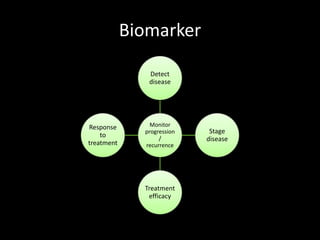
Biomarker
Monitor
progression
/
recurrence
Detect
disease
Stage
disease
Treatment
efficacy
Response
to
treatment
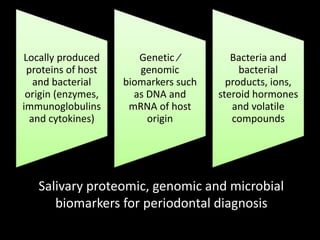
CLASSIFICATION OF SALIVARY BIOMARKERS
Locally produced
proteins of host
and bacterial
origin (enzymes,
immunoglobulins
and cytokines)
Genetic ⁄
genomic
biomarkers such
as DNA and
mRNA of host
origin
Bacteria and
bacterial
products, ions,
steroid hormones
and volatile
compounds
Salivary proteomic, genomic and microbial
biomarkers for periodontal diagnosis
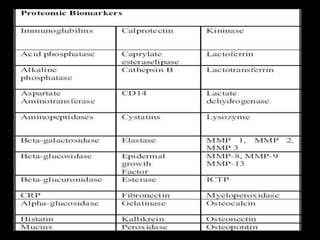
Salivary proteomic approach as biomarkers
• Periodontopathic bacteria either cause degradation of
host tissue directly or activate a host response
• It initiates the release of biological mediators from host
cells and when it exaggerated it leads to host tissue
destruction
• Mediators include proteinases, cytokines and
prostaglandins. And bacteria-derived enzymes such as
collagen-degrading enzymes, elastase- like enzymes,
trypsin-like proteases, aminopeptidases and
dipeptidylpeptidase
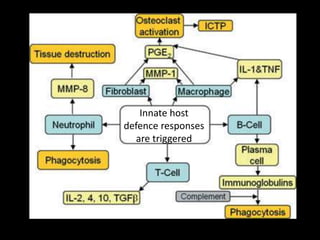
Innate host
defence responses
are triggered
• Salivary proteomic biomarkers have been
identified for three key features of the
pathogenic processes in periodontal disease –
– Inflammation
– Collagen degradation and
– Bone turnover
Host-derived MMPs
• Both MMP-1 (interstitial collagenase) and
MMP-8 (polymorphonuclear leukocyte-
derived collagenase) gets activated in
periodontitis.
• MMP-8, which is primarily derived from
polymorphonuclear leukocytes during active
stages of periodontitis, is a major tissue
destructive enzyme in periodontal disease
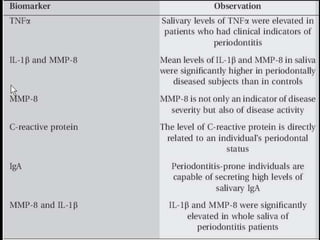
• An elevated level of MMP-8 was detected in
the saliva of subjects affected by periodontitis
compared with healthy patients, but the levels
of salivary MMP 1 were similar in both groups.
• Therefore, quantification of the level of MMP-
8 is a promising candidate for diagnosing and,
more importantly, predicting the progression
of this episodic disease.
• Other MMPs, including MMP-2, MMP-3 and
MMP-9, were also reported in the saliva of
patients affected by periodontitis
• Salivary biomarkers have been used to
examine the effect of lifestyle factors,
including smoking on periodontal health.
• Levels of salivary markers including
prostaglandin E2, lactoferrin, albumin,
aspartate aminotransferase, lactate
dehydrogenase, alkaline phosphatase were
significantly lower in current smokers than in
non-current smokers.
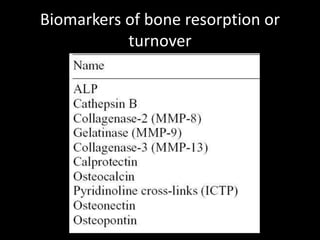
Biomarkers of bone resorption or
turnover
Alkaline phosphatase
• Three main sources:
– the actual salivary secretions
– the GCF, PMNs and tissue degradation; and
– disposed bacterial cells from dental biofilms and
mucosal surfaces
Alkaline phosphatase
• Significant correlation between ALP and pocket
depth & inflammation exists.
• Higher enzyme activity in individuals with
periodontal disease than non diseased
individuals.
• Periodontal destruction by measurement of
probing depth, gingival bleeding, and suppuration
were related to higher ALP levels in saliva
Cathepsin B
• Cathepsin B functions in proteolysis
• 100% sensitivity and 99.8% specificity
• Cathepsin B may have a potential use in
distinguishing periodontitis from gingivitis and
in planning treatment and monitoring
treatment outcomes
CRP
• C-reactive protein is a systemic marker released
during acute phase of an inflammatory response
and is produced by liver.
• Circulating CRP reaches saliva via GCF or salivary
glands.
• High levels of CRP are associated with chronic
and aggressive periodontal diseases.
Osteopontin (OPN)
• It is a Noncollagenous calcium binding glycosylated
phosphoprotein in bone matrix and is produced by
several cells including osteoblasts, osteoclasts and
macrophages.
• Kido et al (2001) demonstrated that OPN level in
saliva was increased with progression of periodontal
disease.
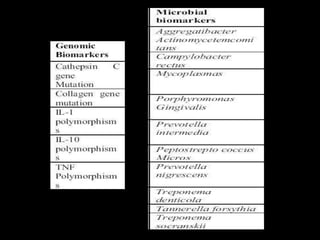
Genomic approach as diagnostic
markers
• Reports of genetic polymorphisms associated
with periodontal disease are increasing and
strong evidence supports the proposal that
genes play a role in the predisposition to and
progression of periodontal disease.
• A number of studies have examined links
between polymorphisms within host response
factors and aggressive periodontitis.
• By examination of the genes encoding
inflammatory cytokines such as IL-1 and TNF
α, the anti-inflammatory cytokine IL-10 and
the F c- gamma receptors.
• Reactive oxygen species, participate in the
pathogenesis of periodontal tissue destruction.
• DNA damage, lipid peroxidation, protein
disruption and stimulation of inflammatory
cytokine release.
• 8-hydroxy-deoxyguanosine - a product of
oxidative DNA damage, is a biomarker for
detecting periodontitis in human subjects.
• Till now,68 up-regulated and six down-
regulated genes was identified, including
lactotransferrin, MMP-1, MMP-3, interferon
induced-15, keratin 2A and desmocollin-1, and
this result was confirmed by real-time
polymerase chain reaction.
Stress biomarkers in saliva
• Salivary α-amylase
• Chromogranin A
• Salivary cortisol
Salivary cortisol
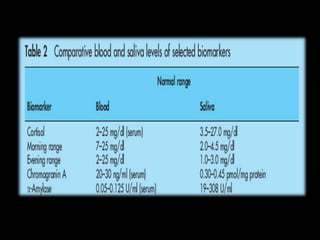
• Its level in saliva is lower than that in blood
• Advantage of salivary over serum cortisol
measurement is the minimisation of stress
from fear of needles during collection, which
may bias the results.
Salivary – α amylase &
Chromogranin A
• Both salivary CgA and a-amylase are
considered biomarkers of the stress response
by the sympatho–adreno–medullary system,
unlike cortisol, which is considered a
biomarker of stress response by the
Hypothalamic pituitary adrenal system.
Various other diagnosis
• Candidiasis
• Risk of cardiovascular and cerebrovascular diseases
• Cystic fibrosis
• Oral squamous cell carcinoma
– protein p53
– M2BP
– MRP14
– CD59
– Profilin
– Catalase
• Breast and ovarian cancer
• PCR detection of H. pylori in the saliva show high
sensitivity.
• The presence of antibodies to other infectious
organisms such as Borrelia burdogferi, shigella
can also be detected in saliva.
• Detection of hepatitis A and hepatitis B surface
antigen in the saliva has been used in
epidemiological studies.
• In neonates the presence of Ig A is an
excellent marker of rota virus infection
• HIV antibody detection is as precise in saliva
as in serum and is both applicable in clinical
and epidemiological studies.
Saliva substitutes
• Xanthan gum
• Sodium carboxymethylcellulose
• Potassium chloride
• Sodium chloride
• Magnesium chloride
• Calcium chloride
• Di-potassium hydrogen orthophosphate
• Potassium di-hydrogen orthophosphate
• Sodium fluoride
• Sorbitol
• Methyl p-hydroxybenzoate
• Spirit of lemon
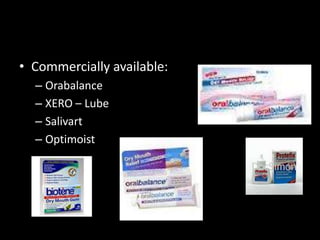
• Commercially available:
– Orabalance
– XERO – Lube
– Salivart
– Optimoist
Drug monitoring in saliva
Used to check:
• Molecular size
• Lipid solubility
• The degree of ionization of the drug
• The effect of salivary Ph
• The degree of protein binding of the drug
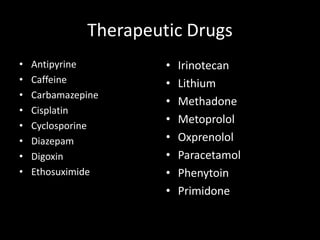
Therapeutic Drugs
• Antipyrine
• Caffeine
• Carbamazepine
• Cisplatin
• Cyclosporine
• Diazepam
• Digoxin
• Ethosuximide
• Irinotecan
• Lithium
• Methadone
• Metoprolol
• Oxprenolol
• Paracetamol
• Phenytoin
• Primidone
Saliva and age
• With age, a generalized loss of salivary gland
parenchymal tissue loss is seen.
• Salivary acini are replaced by adipose tissue.
• Decreased production of saliva
RESEARCH APPLICATIONS
Research currently is being conducted to:
• To find more details on saliva as a diagnostic aid for
cancer and preterm labor.
• Check regenerative properties and functions of
growth factors found in saliva, such as EGF, TGF
• Saliva is an alternative to serum as a biological fluid that can be
analyzed for diagnostic purposes.
• A number of markers show promise as sensitive measures of the
disease & the effectiveness of therapy are well co-related.
• Longer - term longitudinal studies , however are required to
establish the relationship between specific markers &
progression of periodontal disease.
• Further more, analysis of saliva may offer a cost effective
approach to assessment of periodontal disease in large
populations.
CONCLUSION
1. Clinical Periodontology 10th Edition; Carranza,Newmann.
2. Shafers textbook of oral pathology. 5th Edtn
3. Burkitt’s textboof of oral medicine. 11th edtn
4. Periodontology 2000 volume 34: 2004
5. Tencate’s Oral histology 6th edition
6. J. Clinical Periodontology 2003;30:752-755
7. J. Clinical Periodontology 2000,27:453-465
8. J. Periodontal Research 1990,1983
9. J. Oral Pathology Medicine 1990.
10.Dentomaxillofac Radiol 2007;36:59-62. T Bar, A Zagury, D London, R
Shacham, and O Nahlieli.
REFERENCES
Saliva

Saliva

  • 1.
  • 2.
    PRESENTATION BY: Dr.Mohamed Abdul Haleem 2nd Year Perio PG KVG Dental college & Hospital, Sullia.
  • 3.
    CONTENTS 1. Introduction 2. Classificationof salivary gland 3. Composition of saliva 4. Functions of saliva 5. Properties of saliva 6. Anatomy of salivary gland 7. Salivary gland structure 8. Formation of saliva 9. Collection of saliva
  • 4.
    CONTENTS 10.Conditions affecting salivation 11.Salivarymarkers for periodontal diagnosis 12.Role of salivary enzymes 13.Salivary hormones 14.Saliva as a future diagnostic fluid 15.Biomarker 16.Classification of biomarker 17.Salivary substitutes 18.Conclusion 19.References
  • 5.
    INTRODUCTION • Glandular tissuesof head and neck comprise lacrimal, salivary, thyroid, parathyroid and thymus glands. • Salivary glands are of utmost importance to the dentist. There are three pairs of major salivary glands and numerous minor salivary glands. • Their salivary secretion ranges up to 800-1500 ml which requires 2400 swallows per day.
  • 6.
    INTRODUCTION • The oralenvironment to a large degree is regulated by saliva. • Saliva with its unique properties have been implicated not only in dentistry but also in various other fields of medicine as a potential diagnostic tool.
  • 7.
    CLASSIFICATION OF SALIVARYGLAND 1.Based on anatomic location – Parotid gland – Sub mandibular gland – Sub lingual gland – Accessory glands (labial, lingual, palatal, buccal, glossopalatine and retromolar) 2. Based on size and amount of secretion – Major salivary glands – Minor salivary glands
  • 8.
    3. Based ontype of secretion – Serous – Mucous – Mixed Parotid glands - Purely serous Von Ebner’s Glands - Purely serous Palatine, Glossopalatine - Purely mucous. Posterior part of the tongue - Purely mucous Submandibular-Predominantly serous, Mixed Sublingual - Predominantly mucous , Mixed Labial, Buccal, Lingual - Mixed
  • 9.
    COMPOSITION Parameter Characteristics Volume 600-1000ml/day ElectrolytesNa+, K+, Cl-, Ca2+, Mg2+and F- Secretory proteins/peptides Amylase, proline-rich proteins, mucins, histatin, cystatin, peroxidase, lysozyme, lactoferrin. Immunoglobulins Secretory immunoglobulins A, immunoglobulins G and M Small organic Glucose, amino acids, urea, uric acid, and lipid molecules Other components Epidermal growth factor, insulin, cyclic adenosine monophosphate-binding proteins, and serum albumin
  • 10.
    • Saliva ismade up of approx. 99% of water. • Organic components Protein 200mg/100ml. enzymes, immunoglobulins, mucins, traces of albumin and polypeptides and glycopeptides. -amylase{Ptyalin} 60-120 mg/100 ml in parotid. 25 mg/100ml in submandibular. Immunoglobulins Ig A Ig G Ig M
  • 11.
    Anti bacterial substances Lysosyme Lactoferrin Sialoperoxidase Glycoproteins Prolinerich glycoprotein seen in parotid saliva. Other compounds Siatherin Sialin Free amino acids Urea Glucose
  • 12.
  • 13.
  • 14.
    PROPERTIES OF SALIVA •Consistency : Slightly cloudy due to presence of mucins and other cells • PH : Usually slightly acidic (5-8), On standing or boiling, it loses Co2 and becomes alkaline • Specific gravity : 1.0024 – 1.0061 • Freezing point :0.07 – 0.34 degree Celsius • Osmotic pressure : ( 700-1000m osmol/litre )
  • 15.
  • 16.
    Parotid gland  Largestof all the salivary glands  Purely serous gland that produce thin , watery amylase rich saliva  Superficial portion lies in front of external ear & deeper portion lies behind the ramus of mandible  Stensen's Duct (Parotid Papilla) opens out adjacent to maxillary second molar.
  • 17.
    Submandibular Gland  Secondlargest salivary gland  Mixed gland  Located in the posterior part of floor of mouth, adjacent to medial aspect of mandible & wrapping around the posterior border of mylohyoid muscle.  Wharton's Duct opens beneath the tongue at sub- lingual caruncle lateral to the lingual frenum.
  • 18.
    Sublingual Gland Smallest salivarygland Mixed gland but mucous secretory cells predominate. Located in anterior part of floor of mouth between the mucosa and mylohyoid muscle Opens through series of small ducts (ducts of rivinus) opening along the sub-lingual fold & often through a larger duct (bartholin’s duct)
  • 19.
    The minor salivaryglands: 1.Estimated numbers is 600-1000. 2.Exist as small, discrete, aggregates of secretory tissue present in the submucosa throughout most of the oral cavity, except the gingival & anterior part of the hard palate. 3.Predominantly mucous glands, except for Von Ebners glands (purely serous). 4.Here intercalated & striated ducts are poorly developed.
  • 20.
    VASCULAR SUPPLY PAROTID GLAND Arterial:Ext.Carotid Artery and its branches Venous: Ext.Jugular Vein Lymphatic: Parotid Nodes Upper deep cervical nodes SUBMANDIBULAR GLAND Arterial: Facial Artery , Lingual Artery Venous: Common Facial Vein /Lingual Vein Lymphatic: Submandibular Lymph nodes SUBLINGUAL GLAND Arterial: Lingual and Submental Arteries Venous: Lingual Vein
  • 21.
    INNERVATION Parasympathetic innervation to major salivaryglands  Otic ganglion suplies the parotid gland.  Submandibular ganglion supplies the other major glands. Sympathetic innervation Promotes the flow of saliva and stimulates muscle contraction at salivary ducts
  • 22.
    Regulation of salivarysecretion Afferent signals from sensory receptors in mouth (Trigeminal, facial, glossopharyngeal nerves) Salivary nuclei in the medulla oblongata of brain Parasympathetic nerve bundle & sympathetic nerve bundle salivary glands
  • 23.
    Salivary Gland Structure •Composed of parenchymal elements supported by connective tissue • The types of cells found in the salivary glands are duct system cells, acinar cells, mucous cells and myoepithelial cells.
  • 24.
    • Inter cellularcanaliculi : These are the extensions of the lumen of the end piece between adjacent secretory cells that serve to increase the terminal surface area available for secretion. • Secretory end pieces: branched ducts, terminating in spherical or tubular secretory end pieces/ acini. • Intercalated duct : main duct connecting acinar/mucous secretions to rest of the gland, not involved in modification of electrolytes. • Striated duct: electrolyte regulation in reabsorbing sodium. • Excretory duct: continuing sodium reabsorption and secreting potassium.
  • 25.
    FORMATION OF SALIVA Formationof saliva occurs in 2 stages. Stage 1 : Production of primary saliva from the cells of secretory end pieces & intercalated ducts, which is an isotonic fluid Stage 2 : The primary saliva is modified as it passes through the striated & excretory ducts mainly by reabsorption & secretion of electrolytes. The final saliva that reaches the oral cavity is hypotonic.
  • 26.
    Why saliva??? Advantages: • Non– invasive • Limited training • No special equipment • Potentially valuable for children and older patients • Cost effective • Eliminates the risk of infection • Easy, No pain, No needle prick, Fast • Screening of large population No Pain COLLECTION OF SALIVA
  • 27.
    University of SouthernCalifornia School of Dentistry guidelines • Unstimulated whole saliva collection always should precede stimulated whole saliva collection. • The patient is advised to refrain from intake of any food or beverage (water exempted) one hour before the test session. • Smoking, chewing gum and intake of coffee also are prohibited during this hour. • The subject is advised to rinse his or her mouth several times with distilled water and then to relax for five minutes. • Keep his mouth slightly open and allow saliva to drain into the tube. • Should last for five minutes
  • 28.
    Unstimulated flow • Restingsalivary flow―no external stimulus oTypically 0.2 mL – 0.3 mL per minute oLess than 0.1 mL per minute means the person has hyposalivation
  • 29.
    • Percentage contributionof different salivary glands during unstimulated saliva:
  • 30.
    Stimulated Flow • Responseto a stimulus - usually taste, chewing or medication oTypically 1.5 mL – 2 mL per minute oLess than 0.7 mL per minute is considered hyposalivation
  • 31.
    METHOD OF COLLECTINGSALIVA Passive drool Oral swab Infant swab Spitting method Suction method
  • 32.
    PASSIVE DROOL • Passivedrool is highly recommended because it is cost effective and approved for use with almost all analytes. • To avoid problems with analyte retention or the introduction of contaminants, use only high quality polypropylene vials for collection, such as 2 ml cryovials. • The vials used must seal tightly and be able to withstand temperatures as low as -80ºC.
  • 33.
    • Repeat asoften as necessary until sufficient sample is collected. • One mL (excluding foam) is adequate for most tests. • Collection of samples to be analyzed for multiple analytes may require larger vials.
  • 34.
    Salimetrics Oral Swab(SOS) • Used in participants who are not willing or able to drool saliva into a vial. • The saliva samples can be analyzed for cortisol, testosterone, α-amylase, chromogranin A, cotinine, C-reactive protein or SIgA using Oral. • The SOS also helps filter mucus from the sample which help improving immunoassay results.
  • 37.
    CONDITIONS AFFECTING SALIVATION Physiologic •Taste • Surface texture • Dehydration • Age • Mastication • Emotion Pathologic conditions • Vitamin deficiency • Atrophy of the salivary glands • Irradiation therapy • Diseases of the brain stem • Diabetes mellitus/ insipidus • Diarrhoea • Acute infectious diseases Drugs •Cholinesterase inhibitors- Prostigmine •Adrenergic stimulating drugs- epinephrine •Sialogogues- pilocarpine. •Antihistamines - Atropine •Drugs for peptic ulcer – Omeprazole, Ranitidine. •Antihypertensives – Captopril. •Antiparkinsonian drugs – Levodopa. •Antianxiety agents- Benzodiazepines. •Antidepressants – Olanzepine. •Diuretics – Furesemide.
  • 38.
    SALIVARY MARKERS FORPERIODONTAL DIAGNOSIS Enzymes Immuno globulins Proteins Phenotypi c markers Host cells Ions Hormone Bacteria Volatile compounds 1.Alpha glucosidase 2.Alkaline Phosphates 3.amino peptidase 4.β galactosidase 5.β- glucosidase 6.collagenase 7.elastase 8.esterase 9.gelatinase 10.kallikrein 11.lysozyme 12. myeloperoxidase 13. trypsin. IgA IgG IgM sIgA 1.Cystatin 2.Epidermal growth factor 3.fibronectin 4. lactoferrin 5.platelet Activating Factor 6.vascular endothelial growth factor Epithelial keratins Leucocyte (PMNs) calcium cortisol A.actinomycetum comitans B.forsythus mycoplasma P.gingivalis P.intermedia P.micros p.nigrescens C.rectus T.denticola Hydrogen sulfide Methyl mercaptan Picolines Pyridines
  • 39.
    DIAGNOSTIC APPLICATIONS  Serumconstituents(i.e., drugs and hormones) reach saliva through, – the salivary glands – GCF outflow Saliva is used for the diagnosis of: 1. Hereditary Diseases 2. Autoimmune Diseases 3. Malignancy 4. Infectious Diseases 5. Drug Monitoring 6. Monitoring Of Hormone Levels 7. Diagnosis Of Oral Disease With Relevance For Systemic Diseases
  • 40.
    DISADVANTAGES • Samples aresubject to bacterial degradation over time. • Absorbing specimens on cotton may contribute interfering substances to the extract • Interpretation of saliva assays is still difficult • Contamination from bleeding gums
  • 41.
    Role of salivaryenzymes • Salivary enzymes can be produced by salivary glands, oral micro organisms, PMNs, oral epithelial cells or be derived from GCF. • Attempts have been made to correlate enzymatic activity in human saliva with periodontal status. • Studies have also assessed changes in salivary enzyme activity in response to periodontal therapy. • Enzymes may alter bacterial receptors & thus affect bacterial attachment on the tooth (Gibbons & Etherden 1982 ), or they may be directly involved in the pathogenesis of gingivitis & periodontitis ( Dewar 1958 ).( JPR 1983 18: 559-569 )
  • 42.
    • Those particularlyrelevant in this group of enzymes are: 1. Aspartate and alanine aminotransferases (AST and ALT) 2. Lactate dehydrogenase (LDH) 3. Gamma-glutamyl transferase (GGT) 4. Creatine kinase (CK) 5. Alkaline phosphatase (ALP) 6. Acidic phosphatase (ACP)
  • 43.
    Salivary hormones : •Aworkshop on the immunoassay of steroids in saliva concluded that, “ All steroids of diagnostic significance in routine clinical endocrinology can now be measured in saliva”. •The list of steroid hormones currently being assayed in saliva includes cortisol, aldosterone, estriol, testosterone, progesterone etc. •Salivary estriol measurement during pregnancy has been shown to be an excellent means of detecting fetal growth retardation & estriol to progesterone ratio shows promise as a predictor of preterm labor. •Some investigators have found that salivary cortisol is a better measure of adrenal cortical function than serum cortisol.
  • 45.
    What is abiomarker??? • A biomarker is an objective measure that has been evaluated and confirmed either as an indicator of physiologic health, a pathogenic process or a pharmacologic response to a therapeutic intervention.
  • 46.
    • Biomarkers, whether producedby normal healthy individuals or by individuals affected by specific systemic diseases, are tell - tale molecules that could be used to monitor health status, disease onset, treatment response and outcome.
  • 47.
  • 48.
  • 49.
    Locally produced proteins ofhost and bacterial origin (enzymes, immunoglobulins and cytokines) Genetic ⁄ genomic biomarkers such as DNA and mRNA of host origin Bacteria and bacterial products, ions, steroid hormones and volatile compounds Salivary proteomic, genomic and microbial biomarkers for periodontal diagnosis
  • 52.
    Salivary proteomic approachas biomarkers • Periodontopathic bacteria either cause degradation of host tissue directly or activate a host response • It initiates the release of biological mediators from host cells and when it exaggerated it leads to host tissue destruction • Mediators include proteinases, cytokines and prostaglandins. And bacteria-derived enzymes such as collagen-degrading enzymes, elastase- like enzymes, trypsin-like proteases, aminopeptidases and dipeptidylpeptidase
  • 53.
  • 54.
    • Salivary proteomicbiomarkers have been identified for three key features of the pathogenic processes in periodontal disease – – Inflammation – Collagen degradation and – Bone turnover
  • 55.
    Host-derived MMPs • BothMMP-1 (interstitial collagenase) and MMP-8 (polymorphonuclear leukocyte- derived collagenase) gets activated in periodontitis. • MMP-8, which is primarily derived from polymorphonuclear leukocytes during active stages of periodontitis, is a major tissue destructive enzyme in periodontal disease
  • 56.
    • An elevatedlevel of MMP-8 was detected in the saliva of subjects affected by periodontitis compared with healthy patients, but the levels of salivary MMP 1 were similar in both groups. • Therefore, quantification of the level of MMP- 8 is a promising candidate for diagnosing and, more importantly, predicting the progression of this episodic disease.
  • 57.
    • Other MMPs,including MMP-2, MMP-3 and MMP-9, were also reported in the saliva of patients affected by periodontitis
  • 58.
    • Salivary biomarkershave been used to examine the effect of lifestyle factors, including smoking on periodontal health. • Levels of salivary markers including prostaglandin E2, lactoferrin, albumin, aspartate aminotransferase, lactate dehydrogenase, alkaline phosphatase were significantly lower in current smokers than in non-current smokers.
  • 60.
    Biomarkers of boneresorption or turnover
  • 61.
    Alkaline phosphatase • Threemain sources: – the actual salivary secretions – the GCF, PMNs and tissue degradation; and – disposed bacterial cells from dental biofilms and mucosal surfaces
  • 62.
    Alkaline phosphatase • Significantcorrelation between ALP and pocket depth & inflammation exists. • Higher enzyme activity in individuals with periodontal disease than non diseased individuals. • Periodontal destruction by measurement of probing depth, gingival bleeding, and suppuration were related to higher ALP levels in saliva
  • 63.
    Cathepsin B • CathepsinB functions in proteolysis • 100% sensitivity and 99.8% specificity • Cathepsin B may have a potential use in distinguishing periodontitis from gingivitis and in planning treatment and monitoring treatment outcomes
  • 64.
    CRP • C-reactive proteinis a systemic marker released during acute phase of an inflammatory response and is produced by liver. • Circulating CRP reaches saliva via GCF or salivary glands. • High levels of CRP are associated with chronic and aggressive periodontal diseases.
  • 65.
    Osteopontin (OPN) • Itis a Noncollagenous calcium binding glycosylated phosphoprotein in bone matrix and is produced by several cells including osteoblasts, osteoclasts and macrophages. • Kido et al (2001) demonstrated that OPN level in saliva was increased with progression of periodontal disease.
  • 66.
    Genomic approach asdiagnostic markers • Reports of genetic polymorphisms associated with periodontal disease are increasing and strong evidence supports the proposal that genes play a role in the predisposition to and progression of periodontal disease.
  • 67.
    • A numberof studies have examined links between polymorphisms within host response factors and aggressive periodontitis. • By examination of the genes encoding inflammatory cytokines such as IL-1 and TNF α, the anti-inflammatory cytokine IL-10 and the F c- gamma receptors.
  • 68.
    • Reactive oxygenspecies, participate in the pathogenesis of periodontal tissue destruction. • DNA damage, lipid peroxidation, protein disruption and stimulation of inflammatory cytokine release. • 8-hydroxy-deoxyguanosine - a product of oxidative DNA damage, is a biomarker for detecting periodontitis in human subjects.
  • 69.
    • Till now,68up-regulated and six down- regulated genes was identified, including lactotransferrin, MMP-1, MMP-3, interferon induced-15, keratin 2A and desmocollin-1, and this result was confirmed by real-time polymerase chain reaction.
  • 70.
    Stress biomarkers insaliva • Salivary α-amylase • Chromogranin A • Salivary cortisol
  • 71.
    Salivary cortisol • Itslevel in saliva is lower than that in blood • Advantage of salivary over serum cortisol measurement is the minimisation of stress from fear of needles during collection, which may bias the results.
  • 72.
    Salivary – αamylase & Chromogranin A • Both salivary CgA and a-amylase are considered biomarkers of the stress response by the sympatho–adreno–medullary system, unlike cortisol, which is considered a biomarker of stress response by the Hypothalamic pituitary adrenal system.
  • 74.
    Various other diagnosis •Candidiasis • Risk of cardiovascular and cerebrovascular diseases • Cystic fibrosis • Oral squamous cell carcinoma – protein p53 – M2BP – MRP14 – CD59 – Profilin – Catalase • Breast and ovarian cancer
  • 75.
    • PCR detectionof H. pylori in the saliva show high sensitivity. • The presence of antibodies to other infectious organisms such as Borrelia burdogferi, shigella can also be detected in saliva. • Detection of hepatitis A and hepatitis B surface antigen in the saliva has been used in epidemiological studies.
  • 76.
    • In neonatesthe presence of Ig A is an excellent marker of rota virus infection • HIV antibody detection is as precise in saliva as in serum and is both applicable in clinical and epidemiological studies.
  • 77.
    Saliva substitutes • Xanthangum • Sodium carboxymethylcellulose • Potassium chloride • Sodium chloride • Magnesium chloride • Calcium chloride • Di-potassium hydrogen orthophosphate • Potassium di-hydrogen orthophosphate • Sodium fluoride • Sorbitol • Methyl p-hydroxybenzoate • Spirit of lemon
  • 78.
    • Commercially available: –Orabalance – XERO – Lube – Salivart – Optimoist
  • 79.
    Drug monitoring insaliva Used to check: • Molecular size • Lipid solubility • The degree of ionization of the drug • The effect of salivary Ph • The degree of protein binding of the drug
  • 80.
    Therapeutic Drugs • Antipyrine •Caffeine • Carbamazepine • Cisplatin • Cyclosporine • Diazepam • Digoxin • Ethosuximide • Irinotecan • Lithium • Methadone • Metoprolol • Oxprenolol • Paracetamol • Phenytoin • Primidone
  • 81.
    Saliva and age •With age, a generalized loss of salivary gland parenchymal tissue loss is seen. • Salivary acini are replaced by adipose tissue. • Decreased production of saliva
  • 82.
    RESEARCH APPLICATIONS Research currentlyis being conducted to: • To find more details on saliva as a diagnostic aid for cancer and preterm labor. • Check regenerative properties and functions of growth factors found in saliva, such as EGF, TGF
  • 83.
    • Saliva isan alternative to serum as a biological fluid that can be analyzed for diagnostic purposes. • A number of markers show promise as sensitive measures of the disease & the effectiveness of therapy are well co-related. • Longer - term longitudinal studies , however are required to establish the relationship between specific markers & progression of periodontal disease. • Further more, analysis of saliva may offer a cost effective approach to assessment of periodontal disease in large populations. CONCLUSION
  • 84.
    1. Clinical Periodontology10th Edition; Carranza,Newmann. 2. Shafers textbook of oral pathology. 5th Edtn 3. Burkitt’s textboof of oral medicine. 11th edtn 4. Periodontology 2000 volume 34: 2004 5. Tencate’s Oral histology 6th edition 6. J. Clinical Periodontology 2003;30:752-755 7. J. Clinical Periodontology 2000,27:453-465 8. J. Periodontal Research 1990,1983 9. J. Oral Pathology Medicine 1990. 10.Dentomaxillofac Radiol 2007;36:59-62. T Bar, A Zagury, D London, R Shacham, and O Nahlieli. REFERENCES