SALES BUDGETS, QUOTAS, TERRITORY AND CONTROL
DEEPAK SINGH
PCTE LUDHIANA
Sales Budgeting
What is Sales Budget?
An estimate of volume of sales and selling
expenses
Sales volume: based on sales forecast, but kept
slightly lower than sales forecast
Sales budget is prepared:
 Product wise
 Territory wise
 Sales person wise
 Customer wise
Why prepare sales budget?
Planning
 Predicting profits
 Assigning targets to team
 Planning production/ allocation of resources
Coordination
 Keeping all departments and teams on same page
 Leveling expectations
 Clarifying requirements
Control
 Monitoring actual Vs targets
 Corrective actions
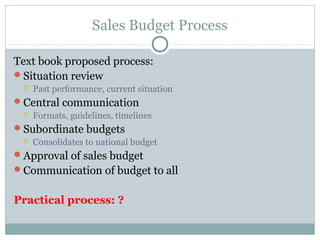
Sales Budget Process
Text book proposed process:
Situation review
 Past performance, current situation
Central communication
 Formats, guidelines, timelines
Subordinate budgets
 Consolidates to national budget
Approval of sales budget
Communication of budget to all
Practical process: ?
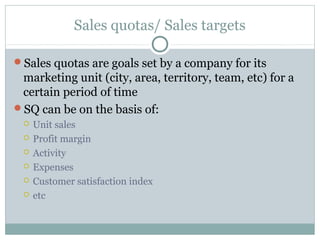
Sales quotas/ Sales targets
Sales quotas are goals set by a company for its
marketing unit (city, area, territory, team, etc) for a
certain period of time
SQ can be on the basis of:
 Unit sales
 Profit margin
 Activity
 Expenses
 Customer satisfaction index
 etc
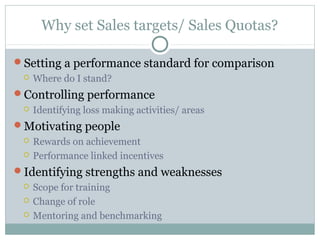
Why set Sales targets/ Sales Quotas?
Setting a performance standard for comparison
 Where do I stand?
Controlling performance
 Identifying loss making activities/ areas
Motivating people
 Rewards on achievement
 Performance linked incentives
Identifying strengths and weaknesses
 Scope for training
 Change of role
 Mentoring and benchmarking
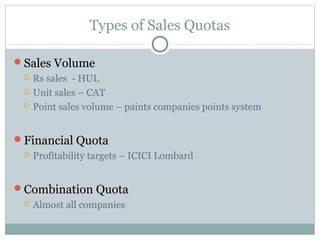
Types of Sales Quotas
Sales Volume
 Rs sales - HUL
 Unit sales – CAT
 Point sales volume – paints companies points system
Financial Quota
 Profitability targets – ICICI Lombard
Combination Quota
 Almost all companies
Sales Territory
An exclusive (mostly) territory assigned to a
marketing/ sales team where no other member from
the company directly competes with the concerned
team.
Sales territory can be:
 Geographic – city, state, area, etc
 Type of industry: IT, Banking, Petroleum, etc
 Type of customer – corporate, retail, SME, etc
Helps reduce infighting in company
More efficient allocation of resources
E.g. Car insurance for Bentley of DHFL Chairman
Sales Control and Cost Analysis
Achievement of budgets and company objectives
Planning and executing corrective measures
Monthly/ Quarterly sales review
 Relation review to Vertical review
Introduction of stimulus measures
Impact on net profitability
Analysis of returns on sales expenses
Thank You

Sales budgeting

  • 1.
    SALES BUDGETS, QUOTAS,TERRITORY AND CONTROL DEEPAK SINGH PCTE LUDHIANA Sales Budgeting
  • 2.
    What is SalesBudget? An estimate of volume of sales and selling expenses Sales volume: based on sales forecast, but kept slightly lower than sales forecast Sales budget is prepared:  Product wise  Territory wise  Sales person wise  Customer wise
  • 3.
    Why prepare salesbudget? Planning  Predicting profits  Assigning targets to team  Planning production/ allocation of resources Coordination  Keeping all departments and teams on same page  Leveling expectations  Clarifying requirements Control  Monitoring actual Vs targets  Corrective actions
  • 4.
    Sales Budget Process Textbook proposed process: Situation review  Past performance, current situation Central communication  Formats, guidelines, timelines Subordinate budgets  Consolidates to national budget Approval of sales budget Communication of budget to all Practical process: ?
  • 5.
    Sales quotas/ Salestargets Sales quotas are goals set by a company for its marketing unit (city, area, territory, team, etc) for a certain period of time SQ can be on the basis of:  Unit sales  Profit margin  Activity  Expenses  Customer satisfaction index  etc
  • 6.
    Why set Salestargets/ Sales Quotas? Setting a performance standard for comparison  Where do I stand? Controlling performance  Identifying loss making activities/ areas Motivating people  Rewards on achievement  Performance linked incentives Identifying strengths and weaknesses  Scope for training  Change of role  Mentoring and benchmarking
  • 7.
    Types of SalesQuotas Sales Volume  Rs sales - HUL  Unit sales – CAT  Point sales volume – paints companies points system Financial Quota  Profitability targets – ICICI Lombard Combination Quota  Almost all companies
  • 8.
    Sales Territory An exclusive(mostly) territory assigned to a marketing/ sales team where no other member from the company directly competes with the concerned team. Sales territory can be:  Geographic – city, state, area, etc  Type of industry: IT, Banking, Petroleum, etc  Type of customer – corporate, retail, SME, etc Helps reduce infighting in company More efficient allocation of resources E.g. Car insurance for Bentley of DHFL Chairman
  • 9.
    Sales Control andCost Analysis Achievement of budgets and company objectives Planning and executing corrective measures Monthly/ Quarterly sales review  Relation review to Vertical review Introduction of stimulus measures Impact on net profitability Analysis of returns on sales expenses
  • 10.