

MARKETERS AND
PROSPECTSA marketer is someone who seeks a response
it could be an attention, a purchase or a
donation from another party called prospect.
Marketers are skilled at stimulating demand
for their product.
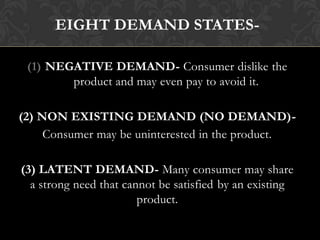
EIGHT DEMAND STATES(1) NEGATIVE DEMAND- Consumer dislike the
product and may even pay to avoid it.
(2) NON EXISTING DEMAND (NO DEMAND)Consumer may be uninterested in the product.
(3) LATENT DEMAND- Many consumer may share
a strong need that cannot be satisfied by an existing
product.
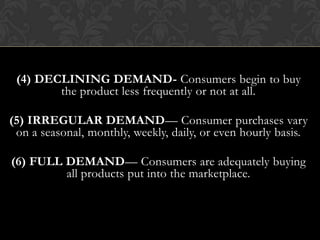
(4) DECLINING DEMAND- Consumers begin to buy
the product less frequently or not at all.
(5) IRREGULAR DEMAND— Consumer purchases vary
on a seasonal, monthly, weekly, daily, or even hourly basis.
(6) FULL DEMAND— Consumers are adequately buying
all products put into the marketplace.
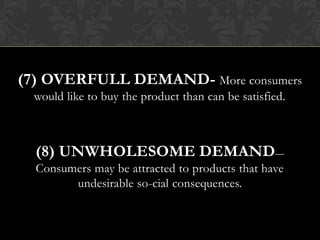
(7) OVERFULL DEMAND- More consumers
would like to buy the product than can be satisfied.

(8) UNWHOLESOME DEMAND—
Consumers may be attracted to products that have
undesirable so-cial consequences.
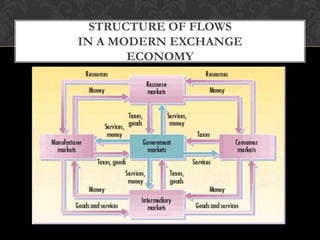
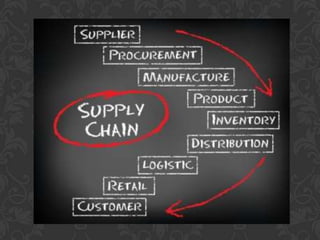
STRUCTURE OF FLOWS
IN A MODERN EXCHANGE
ECONOMY
CORE MARKETING
CONCEPTS
NEEDS, WANTS, AND DEMANDS
Needs - state of felt deprivation including physical,
social, and individual needs.
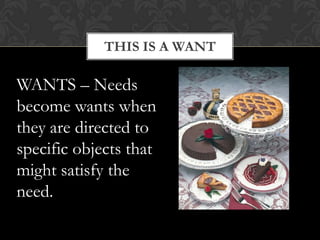
THIS IS A WANT

WANTS – Needs
become wants when
they are directed to
specific objects that
might satisfy the
need.
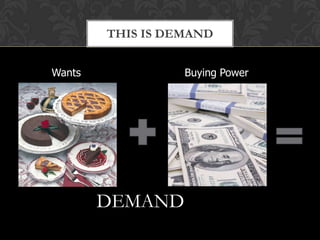
THIS IS DEMAND
Wants

Buying Power

DEMAND
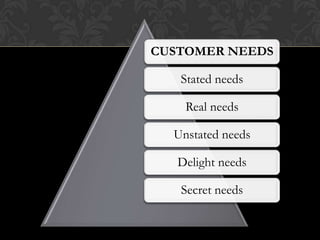
CUSTOMER NEEDS
Stated needs
Real needs
Unstated needs
Delight needs
Secret needs
Target market :-Every customer has different choices as per
their needs and identifying market
segments the marketer decides which
present greatest opportunities which
are their target markets.
Positioning :- Positioning is the process by which
marketers try to create an image or
identity in the minds of their target
market for its product, service,
idea, brand, or organization.
Segmentation:- When the marketers start dividing the
market in to segments as per customers
choices is known as Segmentation.
marketing concepts,types of demand & marketing structure

marketing concepts,types of demand & marketing structure

  • 1.
    MARKETERS AND PROSPECTSA marketeris someone who seeks a response it could be an attention, a purchase or a donation from another party called prospect. Marketers are skilled at stimulating demand for their product.
  • 2.
    EIGHT DEMAND STATES(1)NEGATIVE DEMAND- Consumer dislike the product and may even pay to avoid it. (2) NON EXISTING DEMAND (NO DEMAND)Consumer may be uninterested in the product. (3) LATENT DEMAND- Many consumer may share a strong need that cannot be satisfied by an existing product.
  • 3.
    (4) DECLINING DEMAND-Consumers begin to buy the product less frequently or not at all. (5) IRREGULAR DEMAND— Consumer purchases vary on a seasonal, monthly, weekly, daily, or even hourly basis. (6) FULL DEMAND— Consumers are adequately buying all products put into the marketplace.
  • 4.
    (7) OVERFULL DEMAND-More consumers would like to buy the product than can be satisfied. (8) UNWHOLESOME DEMAND— Consumers may be attracted to products that have undesirable so-cial consequences.
  • 5.
    STRUCTURE OF FLOWS INA MODERN EXCHANGE ECONOMY
  • 6.
    CORE MARKETING CONCEPTS NEEDS, WANTS,AND DEMANDS Needs - state of felt deprivation including physical, social, and individual needs.
  • 7.
    THIS IS AWANT WANTS – Needs become wants when they are directed to specific objects that might satisfy the need.
  • 8.
  • 9.
    CUSTOMER NEEDS Stated needs Realneeds Unstated needs Delight needs Secret needs
  • 10.
    Target market :-Everycustomer has different choices as per their needs and identifying market segments the marketer decides which present greatest opportunities which are their target markets. Positioning :- Positioning is the process by which marketers try to create an image or identity in the minds of their target market for its product, service, idea, brand, or organization. Segmentation:- When the marketers start dividing the market in to segments as per customers choices is known as Segmentation.