In Common parlance, the word ‘Product’ is
used to refer only to the physical or tangible
attributes of a product.
From the customer’s point of view, a product
is a bundle of utilities, which is purchased
because of its capability to provide satisfaction of
certain need.
Thus,a Product is anything that can be
offered to a market to satisfy a want or need.
PRODUCT
CONSUMER PRODUCTS
Consumer products are products
purchased by ultimate consumers for personal
or family use.
• Eg : soap, edible oil, textiles, toothpastes, fans
etc
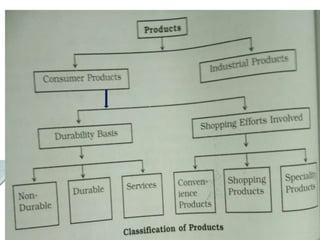
Consumer products are further classified as
follows.
(A) Shopping basis (B) Durability basis.
SHOPPING BASIS
On the basis of the time and effort, buyers are
willing to spend in the purchase of a product, we can
classify the consumer product into three categories.
1. Convenience products:
2. Shopping products
3. Specialty products
1. Convenience products
:These goods are purchased frequently and with
minimum efforts. They are meant for personal
convenience.
Eg. Newspapers, toothpaste, soaps, tea etc. are
examples of convenience products.
Features of Convenience Products
1. These products are purchased at convenient
location with least effort and time
2. It has regular and continuous demand
3. These products have small units of purchase and
low prices.
4. It has standardized price.
5. The competition in these products is high and hence
heavy advertisement is needed.
6. Sales promotion or short term incentives are needed
in the marketing of such products.
2.SHOPPING PRODUCTS
These products are purchased after
a comparative analysis of quality, price,
warranty etc. of competitive brands.
Eg. Furniture, cloth, TV, fridge, Washing
machine, Scooters, Cars
Characteristics of shopping
Products
1. These are durable in nature
2. The unit price as well as profit margin of
shopping products is generally high
3. The purchase of such product is
pre planned.
4. Retailers generally play an important role
in the sale of shopping products.
SPECIALITY PRODUCTS
3. Specialty products
These products are purchased with special
efforts. The consumers are aware of the
products they want and they are willing to
make special efforts to purchase it.
Eg( 1) Rare collection of art work, antiques
(2) In our daily life we can see people going
to a particular hair cutting saloon or
restaurant or a tailor.
Features of specialty products
1. The demand for specialty products is relatively
inelastic ( low)
2. The price of such products are high.
3. These products are available at specific places
only.
4. Aggressive sales promotion methods are to be
adopted to inform about their availability
5. After sales service is needed for many of the
specialty products.
(B) Durability/ Tangibility basis
On the basis of durability ,
products are classified into three categories
• Durable,
• Non-durable
• Services.
1.DURABLE PRODUCTS
These goods are used for longer period
and having many uses.
It provides high profit margin. It required
greater personal selling efforts and after sale
service..they are not purchased frequently.
Eg: TV, Refrigerator, Car etc.
2.NON – DURABLE PRODUCTS
• These are products which have a short
period of life. They are consumed and
exhausted very frequently. These products
are available everywhere and are to be
advertised heavily. They are purchased
very frequently.
• Eg: soap, Toothpaste, detergents, Soft
drinks etc.
3.SERVICES
Services are intangible. Services have
no tangible physical form, but their benefits
are capable of being experienced by the
buyers.
Eg: Dry cleaning, Services offered by a
doctor, lawyer. Hair cutting, Postal
services,
3.CHARECTERISTICS OF SERVICES
• 1. Services are intangible in nature
• 2. Services cannot be stored. They are
highly perishable.
• 3. Services are highly variable
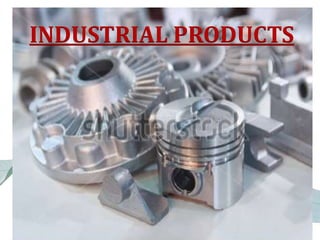
INDUSTRIAL PRODUCTS
INDUSTRIAL PRODUCTS
These products are used for
producing other products. They are the
inputs in the production of other products.
Eg : Tools, engines, Machinery etc.
FEATURES OF INDUSTRIAL PRODUCTS
1. Number of buyers The number of buyers of
industrial product are limited.
2. Channel levels: Because of limited number of
buyers industrial products are marketed through
shorter channels of distribution( direct selling/ one
channel)
3. Geographical concentration: Industrial markets are
highly concentrated geographically.
4. Derived demand: The demand for industrial
products are derived from the demand for
consumer products. Eg: demand for sugar cane will be
derived from demand for sugar.
FEATURES OF INDUSTRIAL PRODUCTS
5. Role of technical considerations: Technical
aspects assume greater significance in the
purchase of industrial products.
6. Reciprocal buying: some companies may resort
to reciprocal buying. For example , a company
manufacturing vehicles buys tires from another
company, who in turn buys vehicles reciprocally.
7. Leasing out;- Instead of purchasing outright,
procuring a lease basis is the tread today
because of the heavy price of these products.
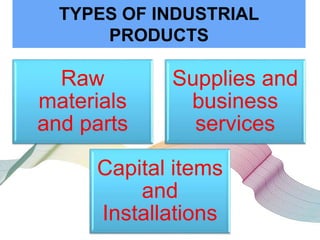
TYPES OF INDUSTRIAL
PRODUCTS
Raw
materials
and parts
Supplies and
business
services
Capital items
and
Installations
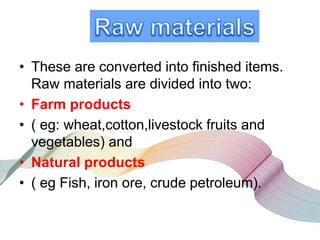
• These are converted into finished items.
Raw materials are divided into two:
• Farm products
• ( eg: wheat,cotton,livestock fruits and
vegetables) and
• Natural products
• ( eg Fish, iron ore, crude petroleum).
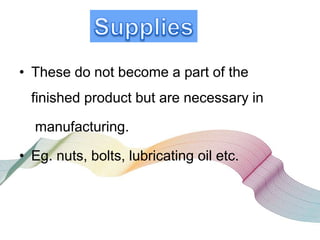
• These do not become a part of the
finished product but are necessary in
manufacturing.
• Eg. nuts, bolts, lubricating oil etc.
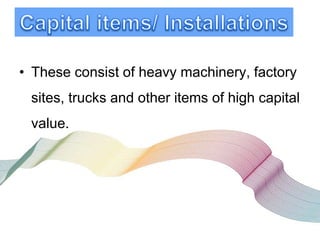
• These consist of heavy machinery, factory
sites, trucks and other items of high capital
value.
Type of products

Type of products

  • 2.
    In Common parlance,the word ‘Product’ is used to refer only to the physical or tangible attributes of a product. From the customer’s point of view, a product is a bundle of utilities, which is purchased because of its capability to provide satisfaction of certain need. Thus,a Product is anything that can be offered to a market to satisfy a want or need. PRODUCT
  • 4.
    CONSUMER PRODUCTS Consumer productsare products purchased by ultimate consumers for personal or family use. • Eg : soap, edible oil, textiles, toothpastes, fans etc Consumer products are further classified as follows. (A) Shopping basis (B) Durability basis.
  • 5.
    SHOPPING BASIS On thebasis of the time and effort, buyers are willing to spend in the purchase of a product, we can classify the consumer product into three categories. 1. Convenience products: 2. Shopping products 3. Specialty products
  • 6.
    1. Convenience products :Thesegoods are purchased frequently and with minimum efforts. They are meant for personal convenience. Eg. Newspapers, toothpaste, soaps, tea etc. are examples of convenience products.
  • 7.
    Features of ConvenienceProducts 1. These products are purchased at convenient location with least effort and time 2. It has regular and continuous demand 3. These products have small units of purchase and low prices. 4. It has standardized price. 5. The competition in these products is high and hence heavy advertisement is needed. 6. Sales promotion or short term incentives are needed in the marketing of such products.
  • 8.
    2.SHOPPING PRODUCTS These productsare purchased after a comparative analysis of quality, price, warranty etc. of competitive brands. Eg. Furniture, cloth, TV, fridge, Washing machine, Scooters, Cars
  • 9.
    Characteristics of shopping Products 1.These are durable in nature 2. The unit price as well as profit margin of shopping products is generally high 3. The purchase of such product is pre planned. 4. Retailers generally play an important role in the sale of shopping products.
  • 10.
  • 11.
    3. Specialty products Theseproducts are purchased with special efforts. The consumers are aware of the products they want and they are willing to make special efforts to purchase it. Eg( 1) Rare collection of art work, antiques (2) In our daily life we can see people going to a particular hair cutting saloon or restaurant or a tailor.
  • 12.
    Features of specialtyproducts 1. The demand for specialty products is relatively inelastic ( low) 2. The price of such products are high. 3. These products are available at specific places only. 4. Aggressive sales promotion methods are to be adopted to inform about their availability 5. After sales service is needed for many of the specialty products.
  • 13.
    (B) Durability/ Tangibilitybasis On the basis of durability , products are classified into three categories • Durable, • Non-durable • Services.
  • 14.
    1.DURABLE PRODUCTS These goodsare used for longer period and having many uses. It provides high profit margin. It required greater personal selling efforts and after sale service..they are not purchased frequently. Eg: TV, Refrigerator, Car etc.
  • 15.
    2.NON – DURABLEPRODUCTS • These are products which have a short period of life. They are consumed and exhausted very frequently. These products are available everywhere and are to be advertised heavily. They are purchased very frequently. • Eg: soap, Toothpaste, detergents, Soft drinks etc.
  • 16.
    3.SERVICES Services are intangible.Services have no tangible physical form, but their benefits are capable of being experienced by the buyers. Eg: Dry cleaning, Services offered by a doctor, lawyer. Hair cutting, Postal services,
  • 17.
    3.CHARECTERISTICS OF SERVICES •1. Services are intangible in nature • 2. Services cannot be stored. They are highly perishable. • 3. Services are highly variable
  • 18.
  • 19.
    INDUSTRIAL PRODUCTS These productsare used for producing other products. They are the inputs in the production of other products. Eg : Tools, engines, Machinery etc.
  • 20.
    FEATURES OF INDUSTRIALPRODUCTS 1. Number of buyers The number of buyers of industrial product are limited. 2. Channel levels: Because of limited number of buyers industrial products are marketed through shorter channels of distribution( direct selling/ one channel) 3. Geographical concentration: Industrial markets are highly concentrated geographically. 4. Derived demand: The demand for industrial products are derived from the demand for consumer products. Eg: demand for sugar cane will be derived from demand for sugar.
  • 21.
    FEATURES OF INDUSTRIALPRODUCTS 5. Role of technical considerations: Technical aspects assume greater significance in the purchase of industrial products. 6. Reciprocal buying: some companies may resort to reciprocal buying. For example , a company manufacturing vehicles buys tires from another company, who in turn buys vehicles reciprocally. 7. Leasing out;- Instead of purchasing outright, procuring a lease basis is the tread today because of the heavy price of these products.
  • 22.
    TYPES OF INDUSTRIAL PRODUCTS Raw materials andparts Supplies and business services Capital items and Installations
  • 23.
    • These areconverted into finished items. Raw materials are divided into two: • Farm products • ( eg: wheat,cotton,livestock fruits and vegetables) and • Natural products • ( eg Fish, iron ore, crude petroleum).
  • 24.
    • These donot become a part of the finished product but are necessary in manufacturing. • Eg. nuts, bolts, lubricating oil etc.
  • 25.
    • These consistof heavy machinery, factory sites, trucks and other items of high capital value.