Group Member
• Sumaiya Akhter.
• Jafrin Akter.
• Muhammad Hasibur Rahaman.
• Md. Mahabub Hasan.
Presentation
On
Defining Marketing for the 21st Century
Discussion Questions
1.Why is marketing important?
2.What is the scope of marketing?
3.What are some fundamental marketing concepts?
4.How has marketing management changed in recent years?
5.What are the task necessary for successful marketing management?
Why is marketing important?
Marketing is playing a key role in addressing the 21st century challenged
that firm to prosper financially and even survive in the face of an
unforgiving economic environment.
Financial success often depends on marketing ability. Finance, operations,
accounting, and other business functions won’t really matter without
sufficient demand for products and services so the firm can make a profit.
Marketing has helped introduce and gain acceptance of new products that
have eased or enriched people’s lives.
Successful marketing builds demand for products and services, which, in
turn, creates jobs.
Successful marketing also allows firms to more fully engage in socially
responsible activities.
What is the scope of marketing?
What Is Marketing?
What Is Marketing Management?
What Is Marketed?
Who Markets?
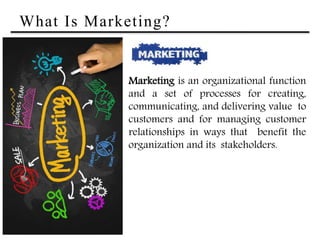
What Is Marketing?
Marketing is an organizational function
and a set of processes for creating,
communicating, and delivering value to
customers and for managing customer
relationships in ways that benefit the
organization and its stakeholders.
What Is Marketing Management?
Marketing management is the art and science of
choosing target markets and getting, keeping, and
growing customers through creating, delivering, and
communicating superior
customer value.
What Is Marketing Management?
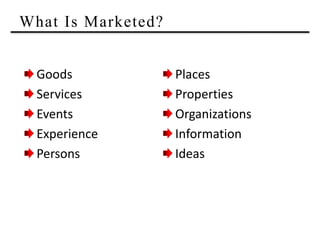
What Is Marketed?
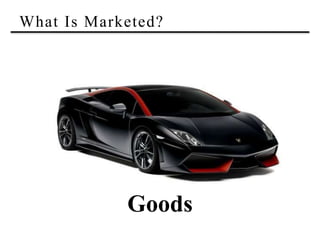
Goods
What Is Marketed?
Services
What Is Marketed?
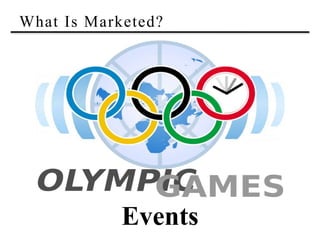
Events
What Is Marketed?
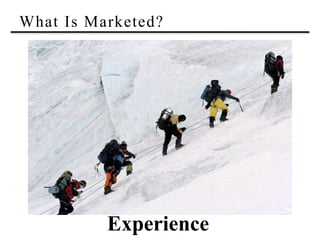
Experience
What Is Marketed?
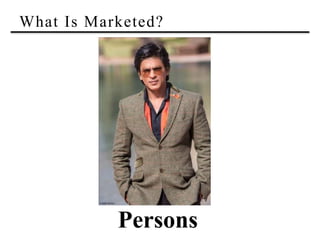
Persons
What Is Marketed?
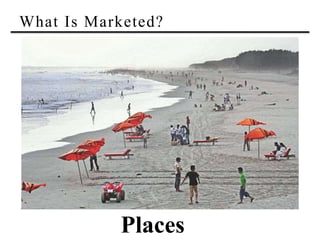
Places
What Is Marketed?
Properties
What Is Marketed?
Organizations
What Is Marketed?
What Is Marketed?
What Is Marketed?
Goods
Services
Events
Experience
Persons
Places
Properties
Organizations
Information
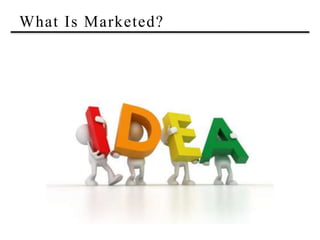
Ideas
Who Markets?
Marketers And Prospects
Markets
Key Customer Markets
Marketplaces, Market spaces And Metamarkets
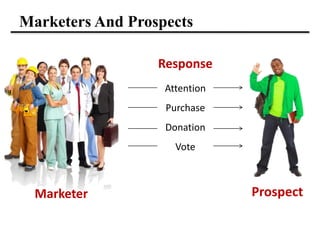
Marketers And Prospects
Marketer Prospect
Attention
Purchase
Donation
Vote
Response
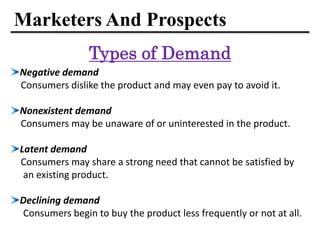
Marketers And Prospects
Negative demand
Consumers dislike the product and may even pay to avoid it.
Nonexistent demand
Consumers may be unaware of or uninterested in the product.
Latent demand
Consumers may share a strong need that cannot be satisfied by
an existing product.
Declining demand
Consumers begin to buy the product less frequently or not at all.
Types of Demand
Marketers And Prospects
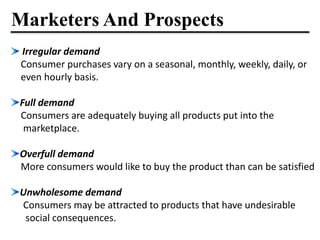
Irregular demand
Consumer purchases vary on a seasonal, monthly, weekly, daily, or
even hourly basis.
Full demand
Consumers are adequately buying all products put into the
marketplace.
Overfull demand
More consumers would like to buy the product than can be satisfied
Unwholesome demand
Consumers may be attracted to products that have undesirable
social consequences.
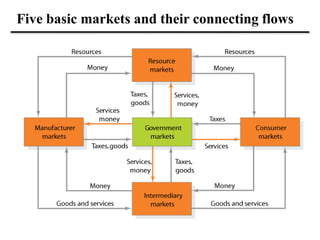
Five basic markets and their connecting flows
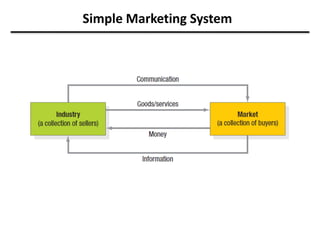
Simple Marketing System
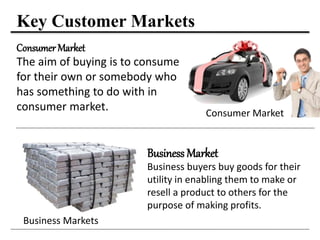
Key Customer Markets
Consumer Market
Consumer Market
The aim of buying is to consume
for their own or somebody who
has something to do with in
consumer market.
Business Market
Business buyers buy goods for their
utility in enabling them to make or
resell a product to others for the
purpose of making profits.
Business Markets
Key Customer Markets
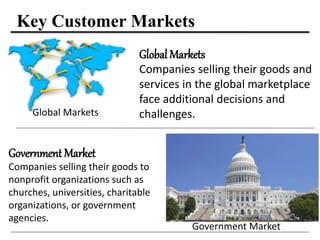
Global Markets
Companies selling their goods and
services in the global marketplace
face additional decisions and
challenges.
Government Market
Companies selling their goods to
nonprofit organizations such as
churches, universities, charitable
organizations, or government
agencies.
Global Markets
Government Market
Marketplaces, Market spaces And Metamarkets
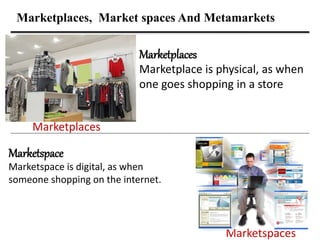
Marketplaces
Marketplace is physical, as when
one goes shopping in a store
Marketspace
Marketspace is digital, as when
someone shopping on the internet.
Marketplaces
Marketspaces
Marketplaces, Market spaces And Metamarkets
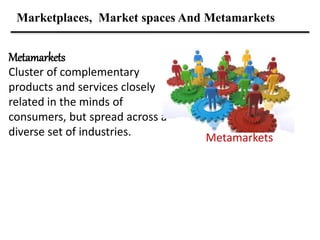
Metamarkets
Cluster of complementary
products and services closely
related in the minds of
consumers, but spread across a
diverse set of industries. Metamarkets
What are the Fundamental Marketing Concepts?
Needs, Wants & Demand
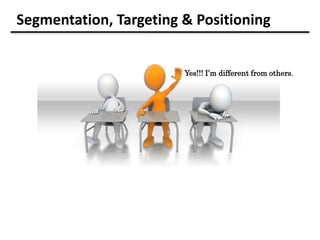
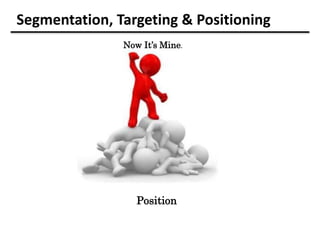
Segmentation, Targeting & Positioning
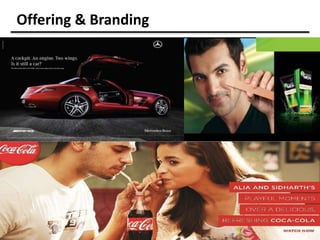
Offering & Branding
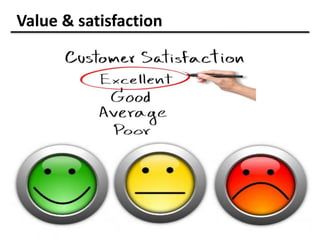
Value & satisfaction
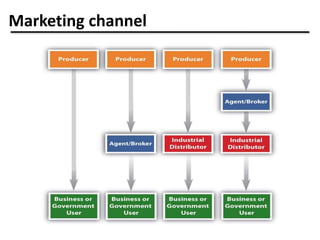
Marketing channel
Competition
Core Marketing Concepts
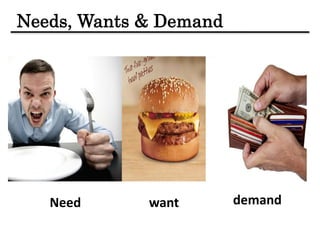
Needs, Wants & Demand
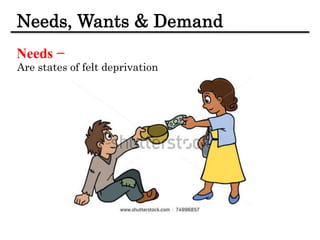
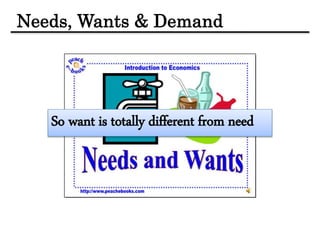
Needs −
Are states of felt deprivation
Needs, Wants & Demand
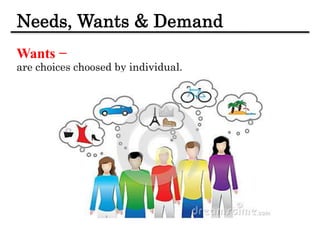
Wants −
are choices choosed by individual.
Needs, Wants & Demand
So want is totally different from need
Needs, Wants & Demand
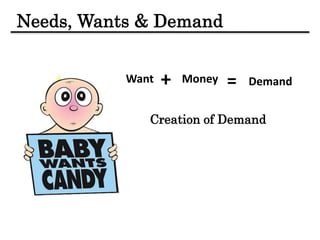
Want Money Demand=+
Creation of Demand
Needs, Wants & Demand
Need want demand
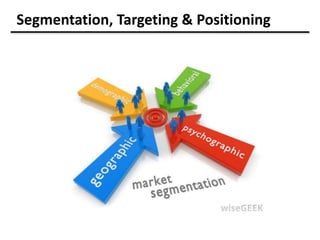
Segmentation, Targeting & Positioning
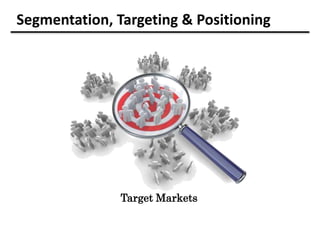
Target Markets
Segmentation, Targeting & Positioning
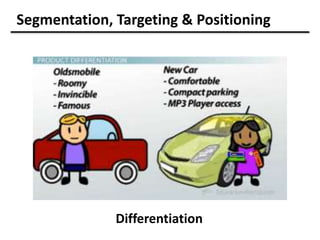
Differentiation
Segmentation, Targeting & Positioning
Yes!!! I’m different from others.
Segmentation, Targeting & Positioning
Position
Now It’s Mine.
Offering & Branding
Value & satisfaction
Marketing channel
Competition
How has marketing management changed
in recent years?
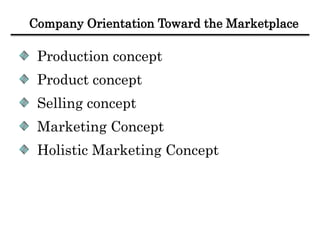
Company Orientation Toward the Marketplace
Production concept
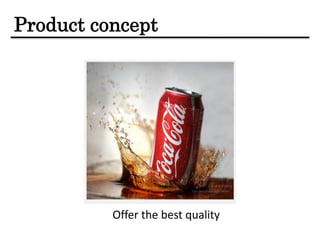
Product concept
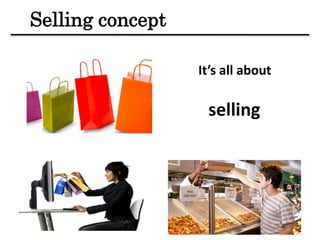
Selling concept
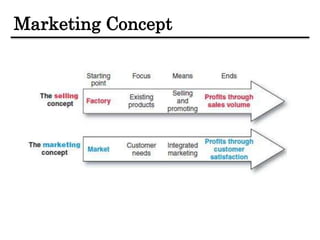
Marketing Concept
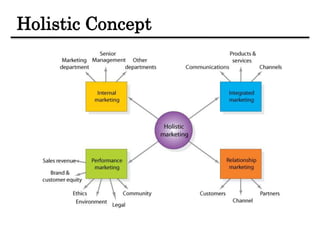
Holistic Marketing Concept
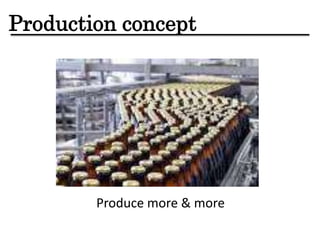
Production concept
Produce more & more
Product concept
Offer the best quality
It’s all about
selling
Selling concept
Marketing Concept
Holistic Concept
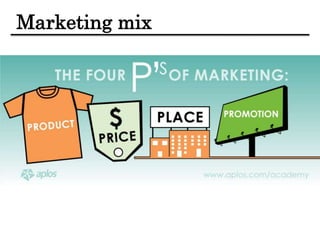
Marketing mix
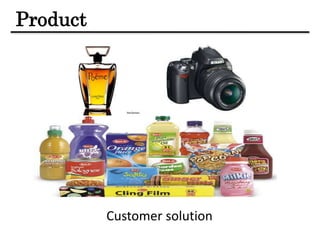
Product
Customer solution
Price
Customer cost
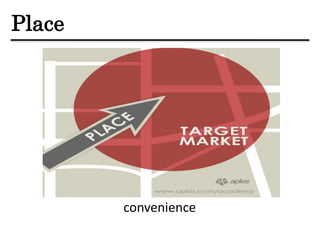
Place
convenience
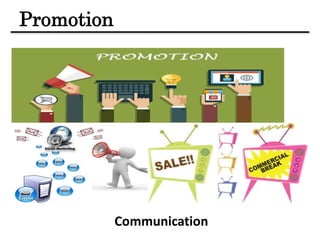
Promotion
Communication
What are the task necessary for
successful marketing management?
Marketing Management Tasks
Develop market strategies and plans
Capture marketing insights
Connect with customers
Build strong brands
Shape market offerings
Deliver value
Communicate value
Create long-term growth
Develop market strategies and plans
Creative strategies and plans that can
guide marketing activities.
Right marketing strategy is a blend of
discipline and flexibility.
Firms must stick to a strategy but also
constantly improve it.
Develop strategies for a range of products
and services within the organization.
Capture marketing insights
Collecting Information and Forecasting Demand
Conducting Marketing Research
Connect with customers
Creating Long-term Loyalty Relationships
Analyzing Consumer Markets
Analyzing Business Markets
Identifying Market Segments and Targets
Build strong brands
Creating Brand Equity
Crafting the Brand Positioning
Competitive Dynamics
Shape market offerings
Setting Product Strategy
Designing and Managing Services
Developing Pricing Strategies and Programs
Deliver value
Designing and Managing Integrated Marketing
Channels
Managing Retailing, Wholesaling, and Logistics
Communicate value
Designing and Managing Integrated Marketing
Communications
Managing Mass Communications
Managing Personal Communications
Create long-term growth
Introducing New Market Offerings
Tapping into Global Markets
Managing a Holistic Marketing
Organization for the Long Run.
Marketing management presentations

Marketing management presentations

Editor's Notes

  • #26 Marketers are individuals, groups, associations, companies, etc. that seek a response, such as attention, a purchase, donation, vote, etc., from another party which is called the prospect.
  • #27 Marketers are skilled at stimulating demand for their products. They seek to influence the level, timing, and composition of demand to meet the organization’s objectives. Eight demand states are possible:
  • #28 Marketers are skilled at stimulating demand for their products. They seek to influence the level, timing, and composition of demand to meet the organization’s objectives. Eight demand states are possible:
  • #29  Manufacturers go to resource markets (raw material markets, labor markets, money markets), buy resources and turn them into goods and services, and sell finished products to intermediaries, who sell them to consumers. Consumers sell their labor and receive money with which they pay for goods and services. The government collects tax revenues to buy goods from resource, manufacturer, and intermediary markets and uses these goods and services to provide public services. Each nation’s economy, and the global economy, consists of interacting sets of markets linked through exchange processes.
  • #30 Figure shows the relationship between the industry and the market. Sellers and buyers are connected by four flows. Sellers send goods and services and communications such as ads and direct mail to the market; in return they receive money and information such as customer attitudes and sales data. The inner loop shows an exchange of money for goods and services; the outer loop shows an exchange of information.