BY:
CHARTHA.GAGLANI
BIOLOGY OF
SACCHAROMYCES
CEREVISIAE
CONTENTS
1) What is an organism?
2) What is Fungus?
3) What is yeast?
4) What is Saccharomyces cerevisiae?
5) Scientific classification
6) Habitat
7) Nutritional requirements
8) Reproduction
9) Brewer’s yeast
10) Baker’s yeast
11) Fungemia
In biology, an organism is
an individual entity that
exhibits the property of life.
It is a synonym of 'Life
Form’.
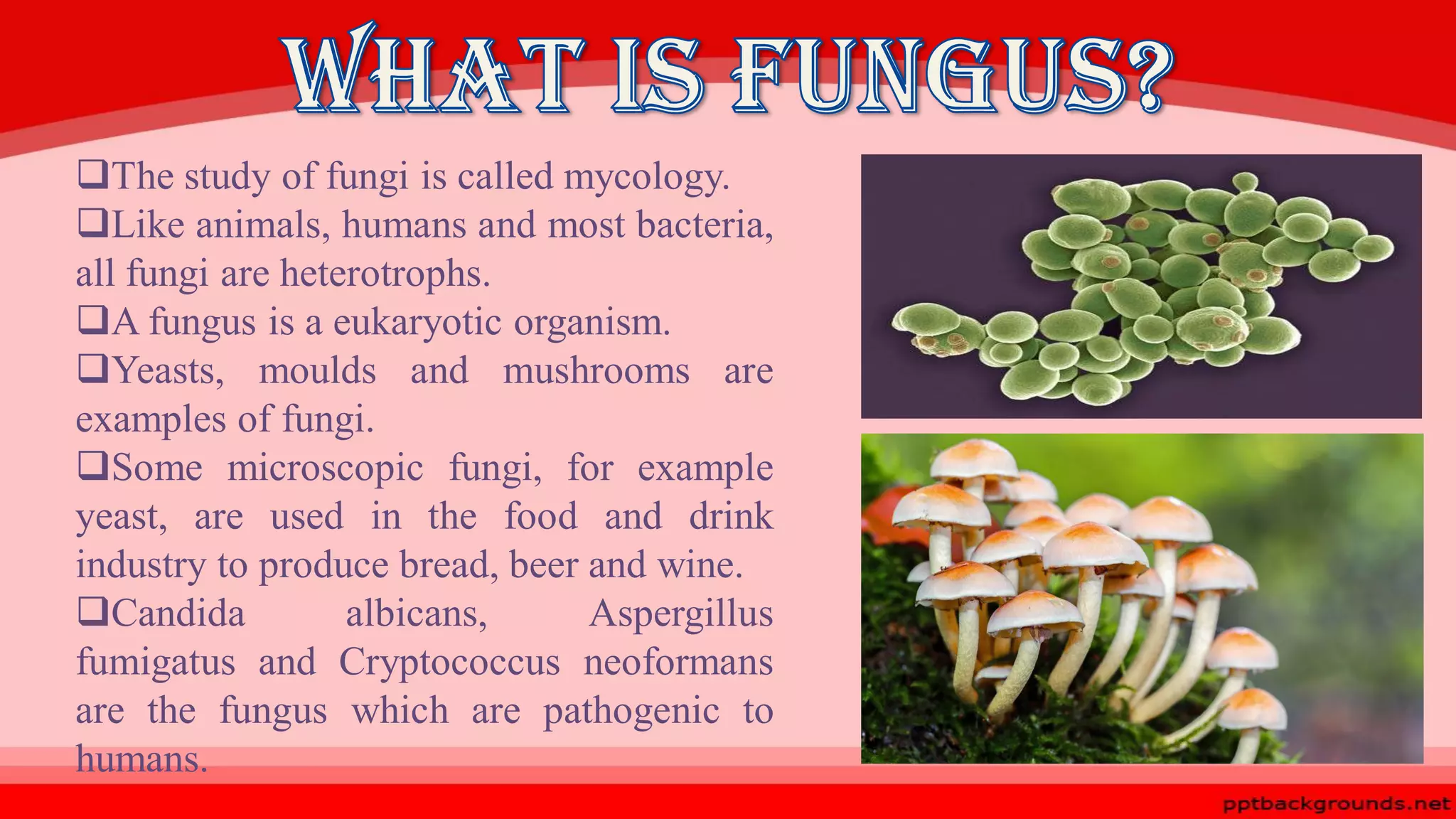
The study of fungi is called mycology.
Like animals, humans and most bacteria,
all fungi are heterotrophs.
A fungus is a eukaryotic organism.
Yeasts, moulds and mushrooms are
examples of fungi.
Some microscopic fungi, for example
yeast, are used in the food and drink
industry to produce bread, beer and wine.
Candida albicans, Aspergillus
fumigatus and Cryptococcus neoformans
are the fungus which are pathogenic to
humans.
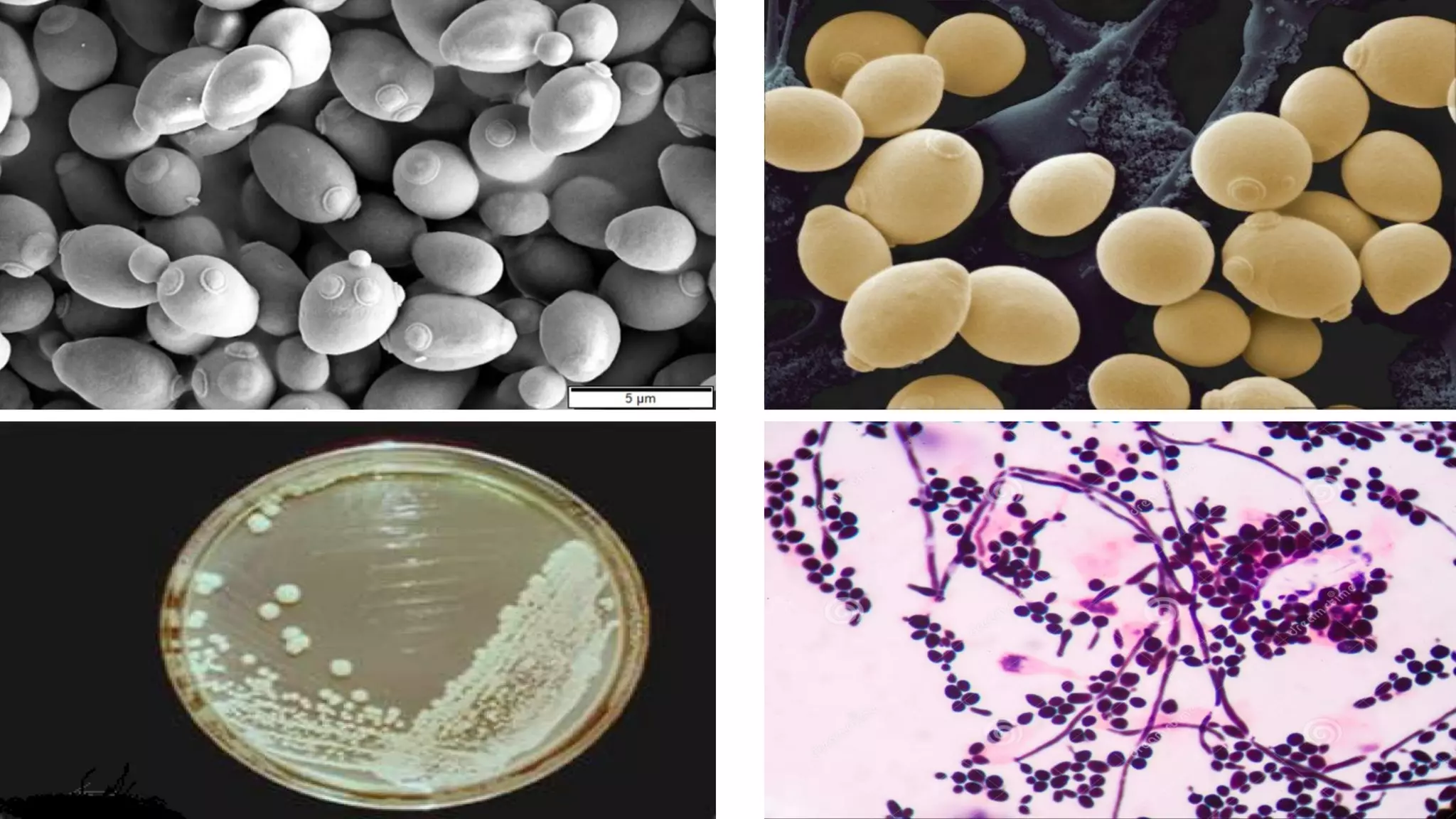
Yeasts are eukaryotic, single celled
microorganisms classified as members of
the fungus kingdom.
The first yeast originated hundreds of
millions of years ago, and
1,500 species are currently identified.
Yeast sizes vary greatly, depending on
species and environment, typically
measuring 3–4 µm in diameter, although
some yeasts can grow to 40 µm in size.
• Saccharomyces cerevisiae is a species of yeast. It has been
instrumental to winemaking, baking, and brewing since
ancient times.
• It is one of the most intensively studied eukaryotic model
organisms in molecular and cell biology.
• It is the microorganism behind the most common type of
fermentation. S. cerevisiae cells are round to ovoid, 5–10 μm
in diameter.
• It reproduces by a division process known as budding.
Kingdom: Fungi
Phylum: Ascomycota
Subphylum: Saccharomycotina
Order: Saccharomycetales
Family: Saccharomycetaceae
Genus: Saccharomyces
Species: S. cerevisiae
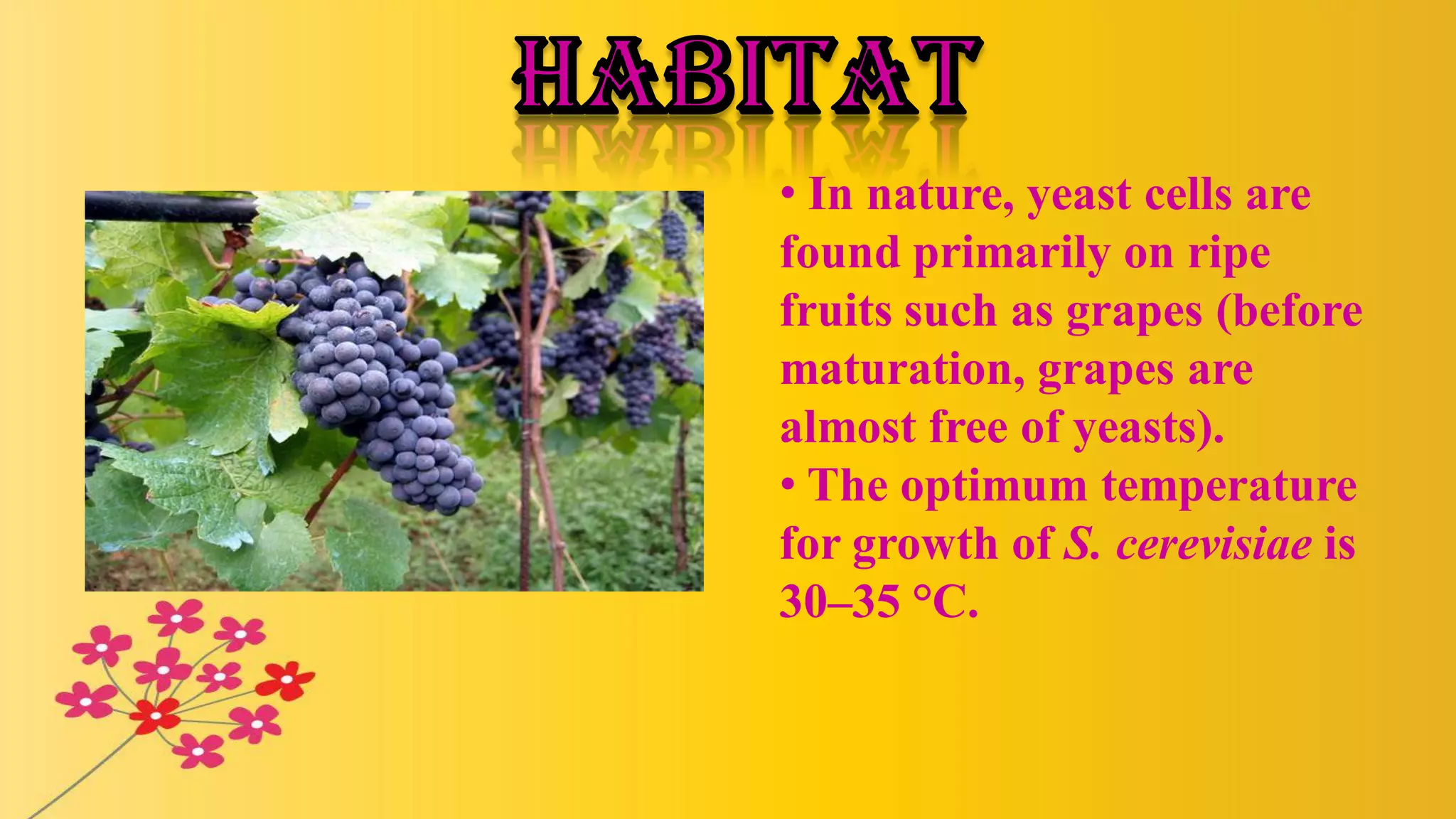
• In nature, yeast cells are
found primarily on ripe
fruits such as grapes (before
maturation, grapes are
almost free of yeasts).
• The optimum temperature
for growth of S. cerevisiae is
30–35 °C.
 All strains of S. cerevisiae can grow aerobically on glucose,
maltose, trehalose.
 Galactose and fructose are shown to be two of the best
fermenting sugars.
Yeasts also have a requirement for phosphorus and some metals,
like magnesium, iron, calcium, and zinc, are also required for good
growth of the yeast.
Concerning organic requirements, most strains of S.
cerevisiae require biotin.
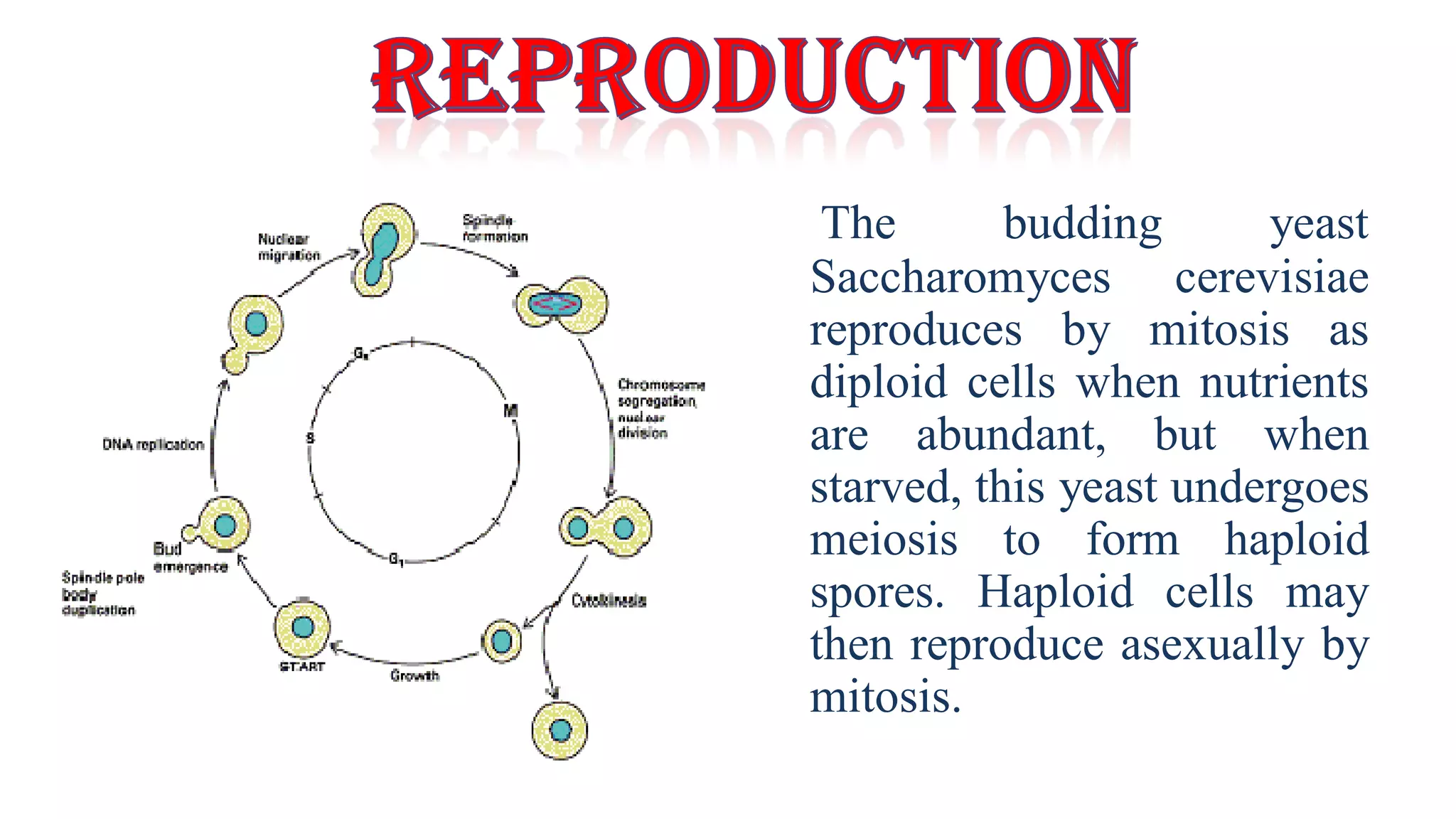
The budding yeast
Saccharomyces cerevisiae
reproduces by mitosis as
diploid cells when nutrients
are abundant, but when
starved, this yeast undergoes
meiosis to form haploid
spores. Haploid cells may
then reproduce asexually by
mitosis.
Saccharomyces cerevisiae is used in
brewing beer, when it is sometimes called a
top-fermenting or top-cropping yeast.
It is so called because during the
fermentation process its hydrophobic
surface causes the flocs to adhere to CO2
and rise to the top of the fermentation
vessel.
Lager yeast normally ferments at a
temperature of approximately 5 °C (41 °F),
where Saccharomyces cerevisiae becomes
dormant.
S. cerevisiae is used in baking; the carbon dioxide
generated by the fermentation is used as a leavening
agent in bread and other baked goods.
Preparing yeasts breads requires the development of
gluten and formation of CO2.
The gluten develops during mixing and kneading, the
gluten will form the framework of bread and hold the
CO2 produced by yeast during fermentation.
The yeast will produce CO2 which will give volume to
the bread.
• Fungemia or fungemia is the presence of fungi or yeasts in the
blood. The most common type, also known as candidemia, caused
by Saccharomyces, Aspergillus and Cryptococcus, are also called
fungemia.
• Symptoms: includes pain, acute confusion, chronic fatigue, and
infections. Skin infections can include persistent or non-
healing wounds and lesions, sweating, itching, and unusual
discharge or drainage.
• Treatment: An intravenous echinocandin such as
anidulafungin, caspofungin or micafungin is recommended as first-
line therapy for fungemia, specifically candidemia. Oral or
intravenous fluconazole is an acceptable alternative.
Saccharomyces cerevisiae

Saccharomyces cerevisiae

  • 1.
  • 2.
    CONTENTS 1) What isan organism? 2) What is Fungus? 3) What is yeast? 4) What is Saccharomyces cerevisiae? 5) Scientific classification 6) Habitat 7) Nutritional requirements 8) Reproduction 9) Brewer’s yeast 10) Baker’s yeast 11) Fungemia
  • 3.
    In biology, anorganism is an individual entity that exhibits the property of life. It is a synonym of 'Life Form’.
  • 5.
    The study offungi is called mycology. Like animals, humans and most bacteria, all fungi are heterotrophs. A fungus is a eukaryotic organism. Yeasts, moulds and mushrooms are examples of fungi. Some microscopic fungi, for example yeast, are used in the food and drink industry to produce bread, beer and wine. Candida albicans, Aspergillus fumigatus and Cryptococcus neoformans are the fungus which are pathogenic to humans.
  • 7.
    Yeasts are eukaryotic,single celled microorganisms classified as members of the fungus kingdom. The first yeast originated hundreds of millions of years ago, and 1,500 species are currently identified. Yeast sizes vary greatly, depending on species and environment, typically measuring 3–4 µm in diameter, although some yeasts can grow to 40 µm in size.
  • 8.
    • Saccharomyces cerevisiaeis a species of yeast. It has been instrumental to winemaking, baking, and brewing since ancient times. • It is one of the most intensively studied eukaryotic model organisms in molecular and cell biology. • It is the microorganism behind the most common type of fermentation. S. cerevisiae cells are round to ovoid, 5–10 μm in diameter. • It reproduces by a division process known as budding.
  • 10.
    Kingdom: Fungi Phylum: Ascomycota Subphylum:Saccharomycotina Order: Saccharomycetales Family: Saccharomycetaceae Genus: Saccharomyces Species: S. cerevisiae
  • 11.
    • In nature,yeast cells are found primarily on ripe fruits such as grapes (before maturation, grapes are almost free of yeasts). • The optimum temperature for growth of S. cerevisiae is 30–35 °C.
  • 12.
     All strainsof S. cerevisiae can grow aerobically on glucose, maltose, trehalose.  Galactose and fructose are shown to be two of the best fermenting sugars. Yeasts also have a requirement for phosphorus and some metals, like magnesium, iron, calcium, and zinc, are also required for good growth of the yeast. Concerning organic requirements, most strains of S. cerevisiae require biotin.
  • 14.
    The budding yeast Saccharomycescerevisiae reproduces by mitosis as diploid cells when nutrients are abundant, but when starved, this yeast undergoes meiosis to form haploid spores. Haploid cells may then reproduce asexually by mitosis.
  • 15.
    Saccharomyces cerevisiae isused in brewing beer, when it is sometimes called a top-fermenting or top-cropping yeast. It is so called because during the fermentation process its hydrophobic surface causes the flocs to adhere to CO2 and rise to the top of the fermentation vessel. Lager yeast normally ferments at a temperature of approximately 5 °C (41 °F), where Saccharomyces cerevisiae becomes dormant.
  • 18.
    S. cerevisiae isused in baking; the carbon dioxide generated by the fermentation is used as a leavening agent in bread and other baked goods. Preparing yeasts breads requires the development of gluten and formation of CO2. The gluten develops during mixing and kneading, the gluten will form the framework of bread and hold the CO2 produced by yeast during fermentation. The yeast will produce CO2 which will give volume to the bread.
  • 20.
    • Fungemia orfungemia is the presence of fungi or yeasts in the blood. The most common type, also known as candidemia, caused by Saccharomyces, Aspergillus and Cryptococcus, are also called fungemia. • Symptoms: includes pain, acute confusion, chronic fatigue, and infections. Skin infections can include persistent or non- healing wounds and lesions, sweating, itching, and unusual discharge or drainage. • Treatment: An intravenous echinocandin such as anidulafungin, caspofungin or micafungin is recommended as first- line therapy for fungemia, specifically candidemia. Oral or intravenous fluconazole is an acceptable alternative.