RURAL AND
URBAN
DEVELOPMENT
Chapter 8
By
Fajardo
Rural Development
 Generally refers to the process and improving
the quality of life and economic well- being of
people living in relatively isolated and
sparsely populated areas.
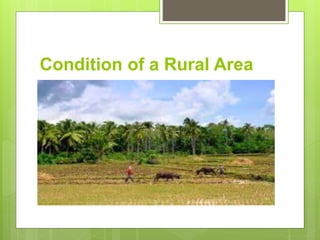
Condition of a Rural Area
Rural Problems
 Low/little/lesser incomes
 Productivity is very low
 Absence of Economic and Social
infrastructure
 No Capital
 Lack of Cultural and Educational activities
Rural Areas: Roots of Poverty
 The world’s poorest are found in the rural
areas.
 Economic opportunities are extremely rare
and hope.
 Without enough foods, cloth, and shelter.
Rural Poors
 Small Farmers
 Tenants
 Sharecroppers
 Farm workers
 Hacienderos and Rancheros
 Agrarian reform
program
 Cooperatives
development program
 Human settlement
program
 Community
development program
 Nutrition program
 Integrated area
development program
 Rural electrification
project
 Fishing resources
management
 Medium and small-
scale industries
 Family planning
Stages of Rural Development
in China
The transition of China from a small peasant economy
into a collective agriculture is divided into four stages
within the span of six years from 1952- 1958, These
stages are:
 Mutual Aid teams – The first step towards
collectivization, 6- 10 families grouped themselves to
labor, animal and farm implements, By the end of 1952,
40% of the rural families belonged to 8 million mutual
aid teams.
 Elementary cooperatives- formed in 1953, The
simple credit and marketing cooperatives. The
main feature of elementary cooperatives is their
recognition of individual property rights in the
system of income distribution.
 Advanced cooperatives- composed of 10-20
elementary cooperatives. This covered one village
with 1000-3000 persons and a farm area from
300-800 hectares.
 Peoples Commune- The main purpose of the
commune is to serve agriculture. The
agricultural cooperatives and the
administrative units called ‘Hsiang’, were
merge into the peoples communes. By 1958,
740,000 advanced cooperatives were re-
constituted into 26,000 communes.
Lessons from China
 Employment, equality and satisfaction of
basic needs.
 Ability to meet the basic needs of its people.
 First priority is the social transformation of
agriculture.
Urban Development
 Is a technical and political process concerned
with the use of land and design of the urban
environment, including transportation
networks, to guide and ensure the orderly
development of settlement and communities.
Urban Development in
Southeast Asia
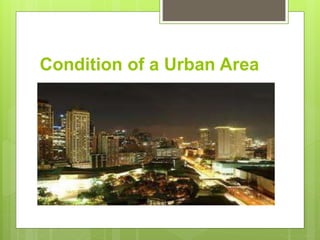
Condition of a Urban Area
Development of Great Cities in
Southeast Asia
 All great cities in Southeast Asia were formed
by the European Colonizers.
 Such colonial influence was the evident in the
western appearance of administrative and
commerce areas and large number of foreign
residents.
Spanish Development of
Philippines Cities
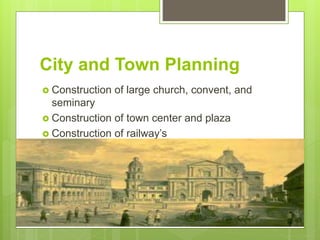
City and Town Planning
 Construction of large church, convent, and
seminary
 Construction of town center and plaza
 Construction of railway’s
Economic Activities during
Spanish Time
 Galleon Trade
 Tobacco Monopoly
 Production of rice, sugar and abaca
Thank You!
Presented by.
Eduarte, Wendell Aries S.
ECO 1. MWF 8:00- 11:00am
Instructor: Dr. Zenaida H. Brioso

Rural and urban development

  • 1.
  • 2.
    Rural Development  Generallyrefers to the process and improving the quality of life and economic well- being of people living in relatively isolated and sparsely populated areas.
  • 3.
    Condition of aRural Area
  • 4.
    Rural Problems  Low/little/lesserincomes  Productivity is very low  Absence of Economic and Social infrastructure  No Capital  Lack of Cultural and Educational activities
  • 5.
    Rural Areas: Rootsof Poverty  The world’s poorest are found in the rural areas.  Economic opportunities are extremely rare and hope.  Without enough foods, cloth, and shelter.
  • 6.
    Rural Poors  SmallFarmers  Tenants  Sharecroppers  Farm workers  Hacienderos and Rancheros
  • 7.
     Agrarian reform program Cooperatives development program  Human settlement program  Community development program  Nutrition program  Integrated area development program  Rural electrification project  Fishing resources management  Medium and small- scale industries  Family planning
  • 8.
    Stages of RuralDevelopment in China The transition of China from a small peasant economy into a collective agriculture is divided into four stages within the span of six years from 1952- 1958, These stages are:  Mutual Aid teams – The first step towards collectivization, 6- 10 families grouped themselves to labor, animal and farm implements, By the end of 1952, 40% of the rural families belonged to 8 million mutual aid teams.
  • 9.
     Elementary cooperatives-formed in 1953, The simple credit and marketing cooperatives. The main feature of elementary cooperatives is their recognition of individual property rights in the system of income distribution.  Advanced cooperatives- composed of 10-20 elementary cooperatives. This covered one village with 1000-3000 persons and a farm area from 300-800 hectares.
  • 10.
     Peoples Commune-The main purpose of the commune is to serve agriculture. The agricultural cooperatives and the administrative units called ‘Hsiang’, were merge into the peoples communes. By 1958, 740,000 advanced cooperatives were re- constituted into 26,000 communes.
  • 11.
    Lessons from China Employment, equality and satisfaction of basic needs.  Ability to meet the basic needs of its people.  First priority is the social transformation of agriculture.
  • 12.
    Urban Development  Isa technical and political process concerned with the use of land and design of the urban environment, including transportation networks, to guide and ensure the orderly development of settlement and communities.
  • 13.
  • 14.
    Condition of aUrban Area
  • 15.
    Development of GreatCities in Southeast Asia  All great cities in Southeast Asia were formed by the European Colonizers.  Such colonial influence was the evident in the western appearance of administrative and commerce areas and large number of foreign residents.
  • 16.
  • 17.
    City and TownPlanning  Construction of large church, convent, and seminary  Construction of town center and plaza  Construction of railway’s
  • 18.
    Economic Activities during SpanishTime  Galleon Trade  Tobacco Monopoly  Production of rice, sugar and abaca
  • 19.
    Thank You! Presented by. Eduarte,Wendell Aries S. ECO 1. MWF 8:00- 11:00am Instructor: Dr. Zenaida H. Brioso