The Roman
Empire Part 2
Section 2
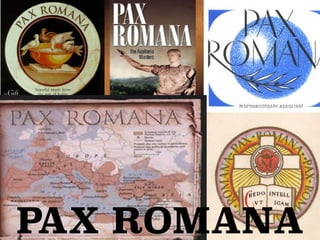
PAX ROMANA
A Vast and Powerful Empire
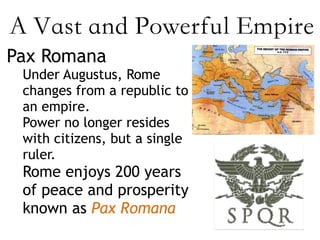
Pax Romana
Under Augustus, Rome
changes from a republic to
an empire.
Power no longer resides
with citizens, but a single
ruler.
Rome enjoys 200 years
of peace and prosperity
known as Pax Romana
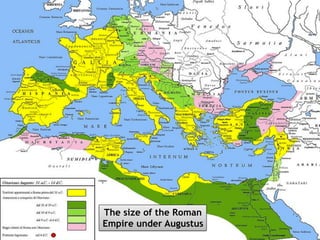
The size of the Roman
Empire under Augustus
A Sound Government
• Augustus created an effective & lasting system
of government where paid government
employees called civil servants did
government jobs instead of senators.
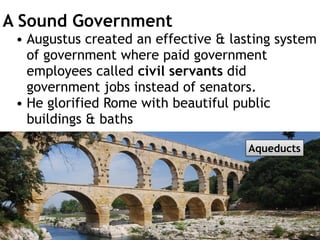
• He glorified Rome with beautiful public
buildings & baths
Trevi Fountain, Rome
Colosseum
Aqueducts
A Great Population
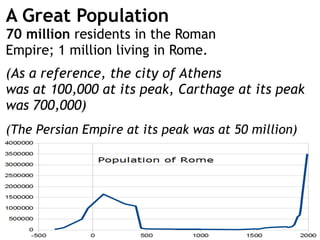
70 million residents in the Roman
Empire; 1 million living in Rome.
(As a reference, the city of Athens 

was at 100,000 at its peak, Carthage at its peak
was 700,000)
(The Persian Empire at its peak was at 50 million)
Agriculture and Trade
•Agriculture most important industry in
empire; 90% of Romans farm
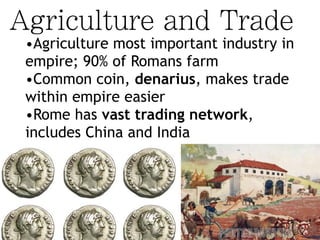
•Common coin, denarius, makes trade
within empire easier
•Rome has vast trading network,
includes China and India
Pax Romana
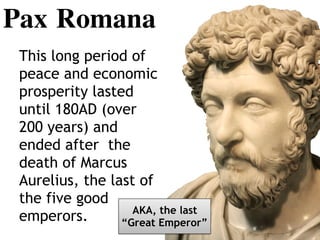
This long period of
peace and economic
prosperity lasted
until 180AD (over
200 years) and
ended after the
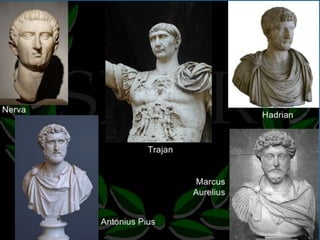
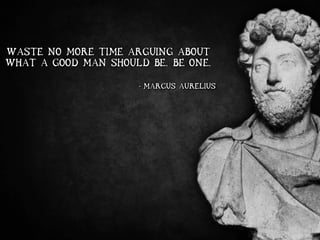
death of Marcus
Aurelius, the last of
the five good
emperors. AKA, the last
“Great Emperor”
Copyright © by Houghton Mifflin Harcourt Publishing Company
NextPrevious
Chapter 6
Ancient World History: Patterns of Interaction
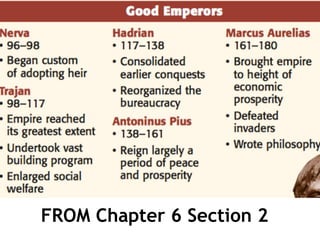
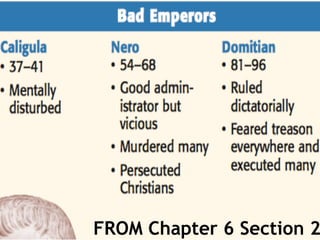
FROM Chapter 6 Section 2
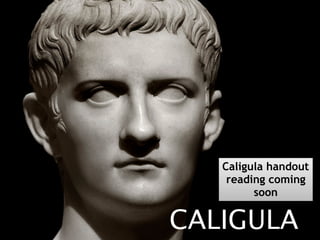
CALIGULA
Caligula handout
reading coming
soon
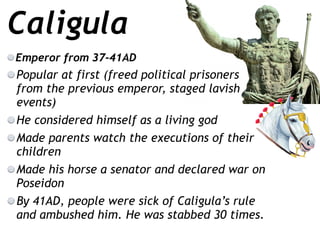
Caligula
Emperor from 37-41AD
Popular at first (freed political prisoners
from the previous emperor, staged lavish
events)
He considered himself as a living god
Made parents watch the executions of their
children
Made his horse a senator and declared war on
Poseidon
By 41AD, people were sick of Caligula’s rule
and ambushed him. He was stabbed 30 times.
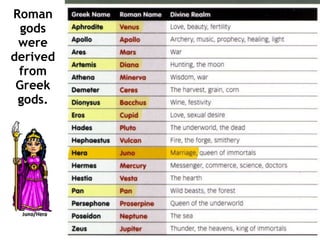
Roman
gods
were
derived
from
Greek
gods.
Gods	and	Goddesses	
Worship of emperor became part of
official religion of Rome.
Although Roman mythology was similar to
Greek, they were different in key ways:
1. Roman mythology doesn’t have as
many imaginative stories of Gods
interacting with humans and causing
mayhem on earth.
2.Roman gods had less personality. They
represented abstract ideas.
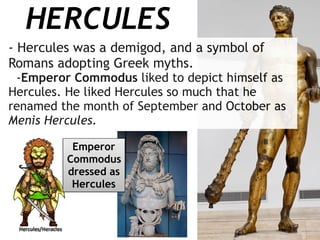
HERCULES
- Hercules was a demigod, and a symbol of
Romans adopting Greek myths.
-Emperor Commodus liked to depict himself as
Hercules. He liked Hercules so much that he
renamed the month of September and October as
Menis Hercules.
Emperor
Commodus
dressed as
Hercules
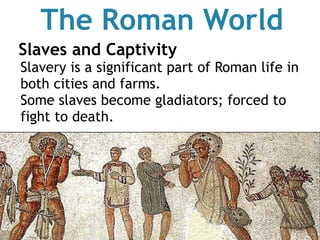
The Roman World
Slaves and Captivity
Slavery is a significant part of Roman life in
both cities and farms.
Some slaves become gladiators; forced to
fight to death.
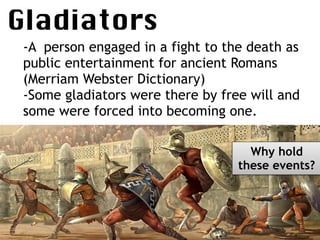
Gladiators

-A person engaged in a fight to the death as
public entertainment for ancient Romans
(Merriam Webster Dictionary)
-Some gladiators were there by free will and
some were forced into becoming one.
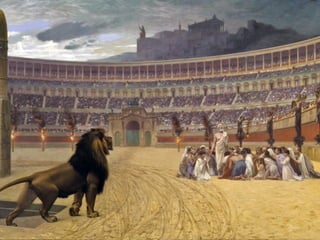
Why hold
these events?
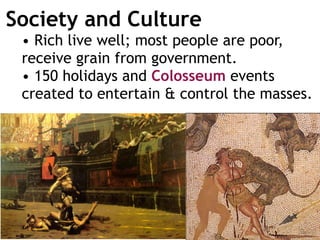
Society and Culture
• Rich live well; most people are poor,
receive grain from government.
• 150 holidays and Colosseum events
created to entertain & control the masses.
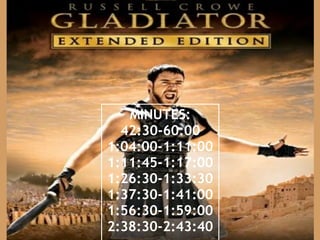
MINUTES:
42:30-60:00
1:04:00-1:11:00
1:11:45-1:17:00
1:26:30-1:33:30
1:37:30-1:41:00
1:56:30-1:59:00
2:38:30-2:43:40
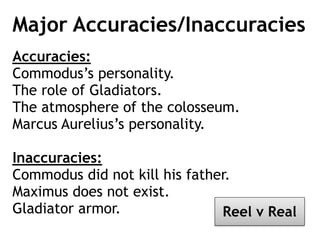
Major Accuracies/Inaccuracies
Accuracies:
Commodus’s personality.
The role of Gladiators.
The atmosphere of the colosseum.
Marcus Aurelius’s personality.
Inaccuracies:
Commodus did not kill his father.
Maximus does not exist.
Gladiator armor. Reel v Real

Rome Part 3

  • 1.
  • 2.
  • 3.
    A Vast andPowerful Empire Pax Romana Under Augustus, Rome changes from a republic to an empire. Power no longer resides with citizens, but a single ruler. Rome enjoys 200 years of peace and prosperity known as Pax Romana
  • 4.
    The size ofthe Roman Empire under Augustus
  • 5.
    A Sound Government •Augustus created an effective & lasting system of government where paid government employees called civil servants did government jobs instead of senators. • He glorified Rome with beautiful public buildings & baths Trevi Fountain, Rome Colosseum Aqueducts
  • 6.
    A Great Population 70million residents in the Roman Empire; 1 million living in Rome. (As a reference, the city of Athens 
 was at 100,000 at its peak, Carthage at its peak was 700,000) (The Persian Empire at its peak was at 50 million)
  • 7.
    Agriculture and Trade •Agriculturemost important industry in empire; 90% of Romans farm •Common coin, denarius, makes trade within empire easier •Rome has vast trading network, includes China and India
  • 8.
    Pax Romana This longperiod of peace and economic prosperity lasted until 180AD (over 200 years) and ended after the death of Marcus Aurelius, the last of the five good emperors. AKA, the last “Great Emperor”
  • 9.
    Copyright © byHoughton Mifflin Harcourt Publishing Company NextPrevious Chapter 6 Ancient World History: Patterns of Interaction
  • 11.
    FROM Chapter 6Section 2
  • 12.
    FROM Chapter 6Section 2
  • 13.
  • 14.
    Caligula Emperor from 37-41AD Popularat first (freed political prisoners from the previous emperor, staged lavish events) He considered himself as a living god Made parents watch the executions of their children Made his horse a senator and declared war on Poseidon By 41AD, people were sick of Caligula’s rule and ambushed him. He was stabbed 30 times.
  • 15.
  • 16.
    Gods and Goddesses Worship of emperorbecame part of official religion of Rome. Although Roman mythology was similar to Greek, they were different in key ways: 1. Roman mythology doesn’t have as many imaginative stories of Gods interacting with humans and causing mayhem on earth. 2.Roman gods had less personality. They represented abstract ideas.
  • 17.
    HERCULES - Hercules wasa demigod, and a symbol of Romans adopting Greek myths. -Emperor Commodus liked to depict himself as Hercules. He liked Hercules so much that he renamed the month of September and October as Menis Hercules. Emperor Commodus dressed as Hercules
  • 18.
    The Roman World Slavesand Captivity Slavery is a significant part of Roman life in both cities and farms. Some slaves become gladiators; forced to fight to death.
  • 19.
    Gladiators -A person engagedin a fight to the death as public entertainment for ancient Romans (Merriam Webster Dictionary) -Some gladiators were there by free will and some were forced into becoming one. Why hold these events?
  • 20.
    Society and Culture •Rich live well; most people are poor, receive grain from government. • 150 holidays and Colosseum events created to entertain & control the masses.
  • 22.
  • 23.
    Major Accuracies/Inaccuracies Accuracies: Commodus’s personality. Therole of Gladiators. The atmosphere of the colosseum. Marcus Aurelius’s personality. Inaccuracies: Commodus did not kill his father. Maximus does not exist. Gladiator armor. Reel v Real