Role of Sigma factors in Regulation
(Escherichia coli (E. coli)
AGM-602 –Microbial Physiology and Regulation
BY
Namadara Sandhya
1st year PhD
202211004
Department of Agriculture Microbiology
What is Sigma factor
Structure of Sigma factor
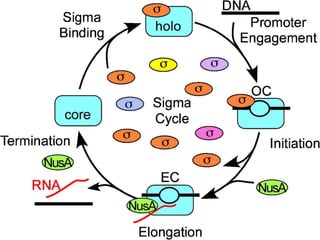
‘‘σ cycle’’
Heat-Shock Response
Anti-sigma factors
What is Sigma factor
(σ factor or specificity factor)?
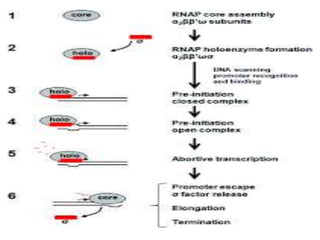
• Sigma factors are multi-domain subunits of bacterial
RNA polymerase (RNAP) that play critical roles in
transcription initiation, including the recognition and
opening of promoter elements to form an initial
“closed” complex (RPc), stabilisation of the “open”
complex (RPo) in which DNA around the
transcription start site is melted, interaction with
transcription activators, the stimulation of the early
steps in RNA synthesis (Saecker et al .,2011)
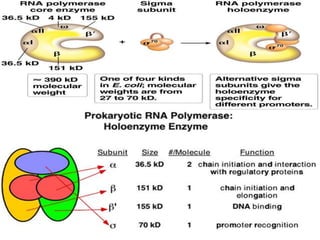
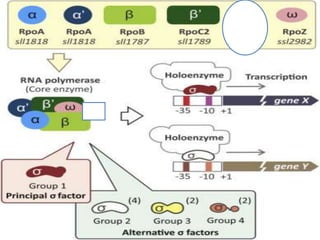
• The sigma factor, together with RNA polymerase core
enzyme consists of five subunits including α (two copies),
β, β' and ω subunits, is known as the RNA
polymerase holoenzyme.
(Paget, Mar
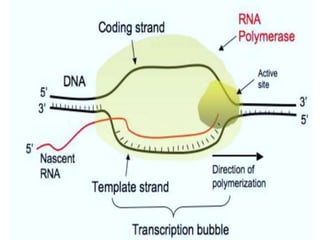
• These five subunits form the RNAP core
enzyme responsible for RNA synthesis using DNA
as template and ribonucleotide (rNTP) as
substrate. Every molecule of RNA polymerase
holoenzyme contains exactly one sigma factor
subunit, which in the model bacterium Escherichia
coli is one.
• Because of the absence of the sigma factor, E.coli
RNA polymerase core enzyme is unable to recognize
any specific bacterial or phage DNA promoters.
Instead it transcribes RNA from nonspecific initiation
sequences.
• Addition of sigma factors will allow the enzyme to
initiate RNA synthesis from specific bacterial and
phage promoters.
(Paget, Mark S. ,201
Structure of Sigma factor
Sigma σ Factors play 3 major roles in the RNA synthesis initiation
process: they
(i) target RNAP holoenzyme to specific promoters,
(ii) melt a region of double-stranded promoter DNA and stabilize it as a
single-stranded open complex, and
(iii) interact with other DNA-binding transcription factors to contribute
complexity to gene expression regulation schemes.
• σ Factors are encoded by genes rpo .those protein molecules ranges
from 17-80 K.D
•The number of sigma factors varies between bacterial species. In E.
coli has seven sigma factors.
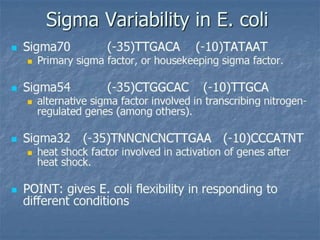
•Sigma factors are distinguished by their characteristic molecular
weights. For example, σ70 is the sigma factor with a molecular weight of
70 kDa.
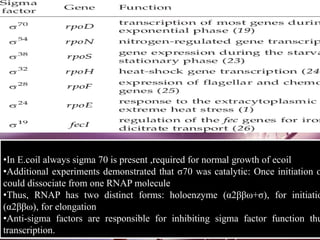
•In E.coil always sigma 70 is present ,required for normal growth of ecoil
•Additional experiments demonstrated that σ70 was catalytic: Once initiation o
could dissociate from one RNAP molecule
•Thus, RNAP has two distinct forms: holoenzyme (α2ββω+σ), for initiatio
(α2ββω), for elongation
•Anti-sigma factors are responsible for inhibiting sigma factor function thu
transcription.
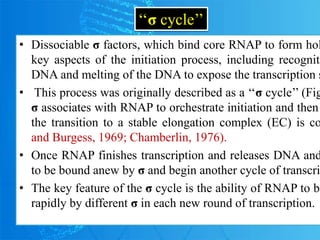
• Dissociable σ factors, which bind core RNAP to form hol
key aspects of the initiation process, including recogniti
DNA and melting of the DNA to expose the transcription s
• This process was originally described as a ‘‘σ cycle’’ (Fig
σ associates with RNAP to orchestrate initiation and then
the transition to a stable elongation complex (EC) is co
and Burgess, 1969; Chamberlin, 1976).
• Once RNAP finishes transcription and releases DNA and
to be bound anew by σ and begin another cycle of transcri
• The key feature of the σ cycle is the ability of RNAP to be
rapidly by different σ in each new round of transcription.
‘‘σ cycle’’
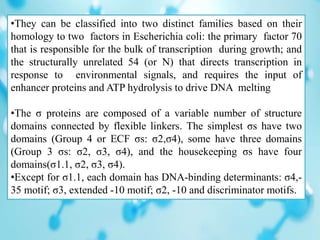
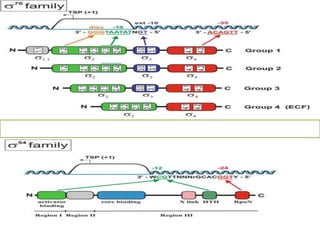
•They can be classified into two distinct families based on their
homology to two factors in Escherichia coli: the primary factor 70
that is responsible for the bulk of transcription during growth; and
the structurally unrelated 54 (or N) that directs transcription in
response to environmental signals, and requires the input of
enhancer proteins and ATP hydrolysis to drive DNA melting
•The σ proteins are composed of a variable number of structure
domains connected by flexible linkers. The simplest σs have two
domains (Group 4 or ECF σs: σ2,σ4), some have three domains
(Group 3 σs: σ2, σ3, σ4), and the housekeeping σs have four
domains(σ1.1, σ2, σ3, σ4).
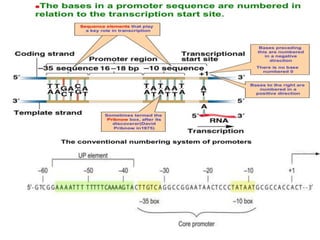
•Except for σ1.1, each domain has DNA-binding determinants: σ4,-
35 motif; σ3, extended -10 motif; σ2, -10 and discriminator motifs.
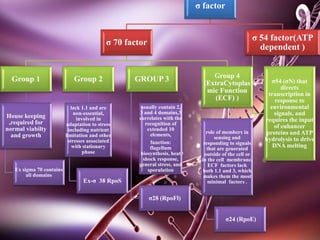
σ factor
σ 70 factor
Group 1
House keeping
,required for
normal viabilty
and growth
Ex sigma 70 contains
all domains
Group 2
lack 1.1 and are
non-essential,
involved in
adaptation to stress
including nutrient
limitation and other
stresses associated
with stationary
phase
Ex-σ 38 RpoS
GROUP 3
usually contain 2,
3 and 4 domains,3
correlates with the
recognition of
extended 10
elements,
function:
flagellum
biosynthesis, heat
shock response,
general stress, and
sporulation
σ28 (RpoFl)
Group 4
(ExtraCytoplas
mic Function
(ECF) )
role of members in
sensing and
responding to signals
that are generated
outside of the cell or
in the cell membrane.
ECF factors lack
both 1.1 and 3, which
makes them the most
minimal factors .
σ24 (RpoE)
σ 54 factor(ATP
dependent )
σ54 (σN) that
directs
transcription in
response to
environmental
signals, and
requires the input
of enhancer
proteins and ATP
hydrolysis to drive
DNA melting
Heat-Shock Response in Escherichia coli
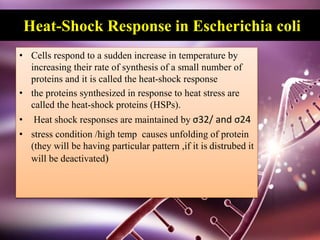
• Cells respond to a sudden increase in temperature by
increasing their rate of synthesis of a small number of
proteins and it is called the heat-shock response
• the proteins synthesized in response to heat stress are
called the heat-shock proteins (HSPs).
• Heat shock responses are maintained by σ32/ and σ24
• stress condition /high temp causes unfolding of protein
(they will be having particular pattern ,if it is distrubed it
will be deactivated)
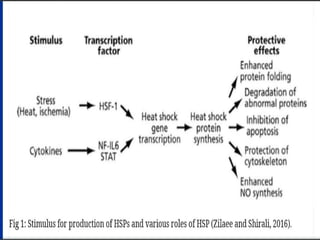
• E. coli, like other organisms, responds to heat shock by rapid
regulating several proteins, including chaperones.
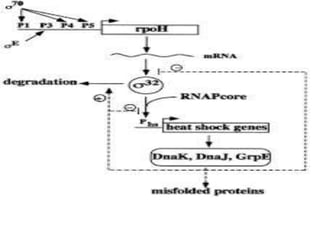
• The heat shock sigma factor, sigma 32 (σ32), a transcription factor, p
pivotal role in this response. The level of σ32 is normally kept low th
a DnaK/J mediated degradation.
• Elevated temperature rapidly increases the σ32 level and initiates a
shock response.
• The increased level of σ32 leads to the synthesis of large numb
molecular chaperones and proteases, that in turn act as a negative fee
on the level of σ32. Chaperones refold proteins efficiently and rapidly
• A posible way for the up-regulation of free σ32 levels would
destabilize the σ32:DnaK:DnaJ complex initiated via a conform
change in σ32 structure at elevated temperatures.
Anti-sigma factors
• In bacteria, the regulation of gene expression is the
basis for adaptability, morphogenesis, and cellular
differentiation. From all the different regulatory layers,
regulation of transcription initiation is a very important
step for controlling gene expression.
• Each sigma factor has an associated anti-sigma factor
which regulates it. These anti-sigma factors are divided
into either cytoplasm or inner membrane bound anti-
sigma factors.
• Cytoplasmic bound anti-sigma factors are made up of
FlgM, DnaK, RssB, & HscC.
• Inner membrane bound anti-sigma factors are made up
of FecR & RseA. Anti-sigma factors are simultaneously
transcribed with their associated sigma factor.
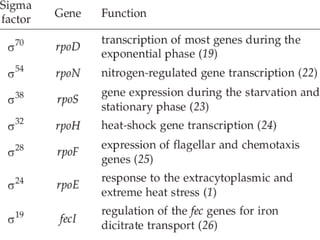
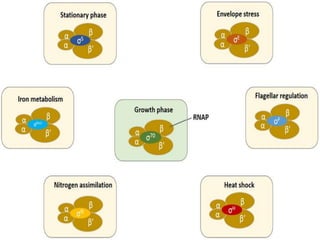
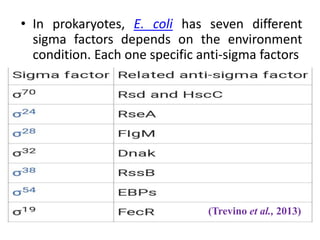
• In prokaryotes, E. coli has seven different
sigma factors depends on the environment
condition. Each one specific anti-sigma factors
(Trevino et al., 2013)
• The mechanism for releasing cytoplasmically-
located σ factors in response to signals that often
stem from the external environment .
• They can be broadly divided into partner-switching,
direct sensing and regulated proteolysis mechanisms
.
• In the case of partner-switching and regulated
proteolysis, an emerging theme is the integration of
distinct signals involving separate input pathways
that enable σ activation in response to varied
environmental and physiological cues.
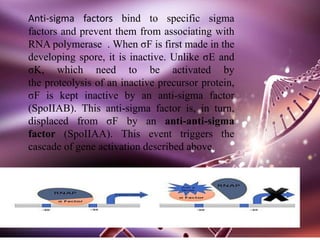
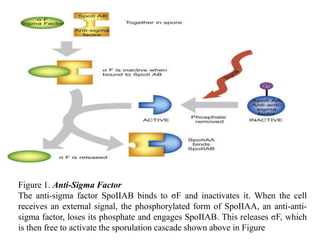
Anti-sigma factors bind to specific sigma
factors and prevent them from associating with
RNA polymerase . When σF is first made in the
developing spore, it is inactive. Unlike σE and
σK, which need to be activated by
the proteolysis of an inactive precursor protein,
σF is kept inactive by an anti-sigma factor
(SpoIIAB). This anti-sigma factor is, in turn,
displaced from σF by an anti-anti-sigma
factor (SpoIIAA). This event triggers the
cascade of gene activation described above.
Figure 1. Anti-Sigma Factor
The anti-sigma factor SpoIIAB binds to σF and inactivates it. When the cell
receives an external signal, the phosphorylated form of SpoIIAA, an anti-anti-
sigma factor, loses its phosphate and engages SpoIIAB. This releases σF, which
is then free to activate the sporulation cascade shown above in Figure
References
• Paget, Mark S. 2015. "Bacterial Sigma Factors and Anti-Sigma Factors: Structure,
Function and Distribution" Biomolecules 5, no. 3: 1245-1265.
https://doi.org/10.3390/biom5031245
• Saecker, R.M.; Record, M.T.; Dehaseth, P.L. Mechanism of bacterial transcription
initiation: RNA polymerase—Promoter binding, isomerization to initiation-
competent open complexes, and initiation of RNA synthesis. J. Mol. Biol. 2011,
412, 754–771.]
• Maria C. Davis, Christopher A. Kesthely, Emily A. Franklin, and Shawn R.
MacLellan. The essential activities of the bacterial sigma factor. Canadian Journal
of Microbiology. 63(2): 89-99. https://doi.org/10.1139/cjm-2016-0576
• Burgess RR, Travers AA, Dunn JJ, Bautz EK. Factor stimulating transcription by
RNA polymerase. Nature. 1969 Jan 4;221(5175):43-6. doi: 10.1038/221043a0.
PMID: 4882047.
• Treviño-Quintanilla LG, Freyre-González JA, Martínez-Flores I (September
2013). "Anti-Sigma Factors in E. coli: Common Regulatory Mechanisms Controlling
Sigma Factors Availability". Current Genomics. 14 (6): 378–
87. doi:10.2174/1389202911314060007. PMC 3861889. PMID 24396271
role of sigma factor.pptx

role of sigma factor.pptx

  • 1.
    Role of Sigmafactors in Regulation (Escherichia coli (E. coli) AGM-602 –Microbial Physiology and Regulation BY Namadara Sandhya 1st year PhD 202211004 Department of Agriculture Microbiology
  • 2.
    What is Sigmafactor Structure of Sigma factor ‘‘σ cycle’’ Heat-Shock Response Anti-sigma factors
  • 3.
    What is Sigmafactor (σ factor or specificity factor)? • Sigma factors are multi-domain subunits of bacterial RNA polymerase (RNAP) that play critical roles in transcription initiation, including the recognition and opening of promoter elements to form an initial “closed” complex (RPc), stabilisation of the “open” complex (RPo) in which DNA around the transcription start site is melted, interaction with transcription activators, the stimulation of the early steps in RNA synthesis (Saecker et al .,2011) • The sigma factor, together with RNA polymerase core enzyme consists of five subunits including α (two copies), β, β' and ω subunits, is known as the RNA polymerase holoenzyme. (Paget, Mar
  • 5.
    • These fivesubunits form the RNAP core enzyme responsible for RNA synthesis using DNA as template and ribonucleotide (rNTP) as substrate. Every molecule of RNA polymerase holoenzyme contains exactly one sigma factor subunit, which in the model bacterium Escherichia coli is one. • Because of the absence of the sigma factor, E.coli RNA polymerase core enzyme is unable to recognize any specific bacterial or phage DNA promoters. Instead it transcribes RNA from nonspecific initiation sequences. • Addition of sigma factors will allow the enzyme to initiate RNA synthesis from specific bacterial and phage promoters. (Paget, Mark S. ,201
  • 8.
    Structure of Sigmafactor Sigma σ Factors play 3 major roles in the RNA synthesis initiation process: they (i) target RNAP holoenzyme to specific promoters, (ii) melt a region of double-stranded promoter DNA and stabilize it as a single-stranded open complex, and (iii) interact with other DNA-binding transcription factors to contribute complexity to gene expression regulation schemes. • σ Factors are encoded by genes rpo .those protein molecules ranges from 17-80 K.D •The number of sigma factors varies between bacterial species. In E. coli has seven sigma factors. •Sigma factors are distinguished by their characteristic molecular weights. For example, σ70 is the sigma factor with a molecular weight of 70 kDa.
  • 10.
    •In E.coil alwayssigma 70 is present ,required for normal growth of ecoil •Additional experiments demonstrated that σ70 was catalytic: Once initiation o could dissociate from one RNAP molecule •Thus, RNAP has two distinct forms: holoenzyme (α2ββω+σ), for initiatio (α2ββω), for elongation •Anti-sigma factors are responsible for inhibiting sigma factor function thu transcription.
  • 11.
    • Dissociable σfactors, which bind core RNAP to form hol key aspects of the initiation process, including recogniti DNA and melting of the DNA to expose the transcription s • This process was originally described as a ‘‘σ cycle’’ (Fig σ associates with RNAP to orchestrate initiation and then the transition to a stable elongation complex (EC) is co and Burgess, 1969; Chamberlin, 1976). • Once RNAP finishes transcription and releases DNA and to be bound anew by σ and begin another cycle of transcri • The key feature of the σ cycle is the ability of RNAP to be rapidly by different σ in each new round of transcription. ‘‘σ cycle’’
  • 13.
    •They can beclassified into two distinct families based on their homology to two factors in Escherichia coli: the primary factor 70 that is responsible for the bulk of transcription during growth; and the structurally unrelated 54 (or N) that directs transcription in response to environmental signals, and requires the input of enhancer proteins and ATP hydrolysis to drive DNA melting •The σ proteins are composed of a variable number of structure domains connected by flexible linkers. The simplest σs have two domains (Group 4 or ECF σs: σ2,σ4), some have three domains (Group 3 σs: σ2, σ3, σ4), and the housekeeping σs have four domains(σ1.1, σ2, σ3, σ4). •Except for σ1.1, each domain has DNA-binding determinants: σ4,- 35 motif; σ3, extended -10 motif; σ2, -10 and discriminator motifs.
  • 15.
    σ factor σ 70factor Group 1 House keeping ,required for normal viabilty and growth Ex sigma 70 contains all domains Group 2 lack 1.1 and are non-essential, involved in adaptation to stress including nutrient limitation and other stresses associated with stationary phase Ex-σ 38 RpoS GROUP 3 usually contain 2, 3 and 4 domains,3 correlates with the recognition of extended 10 elements, function: flagellum biosynthesis, heat shock response, general stress, and sporulation σ28 (RpoFl) Group 4 (ExtraCytoplas mic Function (ECF) ) role of members in sensing and responding to signals that are generated outside of the cell or in the cell membrane. ECF factors lack both 1.1 and 3, which makes them the most minimal factors . σ24 (RpoE) σ 54 factor(ATP dependent ) σ54 (σN) that directs transcription in response to environmental signals, and requires the input of enhancer proteins and ATP hydrolysis to drive DNA melting
  • 20.
    Heat-Shock Response inEscherichia coli • Cells respond to a sudden increase in temperature by increasing their rate of synthesis of a small number of proteins and it is called the heat-shock response • the proteins synthesized in response to heat stress are called the heat-shock proteins (HSPs). • Heat shock responses are maintained by σ32/ and σ24 • stress condition /high temp causes unfolding of protein (they will be having particular pattern ,if it is distrubed it will be deactivated)
  • 21.
    • E. coli,like other organisms, responds to heat shock by rapid regulating several proteins, including chaperones. • The heat shock sigma factor, sigma 32 (σ32), a transcription factor, p pivotal role in this response. The level of σ32 is normally kept low th a DnaK/J mediated degradation. • Elevated temperature rapidly increases the σ32 level and initiates a shock response. • The increased level of σ32 leads to the synthesis of large numb molecular chaperones and proteases, that in turn act as a negative fee on the level of σ32. Chaperones refold proteins efficiently and rapidly • A posible way for the up-regulation of free σ32 levels would destabilize the σ32:DnaK:DnaJ complex initiated via a conform change in σ32 structure at elevated temperatures.
  • 24.
    Anti-sigma factors • Inbacteria, the regulation of gene expression is the basis for adaptability, morphogenesis, and cellular differentiation. From all the different regulatory layers, regulation of transcription initiation is a very important step for controlling gene expression. • Each sigma factor has an associated anti-sigma factor which regulates it. These anti-sigma factors are divided into either cytoplasm or inner membrane bound anti- sigma factors. • Cytoplasmic bound anti-sigma factors are made up of FlgM, DnaK, RssB, & HscC. • Inner membrane bound anti-sigma factors are made up of FecR & RseA. Anti-sigma factors are simultaneously transcribed with their associated sigma factor.
  • 25.
    • In prokaryotes,E. coli has seven different sigma factors depends on the environment condition. Each one specific anti-sigma factors (Trevino et al., 2013)
  • 26.
    • The mechanismfor releasing cytoplasmically- located σ factors in response to signals that often stem from the external environment . • They can be broadly divided into partner-switching, direct sensing and regulated proteolysis mechanisms . • In the case of partner-switching and regulated proteolysis, an emerging theme is the integration of distinct signals involving separate input pathways that enable σ activation in response to varied environmental and physiological cues.
  • 27.
    Anti-sigma factors bindto specific sigma factors and prevent them from associating with RNA polymerase . When σF is first made in the developing spore, it is inactive. Unlike σE and σK, which need to be activated by the proteolysis of an inactive precursor protein, σF is kept inactive by an anti-sigma factor (SpoIIAB). This anti-sigma factor is, in turn, displaced from σF by an anti-anti-sigma factor (SpoIIAA). This event triggers the cascade of gene activation described above.
  • 28.
    Figure 1. Anti-SigmaFactor The anti-sigma factor SpoIIAB binds to σF and inactivates it. When the cell receives an external signal, the phosphorylated form of SpoIIAA, an anti-anti- sigma factor, loses its phosphate and engages SpoIIAB. This releases σF, which is then free to activate the sporulation cascade shown above in Figure
  • 29.
    References • Paget, MarkS. 2015. "Bacterial Sigma Factors and Anti-Sigma Factors: Structure, Function and Distribution" Biomolecules 5, no. 3: 1245-1265. https://doi.org/10.3390/biom5031245 • Saecker, R.M.; Record, M.T.; Dehaseth, P.L. Mechanism of bacterial transcription initiation: RNA polymerase—Promoter binding, isomerization to initiation- competent open complexes, and initiation of RNA synthesis. J. Mol. Biol. 2011, 412, 754–771.] • Maria C. Davis, Christopher A. Kesthely, Emily A. Franklin, and Shawn R. MacLellan. The essential activities of the bacterial sigma factor. Canadian Journal of Microbiology. 63(2): 89-99. https://doi.org/10.1139/cjm-2016-0576 • Burgess RR, Travers AA, Dunn JJ, Bautz EK. Factor stimulating transcription by RNA polymerase. Nature. 1969 Jan 4;221(5175):43-6. doi: 10.1038/221043a0. PMID: 4882047. • Treviño-Quintanilla LG, Freyre-González JA, Martínez-Flores I (September 2013). "Anti-Sigma Factors in E. coli: Common Regulatory Mechanisms Controlling Sigma Factors Availability". Current Genomics. 14 (6): 378– 87. doi:10.2174/1389202911314060007. PMC 3861889. PMID 24396271

Editor's Notes