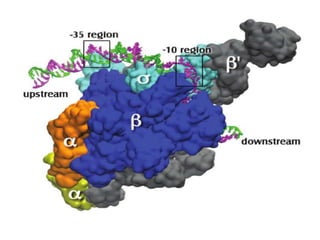
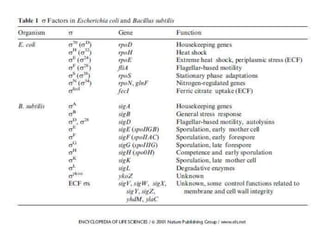
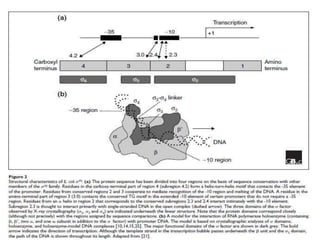
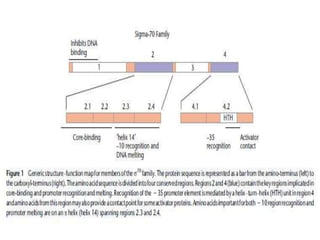
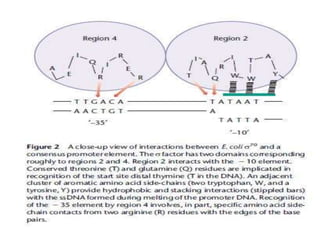
Sigma factors are subunits of bacterial RNA polymerase that help the enzyme recognize specific DNA promoter sequences to initiate transcription. There are multiple sigma factors in bacteria that allow transcription of different genes in response to environmental conditions. Sigma factors work by binding to the core RNA polymerase to form a holoenzyme complex that can then bind promoter DNA. After transcription initiation, the sigma factor dissociates from the polymerase. The primary sigma factor, σ70, directs transcription of most genes under normal growth conditions, while alternative sigma factors regulate specialized functions and stress response pathways.