FORMATION OF ROCKS
Mani Eappen
1760107
3BTCI
WHAT IS A ROCK?
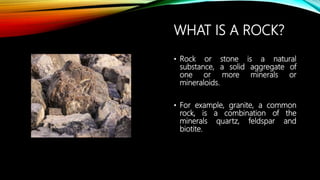
• Rock or stone is a natural
substance, a solid aggregate of
one or more minerals or
mineraloids.
• For example, granite, a common
rock, is a combination of the
minerals quartz, feldspar and
biotite.
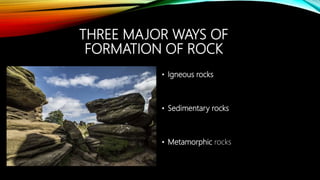
THREE MAJOR WAYS OF
FORMATION OF ROCK
• Igneous rocks
• Sedimentary rocks
• Metamorphic rocks
IGNEOUS ROCKS
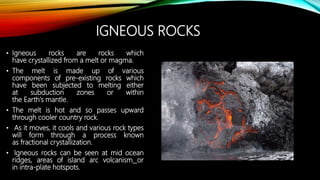
• Igneous rocks are rocks which
have crystallized from a melt or magma.
• The melt is made up of various
components of pre-existing rocks which
have been subjected to melting either
at subduction zones or within
the Earth's mantle.
• The melt is hot and so passes upward
through cooler country rock.
• As it moves, it cools and various rock types
will form through a process known
as fractional crystallization.
• Igneous rocks can be seen at mid ocean
ridges, areas of island arc volcanism or
in intra-plate hotspots.
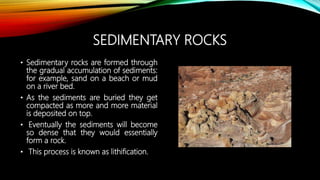
SEDIMENTARY ROCKS
• Sedimentary rocks are formed through
the gradual accumulation of sediments:
for example, sand on a beach or mud
on a river bed.
• As the sediments are buried they get
compacted as more and more material
is deposited on top.
• Eventually the sediments will become
so dense that they would essentially
form a rock.
• This process is known as lithification.
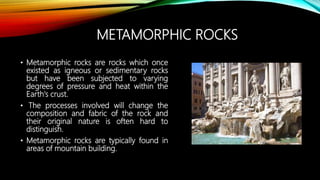
METAMORPHIC ROCKS
• Metamorphic rocks are rocks which once
existed as igneous or sedimentary rocks
but have been subjected to varying
degrees of pressure and heat within the
Earth's crust.
• The processes involved will change the
composition and fabric of the rock and
their original nature is often hard to
distinguish.
• Metamorphic rocks are typically found in
areas of mountain building.
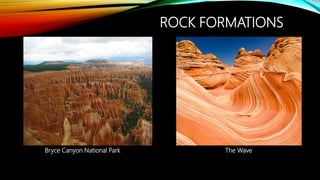
ROCK FORMATIONS
Bryce Canyon National Park The Wave
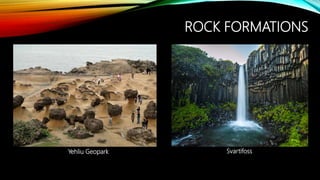
ROCK FORMATIONS
Yehliu Geopark Svartifoss
THANK YOU…

Formation of rocks

  • 1.
    FORMATION OF ROCKS ManiEappen 1760107 3BTCI
  • 2.
    WHAT IS AROCK? • Rock or stone is a natural substance, a solid aggregate of one or more minerals or mineraloids. • For example, granite, a common rock, is a combination of the minerals quartz, feldspar and biotite.
  • 3.
    THREE MAJOR WAYSOF FORMATION OF ROCK • Igneous rocks • Sedimentary rocks • Metamorphic rocks
  • 4.
    IGNEOUS ROCKS • Igneousrocks are rocks which have crystallized from a melt or magma. • The melt is made up of various components of pre-existing rocks which have been subjected to melting either at subduction zones or within the Earth's mantle. • The melt is hot and so passes upward through cooler country rock. • As it moves, it cools and various rock types will form through a process known as fractional crystallization. • Igneous rocks can be seen at mid ocean ridges, areas of island arc volcanism or in intra-plate hotspots.
  • 5.
    SEDIMENTARY ROCKS • Sedimentaryrocks are formed through the gradual accumulation of sediments: for example, sand on a beach or mud on a river bed. • As the sediments are buried they get compacted as more and more material is deposited on top. • Eventually the sediments will become so dense that they would essentially form a rock. • This process is known as lithification.
  • 6.
    METAMORPHIC ROCKS • Metamorphicrocks are rocks which once existed as igneous or sedimentary rocks but have been subjected to varying degrees of pressure and heat within the Earth's crust. • The processes involved will change the composition and fabric of the rock and their original nature is often hard to distinguish. • Metamorphic rocks are typically found in areas of mountain building.
  • 7.
    ROCK FORMATIONS Bryce CanyonNational Park The Wave
  • 8.
  • 9.