RHS Level 2 Certificate
Week 22 – Outdoor food
production. Vegetables –
root vegetables and
miscellaneous
Learning Outcomes
1. Vegetable production
1. Root vegetables. For named varieties of each of
carrots (early and main crop), potatoes (early and
main crop) radish and beetroot state:
1.1 state the place in seasonal rotation and
sucessional cropping
1.2 state cultivation, propagation and care
requirements
1.3 state 2 pests and 2 diseases and their control
1.4 state harvesting period and technique and storage
Root vegetables – general points
 Root vegetables are discussed together but have
particular and differing requirements.
 Generally, apart from carrots, manure is applied
when digging the plot the previous autumn.
 Use a stale seed bed and apply a balanced fertilizer
when preparing this.
 Lime requirements vary depending on the crop.
 Watering is important and should be consistent –
lack of water leads to split roots.
Carrots (Daucus carota) Varieties
 Round rooted – good for heavy or stony soil.
E.g. ‘Parmex’ , ‘Paris Market’
 Early – ‘Amsterdam Forcing’
 Main Crop: ‘Chantenay’
 Late Main Crop: ‘Autumn King’
 Resistant to Carrot Root Fly: ‘Resistafly F1’
Carrots - cultivation
 Dig the soil in Autumn but do not manure or
add compost.
 Prepare a stale seed bed, adding balanced
fertilizer but do not lime.
 Sow where they are to grow, carrots resent
transplantation.
 Sow in 1cm deep drills about 15cm apart,
very thinly to avoid the need to thin.
Carrots – after care
 Water regularly after germination. Irregular
watering causes split roots.
 Thin if necessary to 4-6cm apart. On a damp
overcast day and remove all thinnings.
 Keep weeds under control until well
established. Use a mulch between the rows.
 Control pests and diseases.
Carrots – pests and diseases
 Carrot root fly – low flying insect lays eggs in the soil
and crowns of plants. Control – barriers of fine
mesh, nematode control available. Good crop
hygiene at harvest.
 Aphids – spread viruses so control by using fatty
acid spray as soon as they are seen
 Violet root rot – no control, apart from long rotation
and crop hygiene.
 Dwarf Motley virus – discoloured leaves and poor
yield. Spread by aphids so control is to control
aphids.
Potatoes (Solanum tuberosum)
Varieties
 Early: ‘Pentland Javelin’ Good disease
resistance and some resistance to eel worm
 Salad: ‘Pink Fir Apple’ Good flavour and
unusual appearance, smaller yields than
traditional varieties
 Main Crop: ‘Sarpo Mira’. Good blight
resistance.
Potatoes – cultivation (1)
 Dig and manure the previous Autumn.
 Chit the seed potatoes before planting to avoid
rotting off in the soil. Plant only certified virus free
seed potatoes.
 Prepare a stale seed bed and apply balanced
fertilizer. Do not lime.
 Early varieties – plant in March, main crop in April
(provide frost protection on cold nights)
 Water regularly at the base of the plants.
Potatoes – cultivation (2)
 Earth up when haulms are about 30cm tall to
half their height. Prevents spuds turning
green and encourages tuber formation.
 Main Crop varieties benefit from high
nitrogen and potash feed when the canopy
begins to touch. No need to feed Early
varieties.
Potatoes - harvest
 Harvest Early potatoes once they have
flowered. They should be chicken egg sized.
Earlies do not store well. Treat Salad
varieties as for Earlies.
 Main Crop – harvest once the haulms are
dieing back (but do not leave too long
because of late blight). Lift and allow to dry
before storing in a cool, dark, dry place.
Potatoes – pests
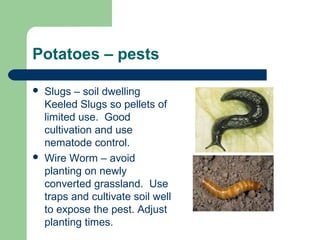
 Slugs – soil dwelling
Keeled Slugs so pellets of
limited use. Good
cultivation and use
nematode control.
 Wire Worm – avoid
planting on newly
converted grassland. Use
traps and cultivate soil well
to expose the pest. Adjust
planting times.
Potatoes - diseases
 Blight – brown patches on leaves, dark spots
on tubers which then rot. Grow resistant
varieties, no chemical controls now available.
Avoid splashing the leaves of the plants
when watering.
 Mosaic virus – yellow mottled leaves, weak
plants and poor yield. Control the aphid that
spread the virus.
Radish
 Ideal catch crop or inter-crop as they are fast
maturing. Sow little and often for the same
reason – old roots are tough and they bolt
quickly.
 Ready about 20-30 days after sowing.
 Keep well watered to prevent roots becoming
tough and to keep flea beetle in check.
 Keep well weeded.
Beetroot 1
 Another useful inter crop for slower growing
roots or heading brassicas.
 Prefers slight acidity, well drained but fertile soil
in full sun.
 Early sowings may bolt – use suitable cultivar
(E.g. ‘Boltardy’).
 Usually sown where they are to grow – each
‘seed’ is a multi seeded capsule so thinning will
be needed.
Beetroot 2
 Keep well watered and weed free.
 Harvest – 60 -90 days after sowing.
 Pests – the usual plus Beet Leaf Miner which is
less of a problem on beetroot than on spinach
or leaf beets. Fungal leaf spot is a common
disease but not likely to affect yield.
 Storage – pickled, about 10-14 days in the
fridge or in layers in boxes of sand in a cool
place protected from mice.
Learning outcomes
1. Vegetable production
1. Root vegetables. For named varieties of each of
carrots (early and main crop), potatoes (early and
main crop) radish and beetroot state:
1.1 state the place in seasonal rotation and
sucessional cropping
1.2 state cultivation, propagation and care
requirements
1.3 state 2 pests and 2 diseases and their control
1.4 state harvesting period and technique and storage

Rhs level 2 certificate year 1 week 22 2016

  • 1.
    RHS Level 2Certificate Week 22 – Outdoor food production. Vegetables – root vegetables and miscellaneous
  • 2.
    Learning Outcomes 1. Vegetableproduction 1. Root vegetables. For named varieties of each of carrots (early and main crop), potatoes (early and main crop) radish and beetroot state: 1.1 state the place in seasonal rotation and sucessional cropping 1.2 state cultivation, propagation and care requirements 1.3 state 2 pests and 2 diseases and their control 1.4 state harvesting period and technique and storage
  • 3.
    Root vegetables –general points  Root vegetables are discussed together but have particular and differing requirements.  Generally, apart from carrots, manure is applied when digging the plot the previous autumn.  Use a stale seed bed and apply a balanced fertilizer when preparing this.  Lime requirements vary depending on the crop.  Watering is important and should be consistent – lack of water leads to split roots.
  • 4.
    Carrots (Daucus carota)Varieties  Round rooted – good for heavy or stony soil. E.g. ‘Parmex’ , ‘Paris Market’  Early – ‘Amsterdam Forcing’  Main Crop: ‘Chantenay’  Late Main Crop: ‘Autumn King’  Resistant to Carrot Root Fly: ‘Resistafly F1’
  • 5.
    Carrots - cultivation Dig the soil in Autumn but do not manure or add compost.  Prepare a stale seed bed, adding balanced fertilizer but do not lime.  Sow where they are to grow, carrots resent transplantation.  Sow in 1cm deep drills about 15cm apart, very thinly to avoid the need to thin.
  • 6.
    Carrots – aftercare  Water regularly after germination. Irregular watering causes split roots.  Thin if necessary to 4-6cm apart. On a damp overcast day and remove all thinnings.  Keep weeds under control until well established. Use a mulch between the rows.  Control pests and diseases.
  • 7.
    Carrots – pestsand diseases  Carrot root fly – low flying insect lays eggs in the soil and crowns of plants. Control – barriers of fine mesh, nematode control available. Good crop hygiene at harvest.  Aphids – spread viruses so control by using fatty acid spray as soon as they are seen  Violet root rot – no control, apart from long rotation and crop hygiene.  Dwarf Motley virus – discoloured leaves and poor yield. Spread by aphids so control is to control aphids.
  • 8.
    Potatoes (Solanum tuberosum) Varieties Early: ‘Pentland Javelin’ Good disease resistance and some resistance to eel worm  Salad: ‘Pink Fir Apple’ Good flavour and unusual appearance, smaller yields than traditional varieties  Main Crop: ‘Sarpo Mira’. Good blight resistance.
  • 9.
    Potatoes – cultivation(1)  Dig and manure the previous Autumn.  Chit the seed potatoes before planting to avoid rotting off in the soil. Plant only certified virus free seed potatoes.  Prepare a stale seed bed and apply balanced fertilizer. Do not lime.  Early varieties – plant in March, main crop in April (provide frost protection on cold nights)  Water regularly at the base of the plants.
  • 10.
    Potatoes – cultivation(2)  Earth up when haulms are about 30cm tall to half their height. Prevents spuds turning green and encourages tuber formation.  Main Crop varieties benefit from high nitrogen and potash feed when the canopy begins to touch. No need to feed Early varieties.
  • 11.
    Potatoes - harvest Harvest Early potatoes once they have flowered. They should be chicken egg sized. Earlies do not store well. Treat Salad varieties as for Earlies.  Main Crop – harvest once the haulms are dieing back (but do not leave too long because of late blight). Lift and allow to dry before storing in a cool, dark, dry place.
  • 12.
    Potatoes – pests Slugs – soil dwelling Keeled Slugs so pellets of limited use. Good cultivation and use nematode control.  Wire Worm – avoid planting on newly converted grassland. Use traps and cultivate soil well to expose the pest. Adjust planting times.
  • 13.
    Potatoes - diseases Blight – brown patches on leaves, dark spots on tubers which then rot. Grow resistant varieties, no chemical controls now available. Avoid splashing the leaves of the plants when watering.  Mosaic virus – yellow mottled leaves, weak plants and poor yield. Control the aphid that spread the virus.
  • 14.
    Radish  Ideal catchcrop or inter-crop as they are fast maturing. Sow little and often for the same reason – old roots are tough and they bolt quickly.  Ready about 20-30 days after sowing.  Keep well watered to prevent roots becoming tough and to keep flea beetle in check.  Keep well weeded.
  • 15.
    Beetroot 1  Anotheruseful inter crop for slower growing roots or heading brassicas.  Prefers slight acidity, well drained but fertile soil in full sun.  Early sowings may bolt – use suitable cultivar (E.g. ‘Boltardy’).  Usually sown where they are to grow – each ‘seed’ is a multi seeded capsule so thinning will be needed.
  • 16.
    Beetroot 2  Keepwell watered and weed free.  Harvest – 60 -90 days after sowing.  Pests – the usual plus Beet Leaf Miner which is less of a problem on beetroot than on spinach or leaf beets. Fungal leaf spot is a common disease but not likely to affect yield.  Storage – pickled, about 10-14 days in the fridge or in layers in boxes of sand in a cool place protected from mice.
  • 17.
    Learning outcomes 1. Vegetableproduction 1. Root vegetables. For named varieties of each of carrots (early and main crop), potatoes (early and main crop) radish and beetroot state: 1.1 state the place in seasonal rotation and sucessional cropping 1.2 state cultivation, propagation and care requirements 1.3 state 2 pests and 2 diseases and their control 1.4 state harvesting period and technique and storage