BIOTECHNOLOGICAL EVOLUTION
OF ANTI-RHEUMATIC DRUGS
RHEUMATOID ARTHRITIS
Rheumatoid arthritis (RA) is a chronic inflammatory disease of
unknown etiology marked by a symmetric, peripheral
polyarthritis.
It is the most common form of chronic inflammatory arthritis
and often results in joint damage and physical disability.
Because it is a systemic disease, RA may result in a variety of
extra-articular manifestations, including fatigue, subcutaneous
nodules, lung involvement, pericarditis, peripheral neuropathy,
vasculitis, and hematologic abnormalities.
The natural history of RA is complex and affected by a number of
factors including age of onset, gender, genotype, phenotype and
comorbid conditions, which make for a truly heterogeneous disease.
Frequently RA onset is insidious.
Common RA clinical manifestations are: pain, stiffness and
swelling of the peripheral joints.
The classic clinical picture is characterized by symmetric
polyarthritis interesting both hands with morning stiffness (lasting
more than 1 hour).
Constitutional symptoms such as fatigue, malaise, morning stiffness
are common
RHEUMATOID ARTHRITIS
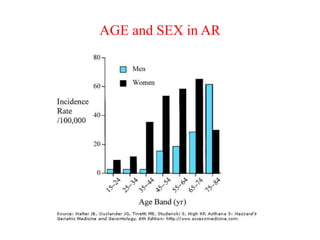
AGE and SEX in AR
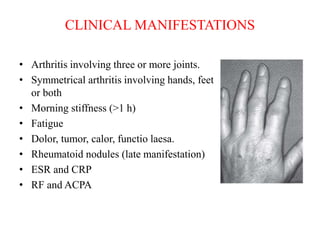
• Arthritis involving three or more joints.
• Symmetrical arthritis involving hands, feet
or both
• Morning stiffness (>1 h)
• Fatigue
• Dolor, tumor, calor, functio laesa.
• Rheumatoid nodules (late manifestation)
• ESR and CRP
• RF and ACPA
CLINICAL MANIFESTATIONS
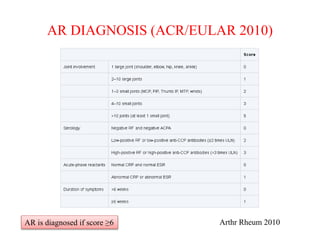
AR DIAGNOSIS (ACR/EULAR 2010)
Arthr Rheum 2010AR is diagnosed if score ≥6
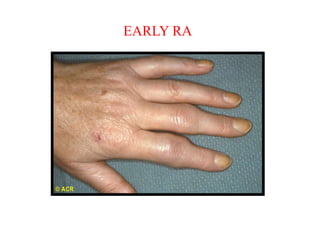
Artrite con tumefazione fusiforme delle articolazioni
interfalange prossimali (IFP) tipica nell’artrite reumatoide
EARLY RA
Tumefazione e sublussazioni volari delle articolazioni
metacarpofalangee
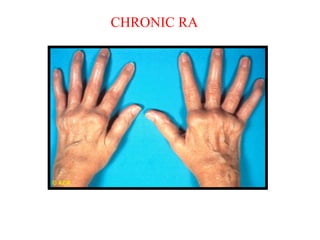
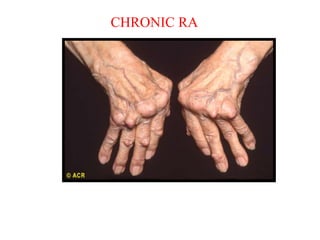
CHRONIC RA
CHRONIC RA
Deviazione ulnare e sublussazione delle articolazioni
metacarpofalangee con tumefazione, noduli reumatoidi.
Spesso concomita atrofia muscolare della muscolatura dorsale.
CHRONIC RA
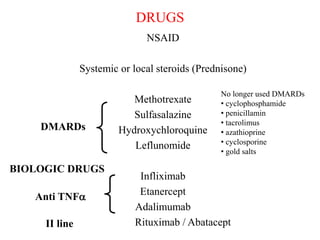
NSAID
Systemic or local steroids (Prednisone)
Methotrexate
Sulfasalazine
Hydroxychloroquine
Leflunomide
Infliximab
Etanercept
Adalimumab
Rituximab / Abatacept
DMARDs
Anti TNFa
No longer used DMARDs
• cyclophosphamide
• penicillamin
• tacrolimus
• azathioprine
• cyclosporine
• gold salts
II line
BIOLOGIC DRUGS
DRUGS
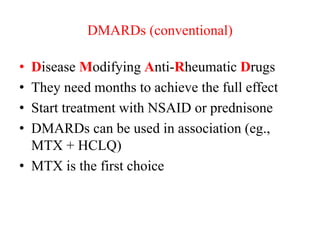
DMARDs (conventional)
• Disease Modifying Anti-Rheumatic Drugs
• They need months to achieve the full effect
• Start treatment with NSAID or prednisone
• DMARDs can be used in association (eg.,
MTX + HCLQ)
• MTX is the first choice
Cartilageloss
IL-6
B cell
T cell
Macrophage
Dendritic
cell
IL-10TNF-a
TNF-a
IL-10
RF
Fix complement
Inflamed synovia
TNF-a
B cell
IL-6
B cell
Plasma cell
RF
RF
RF
RF
IL-1
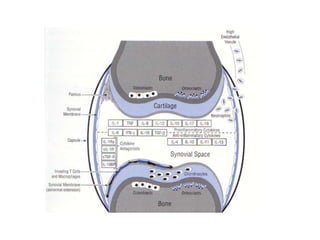
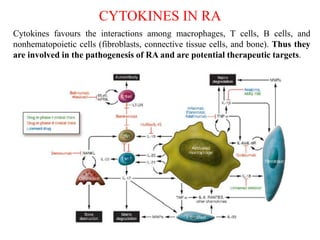
CYTOKINES IN RA
Cytokines favours the interactions among macrophages, T cells, B cells, and
nonhematopoietic cells (fibroblasts, connective tissue cells, and bone). Thus they
are involved in the pathogenesis of RA and are potential therapeutic targets.
Brennan FM, McInnes IB. Evidence that cytokines play a role in rheumatoid arthritis. J Clin Invest. 2008 Nov;118(11):3537-45.
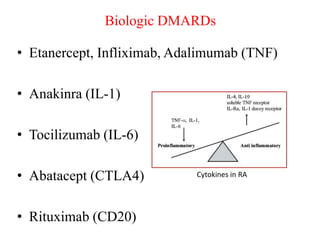
Biologic DMARDs
• Etanercept, Infliximab, Adalimumab (TNF)
• Anakinra (IL-1)
• Tocilizumab (IL-6)
• Abatacept (CTLA4)
• Rituximab (CD20)
Cytokines in RA
ANAKINRA
• IL-1 receptor antagonist
• = Kineret 100 mg
• 1 injection SC qd
ABATACEPT
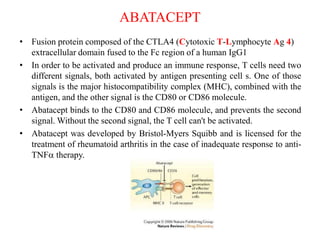
• Fusion protein composed of the CTLA4 (Cytotoxic T-Lymphocyte Ag 4)
extracellular domain fused to the Fc region of a human IgG1
• In order to be activated and produce an immune response, T cells need two
different signals, both activated by antigen presenting cell s. One of those
signals is the major histocompatibility complex (MHC), combined with the
antigen, and the other signal is the CD80 or CD86 molecule.
• Abatacept binds to the CD80 and CD86 molecule, and prevents the second
signal. Without the second signal, the T cell can't be activated.
• Abatacept was developed by Bristol-Myers Squibb and is licensed for the
treatment of rheumatoid arthritis in the case of inadequate response to anti-
TNFa therapy.
• Inhibits T-cells co-stimulation
• = Orencia f 250 mg
•  10 mg/kg
• 2-4 vials (<60; 60-100; >100 kg) every 4 weeks
ABATACEPT
RITUXIMAB
• Chimeric monoclonal antibody
(mouse/human) targeted against the pan-B-cell
marker CD20,
• = Mabthera fl 500 mg IV
• 1000 mg (2 vials) EV, followed by a second
infusion 2 weeks after
• Causes a sustained depletion of B cells
Anti-TNFa DRUGS (1)
Elevated TNFα levels have been found in involved tissues/fluids of patients with
RA, ankylosing spondylitis, psoriatic arthritis, plaque psoriasis, Crohn disease and
ulcerative colitis.
Elevated TNF levels in the synovial fluid are involved in the pathologic pain and
joint destruction in immune-mediated arthritis.
Biological activities of TNFα include the induction of proinflammatory cytokines
(interleukins), enhancement of leukocyte migration, activation of neutrophils and
eosinophils, and the induction of acute phase reactants and tissue degrading
enzymes.
Animal models have shown TNFα expression causes polyarthritis, and anti-TNFα
drugs can prevent disease as well as allow diseased joints to heal.
Anti TNFa drugs are approved as second line agents for the treatment of AR
refractory to Methotrexate and other conventional DMARDs.
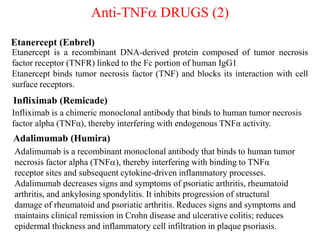
Anti-TNFa DRUGS (2)
Infliximab (Remicade)
Infliximab is a chimeric monoclonal antibody that binds to human tumor necrosis
factor alpha (TNFα), thereby interfering with endogenous TNFα activity.
Adalimumab (Humira)
Adalimumab is a recombinant monoclonal antibody that binds to human tumor
necrosis factor alpha (TNFa), thereby interfering with binding to TNFα
receptor sites and subsequent cytokine-driven inflammatory processes.
Adalimumab decreases signs and symptoms of psoriatic arthritis, rheumatoid
arthritis, and ankylosing spondylitis. It inhibits progression of structural
damage of rheumatoid and psoriatic arthritis. Reduces signs and symptoms and
maintains clinical remission in Crohn disease and ulcerative colitis; reduces
epidermal thickness and inflammatory cell infiltration in plaque psoriasis.
Etanercept is a recombinant DNA-derived protein composed of tumor necrosis
factor receptor (TNFR) linked to the Fc portion of human IgG1
Etanercept binds tumor necrosis factor (TNF) and blocks its interaction with cell
surface receptors.
Etanercept (Enbrel)
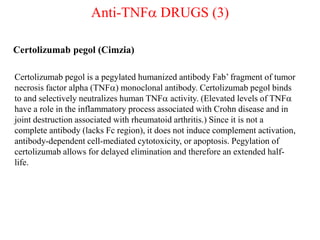
Anti-TNFa DRUGS (3)
Certolizumab pegol (Cimzia)
Certolizumab pegol is a pegylated humanized antibody Fab’ fragment of tumor
necrosis factor alpha (TNFa) monoclonal antibody. Certolizumab pegol binds
to and selectively neutralizes human TNFa activity. (Elevated levels of TNFa
have a role in the inflammatory process associated with Crohn disease and in
joint destruction associated with rheumatoid arthritis.) Since it is not a
complete antibody (lacks Fc region), it does not induce complement activation,
antibody-dependent cell-mediated cytotoxicity, or apoptosis. Pegylation of
certolizumab allows for delayed elimination and therefore an extended half-
life.
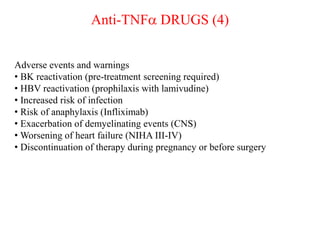
Adverse events and warnings
• BK reactivation (pre-treatment screening required)
• HBV reactivation (prophilaxis with lamivudine)
• Increased risk of infection
• Risk of anaphylaxis (Infliximab)
• Exacerbation of demyelinating events (CNS)
• Worsening of heart failure (NIHA III-IV)
• Discontinuation of therapy during pregnancy or before surgery
Anti-TNFa DRUGS (4)
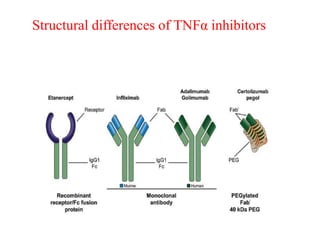
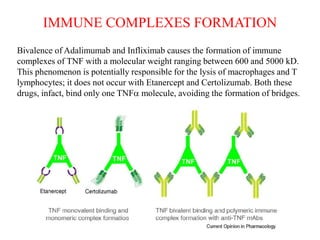
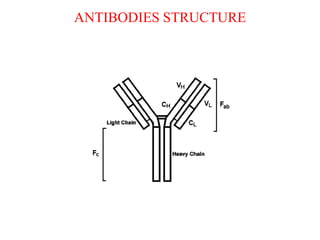
Structural differences of TNFα inhibitors
IMMUNE COMPLEXES FORMATION
Bivalence of Adalimumab and Infliximab causes the formation of immune
complexes of TNF with a molecular weight ranging between 600 and 5000 kD.
This phenomenon is potentially responsible for the lysis of macrophages and T
lymphocytes; it does not occur with Etanercept and Certolizumab. Both these
drugs, infact, bind only one TNFa molecule, avoiding the formation of bridges.
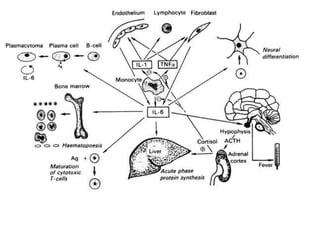
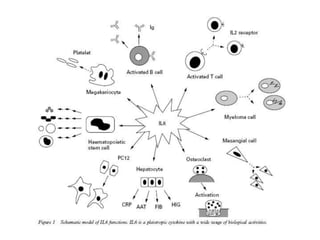
INTERLEUKIN 6
• Interleukin 6 (IL-6) is a pleiotropic, pro-inflammatory cytokine
• IL-6 is implicated in the pathogenesis of a variety of disease
states including inflammatory rheumatic diseases
• Elevated serum IL-6 levels are seen in RA and correlate with
disease activity
• Inhibition of IL-6 and/or its receptor represents a novel
approach for treatment of inflammatory diseases such as RA
Abbreviations used: α2M, α2-macroglobulin; CBM, cytokine-binding module; CIS, cytokine-inducible SH2 protein; CLC,
cardiotrophin-like cytokine; CLF, cytokine-like factor; ERK, extracellular-regulated kinase; EZI, endothelial cell-derived zinc-
finger protein; Fab, fragment antigen binding; FERM, four-point-one, ezrin, radixin, moesin; FKHR, forkheadrelated
transcription factor; FN, fibronectin; Gab, Grb-associated binder; gp, glycoprotein; Grb, growth-factor-receptor-bound
protein; Hck, haematopoietic cell kinase; IFN, interferon; IL, interleukin; IRS, insulin receptor substrate; JAK, Janus kinase;
JNK, c-Jun N-terminal kinase; KIR, kinase inhibitory region; KSHV, Kaposi’s sarcoma-associated herpes virus; MAPK, mitogen-
activated protein kinase; MK2, MAPK-activated protein kinase 2; NES, nuclear export signal; NF-κB, nuclear factor κB; NLS,
nuclear localization signal; Nmi, N-Myc-interactor; p, phospho-;; PH, pleckstrin homology; PKC, protein kinase C; PI3K,
phosphoinositide 3-kinase; PIAS, protein inhibitor of activated STAT; PRMT, protein arginine methyltransferase; PTP, protein
tyrosine phosphatase; R, receptor; s, soluble; SH2, Src homology 2; SHC, SH2 and collagen homology domain containing
protein; SHP, SH2-domain-containing tyrosine phosphatase; SMRT, silencing mediator of retinoic and thyroid hormone
receptors; SOCS, suppressor of cytokine signalling; SOS, Son of Sevenless; SSI, STAT-induced STAT inhibitor; STAT, signal
transducer and activator of transcription; TNF, tumour necrosis factor.
Roche Medical Affairs. All rights reserved.
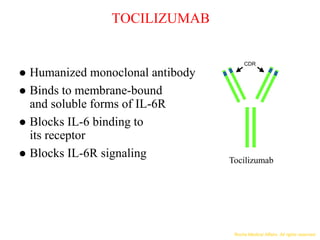
TOCILIZUMAB
 Humanized monoclonal antibody
 Binds to membrane-bound
and soluble forms of IL-6R
 Blocks IL-6 binding to
its receptor
 Blocks IL-6R signaling Tocilizumab
CDR
Roche Medical Affairs. All rights reserved.
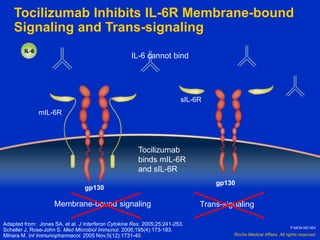
Antagonist of the interleukin-6 (IL-6) receptor
Endogenous IL-6 is induced by inflammatory stimuli and mediates
a variety of immunological responses
Inhibition of IL-6 receptors by tocilizumab leads to a reduction in
cytokine and acute phase reactant production
Tocilizumab is approved for the treatment of RA refractory to
conventional DMARDs or anti TNFa drugs
Tocilizumab is generally used in association with Metothrexate
Doses: 8 mg/kg of body weight, (not less than 480 mg) every 4
weeks
FEATURES AND
INDICATIONS
Roche Medical Affairs. All rights reserved.
gp130
gp130
Tocilizumab
binds mIL-6R
and sIL-6R
IL-6 cannot bind
Membrane-bound signaling Trans-signaling
mIL-6R
sIL-6R
Tocilizumab Inhibits IL-6R Membrane-bound
Signaling and Trans-signaling
Adapted from: Jones SA, et al. J Interferon Cytokine Res. 2005;25:241-253.
Scheller J, Rose-John S. Med Microbiol Immunol. 2006;195(4):173-183.
Mihara M. Int Immunopharmacol. 2005 Nov;5(12):1731-40.
P-MOA-ND-004
Roche Medical Affairs. All rights reserved.
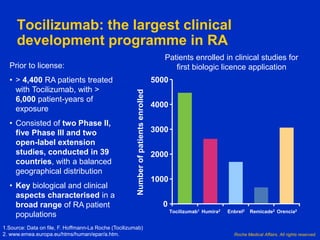
Tocilizumab: the largest clinical
development programme in RA
1.Source: Data on file, F. Hoffmann-La Roche (Tocilizumab)
2. www.emea.europa.eu/htms/human/epar/a.htm.
Prior to license:
• > 4,400 RA patients treated
with Tocilizumab, with >
6,000 patient-years of
exposure
• Consisted of two Phase II,
five Phase III and two
open-label extension
studies, conducted in 39
countries, with a balanced
geographical distribution
• Key biological and clinical
aspects characterised in a
broad range of RA patient
populations
Patients enrolled in clinical studies for
first biologic licence application
Tocilizumab1 Remicade2Humira2 Enbrel2 Orencia2
Numberofpatientsenrolled
0
1000
2000
3000
4000
5000
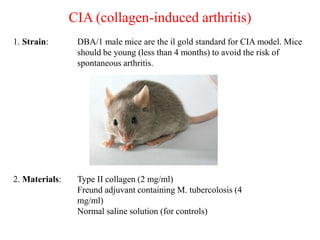
CIA (collagen-induced arthritis)
1. Strain: DBA/1 male mice are the il gold standard for CIA model. Mice
should be young (less than 4 months) to avoid the risk of
spontaneous arthritis.
2. Materials: Type II collagen (2 mg/ml)
Freund adjuvant containing M. tubercolosis (4
mg/ml)
Normal saline solution (for controls)
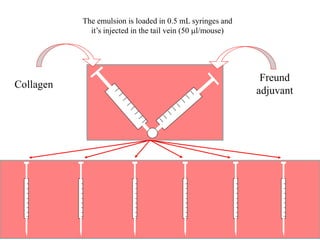
Collagen
Freund
adjuvant
Collagene e adiuvante vengono emulsionati in rapporto 1:1 a 4°C
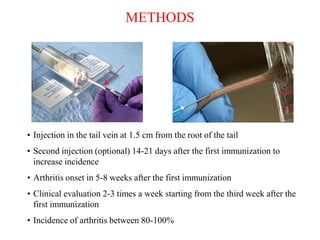
The emulsion is loaded in 0.5 mL syringes and
it’s injected in the tail vein (50 l/mouse)
• Injection in the tail vein at 1.5 cm from the root of the tail
• Second injection (optional) 14-21 days after the first immunization to
increase incidence
• Arthritis onset in 5-8 weeks after the first immunization
• Clinical evaluation 2-3 times a week starting from the third week after the
first immunization
• Incidence of arthritis between 80-100%
METHODS
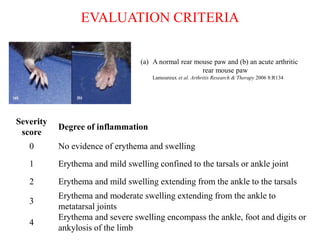
EVALUATION CRITERIA
Severity
score
Degree of inflammation
0 No evidence of erythema and swelling
1 Erythema and mild swelling confined to the tarsals or ankle joint
2 Erythema and mild swelling extending from the ankle to the tarsals
3
Erythema and moderate swelling extending from the ankle to
metatarsal joints
4
Erythema and severe swelling encompass the ankle, foot and digits or
ankylosis of the limb
(a) A normal rear mouse paw and (b) an acute arthritic
rear mouse paw
Lamoureux et al. Arthritis Research & Therapy 2006 8:R134
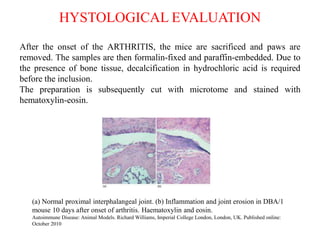
After the onset of the ARTHRITIS, the mice are sacrificed and paws are
removed. The samples are then formalin-fixed and paraffin-embedded. Due to
the presence of bone tissue, decalcification in hydrochloric acid is required
before the inclusion.
The preparation is subsequently cut with microtome and stained with
hematoxylin-eosin.
HYSTOLOGICAL EVALUATION
(a) Normal proximal interphalangeal joint. (b) Inflammation and joint erosion in DBA/1
mouse 10 days after onset of arthritis. Haematoxylin and eosin.
Autoimmune Disease: Animal Models. Richard Williams, Imperial College London, London, UK. Published online:
October 2010
FURTHER READING
ANTIBODIES STRUCTURE

rheumatoid arthritis

  • 1.
  • 2.
    RHEUMATOID ARTHRITIS Rheumatoid arthritis(RA) is a chronic inflammatory disease of unknown etiology marked by a symmetric, peripheral polyarthritis. It is the most common form of chronic inflammatory arthritis and often results in joint damage and physical disability. Because it is a systemic disease, RA may result in a variety of extra-articular manifestations, including fatigue, subcutaneous nodules, lung involvement, pericarditis, peripheral neuropathy, vasculitis, and hematologic abnormalities.
  • 3.
    The natural historyof RA is complex and affected by a number of factors including age of onset, gender, genotype, phenotype and comorbid conditions, which make for a truly heterogeneous disease. Frequently RA onset is insidious. Common RA clinical manifestations are: pain, stiffness and swelling of the peripheral joints. The classic clinical picture is characterized by symmetric polyarthritis interesting both hands with morning stiffness (lasting more than 1 hour). Constitutional symptoms such as fatigue, malaise, morning stiffness are common RHEUMATOID ARTHRITIS
  • 4.
  • 5.
    • Arthritis involvingthree or more joints. • Symmetrical arthritis involving hands, feet or both • Morning stiffness (>1 h) • Fatigue • Dolor, tumor, calor, functio laesa. • Rheumatoid nodules (late manifestation) • ESR and CRP • RF and ACPA CLINICAL MANIFESTATIONS
  • 6.
    AR DIAGNOSIS (ACR/EULAR2010) Arthr Rheum 2010AR is diagnosed if score ≥6
  • 7.
    Artrite con tumefazionefusiforme delle articolazioni interfalange prossimali (IFP) tipica nell’artrite reumatoide EARLY RA
  • 8.
    Tumefazione e sublussazionivolari delle articolazioni metacarpofalangee CHRONIC RA
  • 9.
  • 10.
    Deviazione ulnare esublussazione delle articolazioni metacarpofalangee con tumefazione, noduli reumatoidi. Spesso concomita atrofia muscolare della muscolatura dorsale. CHRONIC RA
  • 11.
    NSAID Systemic or localsteroids (Prednisone) Methotrexate Sulfasalazine Hydroxychloroquine Leflunomide Infliximab Etanercept Adalimumab Rituximab / Abatacept DMARDs Anti TNFa No longer used DMARDs • cyclophosphamide • penicillamin • tacrolimus • azathioprine • cyclosporine • gold salts II line BIOLOGIC DRUGS DRUGS
  • 12.
    DMARDs (conventional) • DiseaseModifying Anti-Rheumatic Drugs • They need months to achieve the full effect • Start treatment with NSAID or prednisone • DMARDs can be used in association (eg., MTX + HCLQ) • MTX is the first choice
  • 13.
    Cartilageloss IL-6 B cell T cell Macrophage Dendritic cell IL-10TNF-a TNF-a IL-10 RF Fixcomplement Inflamed synovia TNF-a B cell IL-6 B cell Plasma cell RF RF RF RF IL-1
  • 15.
    CYTOKINES IN RA Cytokinesfavours the interactions among macrophages, T cells, B cells, and nonhematopoietic cells (fibroblasts, connective tissue cells, and bone). Thus they are involved in the pathogenesis of RA and are potential therapeutic targets. Brennan FM, McInnes IB. Evidence that cytokines play a role in rheumatoid arthritis. J Clin Invest. 2008 Nov;118(11):3537-45.
  • 16.
    Biologic DMARDs • Etanercept,Infliximab, Adalimumab (TNF) • Anakinra (IL-1) • Tocilizumab (IL-6) • Abatacept (CTLA4) • Rituximab (CD20) Cytokines in RA
  • 17.
    ANAKINRA • IL-1 receptorantagonist • = Kineret 100 mg • 1 injection SC qd
  • 18.
    ABATACEPT • Fusion proteincomposed of the CTLA4 (Cytotoxic T-Lymphocyte Ag 4) extracellular domain fused to the Fc region of a human IgG1 • In order to be activated and produce an immune response, T cells need two different signals, both activated by antigen presenting cell s. One of those signals is the major histocompatibility complex (MHC), combined with the antigen, and the other signal is the CD80 or CD86 molecule. • Abatacept binds to the CD80 and CD86 molecule, and prevents the second signal. Without the second signal, the T cell can't be activated. • Abatacept was developed by Bristol-Myers Squibb and is licensed for the treatment of rheumatoid arthritis in the case of inadequate response to anti- TNFa therapy.
  • 19.
    • Inhibits T-cellsco-stimulation • = Orencia f 250 mg •  10 mg/kg • 2-4 vials (<60; 60-100; >100 kg) every 4 weeks ABATACEPT
  • 20.
    RITUXIMAB • Chimeric monoclonalantibody (mouse/human) targeted against the pan-B-cell marker CD20, • = Mabthera fl 500 mg IV • 1000 mg (2 vials) EV, followed by a second infusion 2 weeks after • Causes a sustained depletion of B cells
  • 21.
    Anti-TNFa DRUGS (1) ElevatedTNFα levels have been found in involved tissues/fluids of patients with RA, ankylosing spondylitis, psoriatic arthritis, plaque psoriasis, Crohn disease and ulcerative colitis. Elevated TNF levels in the synovial fluid are involved in the pathologic pain and joint destruction in immune-mediated arthritis. Biological activities of TNFα include the induction of proinflammatory cytokines (interleukins), enhancement of leukocyte migration, activation of neutrophils and eosinophils, and the induction of acute phase reactants and tissue degrading enzymes. Animal models have shown TNFα expression causes polyarthritis, and anti-TNFα drugs can prevent disease as well as allow diseased joints to heal. Anti TNFa drugs are approved as second line agents for the treatment of AR refractory to Methotrexate and other conventional DMARDs.
  • 22.
    Anti-TNFa DRUGS (2) Infliximab(Remicade) Infliximab is a chimeric monoclonal antibody that binds to human tumor necrosis factor alpha (TNFα), thereby interfering with endogenous TNFα activity. Adalimumab (Humira) Adalimumab is a recombinant monoclonal antibody that binds to human tumor necrosis factor alpha (TNFa), thereby interfering with binding to TNFα receptor sites and subsequent cytokine-driven inflammatory processes. Adalimumab decreases signs and symptoms of psoriatic arthritis, rheumatoid arthritis, and ankylosing spondylitis. It inhibits progression of structural damage of rheumatoid and psoriatic arthritis. Reduces signs and symptoms and maintains clinical remission in Crohn disease and ulcerative colitis; reduces epidermal thickness and inflammatory cell infiltration in plaque psoriasis. Etanercept is a recombinant DNA-derived protein composed of tumor necrosis factor receptor (TNFR) linked to the Fc portion of human IgG1 Etanercept binds tumor necrosis factor (TNF) and blocks its interaction with cell surface receptors. Etanercept (Enbrel)
  • 23.
    Anti-TNFa DRUGS (3) Certolizumabpegol (Cimzia) Certolizumab pegol is a pegylated humanized antibody Fab’ fragment of tumor necrosis factor alpha (TNFa) monoclonal antibody. Certolizumab pegol binds to and selectively neutralizes human TNFa activity. (Elevated levels of TNFa have a role in the inflammatory process associated with Crohn disease and in joint destruction associated with rheumatoid arthritis.) Since it is not a complete antibody (lacks Fc region), it does not induce complement activation, antibody-dependent cell-mediated cytotoxicity, or apoptosis. Pegylation of certolizumab allows for delayed elimination and therefore an extended half- life.
  • 24.
    Adverse events andwarnings • BK reactivation (pre-treatment screening required) • HBV reactivation (prophilaxis with lamivudine) • Increased risk of infection • Risk of anaphylaxis (Infliximab) • Exacerbation of demyelinating events (CNS) • Worsening of heart failure (NIHA III-IV) • Discontinuation of therapy during pregnancy or before surgery Anti-TNFa DRUGS (4)
  • 25.
    Structural differences ofTNFα inhibitors
  • 26.
    IMMUNE COMPLEXES FORMATION Bivalenceof Adalimumab and Infliximab causes the formation of immune complexes of TNF with a molecular weight ranging between 600 and 5000 kD. This phenomenon is potentially responsible for the lysis of macrophages and T lymphocytes; it does not occur with Etanercept and Certolizumab. Both these drugs, infact, bind only one TNFa molecule, avoiding the formation of bridges.
  • 27.
    INTERLEUKIN 6 • Interleukin6 (IL-6) is a pleiotropic, pro-inflammatory cytokine • IL-6 is implicated in the pathogenesis of a variety of disease states including inflammatory rheumatic diseases • Elevated serum IL-6 levels are seen in RA and correlate with disease activity • Inhibition of IL-6 and/or its receptor represents a novel approach for treatment of inflammatory diseases such as RA
  • 30.
    Abbreviations used: α2M,α2-macroglobulin; CBM, cytokine-binding module; CIS, cytokine-inducible SH2 protein; CLC, cardiotrophin-like cytokine; CLF, cytokine-like factor; ERK, extracellular-regulated kinase; EZI, endothelial cell-derived zinc- finger protein; Fab, fragment antigen binding; FERM, four-point-one, ezrin, radixin, moesin; FKHR, forkheadrelated transcription factor; FN, fibronectin; Gab, Grb-associated binder; gp, glycoprotein; Grb, growth-factor-receptor-bound protein; Hck, haematopoietic cell kinase; IFN, interferon; IL, interleukin; IRS, insulin receptor substrate; JAK, Janus kinase; JNK, c-Jun N-terminal kinase; KIR, kinase inhibitory region; KSHV, Kaposi’s sarcoma-associated herpes virus; MAPK, mitogen- activated protein kinase; MK2, MAPK-activated protein kinase 2; NES, nuclear export signal; NF-κB, nuclear factor κB; NLS, nuclear localization signal; Nmi, N-Myc-interactor; p, phospho-;; PH, pleckstrin homology; PKC, protein kinase C; PI3K, phosphoinositide 3-kinase; PIAS, protein inhibitor of activated STAT; PRMT, protein arginine methyltransferase; PTP, protein tyrosine phosphatase; R, receptor; s, soluble; SH2, Src homology 2; SHC, SH2 and collagen homology domain containing protein; SHP, SH2-domain-containing tyrosine phosphatase; SMRT, silencing mediator of retinoic and thyroid hormone receptors; SOCS, suppressor of cytokine signalling; SOS, Son of Sevenless; SSI, STAT-induced STAT inhibitor; STAT, signal transducer and activator of transcription; TNF, tumour necrosis factor.
  • 31.
    Roche Medical Affairs.All rights reserved. TOCILIZUMAB  Humanized monoclonal antibody  Binds to membrane-bound and soluble forms of IL-6R  Blocks IL-6 binding to its receptor  Blocks IL-6R signaling Tocilizumab CDR
  • 32.
    Roche Medical Affairs.All rights reserved. Antagonist of the interleukin-6 (IL-6) receptor Endogenous IL-6 is induced by inflammatory stimuli and mediates a variety of immunological responses Inhibition of IL-6 receptors by tocilizumab leads to a reduction in cytokine and acute phase reactant production Tocilizumab is approved for the treatment of RA refractory to conventional DMARDs or anti TNFa drugs Tocilizumab is generally used in association with Metothrexate Doses: 8 mg/kg of body weight, (not less than 480 mg) every 4 weeks FEATURES AND INDICATIONS
  • 33.
    Roche Medical Affairs.All rights reserved. gp130 gp130 Tocilizumab binds mIL-6R and sIL-6R IL-6 cannot bind Membrane-bound signaling Trans-signaling mIL-6R sIL-6R Tocilizumab Inhibits IL-6R Membrane-bound Signaling and Trans-signaling Adapted from: Jones SA, et al. J Interferon Cytokine Res. 2005;25:241-253. Scheller J, Rose-John S. Med Microbiol Immunol. 2006;195(4):173-183. Mihara M. Int Immunopharmacol. 2005 Nov;5(12):1731-40. P-MOA-ND-004
  • 34.
    Roche Medical Affairs.All rights reserved. Tocilizumab: the largest clinical development programme in RA 1.Source: Data on file, F. Hoffmann-La Roche (Tocilizumab) 2. www.emea.europa.eu/htms/human/epar/a.htm. Prior to license: • > 4,400 RA patients treated with Tocilizumab, with > 6,000 patient-years of exposure • Consisted of two Phase II, five Phase III and two open-label extension studies, conducted in 39 countries, with a balanced geographical distribution • Key biological and clinical aspects characterised in a broad range of RA patient populations Patients enrolled in clinical studies for first biologic licence application Tocilizumab1 Remicade2Humira2 Enbrel2 Orencia2 Numberofpatientsenrolled 0 1000 2000 3000 4000 5000
  • 35.
    CIA (collagen-induced arthritis) 1.Strain: DBA/1 male mice are the il gold standard for CIA model. Mice should be young (less than 4 months) to avoid the risk of spontaneous arthritis. 2. Materials: Type II collagen (2 mg/ml) Freund adjuvant containing M. tubercolosis (4 mg/ml) Normal saline solution (for controls)
  • 36.
    Collagen Freund adjuvant Collagene e adiuvantevengono emulsionati in rapporto 1:1 a 4°C The emulsion is loaded in 0.5 mL syringes and it’s injected in the tail vein (50 l/mouse)
  • 37.
    • Injection inthe tail vein at 1.5 cm from the root of the tail • Second injection (optional) 14-21 days after the first immunization to increase incidence • Arthritis onset in 5-8 weeks after the first immunization • Clinical evaluation 2-3 times a week starting from the third week after the first immunization • Incidence of arthritis between 80-100% METHODS
  • 38.
    EVALUATION CRITERIA Severity score Degree ofinflammation 0 No evidence of erythema and swelling 1 Erythema and mild swelling confined to the tarsals or ankle joint 2 Erythema and mild swelling extending from the ankle to the tarsals 3 Erythema and moderate swelling extending from the ankle to metatarsal joints 4 Erythema and severe swelling encompass the ankle, foot and digits or ankylosis of the limb (a) A normal rear mouse paw and (b) an acute arthritic rear mouse paw Lamoureux et al. Arthritis Research & Therapy 2006 8:R134
  • 39.
    After the onsetof the ARTHRITIS, the mice are sacrificed and paws are removed. The samples are then formalin-fixed and paraffin-embedded. Due to the presence of bone tissue, decalcification in hydrochloric acid is required before the inclusion. The preparation is subsequently cut with microtome and stained with hematoxylin-eosin. HYSTOLOGICAL EVALUATION (a) Normal proximal interphalangeal joint. (b) Inflammation and joint erosion in DBA/1 mouse 10 days after onset of arthritis. Haematoxylin and eosin. Autoimmune Disease: Animal Models. Richard Williams, Imperial College London, London, UK. Published online: October 2010
  • 40.
  • 41.