EC8651 TLRF
UNIT – 5
RF SYSTEM DESIGN CONCEPTS
By
Sk. Hedayath Basha
Syllabus
• Active RF components: Semiconductor
basics in RF, bipolar junction transistors,
RF field effect transistors, High electron
mobility transistors
• Basic concepts of RF design, Mixers,
Low noise amplifiers, voltage control
oscillators, Power amplifiers, transducer
power gain and stability considerations.
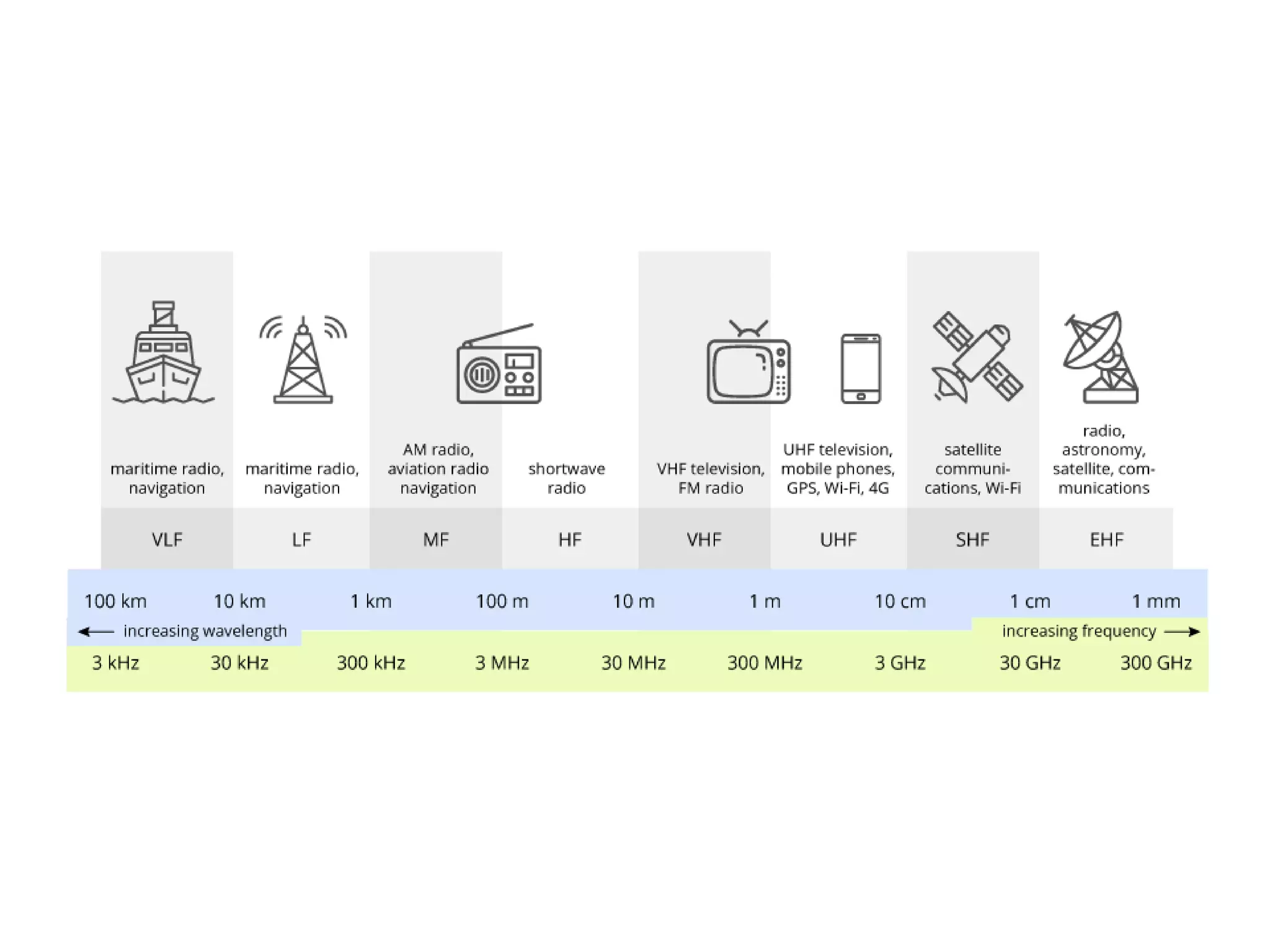
Basics of RF
• RF - Radio Frequency
• The range of Radio Frequency is 300 MHz to
1GHz ( - Reference Book)
• The RF range in Google is 20KHz to 300 GHz
Semiconductor Basics in RF
• Silicon is still the dominant material in
semiconductor manufacturing.
• However, other materials are more compatible
with the high signal frequencies present in RF
systems.
• Three alternative materials that are used in RF
semiconductors are gallium nitride (GaN), gallium
arsenide (GaAs), and silicon germanium (SiGe).
• Specialized semiconductor technologies make it
possible to fabricate devices that maintain
adequate performance at extremely high
frequencies, i.e., above 100 GHz.
RF Diodes
• The Classic PN Junction diode is not suitable for
high frequency applications because of high
junction capacitance.
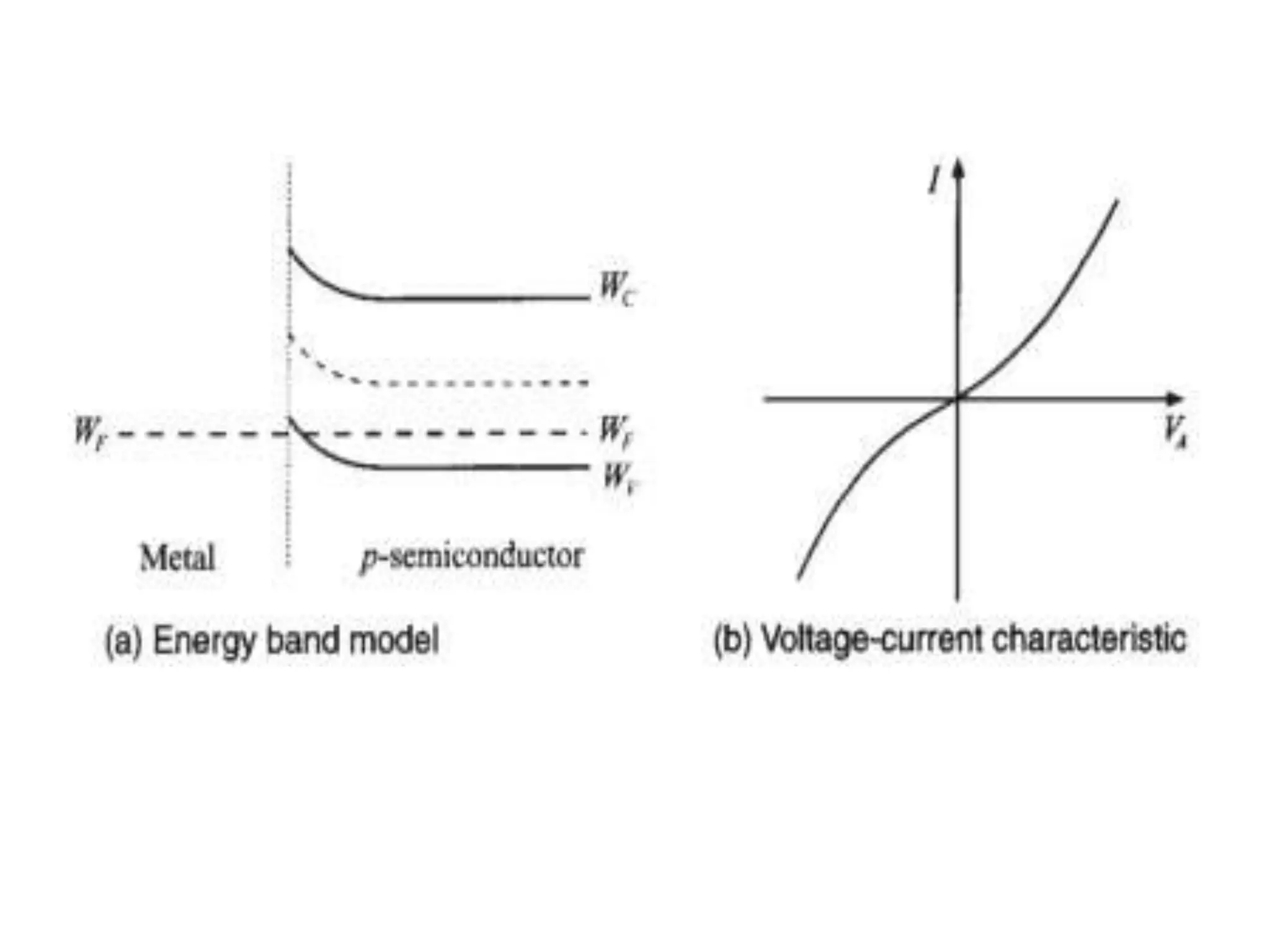
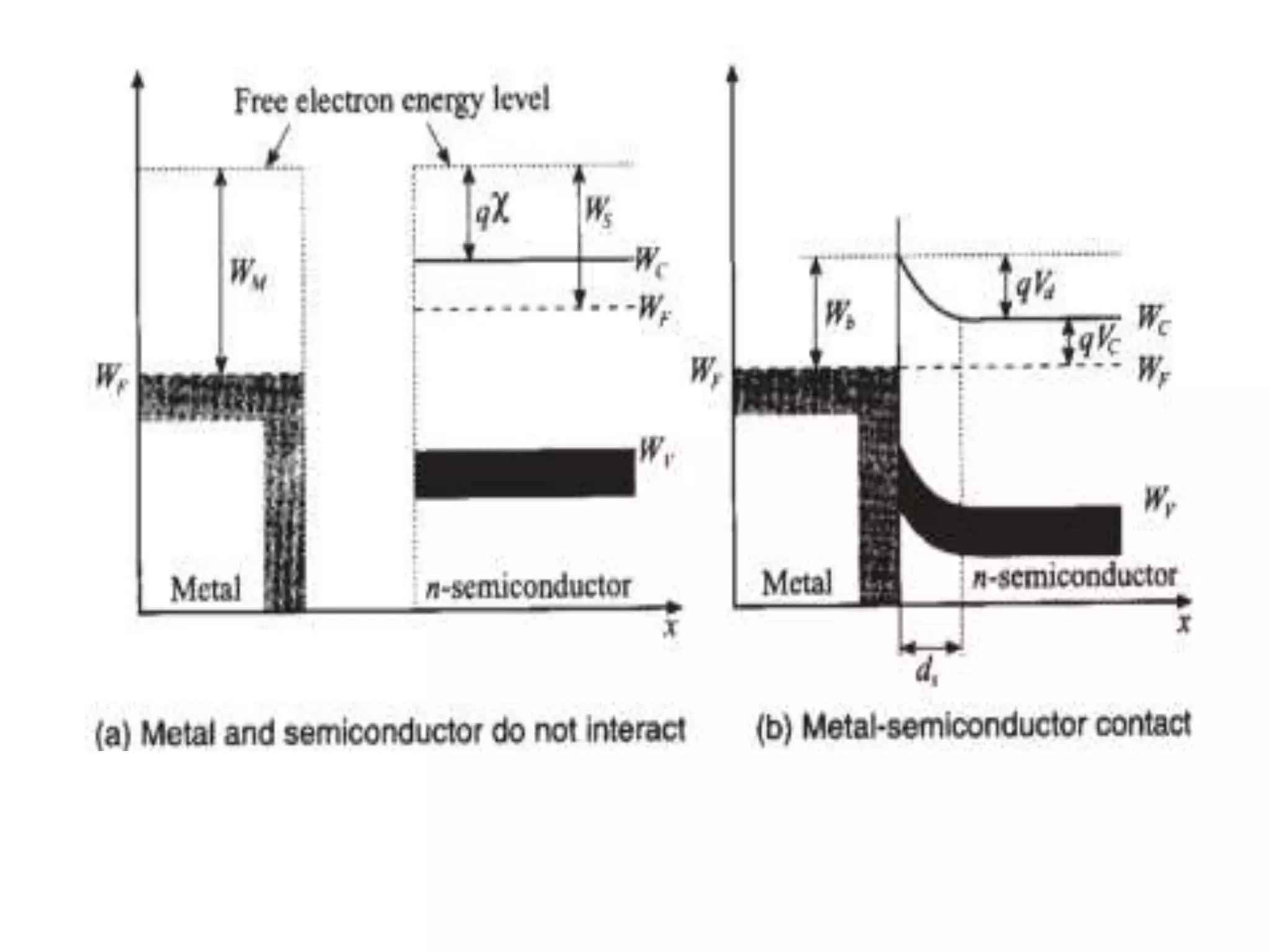
• Diodes formed by a metal-semiconductor
contact posses smaller junction capacitance and
used in high frequencies.
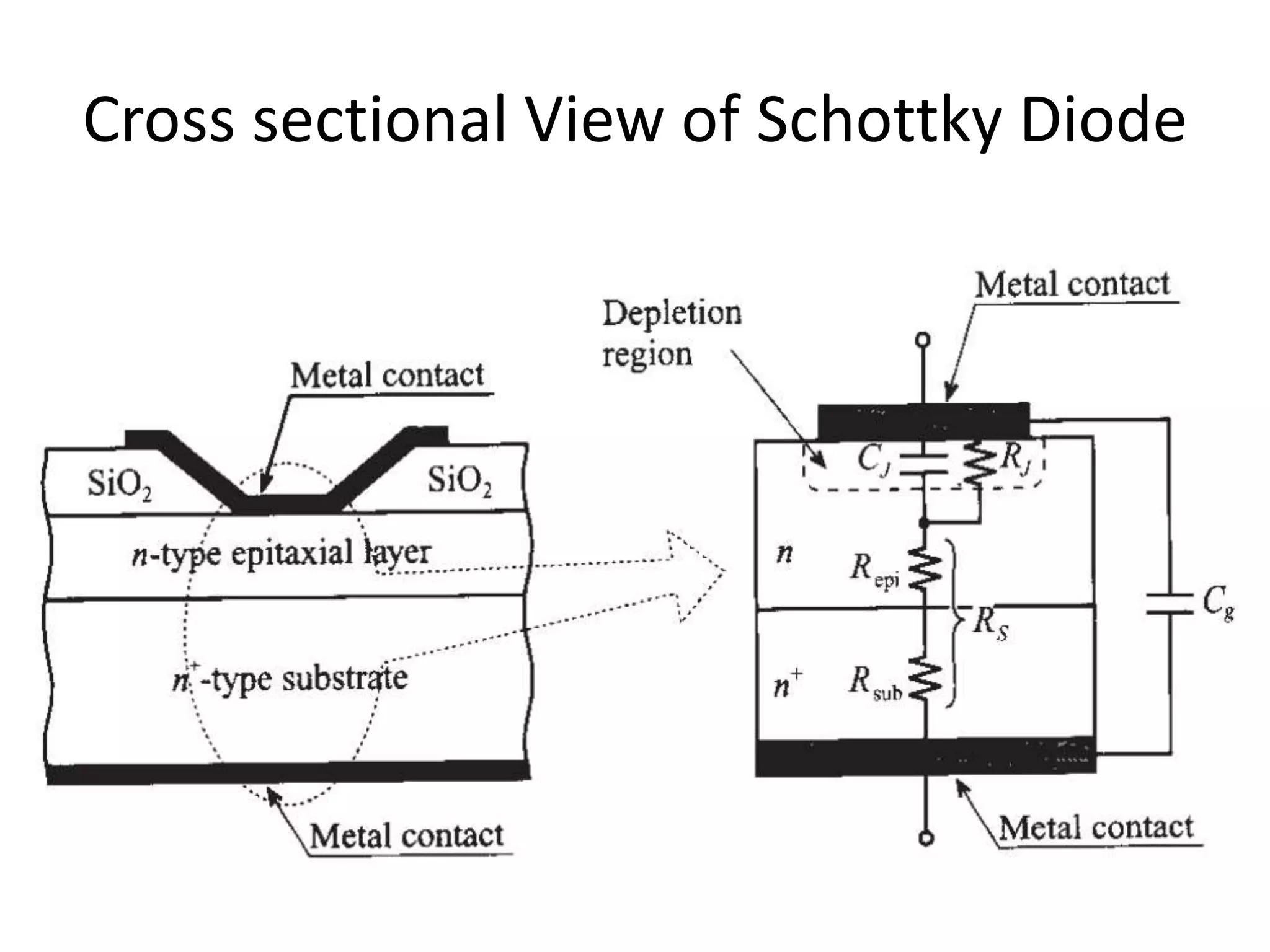
• Schottky diode is one of the metal-
semiconductor diode used in RF detectors,
Mixers, attenuators, Oscillators, and amplifiers.
Cross sectional View of Schottky Diode
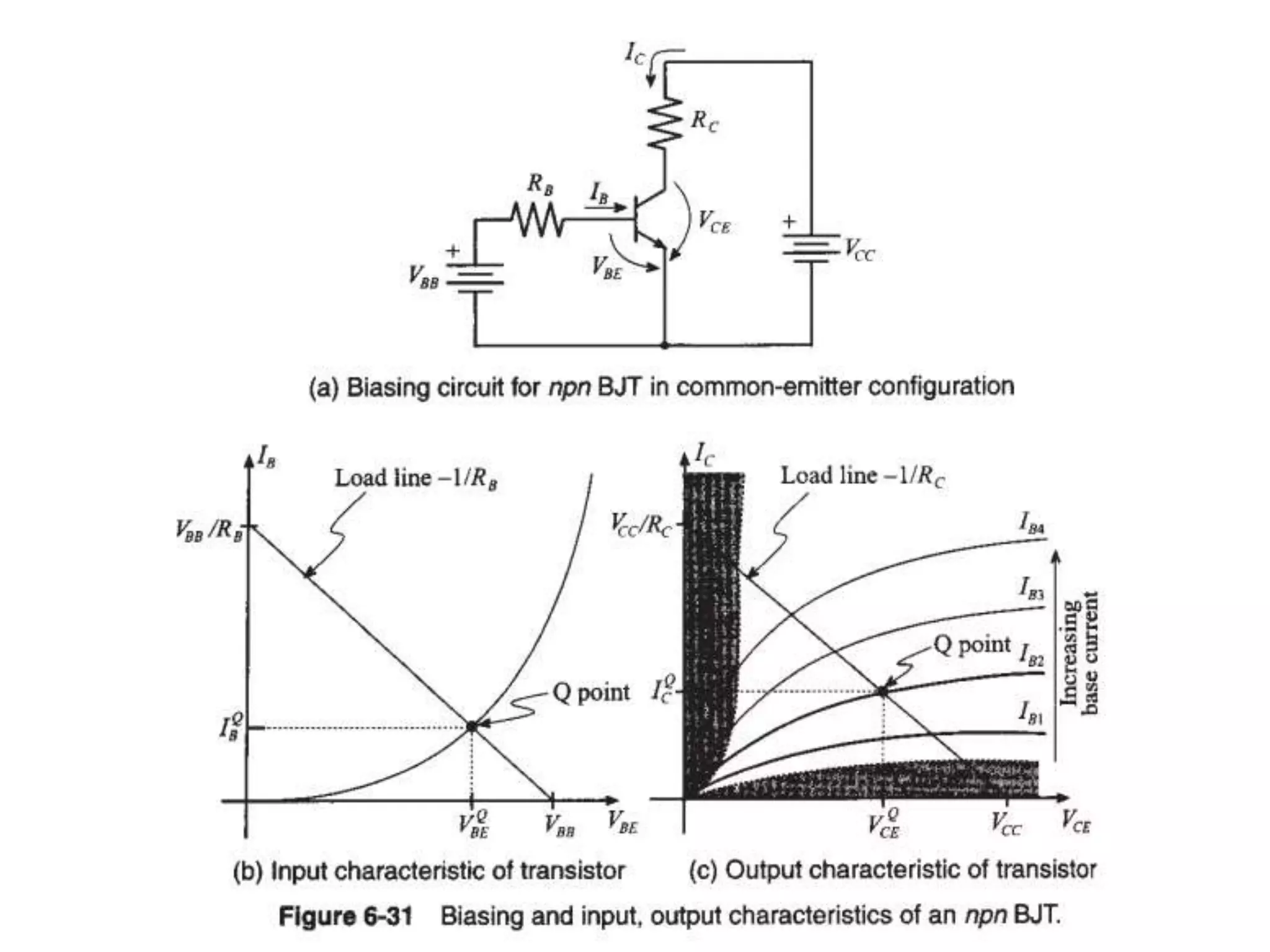
BJT
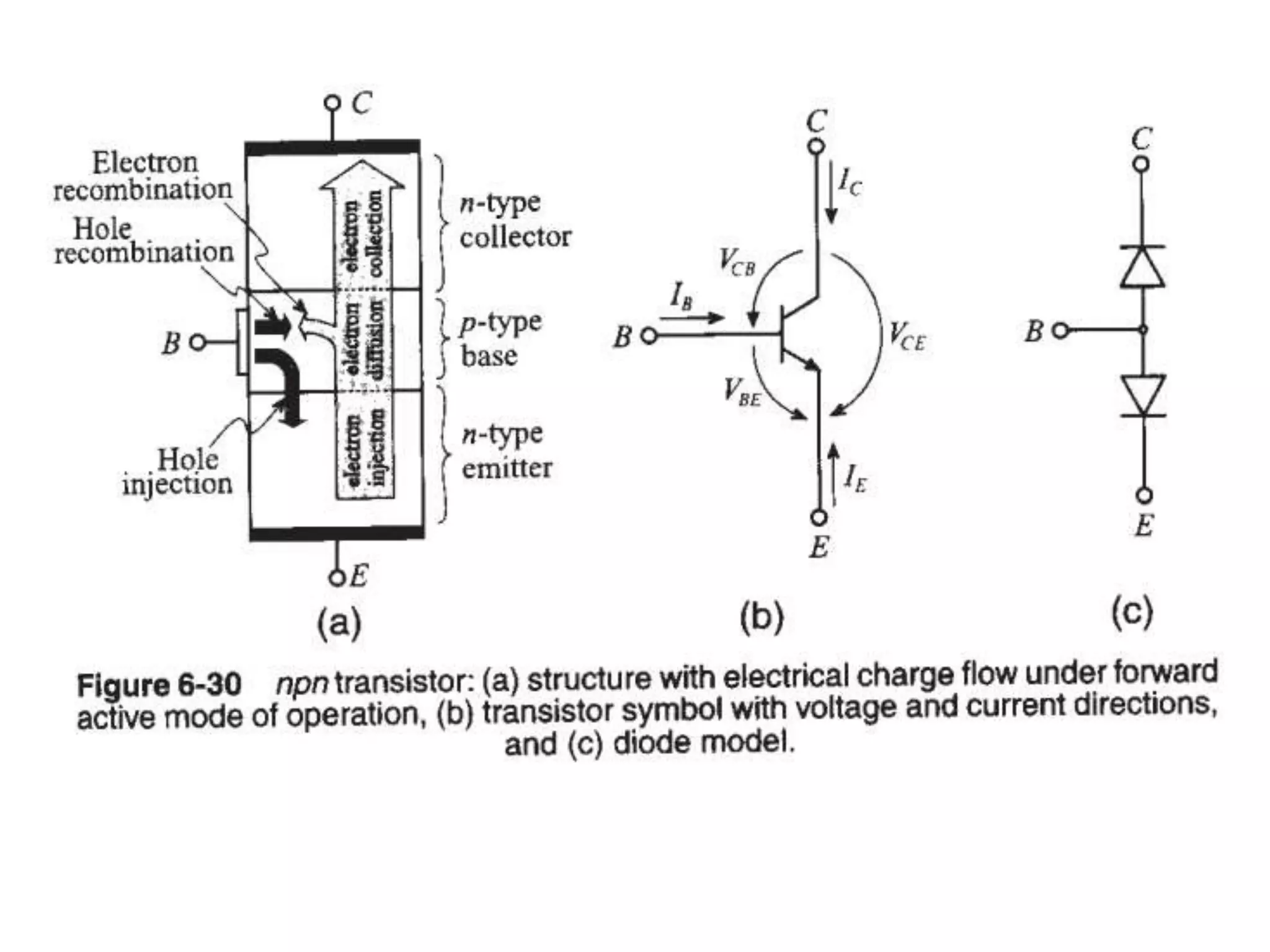
• The transistor has proliferated into a wide
host of sophisticated types ranging from
the still popular bipolar junction transistors
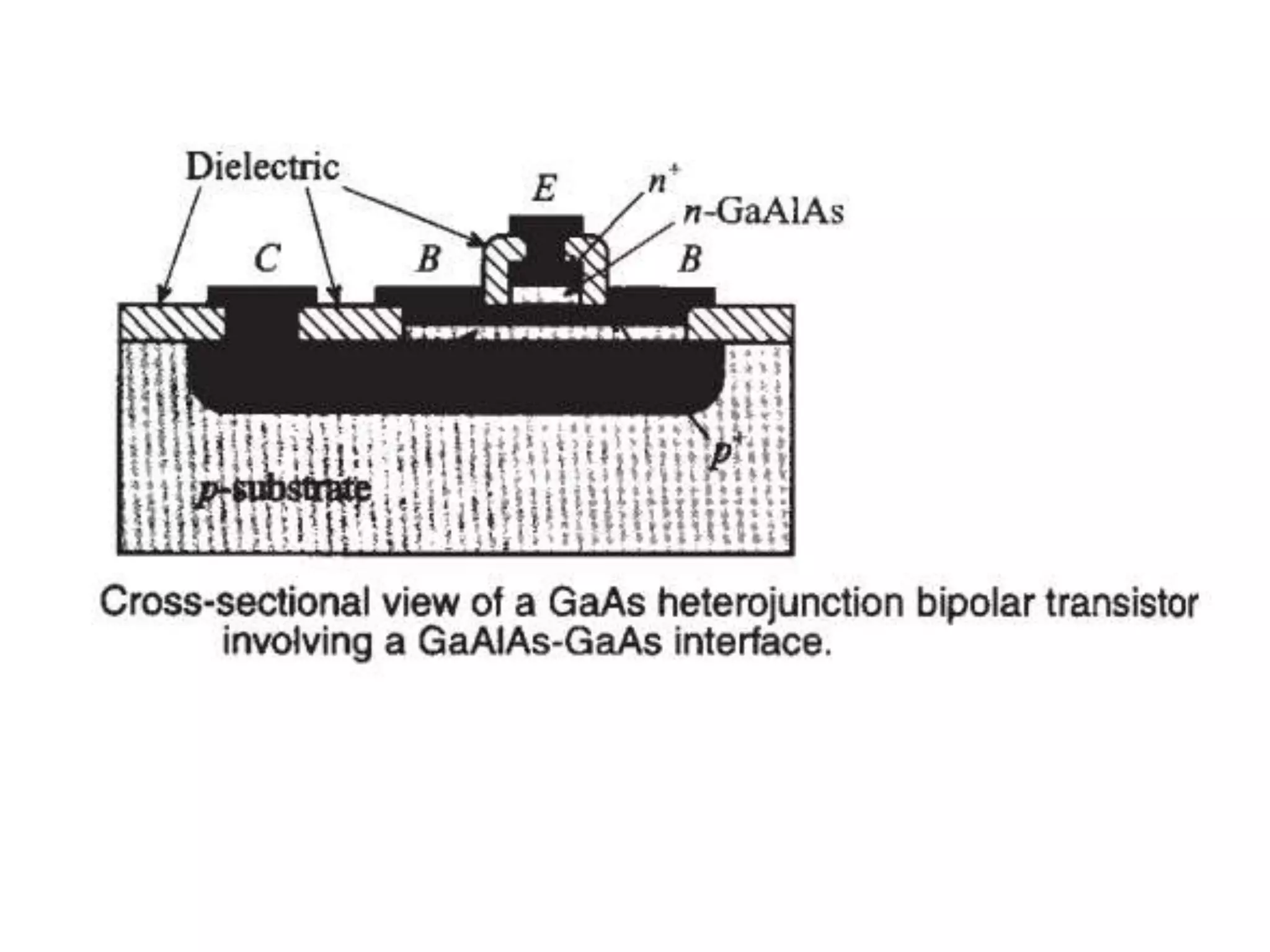
(BJTs) over the modern GaAs field effect
transistors (GaAs FETs) to the most recent
high electron mobility transistors (HEMTs).
BJT Construction
• The BJT is one of the most widely used active
RF elements due to
a) Low Cost Construction
b) Relatively high operating frequency
c) Low noise performance
d) High power handling capacity
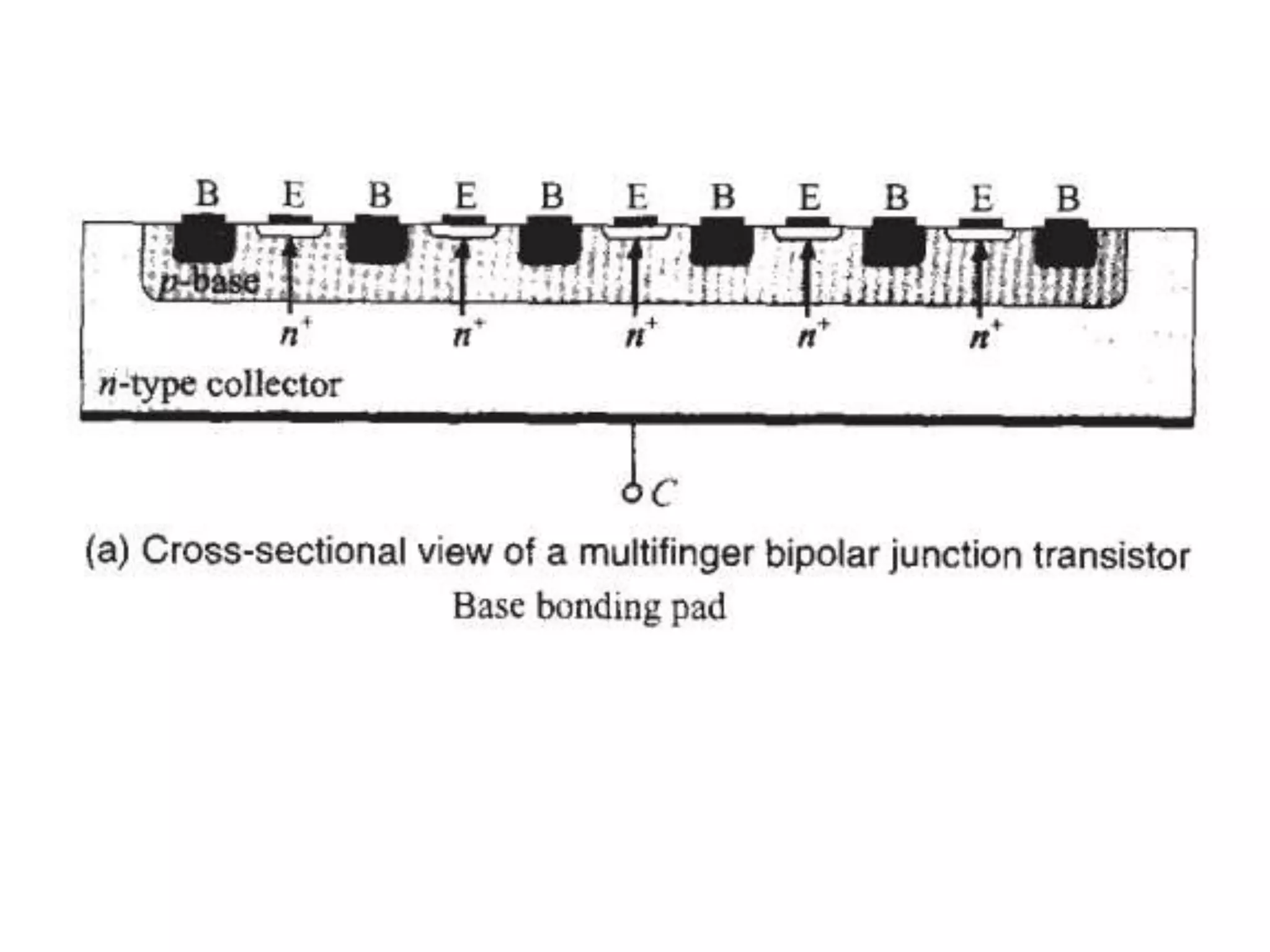
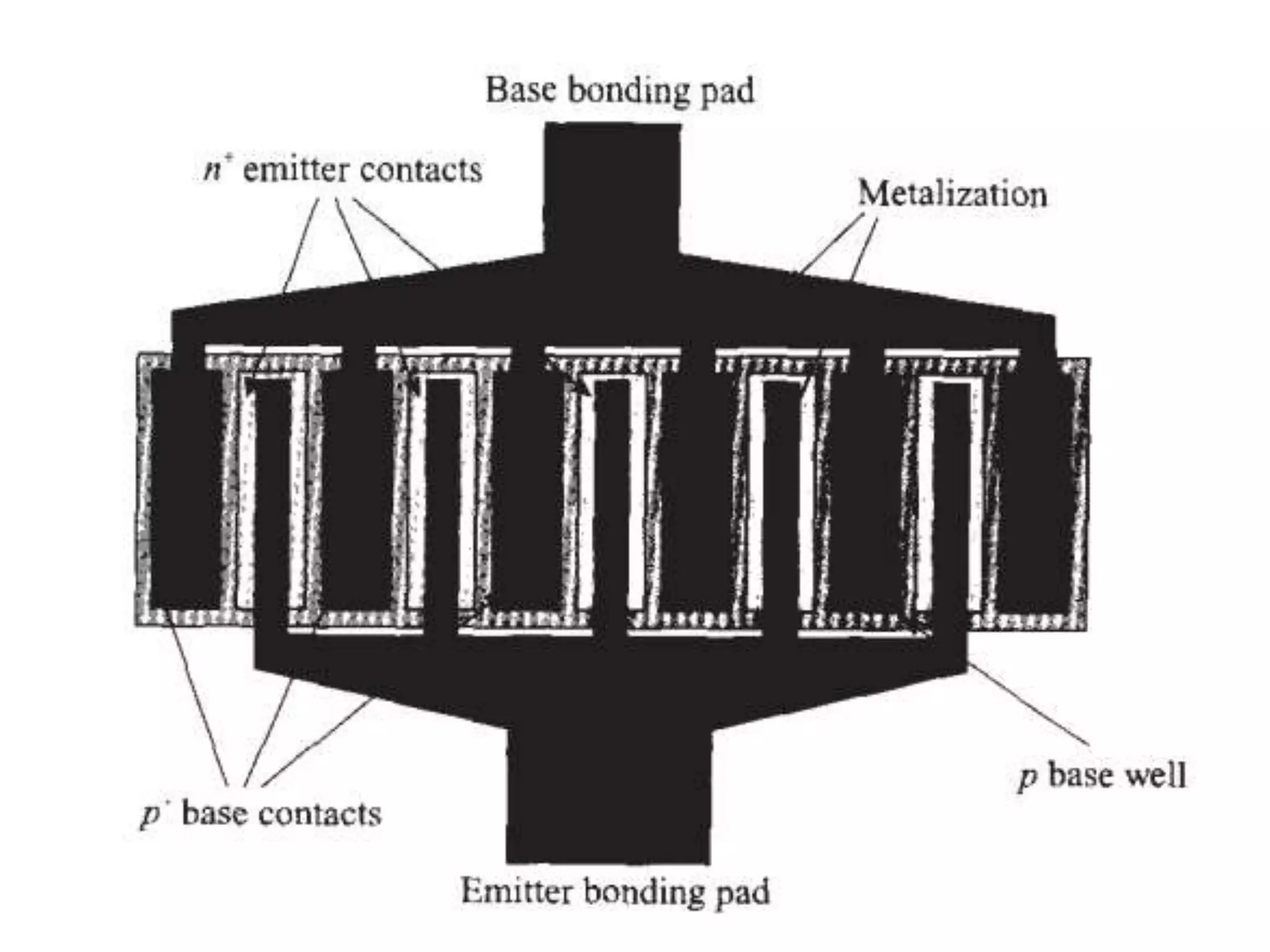
• The high power capacity is achieved through a
special inter digital emitter- base construction
as part of a planar structure.
RF System design concepts

RF System design concepts

  • 1.
    EC8651 TLRF UNIT –5 RF SYSTEM DESIGN CONCEPTS By Sk. Hedayath Basha
  • 2.
    Syllabus • Active RFcomponents: Semiconductor basics in RF, bipolar junction transistors, RF field effect transistors, High electron mobility transistors • Basic concepts of RF design, Mixers, Low noise amplifiers, voltage control oscillators, Power amplifiers, transducer power gain and stability considerations.
  • 3.
    Basics of RF •RF - Radio Frequency • The range of Radio Frequency is 300 MHz to 1GHz ( - Reference Book) • The RF range in Google is 20KHz to 300 GHz
  • 5.
    Semiconductor Basics inRF • Silicon is still the dominant material in semiconductor manufacturing. • However, other materials are more compatible with the high signal frequencies present in RF systems. • Three alternative materials that are used in RF semiconductors are gallium nitride (GaN), gallium arsenide (GaAs), and silicon germanium (SiGe). • Specialized semiconductor technologies make it possible to fabricate devices that maintain adequate performance at extremely high frequencies, i.e., above 100 GHz.
  • 6.
    RF Diodes • TheClassic PN Junction diode is not suitable for high frequency applications because of high junction capacitance. • Diodes formed by a metal-semiconductor contact posses smaller junction capacitance and used in high frequencies. • Schottky diode is one of the metal- semiconductor diode used in RF detectors, Mixers, attenuators, Oscillators, and amplifiers.
  • 7.
    Cross sectional Viewof Schottky Diode
  • 10.
    BJT • The transistorhas proliferated into a wide host of sophisticated types ranging from the still popular bipolar junction transistors (BJTs) over the modern GaAs field effect transistors (GaAs FETs) to the most recent high electron mobility transistors (HEMTs).
  • 11.
    BJT Construction • TheBJT is one of the most widely used active RF elements due to a) Low Cost Construction b) Relatively high operating frequency c) Low noise performance d) High power handling capacity
  • 12.
    • The highpower capacity is achieved through a special inter digital emitter- base construction as part of a planar structure.