Downloaded 91 times
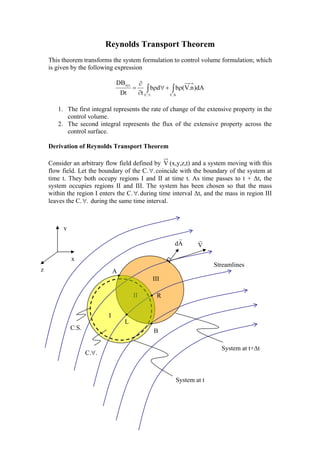
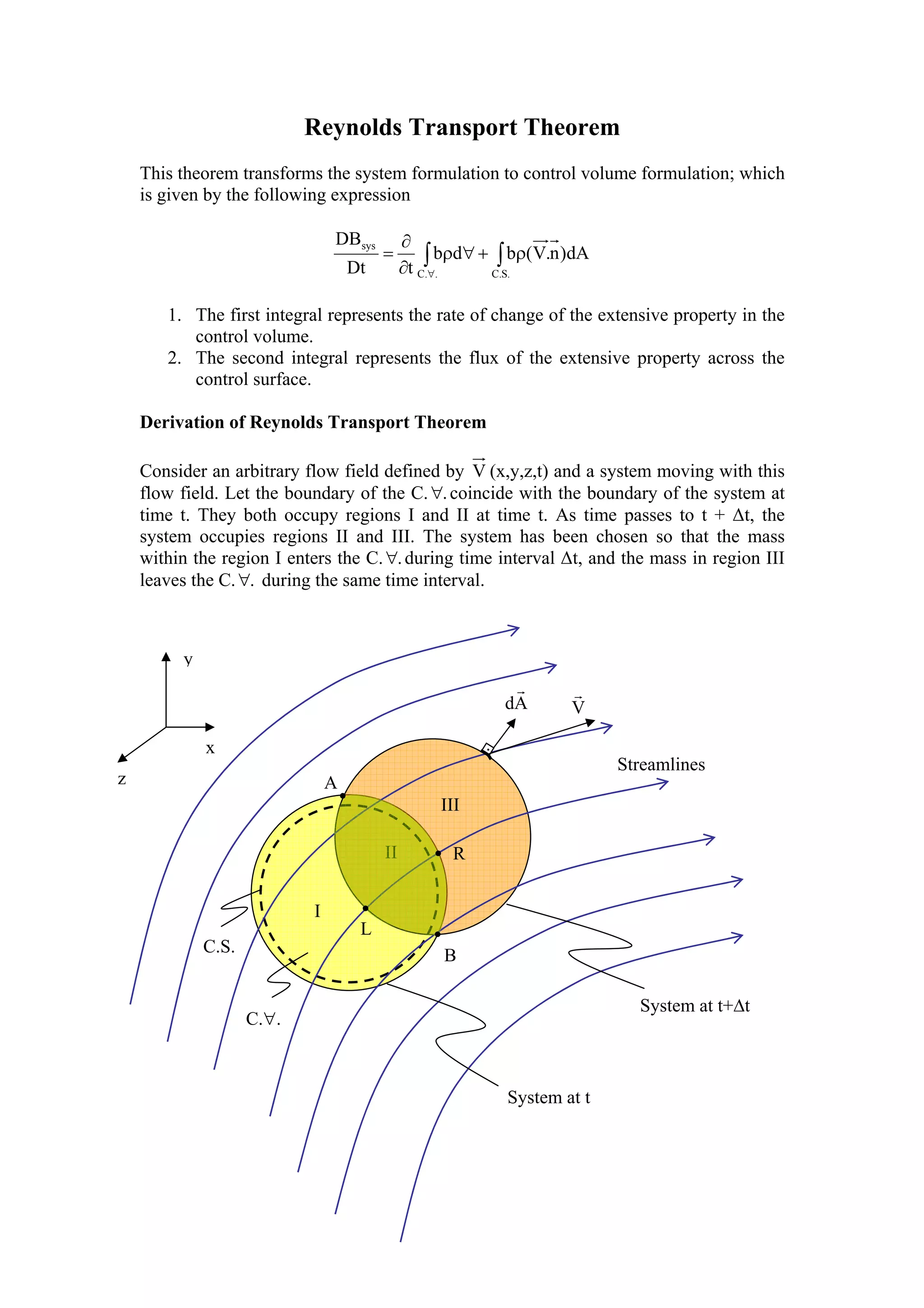
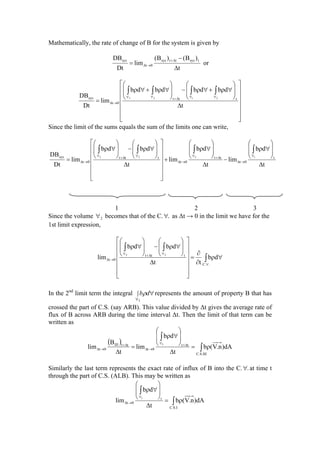
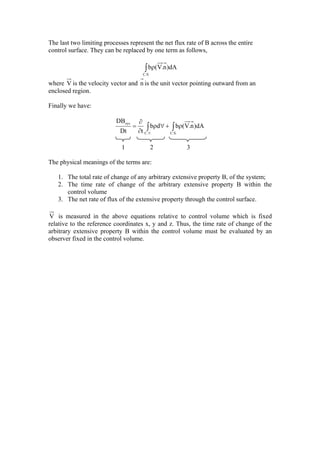

The Reynolds Transport Theorem transforms a system formulation into a control volume formulation. It states that the rate of change of an extensive property within a control volume equals the net rate of flux of that property across the control surface. The theorem is derived by considering a system moving with a flow field over a small time interval. The change in the extensive property of the system is shown to equal the integral of the property entering the control volume minus the integral of the property leaving the control volume. In the limit, this equals the surface integral of the property flux across the entire control surface.


![[Deck] What's New in Spark-Iceberg Integration via DSV2.pptx](https://cdn.slidesharecdn.com/ss_thumbnails/deckwhatsnewinspark-icebergintegrationviadsv2-260210005337-25955b12-thumbnail.jpg?width=640&height=640&fit=bounds)