A collaborative process between an
employee and his superior to plan the
performance and have periodic check
on ;
 How the job is going
 How the employee is performing
 How the employee can develop
 What the superior can do to make it happen
What is Performance
Appraisal
Why conduct a Performance
Appraisal
• Good human resources practice
• Facilitate communication between
supervisors and employees
• Provide a framework of goals and
standards from which to measure
performance
• Act as a forum for individual career
development issues
• Develop action and training plans to
address performance problems
• Serve as a tool to determine salary
increases
• Assure a formal time and place for all
these events to happen
Why conduct a Performance
Appraisal
When to conduct a
Performance Appraisal
• The performance review must occur atleast
once in a year
• However, as a part of Performance
Management, the performance review is a
continuing, ongoing activity
• Establish a more effective two way communication
• Set performance objectives
• Help improve current performance
• Assess past performance
• Provide feedback on performance
• Identify training & development needs
• Allocate rewards
• Identify staff with promotional possibilities
• Assist in career planning decisions
WHO are involved in
Performance Appraisal
• The Appraisee
• The Appraiser
• HR Department
Pre-requisites for Effective &
Successful Performance Appraisal
The essentials of an effective performance system are
as follows:
1. Documentation – means continuous noting and documenting
the performance.
2. Standards / Goals – the standards set should be clear, easy to
understand, achievable, motivating, time bound and
measurable.
3. Practical and simple format - The appraisal format should be
simple, clear, fair and objective.
.
4. Evaluation technique – An appropriate evaluation
technique should be selected; the appraisal system should be
performance based and uniform.
5. Communication – Communication is an indispensable part
of the Performance appraisal process. The desired behavior or
the expected results should be communicated to the
employees as well as the evaluators
6. Feedback – The purpose of the feedback should be
developmental rather than judgmental.
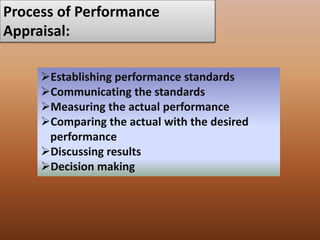
Process of Performance
Appraisal:
Establishing performance standards
Communicating the standards
Measuring the actual performance
Comparing the actual with the desired
performance
Discussing results
Decision making
Purpose Of Performance
Appraisal
Performance Appraisal is being practiced in 90% of the
organisations worldwide.
Typically, Performance Appraisal is aimed at:
To review the performance of the employees over a given
period of time.
To judge the gap between the actual and the desired
performance.
To help the management in exercising organizational control.
To diagnose the training and development needs of the
future.
Provide information to assist in the HR decisions like
promotions, transfers etc.
Provide clarity of the expectations and responsibilities of
the functions to be performed by the employees.
To judge the effectiveness of the other human resource
functions of the organization such as recruitment,
selection, training and development.
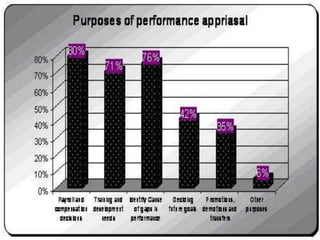
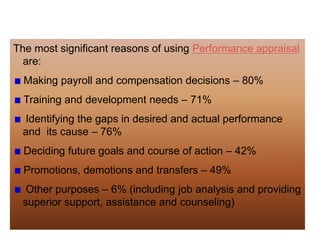
The most significant reasons of using Performance appraisal
are:
Making payroll and compensation decisions – 80%
Training and development needs – 71%
Identifying the gaps in desired and actual performance
and its cause – 76%
Deciding future goals and course of action – 42%
Promotions, demotions and transfers – 49%
Other purposes – 6% (including job analysis and providing
superior support, assistance and counseling)
Challenges Of Performance
Appraisal
The main Performance Appraisal challenges
involved in the performance appraisal process are:
Determining the evaluation criteria
Create a rating instrument
Lack of competence
Errors in rating and evaluation
Resistance
Performance appraisal ppt

Performance appraisal ppt

  • 2.
    A collaborative processbetween an employee and his superior to plan the performance and have periodic check on ;  How the job is going  How the employee is performing  How the employee can develop  What the superior can do to make it happen What is Performance Appraisal
  • 3.
    Why conduct aPerformance Appraisal • Good human resources practice • Facilitate communication between supervisors and employees • Provide a framework of goals and standards from which to measure performance
  • 4.
    • Act asa forum for individual career development issues • Develop action and training plans to address performance problems • Serve as a tool to determine salary increases • Assure a formal time and place for all these events to happen Why conduct a Performance Appraisal
  • 5.
    When to conducta Performance Appraisal • The performance review must occur atleast once in a year • However, as a part of Performance Management, the performance review is a continuing, ongoing activity
  • 6.
    • Establish amore effective two way communication • Set performance objectives • Help improve current performance • Assess past performance • Provide feedback on performance • Identify training & development needs • Allocate rewards • Identify staff with promotional possibilities • Assist in career planning decisions
  • 7.
    WHO are involvedin Performance Appraisal • The Appraisee • The Appraiser • HR Department
  • 8.
    Pre-requisites for Effective& Successful Performance Appraisal The essentials of an effective performance system are as follows: 1. Documentation – means continuous noting and documenting the performance. 2. Standards / Goals – the standards set should be clear, easy to understand, achievable, motivating, time bound and measurable. 3. Practical and simple format - The appraisal format should be simple, clear, fair and objective.
  • 9.
    . 4. Evaluation technique– An appropriate evaluation technique should be selected; the appraisal system should be performance based and uniform. 5. Communication – Communication is an indispensable part of the Performance appraisal process. The desired behavior or the expected results should be communicated to the employees as well as the evaluators 6. Feedback – The purpose of the feedback should be developmental rather than judgmental.
  • 10.
    Process of Performance Appraisal: Establishingperformance standards Communicating the standards Measuring the actual performance Comparing the actual with the desired performance Discussing results Decision making
  • 11.
    Purpose Of Performance Appraisal PerformanceAppraisal is being practiced in 90% of the organisations worldwide. Typically, Performance Appraisal is aimed at: To review the performance of the employees over a given period of time. To judge the gap between the actual and the desired performance. To help the management in exercising organizational control.
  • 12.
    To diagnose thetraining and development needs of the future. Provide information to assist in the HR decisions like promotions, transfers etc. Provide clarity of the expectations and responsibilities of the functions to be performed by the employees. To judge the effectiveness of the other human resource functions of the organization such as recruitment, selection, training and development.
  • 14.
    The most significantreasons of using Performance appraisal are: Making payroll and compensation decisions – 80% Training and development needs – 71% Identifying the gaps in desired and actual performance and its cause – 76% Deciding future goals and course of action – 42% Promotions, demotions and transfers – 49% Other purposes – 6% (including job analysis and providing superior support, assistance and counseling)
  • 15.
    Challenges Of Performance Appraisal Themain Performance Appraisal challenges involved in the performance appraisal process are: Determining the evaluation criteria Create a rating instrument Lack of competence Errors in rating and evaluation Resistance