Vijeta Shukla
 Performance Appraisal system is a part of ongoing
management process, the purposes of which are to:
 Provide for systematic planning by allowing the
manager to identify critical job elements & objectives.
 Conduct a systematic review of employees overall
performance & provide constructive feedback.
 Provide objective information to guide management
decisions on promotions etc.
 Establish an objective basis for determining annual
performance.
 Establishing Performance Standards
 Communicating Performance Standards to
employees 
 Measuring Actual Performance
 Comparing Actual Performance with Standards 
 Discussing appraisal with the employees
 Taking Corrective Action
 The following criteria should be followed to make the
performance appraisal more effective:
 Make performance appraisal part of an ongoing
process
 Look at all aspects of an employee’s performance
 Make specific and constructive judgments
 Criticize work habits & behavior, not the person
 Don’t let marginal employees slide
 Keep complete written records for all performance
appraisals.
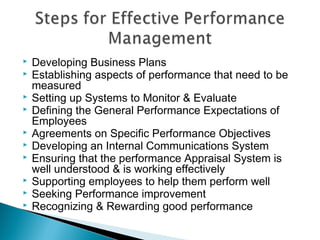
 Developing Business Plans
 Establishing aspects of performance that need to be
measured
 Setting up Systems to Monitor & Evaluate
 Defining the General Performance Expectations of
Employees
 Agreements on Specific Performance Objectives
 Developing an Internal Communications System
 Ensuring that the performance Appraisal System is
well understood & is working effectively
 Supporting employees to help them perform well
 Seeking Performance improvement
 Recognizing & Rewarding good performance
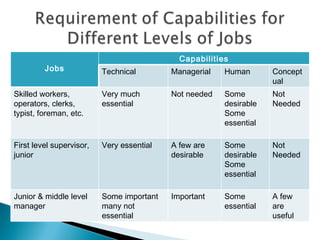
Jobs
Capabilities
Technical Managerial Human Concept
ual
Skilled workers,
operators, clerks,
typist, foreman, etc.
Very much
essential
Not needed Some
desirable
Some
essential
Not
Needed
First level supervisor,
junior
Very essential A few are
desirable
Some
desirable
Some
essential
Not
Needed
Junior & middle level
manager
Some important
many not
essential
Important Some
essential
A few
are
useful
Junior &
middle level
manager
Some
important
many not
essential
Important Some
essential
A few are
useful
Senior
managers,
Head of
Dept./Sec
A few are
desirable
Very essential Many are
needed Some
are important
Desirable
Unit Heads,
GM etc.
A few are
desirable
Very essential Many are
essential &
important
Essential
Chief
Executives
Not needed Important Very essential Most
Essential
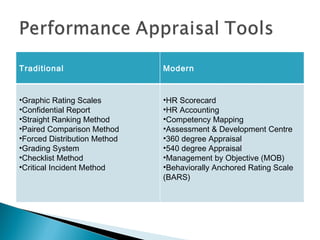
Traditional Modern
•Graphic Rating Scales
•Confidential Report
•Straight Ranking Method
•Paired Comparison Method
•Forced Distribution Method
•Grading System
•Checklist Method
•Critical Incident Method
•HR Scorecard
•HR Accounting
•Competency Mapping
•Assessment & Development Centre
•360 degree Appraisal
•540 degree Appraisal
•Management by Objective (MOB)
•Behaviorally Anchored Rating Scale
(BARS)
 Identifying Job Families
 Identifying Competencies
 Defining Competencies
 Strategizing Competencies
 Defining Measurement Scale
 Position Profiling
 Person Profiling
Development of Reward
Strategy
.
Business Strategy
Satisfy need and expectations of stake holders
Provide added value to customers
HR Stratery
Define what the organization wants & is prepared to pay for encourage & support desired behavior
Develop & maintain competitve pay policies which will attract & retain high quality people.
Adopt a total rewards approach which includes a mix of rewards the best meets & individuals needs.
Reward Strategy
Obtain, develop and retain the skilled, motivated & committed people the organization needs
Reward Management Process
Non Financial
Rewards
Employee
Benefits
Market
Surveys
Business Reward Pay Pay Levels Total Improved
Strategy Strategy Structures & relativities remuneration performance
Job Evaluation
Performance Pay
Perfomance Employee
Mangement development
THANK YOU

Performance appraisal

  • 1.
  • 2.
     Performance Appraisalsystem is a part of ongoing management process, the purposes of which are to:  Provide for systematic planning by allowing the manager to identify critical job elements & objectives.  Conduct a systematic review of employees overall performance & provide constructive feedback.  Provide objective information to guide management decisions on promotions etc.  Establish an objective basis for determining annual performance.
  • 3.
     Establishing PerformanceStandards  Communicating Performance Standards to employees   Measuring Actual Performance  Comparing Actual Performance with Standards   Discussing appraisal with the employees  Taking Corrective Action
  • 4.
     The followingcriteria should be followed to make the performance appraisal more effective:  Make performance appraisal part of an ongoing process  Look at all aspects of an employee’s performance  Make specific and constructive judgments  Criticize work habits & behavior, not the person  Don’t let marginal employees slide  Keep complete written records for all performance appraisals.
  • 6.
     Developing BusinessPlans  Establishing aspects of performance that need to be measured  Setting up Systems to Monitor & Evaluate  Defining the General Performance Expectations of Employees  Agreements on Specific Performance Objectives  Developing an Internal Communications System  Ensuring that the performance Appraisal System is well understood & is working effectively  Supporting employees to help them perform well  Seeking Performance improvement  Recognizing & Rewarding good performance
  • 7.
    Jobs Capabilities Technical Managerial HumanConcept ual Skilled workers, operators, clerks, typist, foreman, etc. Very much essential Not needed Some desirable Some essential Not Needed First level supervisor, junior Very essential A few are desirable Some desirable Some essential Not Needed Junior & middle level manager Some important many not essential Important Some essential A few are useful
  • 8.
    Junior & middle level manager Some important manynot essential Important Some essential A few are useful Senior managers, Head of Dept./Sec A few are desirable Very essential Many are needed Some are important Desirable Unit Heads, GM etc. A few are desirable Very essential Many are essential & important Essential Chief Executives Not needed Important Very essential Most Essential
  • 9.
    Traditional Modern •Graphic RatingScales •Confidential Report •Straight Ranking Method •Paired Comparison Method •Forced Distribution Method •Grading System •Checklist Method •Critical Incident Method •HR Scorecard •HR Accounting •Competency Mapping •Assessment & Development Centre •360 degree Appraisal •540 degree Appraisal •Management by Objective (MOB) •Behaviorally Anchored Rating Scale (BARS)
  • 11.
     Identifying JobFamilies  Identifying Competencies  Defining Competencies  Strategizing Competencies  Defining Measurement Scale  Position Profiling  Person Profiling
  • 12.
    Development of Reward Strategy . BusinessStrategy Satisfy need and expectations of stake holders Provide added value to customers HR Stratery Define what the organization wants & is prepared to pay for encourage & support desired behavior Develop & maintain competitve pay policies which will attract & retain high quality people. Adopt a total rewards approach which includes a mix of rewards the best meets & individuals needs. Reward Strategy Obtain, develop and retain the skilled, motivated & committed people the organization needs
  • 13.
    Reward Management Process NonFinancial Rewards Employee Benefits Market Surveys Business Reward Pay Pay Levels Total Improved Strategy Strategy Structures & relativities remuneration performance Job Evaluation Performance Pay Perfomance Employee Mangement development
  • 14.