Key Factors
1. Mentoring
2. Networking
3. Trust
Call Center Staff Motivation
Trust for What is Worth
- Successful People
- People who will become successful
Improving Motivation in a Call
Center Environment
Tedium of work
Absence of Challenging
Lack of career progression
Absence of investment in training
Low levels of employee retention.
Stress and anxiety
Workload
Physically and mentally demanding work.
These factors engender a sense of frustration and
desintegration of staff morale.
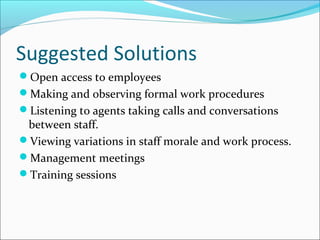
Suggested Solutions
Open access to employees
Making and observing formal work procedures
Listening to agents taking calls and conversations
between staff.
Viewing variations in staff morale and work process.
Management meetings
Training sessions
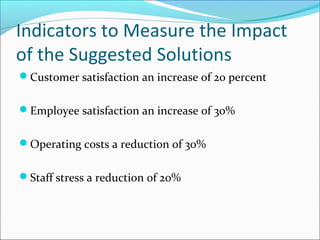
Indicators to Measure the Impact
of the Suggested Solutions
Customer satisfaction an increase of 20 percent
Employee satisfaction an increase of 30%
Operating costs a reduction of 30%
Staff stress a reduction of 20%
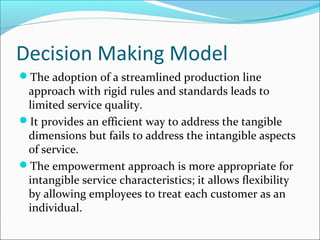
Decision Making Model
The adoption of a streamlined production line
approach with rigid rules and standards leads to
limited service quality.
It provides an efficient way to address the tangible
dimensions but fails to address the intangible aspects
of service.
The empowerment approach is more appropriate for
intangible service characteristics; it allows flexibility
by allowing employees to treat each customer as an
individual.
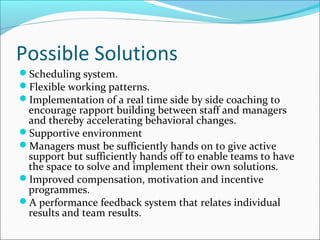
Possible Solutions
Scheduling system.
Flexible working patterns.
Implementation of a real time side by side coaching to
encourage rapport building between staff and managers
and thereby accelerating behavioral changes.
Supportive environment
Managers must be sufficiently hands on to give active
support but sufficiently hands off to enable teams to have
the space to solve and implement their own solutions.
Improved compensation, motivation and incentive
programmes.
A performance feedback system that relates individual
results and team results.
More possible solutions
Acknowledgment and reward systems beed to be
timely and personal with clearly agreed paramenters.
Involving employees in future recruitment activity
involvement
Weekly team meetings to discuss results, problems,
or to cross train team members.
To reduce call volumes
To ensure the customer is connected to an
appropriate agent.
To provide differentiated levels of service.
More possible solutions
Acknowledgment and reward systems beed to be
timely and personal with clearly agreed paramenters.
Involving employees in future recruitment activity
involvement
Weekly team meetings to discuss results, problems,
or to cross train team members.
To reduce call volumes
To ensure the customer is connected to an
appropriate agent.
To provide differentiated levels of service.

Staff motivation

  • 2.
    Key Factors 1. Mentoring 2.Networking 3. Trust
  • 3.
    Call Center StaffMotivation Trust for What is Worth - Successful People - People who will become successful
  • 4.
    Improving Motivation ina Call Center Environment Tedium of work Absence of Challenging Lack of career progression Absence of investment in training Low levels of employee retention. Stress and anxiety Workload Physically and mentally demanding work. These factors engender a sense of frustration and desintegration of staff morale.
  • 5.
    Suggested Solutions Open accessto employees Making and observing formal work procedures Listening to agents taking calls and conversations between staff. Viewing variations in staff morale and work process. Management meetings Training sessions
  • 6.
    Indicators to Measurethe Impact of the Suggested Solutions Customer satisfaction an increase of 20 percent Employee satisfaction an increase of 30% Operating costs a reduction of 30% Staff stress a reduction of 20%
  • 7.
    Decision Making Model Theadoption of a streamlined production line approach with rigid rules and standards leads to limited service quality. It provides an efficient way to address the tangible dimensions but fails to address the intangible aspects of service. The empowerment approach is more appropriate for intangible service characteristics; it allows flexibility by allowing employees to treat each customer as an individual.
  • 8.
    Possible Solutions Scheduling system. Flexibleworking patterns. Implementation of a real time side by side coaching to encourage rapport building between staff and managers and thereby accelerating behavioral changes. Supportive environment Managers must be sufficiently hands on to give active support but sufficiently hands off to enable teams to have the space to solve and implement their own solutions. Improved compensation, motivation and incentive programmes. A performance feedback system that relates individual results and team results.
  • 9.
    More possible solutions Acknowledgmentand reward systems beed to be timely and personal with clearly agreed paramenters. Involving employees in future recruitment activity involvement Weekly team meetings to discuss results, problems, or to cross train team members. To reduce call volumes To ensure the customer is connected to an appropriate agent. To provide differentiated levels of service.
  • 10.
    More possible solutions Acknowledgmentand reward systems beed to be timely and personal with clearly agreed paramenters. Involving employees in future recruitment activity involvement Weekly team meetings to discuss results, problems, or to cross train team members. To reduce call volumes To ensure the customer is connected to an appropriate agent. To provide differentiated levels of service.