Respiratory System and
Circulatory System
What is Respiratory System
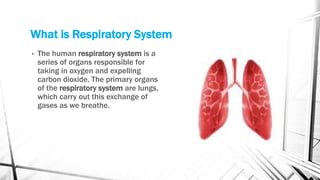
• The human respiratory system is a
series of organs responsible for
taking in oxygen and expelling
carbon dioxide. The primary organs
of the respiratory system are lungs,
which carry out this exchange of
gases as we breathe.
Respiratory System
• Organs of the respiratory system
• Nose/Mouth Bronchi
• Nasal Cavity Bronchioles
• Pharynx Alveoli
• Epiglottis Pleura
• Trachea Lungs
Lobes
Nose
• Brings air into the body
• Nasal hair in nostrils trap dust
Nostrils- the two openings of the nose the filters the air
we breathe.
Nasal Cavity
• Traps dust, pollen and other materials that were not
trapped by nasal hairs
Pharynx
• A muscular tube in the upper throat where the
warmed, moistened and filtered air moves
• Tube-like passageway used by food, liquid, and air
Epiglottis
• At the lower end pharynx is a flap of tissue called
epiglottis closes the entrance to the rest of the
reparatory system when you swallow.
Trachea
• Air- conducting tube
• Connects the larynx with the bronchi
• Lined with mucus membranes and cilia
• Contains strong cartilage rings
Bronchi
• Tiny Branches of air tubes in the lungs
• Connect bronchi to alveoli
Bronchioles
• Tiny branches of air tubes in the lungs
• Connect bronchi to alveoli
Alveoli
• Alveoli are tiny sacs within our lungs that allow oxygen
and carbon dioxide to move between the lungs and
bloodstream.
Pleura
• The pleura refers to the 2 membranes that cover
the lungs and line the chest cavity.
Lungs
• The lungs are a pair of breathing organs located with
the chest which remove carbon dioxide from and
bring oxygen to the blood.
Lobes
Right lung has 3 lobes Left lung has 2 lobes
Right superior Left superior
Right inferior Left inferior
Right middle
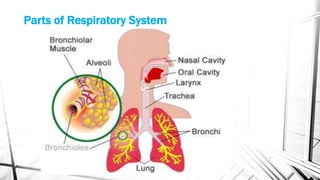
Parts of Respiratory System
Diseases in Respiratory System
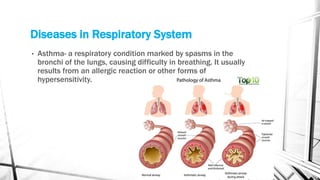
• Asthma- a respiratory condition marked by spasms in the
bronchi of the lungs, causing difficulty in breathing. It usually
results from an allergic reaction or other forms of
hypersensitivity.
• Lung Cancer
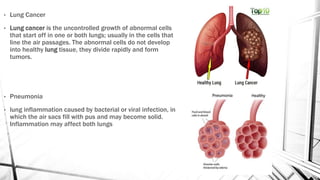
• Lung cancer is the uncontrolled growth of abnormal cells
that start off in one or both lungs; usually in the cells that
line the air passages. The abnormal cells do not develop
into healthy lung tissue, they divide rapidly and form
tumors.
• Pneumonia
• lung inflammation caused by bacterial or viral infection, in
which the air sacs fill with pus and may become solid.
Inflammation may affect both lungs
Circulatory System
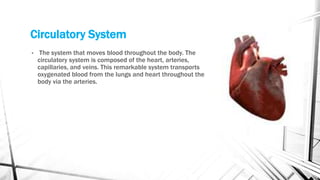
• The system that moves blood throughout the body. The
circulatory system is composed of the heart, arteries,
capillaries, and veins. This remarkable system transports
oxygenated blood from the lungs and heart throughout the
body via the arteries.
Main Parts of Circulatory System
• Heart- a hollow muscular organ that pumps the blood through the
circulatory system by rhythmic contraction and dilation. In vertebrates there
may be up to four chambers (as in humans), with two atria and two
ventricles.
• Blood Vessels- a tubular structure carrying blood through the tissues and
organs; a vein, artery, or capillary.
• Blood- the red liquid that circulates in the arteries and veins of humans and
other vertebrate animals, carrying oxygen to and carbon dioxide from the
tissues of the body.
Two circuits of the cardiovascular system
Pulmonary Circuit
• Carries the deoxygenated blood into the lungs
Systemic Circuit
• Delivers the oxygenated blood to the tissues
Four Chambers of Heart
• Atria- each of the two upper cavities of the heart from which
blood is passed to the ventricles. The right atrium receives
deoxygenated blood from the veins of the body; the left atrium
receives oxygenated blood from the pulmonary vein.
• Ventricles- is one of two large chambers that collect and expel
blood received from an atrium towards the peripheral beds
within the body and lungs. The atrium (an
adjacent/upper heart chamber that is smaller than a ventricle)
primes the pump.
Valves
• that control blood flow to and from the heart
3 Main Blood Vessels
• Arteries- which carry the blood away from the heart
• Capillaries- which enable the actual exchange of
water and chemicals between the blood and the
tissues
• Veins- which carry blood from the capillaries back
toward the heart.
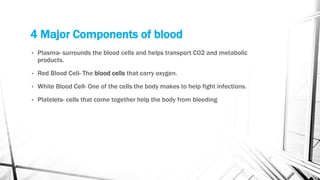
4 Major Components of blood
• Plasma- surrounds the blood cells and helps transport C02 and metabolic
products.
• Red Blood Cell- The blood cells that carry oxygen.
• White Blood Cell- One of the cells the body makes to help fight infections.
• Platelets- cells that come together help the body from bleeding
Disease in Circulatory System
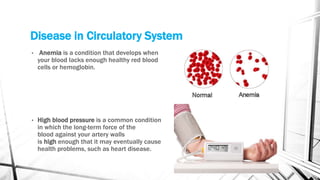
• Anemia is a condition that develops when
your blood lacks enough healthy red blood
cells or hemoglobin.
• High blood pressure is a common condition
in which the long-term force of the
blood against your artery walls
is high enough that it may eventually cause
health problems, such as heart disease.
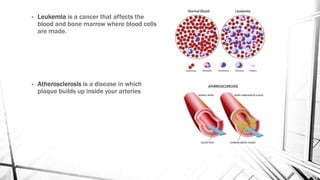
• Leukemia is a cancer that affects the
blood and bone marrow where blood cells
are made.
• Atherosclerosis is a disease in which
plaque builds up inside your arteries

Respiratory System and Circulatory System

  • 1.
  • 2.
    What is RespiratorySystem • The human respiratory system is a series of organs responsible for taking in oxygen and expelling carbon dioxide. The primary organs of the respiratory system are lungs, which carry out this exchange of gases as we breathe.
  • 3.
    Respiratory System • Organsof the respiratory system • Nose/Mouth Bronchi • Nasal Cavity Bronchioles • Pharynx Alveoli • Epiglottis Pleura • Trachea Lungs Lobes
  • 4.
    Nose • Brings airinto the body • Nasal hair in nostrils trap dust Nostrils- the two openings of the nose the filters the air we breathe.
  • 5.
    Nasal Cavity • Trapsdust, pollen and other materials that were not trapped by nasal hairs
  • 6.
    Pharynx • A musculartube in the upper throat where the warmed, moistened and filtered air moves • Tube-like passageway used by food, liquid, and air
  • 7.
    Epiglottis • At thelower end pharynx is a flap of tissue called epiglottis closes the entrance to the rest of the reparatory system when you swallow.
  • 8.
    Trachea • Air- conductingtube • Connects the larynx with the bronchi • Lined with mucus membranes and cilia • Contains strong cartilage rings
  • 9.
    Bronchi • Tiny Branchesof air tubes in the lungs • Connect bronchi to alveoli
  • 10.
    Bronchioles • Tiny branchesof air tubes in the lungs • Connect bronchi to alveoli
  • 11.
    Alveoli • Alveoli aretiny sacs within our lungs that allow oxygen and carbon dioxide to move between the lungs and bloodstream.
  • 12.
    Pleura • The pleurarefers to the 2 membranes that cover the lungs and line the chest cavity.
  • 13.
    Lungs • The lungsare a pair of breathing organs located with the chest which remove carbon dioxide from and bring oxygen to the blood.
  • 14.
    Lobes Right lung has3 lobes Left lung has 2 lobes Right superior Left superior Right inferior Left inferior Right middle
  • 15.
  • 16.
    Diseases in RespiratorySystem • Asthma- a respiratory condition marked by spasms in the bronchi of the lungs, causing difficulty in breathing. It usually results from an allergic reaction or other forms of hypersensitivity.
  • 17.
    • Lung Cancer •Lung cancer is the uncontrolled growth of abnormal cells that start off in one or both lungs; usually in the cells that line the air passages. The abnormal cells do not develop into healthy lung tissue, they divide rapidly and form tumors. • Pneumonia • lung inflammation caused by bacterial or viral infection, in which the air sacs fill with pus and may become solid. Inflammation may affect both lungs
  • 18.
    Circulatory System • Thesystem that moves blood throughout the body. The circulatory system is composed of the heart, arteries, capillaries, and veins. This remarkable system transports oxygenated blood from the lungs and heart throughout the body via the arteries.
  • 19.
    Main Parts ofCirculatory System • Heart- a hollow muscular organ that pumps the blood through the circulatory system by rhythmic contraction and dilation. In vertebrates there may be up to four chambers (as in humans), with two atria and two ventricles. • Blood Vessels- a tubular structure carrying blood through the tissues and organs; a vein, artery, or capillary. • Blood- the red liquid that circulates in the arteries and veins of humans and other vertebrate animals, carrying oxygen to and carbon dioxide from the tissues of the body.
  • 20.
    Two circuits ofthe cardiovascular system Pulmonary Circuit • Carries the deoxygenated blood into the lungs Systemic Circuit • Delivers the oxygenated blood to the tissues
  • 21.
    Four Chambers ofHeart • Atria- each of the two upper cavities of the heart from which blood is passed to the ventricles. The right atrium receives deoxygenated blood from the veins of the body; the left atrium receives oxygenated blood from the pulmonary vein. • Ventricles- is one of two large chambers that collect and expel blood received from an atrium towards the peripheral beds within the body and lungs. The atrium (an adjacent/upper heart chamber that is smaller than a ventricle) primes the pump.
  • 22.
    Valves • that controlblood flow to and from the heart
  • 23.
    3 Main BloodVessels • Arteries- which carry the blood away from the heart • Capillaries- which enable the actual exchange of water and chemicals between the blood and the tissues • Veins- which carry blood from the capillaries back toward the heart.
  • 24.
    4 Major Componentsof blood • Plasma- surrounds the blood cells and helps transport C02 and metabolic products. • Red Blood Cell- The blood cells that carry oxygen. • White Blood Cell- One of the cells the body makes to help fight infections. • Platelets- cells that come together help the body from bleeding
  • 25.
    Disease in CirculatorySystem • Anemia is a condition that develops when your blood lacks enough healthy red blood cells or hemoglobin. • High blood pressure is a common condition in which the long-term force of the blood against your artery walls is high enough that it may eventually cause health problems, such as heart disease.
  • 26.
    • Leukemia isa cancer that affects the blood and bone marrow where blood cells are made. • Atherosclerosis is a disease in which plaque builds up inside your arteries