Ahmed Abdulwahab
UG: 1330095
Mustafa Firas Hasan
UG: 1330181
Pulmonology
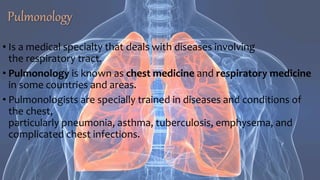
• Is a medical specialty that deals with diseases involving
the respiratory tract.
• Pulmonology is known as chest medicine and respiratory medicine
in some countries and areas.
• Pulmonologists are specially trained in diseases and conditions of
the chest,
particularly pneumonia, asthma, tuberculosis, emphysema, and
complicated chest infections.
Variations in nomenclature
• In the United Kingdom, Ireland, South Africaand Australia the term
"respiratory physician" is used (rather than pulmonologist) to distinguish
a physician that practices pulmonology.
• In Canada, respirology and respirologist are used.
• Surgery of the respiratory tract is generally performed by specialists in
cardiothoracic surgery (or thoracic surgery), though minor procedures may be
performed by pulmonologists.
Diagnosis
The pulmonologist begins the diagnostic process with a general review focusing
on:
• hereditary diseases affecting the lungs (cystic fibrosis, alpha 1-antitrypsin
deficiency)
• exposure to toxins (tobacco smoke, asbestos, exhaust fumes, coal mining
fumes)
• exposure to infectious agents (certain types of birds, malt processing)
• an autoimmune diathesis that might predispose to certain conditions
(pulmonary fibrosis, pulmonary hypertension)
Diagnosis
Physical diagnostics are as important as in the other fields of medicine.
• Inspection of the hands for signs of cyanosis or clubbing, chest wall, and
respiratory rate.
• Palpation of the cervical lymph nodes, trachea and chest wall movement.
• Percussion of the lung fields for dullness or hyper-resonance.
• Auscultation (with a stethoscope) of the lung fields for diminished or unusual
breath sounds.
As many heart diseases can give pulmonary signs, a thorough cardiac
investigation is usually included.
Procedures
• Laboratory investigation of blood (blood tests)
• Spirometry the determination of maximum airflow at a given lung volume.
• Pulmonary Function Tests spirometry, plus response to bronchodilators, lung
volumes, and diffusion capacity.
• Bronchoscopy with bronchoalveolar lavage (BAL), endobronchial and transbronchial
biopsy and epithelial brushing.
• Chest X-rays
• CT scanning
• Scintigraphy and other methods of nuclear medicine
• Positron emission tomography (especially in lung cancer)
• Polysomnography (sleep studies) commonly used for the diagnosis of Sleep apnea
Surgical procedures
• Major surgical procedures on the heart and lungs are performed by a thoracic
surgeon.
• Pulmonologists often perform specialized procedures to get samples from the
inside of the chest or inside of the lung.
• They use radiographic techniques to view vasculature of the lungs and heart
to assist with diagnosis.
Treatment and therapeutics
• Medication is the most important treatment of most diseases of
pulmonology, either by inhalation (bronchodilators and steroids) or in oral
form (antibiotics, leukotriene antagonists).
A common example being the usage of inhalers in the treatment of
inflammatory lung conditions such as asthma or chronic obstructive
pulmonary disease.
Oxygen therapy is often necessary in severe respiratory disease (emphysema
and pulmonary fibrosis).
• Pulmonary rehabilitation is intended to educate the patient, the family, and
improve the overall quality of life and prognosis for the patient.
Education and training
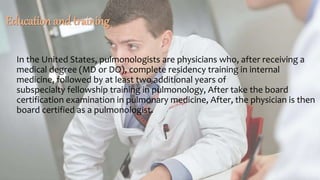
In the United States, pulmonologists are physicians who, after receiving a
medical degree (MD or DO), complete residency training in internal
medicine, followed by at least two additional years of
subspecialty fellowship training in pulmonology, After take the board
certification examination in pulmonary medicine, After, the physician is then
board certified as a pulmonologist.
Pediatric pulmonologist
In the United States, pediatric pulmonologists are physicians who, after
receiving a medical degree (MD or DO), complete residency training
in pediatrics, followed by at least three additional years of subspeciality
fellowship training in pulmonology.
Scientific research
Pulmonologists are involved in both clinical and basic research of
the respiratory system, ranging from the anatomy of the respiratory
epithelium to the most effective treatment of pulmonary hypertension.
Scientific research also takes place to look for causes and possible treatment
in diseases such as pulmonary tuberculosis and lung cancer.
History of pulmonology
• One of the first major discoveries relevant to the field of pulmonology
was the discovery of pulmonary circulation.
• it was thought that blood reaching the right side of the heart passed
through small 'pores' in the septum into the left side to be oxygenated,
as theorized by Galen;, the discovery disproves this theory, which had
previously been accepted since the 2nd century.
• Thirteenth century anatomist and physiologist Ibn Al-Nafis accurately
theorized that there was no 'direct' passage between the two sides
(ventricles) of the heart.
• He believed that the blood must have passed through the pulmonary
artery, through the lungs, and back into the heart to be pumped around
the body.
Pulmonology

Pulmonology

  • 1.
    Ahmed Abdulwahab UG: 1330095 MustafaFiras Hasan UG: 1330181
  • 2.
    Pulmonology • Is amedical specialty that deals with diseases involving the respiratory tract. • Pulmonology is known as chest medicine and respiratory medicine in some countries and areas. • Pulmonologists are specially trained in diseases and conditions of the chest, particularly pneumonia, asthma, tuberculosis, emphysema, and complicated chest infections.
  • 3.
    Variations in nomenclature •In the United Kingdom, Ireland, South Africaand Australia the term "respiratory physician" is used (rather than pulmonologist) to distinguish a physician that practices pulmonology. • In Canada, respirology and respirologist are used. • Surgery of the respiratory tract is generally performed by specialists in cardiothoracic surgery (or thoracic surgery), though minor procedures may be performed by pulmonologists.
  • 4.
    Diagnosis The pulmonologist beginsthe diagnostic process with a general review focusing on: • hereditary diseases affecting the lungs (cystic fibrosis, alpha 1-antitrypsin deficiency) • exposure to toxins (tobacco smoke, asbestos, exhaust fumes, coal mining fumes) • exposure to infectious agents (certain types of birds, malt processing) • an autoimmune diathesis that might predispose to certain conditions (pulmonary fibrosis, pulmonary hypertension)
  • 5.
    Diagnosis Physical diagnostics areas important as in the other fields of medicine. • Inspection of the hands for signs of cyanosis or clubbing, chest wall, and respiratory rate. • Palpation of the cervical lymph nodes, trachea and chest wall movement. • Percussion of the lung fields for dullness or hyper-resonance. • Auscultation (with a stethoscope) of the lung fields for diminished or unusual breath sounds. As many heart diseases can give pulmonary signs, a thorough cardiac investigation is usually included.
  • 6.
    Procedures • Laboratory investigationof blood (blood tests) • Spirometry the determination of maximum airflow at a given lung volume. • Pulmonary Function Tests spirometry, plus response to bronchodilators, lung volumes, and diffusion capacity. • Bronchoscopy with bronchoalveolar lavage (BAL), endobronchial and transbronchial biopsy and epithelial brushing. • Chest X-rays • CT scanning • Scintigraphy and other methods of nuclear medicine • Positron emission tomography (especially in lung cancer) • Polysomnography (sleep studies) commonly used for the diagnosis of Sleep apnea
  • 7.
    Surgical procedures • Majorsurgical procedures on the heart and lungs are performed by a thoracic surgeon. • Pulmonologists often perform specialized procedures to get samples from the inside of the chest or inside of the lung. • They use radiographic techniques to view vasculature of the lungs and heart to assist with diagnosis.
  • 8.
    Treatment and therapeutics •Medication is the most important treatment of most diseases of pulmonology, either by inhalation (bronchodilators and steroids) or in oral form (antibiotics, leukotriene antagonists). A common example being the usage of inhalers in the treatment of inflammatory lung conditions such as asthma or chronic obstructive pulmonary disease. Oxygen therapy is often necessary in severe respiratory disease (emphysema and pulmonary fibrosis). • Pulmonary rehabilitation is intended to educate the patient, the family, and improve the overall quality of life and prognosis for the patient.
  • 9.
    Education and training Inthe United States, pulmonologists are physicians who, after receiving a medical degree (MD or DO), complete residency training in internal medicine, followed by at least two additional years of subspecialty fellowship training in pulmonology, After take the board certification examination in pulmonary medicine, After, the physician is then board certified as a pulmonologist.
  • 10.
    Pediatric pulmonologist In theUnited States, pediatric pulmonologists are physicians who, after receiving a medical degree (MD or DO), complete residency training in pediatrics, followed by at least three additional years of subspeciality fellowship training in pulmonology.
  • 11.
    Scientific research Pulmonologists areinvolved in both clinical and basic research of the respiratory system, ranging from the anatomy of the respiratory epithelium to the most effective treatment of pulmonary hypertension. Scientific research also takes place to look for causes and possible treatment in diseases such as pulmonary tuberculosis and lung cancer.
  • 12.
    History of pulmonology •One of the first major discoveries relevant to the field of pulmonology was the discovery of pulmonary circulation. • it was thought that blood reaching the right side of the heart passed through small 'pores' in the septum into the left side to be oxygenated, as theorized by Galen;, the discovery disproves this theory, which had previously been accepted since the 2nd century. • Thirteenth century anatomist and physiologist Ibn Al-Nafis accurately theorized that there was no 'direct' passage between the two sides (ventricles) of the heart. • He believed that the blood must have passed through the pulmonary artery, through the lungs, and back into the heart to be pumped around the body.