

Conducted by
Mr. Sushil B. Bansode
 Re + Search
 To find Something New in Existing Thing.
 Art of Scientific investigation.
 Fact finding process, A movement from the
unknown to known.
 Research is an organized and systematic way
of finding the Answer to questions.
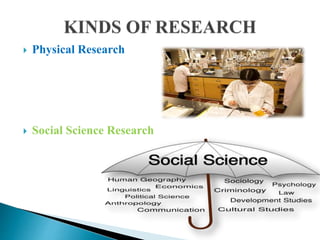
 Physical Research
 Social Science Research
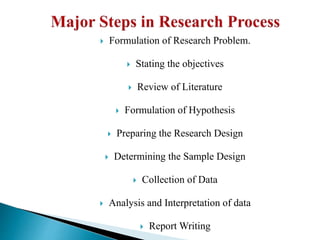
 Formulation of Research Problem.
 Stating the objectives
 Review of Literature
 Formulation of Hypothesis
 Preparing the Research Design
 Determining the Sample Design
 Collection of Data
 Analysis and Interpretation of data
 Report Writing
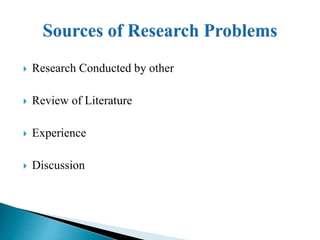
 Research Conducted by other
 Review of Literature
 Experience
 Discussion
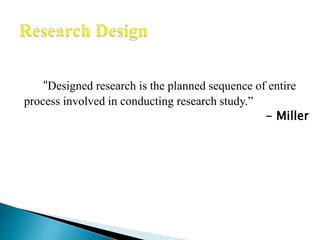
“Designed research is the planned sequence of entire
process involved in conducting research study.”
- Miller
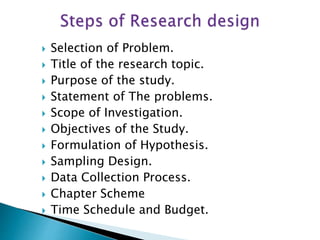
 Selection of Problem.
 Title of the research topic.
 Purpose of the study.
 Statement of The problems.
 Scope of Investigation.
 Objectives of the Study.
 Formulation of Hypothesis.
 Sampling Design.
 Data Collection Process.
 Chapter Scheme
 Time Schedule and Budget.
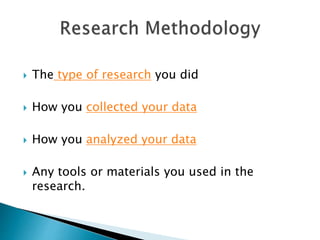
 The type of research you did
 How you collected your data
 How you analyzed your data
 Any tools or materials you used in the
research.
 Primary Data
Primary data is data that is collected by a researcher from
first-hand sources, using methods like surveys, interviews, or
experiments.
 Secondary Data
Secondary data is data gathered from studies, surveys, or
experiments that have been run by other people or for other
research.
 A Project is systematic and scientific study of real business
problems.
 It attempts to identify, analysis and solve it through the
application of managerial skill.
 The project should involves scientific collection of data,
analysis and interpretation of it with meaningful
conclusions and practical suggestions.
 It needs expert guidance and review of past works.
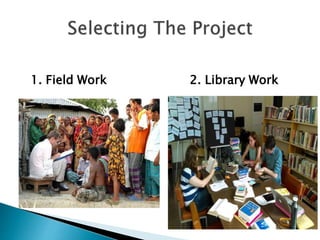
1. Field Work 2. Library Work
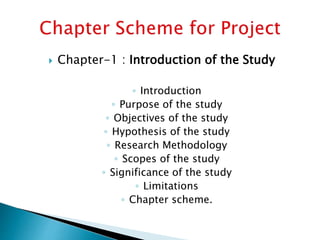
 Chapter-1 : Introduction of the Study
◦ Introduction
◦ Purpose of the study
◦ Objectives of the study
◦ Hypothesis of the study
◦ Research Methodology
◦ Scopes of the study
◦ Significance of the study
◦ Limitations
◦ Chapter scheme.
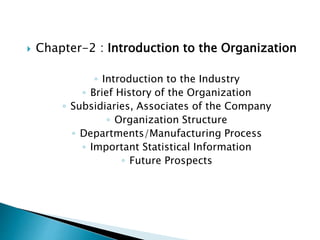
 Chapter-2 : Introduction to the Organization
◦ Introduction to the Industry
◦ Brief History of the Organization
◦ Subsidiaries, Associates of the Company
◦ Organization Structure
◦ Departments/Manufacturing Process
◦ Important Statistical Information
◦ Future Prospects
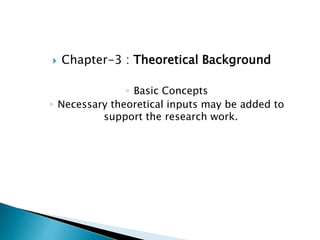
 Chapter-3 : Theoretical Background
◦ Basic Concepts
◦ Necessary theoretical inputs may be added to
support the research work.
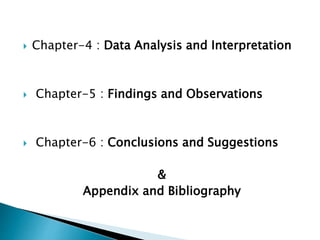
 Chapter-4 : Data Analysis and Interpretation
 Chapter-5 : Findings and Observations
 Chapter-6 : Conclusions and Suggestions
&
Appendix and Bibliography
 Filed work or library work
 Prepare Synopsis
 Prepare budget
 And finally turn to write project
 Font : Times New Roman
 Size of the paper : A4
 Line Spacing : 1.5
 Margin : 2-inches for left and 1-inches for remaining sides
 Page numbers are compulsory.
 All Heading at proper place in bold.
 There should be a proper linkage between objectives, hypothesis,
data and interpretation, findings and suggestions.
1. An empirical study of Ethical Vs Unethical Decision
making by Certified Management Accountants.
2. To study the perception of employees about
performance appraisal effectiveness and its impact on
the employee motivation.
3. A study of effect of taxation on business investment.
4. An Empirical evaluation of an inter-Bank electronic
payment system.
5. A Study on Effects of fun at workplace and employee
morale and productivity and job satisfaction
Thank You
Email:bansodes1994@gmail.com
Mob No. 9404286605

Research Methodology & Report Writing

  • 1.
  • 2.
     Re +Search  To find Something New in Existing Thing.  Art of Scientific investigation.  Fact finding process, A movement from the unknown to known.  Research is an organized and systematic way of finding the Answer to questions.
  • 3.
     Physical Research Social Science Research
  • 4.
     Formulation ofResearch Problem.  Stating the objectives  Review of Literature  Formulation of Hypothesis  Preparing the Research Design  Determining the Sample Design  Collection of Data  Analysis and Interpretation of data  Report Writing
  • 5.
     Research Conductedby other  Review of Literature  Experience  Discussion
  • 6.
    “Designed research isthe planned sequence of entire process involved in conducting research study.” - Miller
  • 7.
     Selection ofProblem.  Title of the research topic.  Purpose of the study.  Statement of The problems.  Scope of Investigation.  Objectives of the Study.  Formulation of Hypothesis.  Sampling Design.  Data Collection Process.  Chapter Scheme  Time Schedule and Budget.
  • 8.
     The typeof research you did  How you collected your data  How you analyzed your data  Any tools or materials you used in the research.
  • 10.
     Primary Data Primarydata is data that is collected by a researcher from first-hand sources, using methods like surveys, interviews, or experiments.  Secondary Data Secondary data is data gathered from studies, surveys, or experiments that have been run by other people or for other research.
  • 11.
     A Projectis systematic and scientific study of real business problems.  It attempts to identify, analysis and solve it through the application of managerial skill.  The project should involves scientific collection of data, analysis and interpretation of it with meaningful conclusions and practical suggestions.  It needs expert guidance and review of past works.
  • 12.
    1. Field Work2. Library Work
  • 13.
     Chapter-1 :Introduction of the Study ◦ Introduction ◦ Purpose of the study ◦ Objectives of the study ◦ Hypothesis of the study ◦ Research Methodology ◦ Scopes of the study ◦ Significance of the study ◦ Limitations ◦ Chapter scheme.
  • 14.
     Chapter-2 :Introduction to the Organization ◦ Introduction to the Industry ◦ Brief History of the Organization ◦ Subsidiaries, Associates of the Company ◦ Organization Structure ◦ Departments/Manufacturing Process ◦ Important Statistical Information ◦ Future Prospects
  • 15.
     Chapter-3 :Theoretical Background ◦ Basic Concepts ◦ Necessary theoretical inputs may be added to support the research work.
  • 16.
     Chapter-4 :Data Analysis and Interpretation  Chapter-5 : Findings and Observations  Chapter-6 : Conclusions and Suggestions & Appendix and Bibliography
  • 17.
     Filed workor library work  Prepare Synopsis  Prepare budget  And finally turn to write project
  • 18.
     Font :Times New Roman  Size of the paper : A4  Line Spacing : 1.5  Margin : 2-inches for left and 1-inches for remaining sides  Page numbers are compulsory.  All Heading at proper place in bold.  There should be a proper linkage between objectives, hypothesis, data and interpretation, findings and suggestions.
  • 19.
    1. An empiricalstudy of Ethical Vs Unethical Decision making by Certified Management Accountants. 2. To study the perception of employees about performance appraisal effectiveness and its impact on the employee motivation. 3. A study of effect of taxation on business investment. 4. An Empirical evaluation of an inter-Bank electronic payment system. 5. A Study on Effects of fun at workplace and employee morale and productivity and job satisfaction
  • 21.