





Components of the Research Report
Developed for
Istanbul Bilim University
26 February 2013
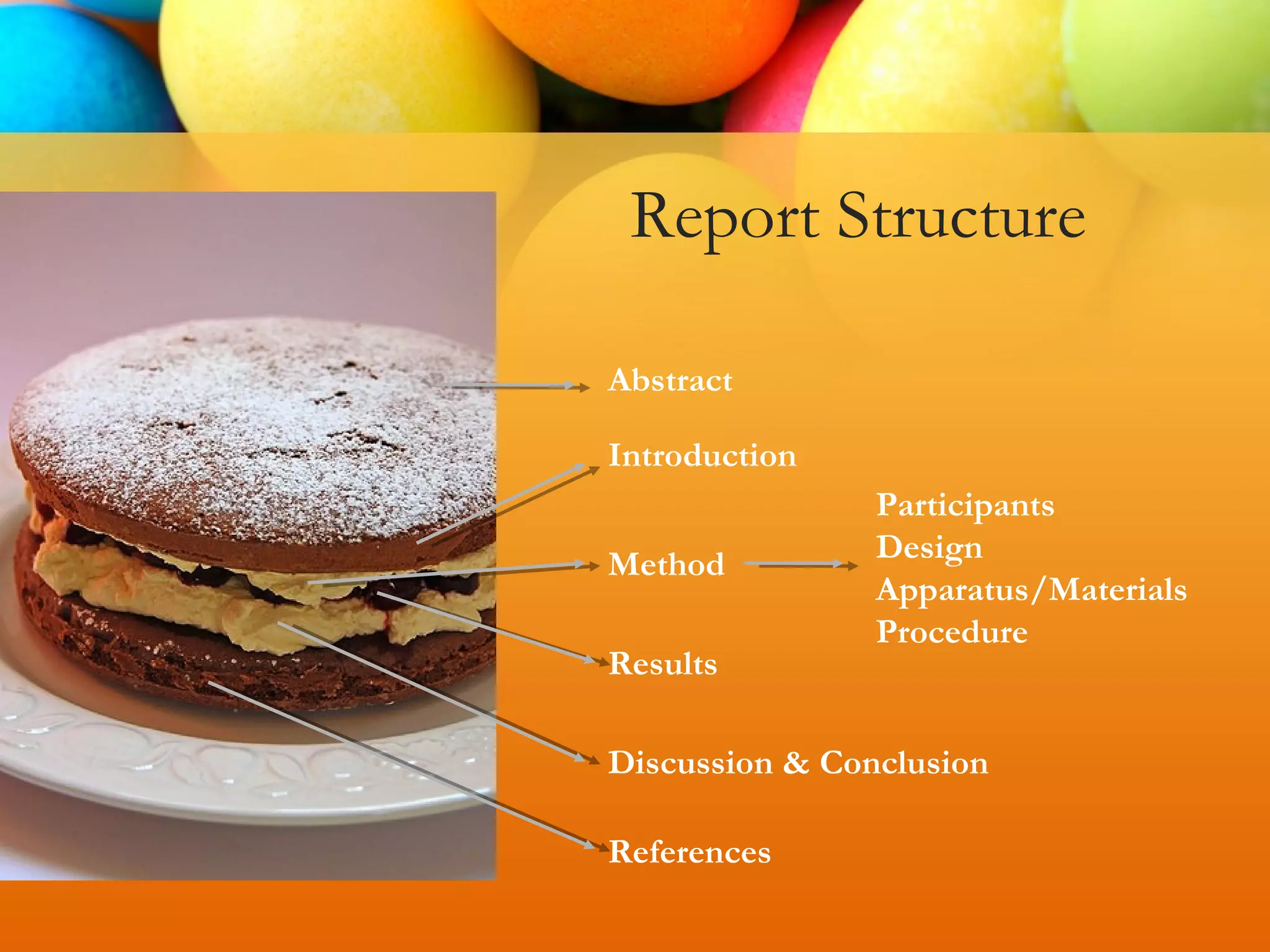
Report Structure
Abstract
Introduction
Method
Results
Discussion & Conclusion
References
Participants
Design
Apparatus/Materials
Procedure
Research Report
 Readers expect to read about your research in
the sequence in which the research
developed:
o
What question you set out to answer
o
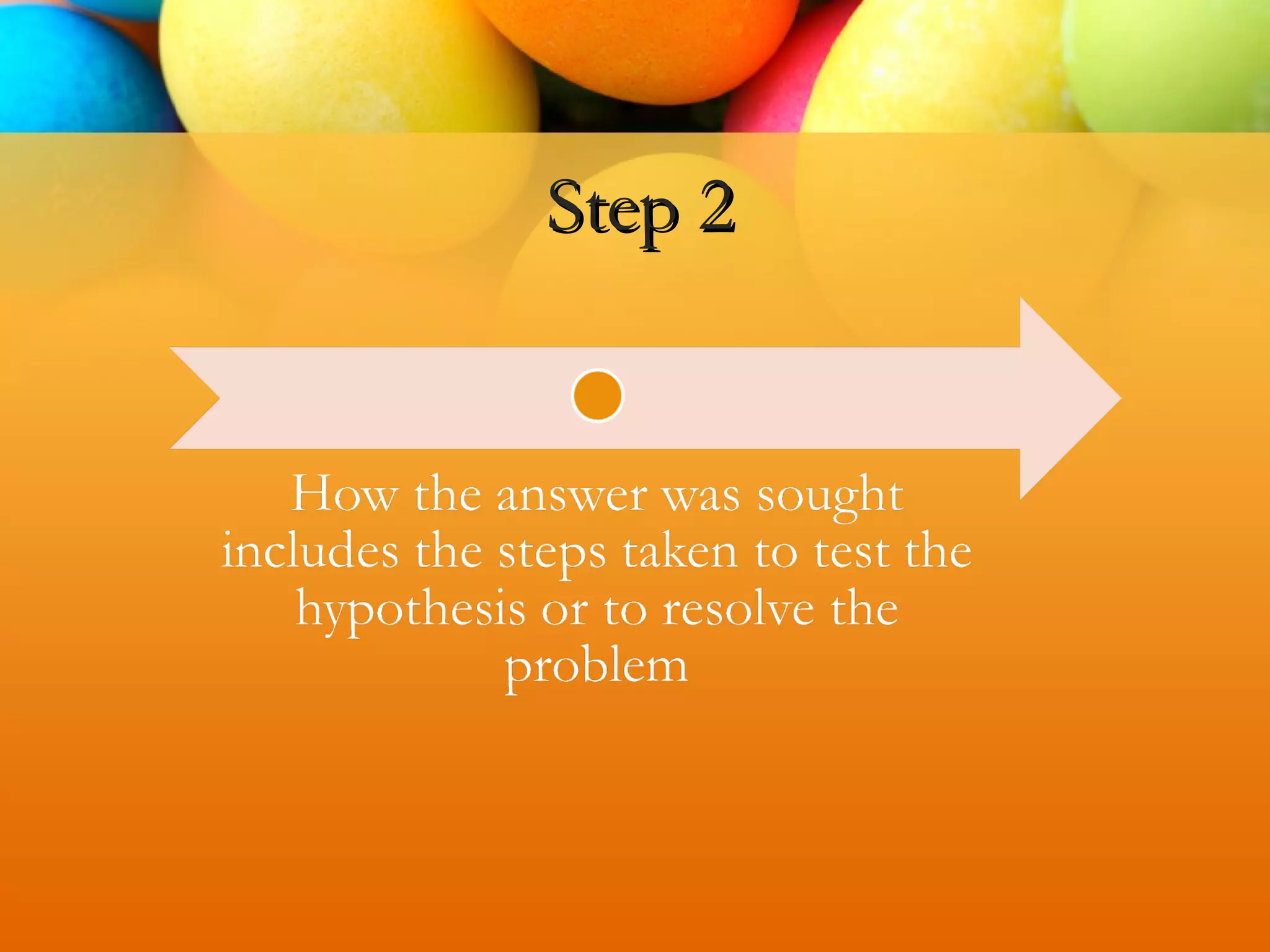
How you sought the answer
o
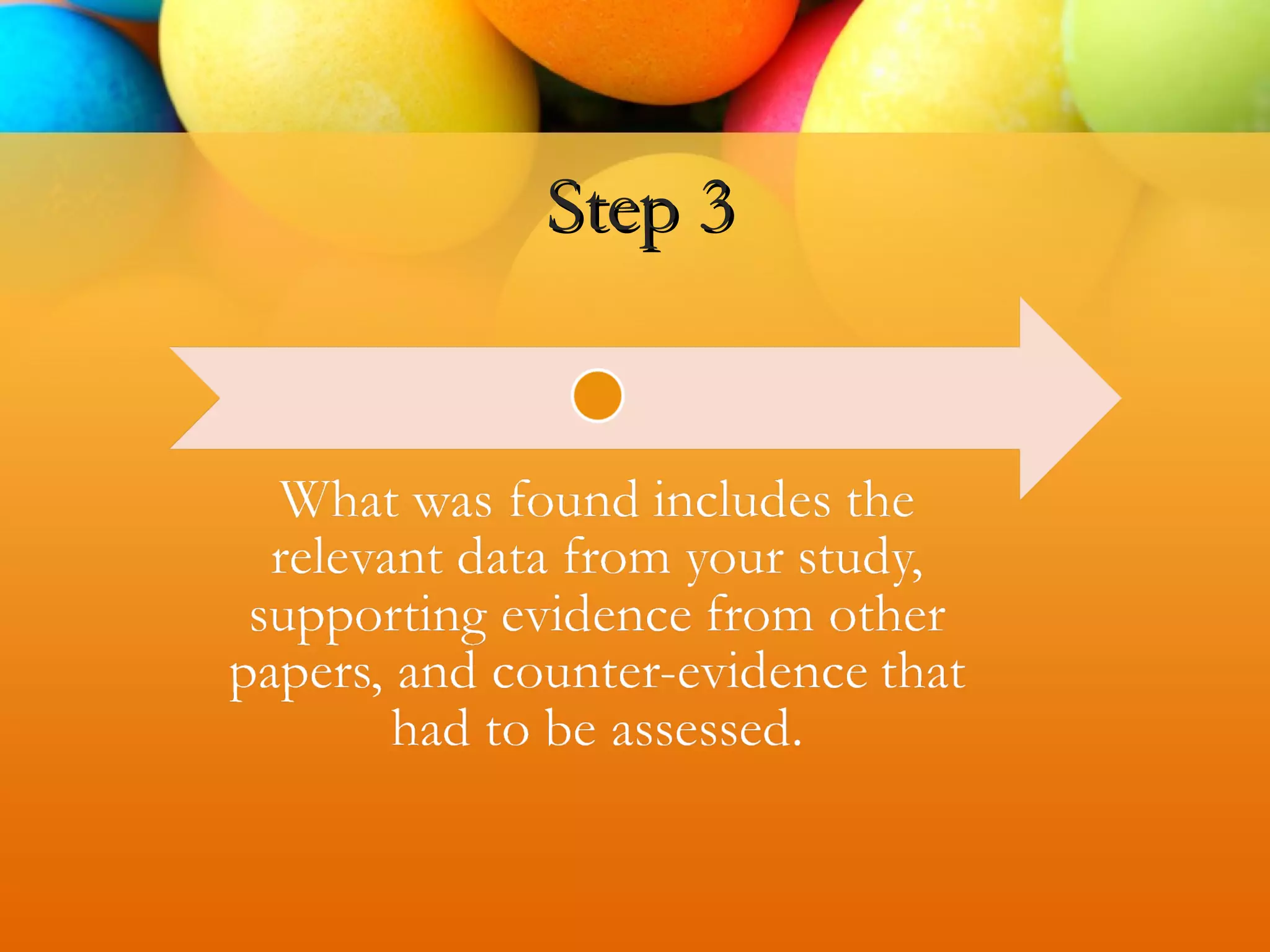
What was found
o
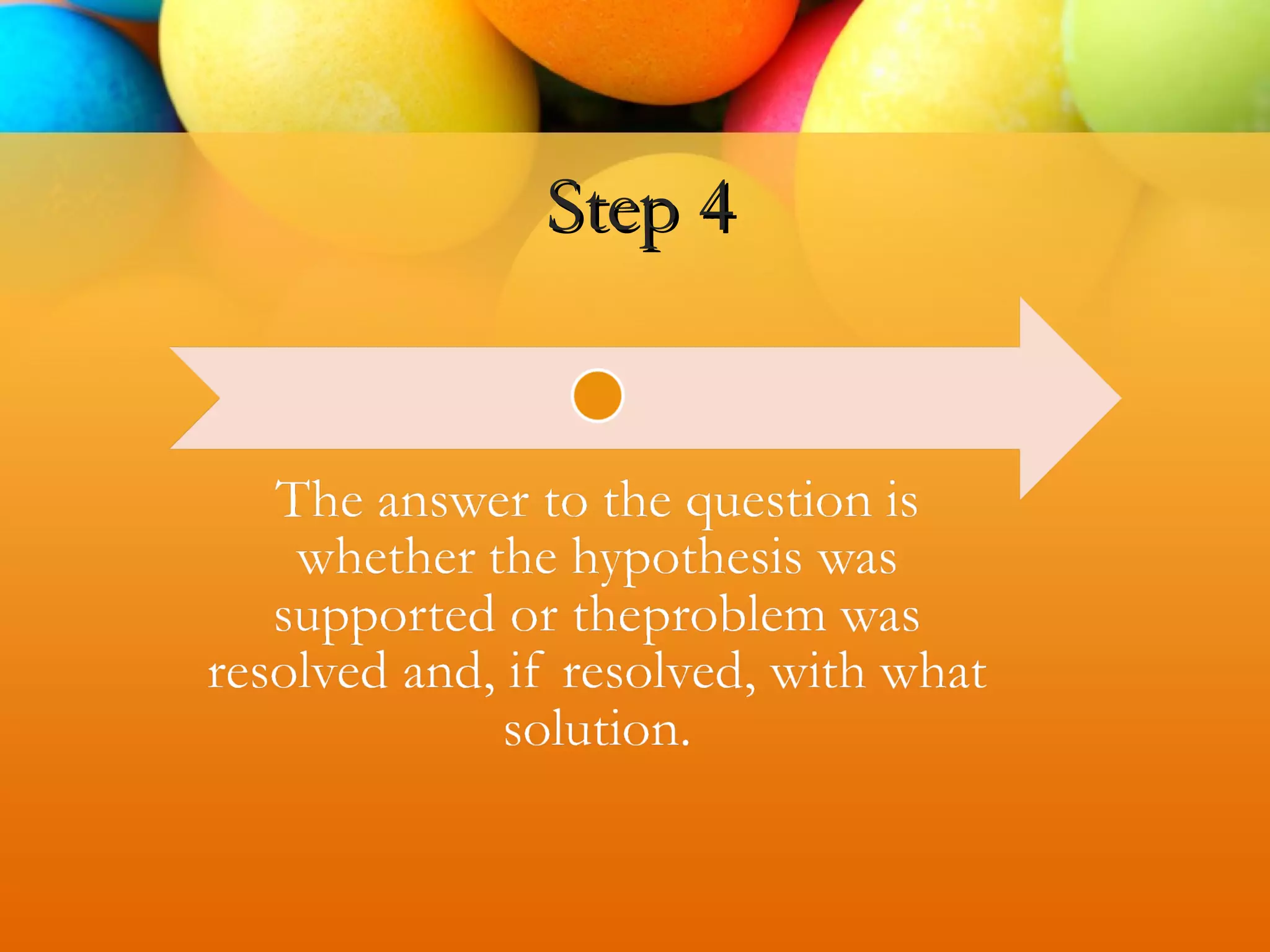
What your answer is
 A research paper gives information in 4 steps
The Conventional Format
Step 1
Step 2
Step 3
Step 4
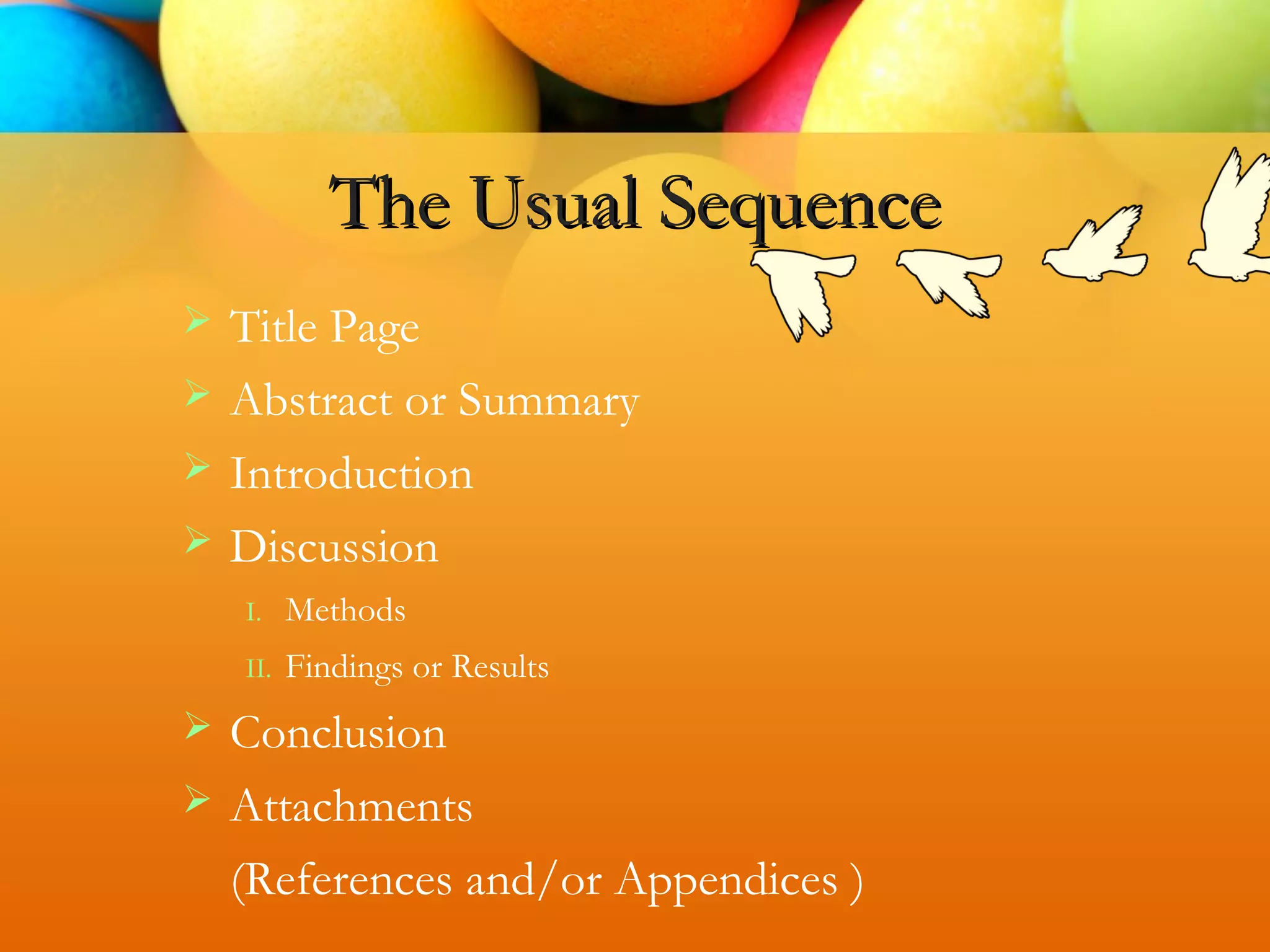
 Title Page
 Abstract or Summary
 Introduction
 Discussion
I. Methods
II. Findings or Results
 Conclusion
 Attachments
(References and/or Appendices )
The Usual Sequence
 We will devote an entire session to this so will leave it
for now, except to say that today a Structured Abstract is
used.
The Abstract
 Tell the reader why the research was started
 Do not explain what can be found in any textbook
in the field
 Do not elaborate on terms used in the title of the
paper
 Make clear what question the research was designed
to answer
The Introduction
 Most authors close an Introduction with a statement
of purpose.
 Some may include a short summary of the study
design
 Some may also close the Introduction a short
statement of the research findings- do not do this
The Introduction
Methods
Methods- Organization
 Study design is selected (after the hypothesis is
stated)
 The subjects to be studied are defined
 Interventions (such as treatments are decided on in
detail
 Measurements and other observations to be made
are specified, including the methods
 Statistical procedures for assessment of data are
selected
Study Design
 Those that are well known need be specified by title
only
 Those that are unusual but have been described
should have a citation to the source
 New designs should be described in detail
Subjects
 Characterize subjects as fully as possible
 Ethical controls should be noted as well
o
Informed consent
o
IRB approval
Intervention/Treatment
Describe the intervention fully
o
Control
o
Experimental
Measurements and Other
Observations
 Standard methods for laboratory or other
procedures need to be identified only by name
and citation
 Variations from these should be described in
enough detail to enable duplication by another
person
 Unpublished methods must be described in
detail and evidence they have been validated
presented.
Statistical Analysis
Methods- General Comments
 You can always use subheadings in this
section, ie:
o
Study Design
o
Subjects
o
Experimental Protocol
o
Statistical Analysis
 Describe your evidence as efficiently as
possible
 Numerical data should be presented in tables
of graphs
 The text usually will present no more than
group differences
Discussion
 The first need is to give the answer to your
research question
 Evidence from other papers may not be the
only evidence you have to present in the
Discussion; there may be counter-evidence to
be presented and assessed.
THE Discussion
 According to Robert Day (How to Write and Publish
a Scientific Paper), a Discussion should:
o
Try to present the principles, relationships, and
generalizations shown by the Results. (Keep in
mind that you discuss; you do not recapitulate the
Results).
o
Point out any exceptions or any lack of
correlation, and define unsettled points
THE Discussion
 According to Day (Continued):
o
Show how your results and interpretations
agree or contrast with previously published
work
o
Don’t be shy; discuss the theoretical
implications of your work, as well as any
possible practical applications
THE Discussion
 And more from Day:
o
State your conclusion, as clearly as possible
o
Summarize your evidence for each conclusion.
Or, as the wise old scientist will tell you, “Never
assume anything except a 4% mortgage.”
 In simple terms, the primary purpose of the
Discussion is to show the relationship among
observed facts
THE Discussion
 Too often, the significance of the results is
not discussed or addressed adequately.
 End the Discussion with a short summary or
conclusion regarding the significance of the
work
The Conclusion
 Too often, the significance of the results is
not discussed or addressed adequately.
 End the Discussion with a short summary or
conclusion regarding the significance of the
work
The Conclusion
 (Cont)”…and its structure should be built on
the natural sequence of question, evidence,
and answer fitted into a format that
reproduces the sequence of steps in the
research.”
The Conclusion
 This summarizes your findings and your
thoughts as to the importance of the work you
did.
Sezer SARIÖZ
English Teacher | Free-lance Interpreter
Sezer SARIÖZ
English Teacher | Free-lance Interpreter
www.sezersarioz.com sezer@sezersarioz.com
sezersarioz sezer.sarioz.5

Components of the Research Report

  • 1.
    Components of theResearch Report Developed for Istanbul Bilim University 26 February 2013
  • 3.
    Report Structure Abstract Introduction Method Results Discussion &Conclusion References Participants Design Apparatus/Materials Procedure
  • 4.
  • 5.
     Readers expectto read about your research in the sequence in which the research developed: o What question you set out to answer o How you sought the answer o What was found o What your answer is  A research paper gives information in 4 steps The Conventional Format
  • 6.
  • 7.
  • 8.
  • 9.
  • 10.
     Title Page Abstract or Summary  Introduction  Discussion I. Methods II. Findings or Results  Conclusion  Attachments (References and/or Appendices ) The Usual Sequence
  • 11.
     We willdevote an entire session to this so will leave it for now, except to say that today a Structured Abstract is used. The Abstract
  • 12.
     Tell thereader why the research was started  Do not explain what can be found in any textbook in the field  Do not elaborate on terms used in the title of the paper  Make clear what question the research was designed to answer The Introduction
  • 13.
     Most authorsclose an Introduction with a statement of purpose.  Some may include a short summary of the study design  Some may also close the Introduction a short statement of the research findings- do not do this The Introduction
  • 14.
  • 15.
    Methods- Organization  Studydesign is selected (after the hypothesis is stated)  The subjects to be studied are defined  Interventions (such as treatments are decided on in detail  Measurements and other observations to be made are specified, including the methods  Statistical procedures for assessment of data are selected
  • 16.
    Study Design  Thosethat are well known need be specified by title only  Those that are unusual but have been described should have a citation to the source  New designs should be described in detail
  • 17.
    Subjects  Characterize subjectsas fully as possible  Ethical controls should be noted as well o Informed consent o IRB approval
  • 18.
  • 19.
    Measurements and Other Observations Standard methods for laboratory or other procedures need to be identified only by name and citation  Variations from these should be described in enough detail to enable duplication by another person  Unpublished methods must be described in detail and evidence they have been validated presented.
  • 20.
  • 21.
    Methods- General Comments You can always use subheadings in this section, ie: o Study Design o Subjects o Experimental Protocol o Statistical Analysis
  • 22.
     Describe yourevidence as efficiently as possible  Numerical data should be presented in tables of graphs  The text usually will present no more than group differences
  • 23.
    Discussion  The firstneed is to give the answer to your research question  Evidence from other papers may not be the only evidence you have to present in the Discussion; there may be counter-evidence to be presented and assessed.
  • 24.
    THE Discussion  Accordingto Robert Day (How to Write and Publish a Scientific Paper), a Discussion should: o Try to present the principles, relationships, and generalizations shown by the Results. (Keep in mind that you discuss; you do not recapitulate the Results). o Point out any exceptions or any lack of correlation, and define unsettled points
  • 25.
    THE Discussion  Accordingto Day (Continued): o Show how your results and interpretations agree or contrast with previously published work o Don’t be shy; discuss the theoretical implications of your work, as well as any possible practical applications
  • 26.
    THE Discussion  Andmore from Day: o State your conclusion, as clearly as possible o Summarize your evidence for each conclusion. Or, as the wise old scientist will tell you, “Never assume anything except a 4% mortgage.”  In simple terms, the primary purpose of the Discussion is to show the relationship among observed facts
  • 27.
    THE Discussion  Toooften, the significance of the results is not discussed or addressed adequately.  End the Discussion with a short summary or conclusion regarding the significance of the work
  • 28.
    The Conclusion  Toooften, the significance of the results is not discussed or addressed adequately.  End the Discussion with a short summary or conclusion regarding the significance of the work
  • 29.
    The Conclusion  (Cont)”…andits structure should be built on the natural sequence of question, evidence, and answer fitted into a format that reproduces the sequence of steps in the research.”
  • 30.
    The Conclusion  Thissummarizes your findings and your thoughts as to the importance of the work you did.
  • 31.
    Sezer SARIÖZ English Teacher| Free-lance Interpreter Sezer SARIÖZ English Teacher | Free-lance Interpreter www.sezersarioz.com sezer@sezersarioz.com sezersarioz sezer.sarioz.5