ORCID: RESEARCH IN A WORLD
WHERE MACHINES READ
ORCID ABU DHABI WORKSHOP | NOVEMBER 14, 2016
MATTHEW BUYS
orcid.org/0000-0001-7234-3684
REGIONAL DIRECTOR
ENGAGING RESEARCHERS
“Researchers want to be read,
acknowledged, and quoted.”
“Researchers want to spend their
time on research, not reporting”
The research community has lacked
the ability to link researchers and
scholars with their professional
activities.
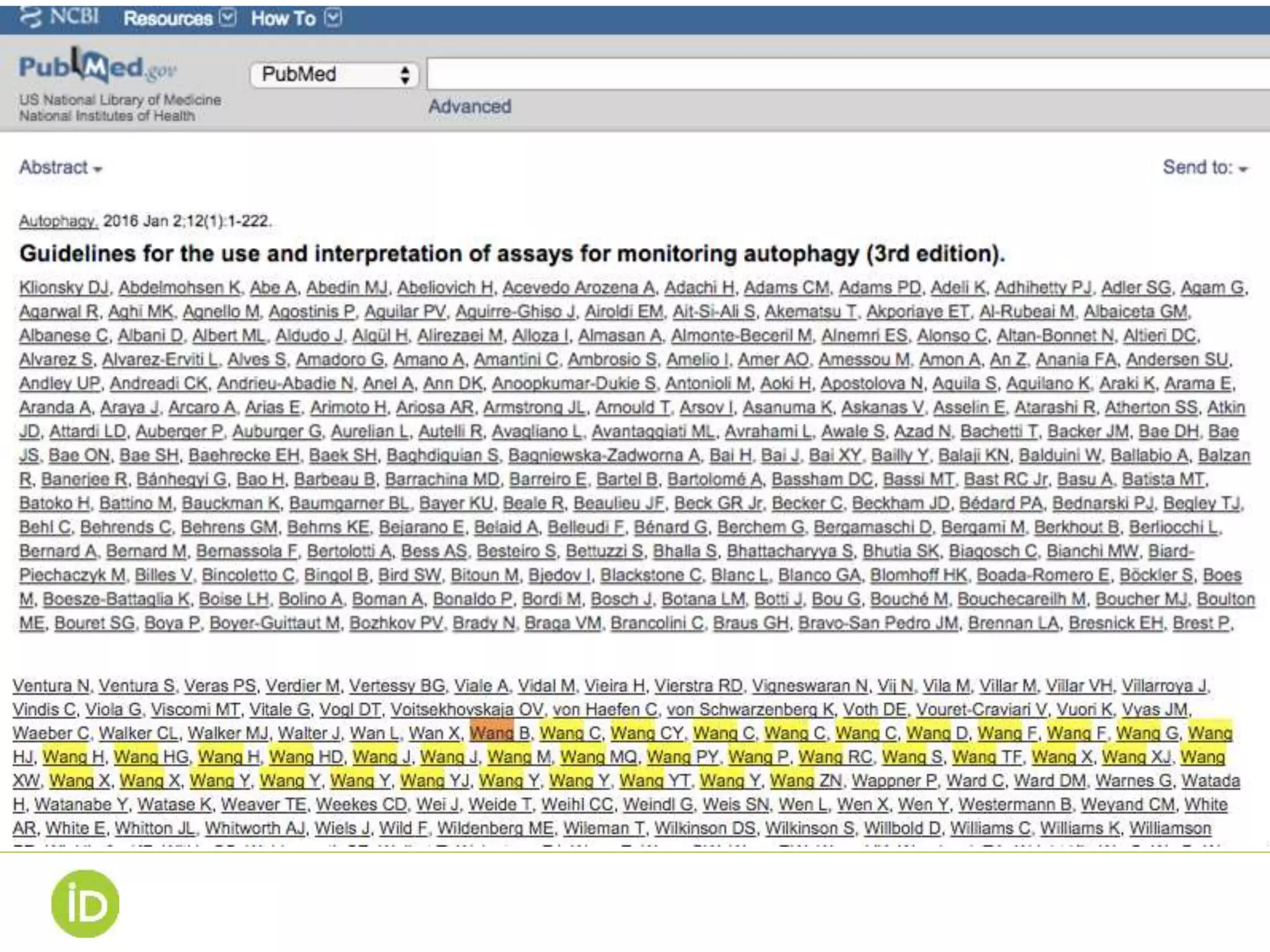
• Name variations:
• Matthew J Buys, MJ Buys, M Buys, Matthew John Buys, ‫بايز‬،
‫ماثيو‬
• Institutional variations:
• ORCID, ORCID Incorporated, ORCID Inc, ORCID EMEA
WHY IS THERE A PROBLEM?
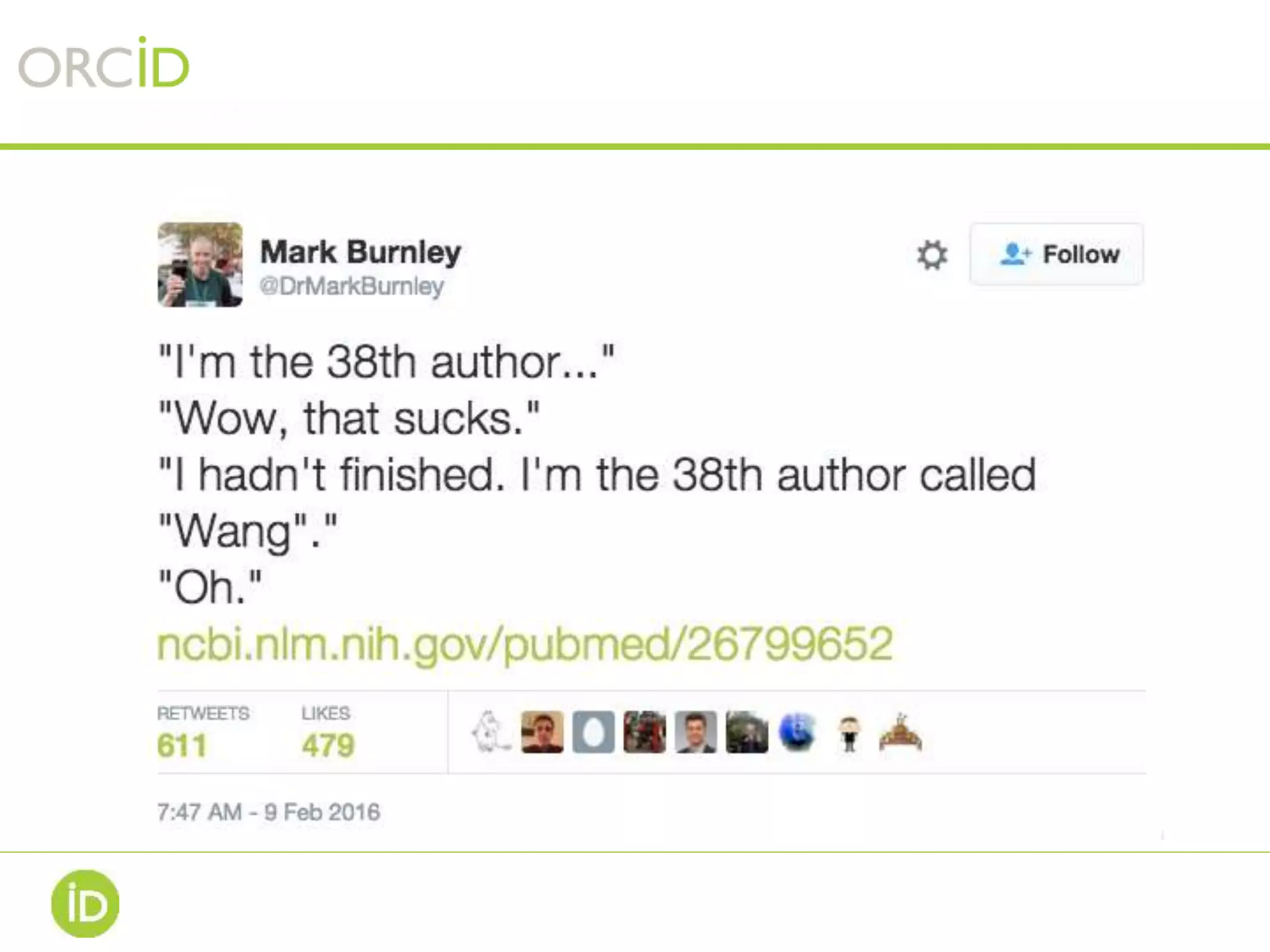
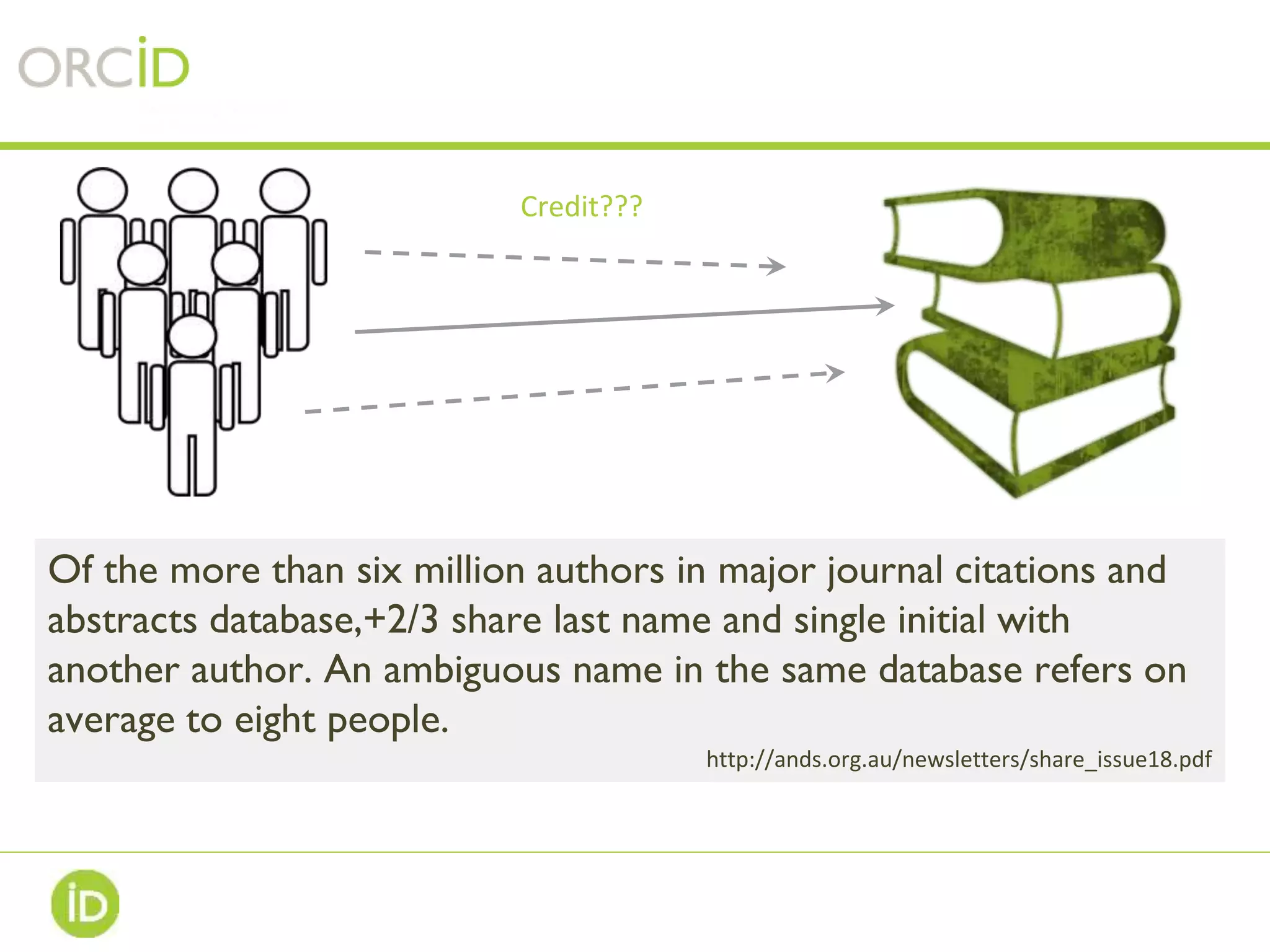
Of the more than six million authors in major journal citations and
abstracts database,+2/3 share last name and single initial with
another author. An ambiguous name in the same database refers on
average to eight people.
http://ands.org.au/newsletters/share_issue18.pdf
Credit???
Names are Messy
CAN NAMES BE CLEANED UP?
Of course they can!
We need to use digital names:
persistent identifiers that uniquely
specify the person, organization, or
object to which a name refers
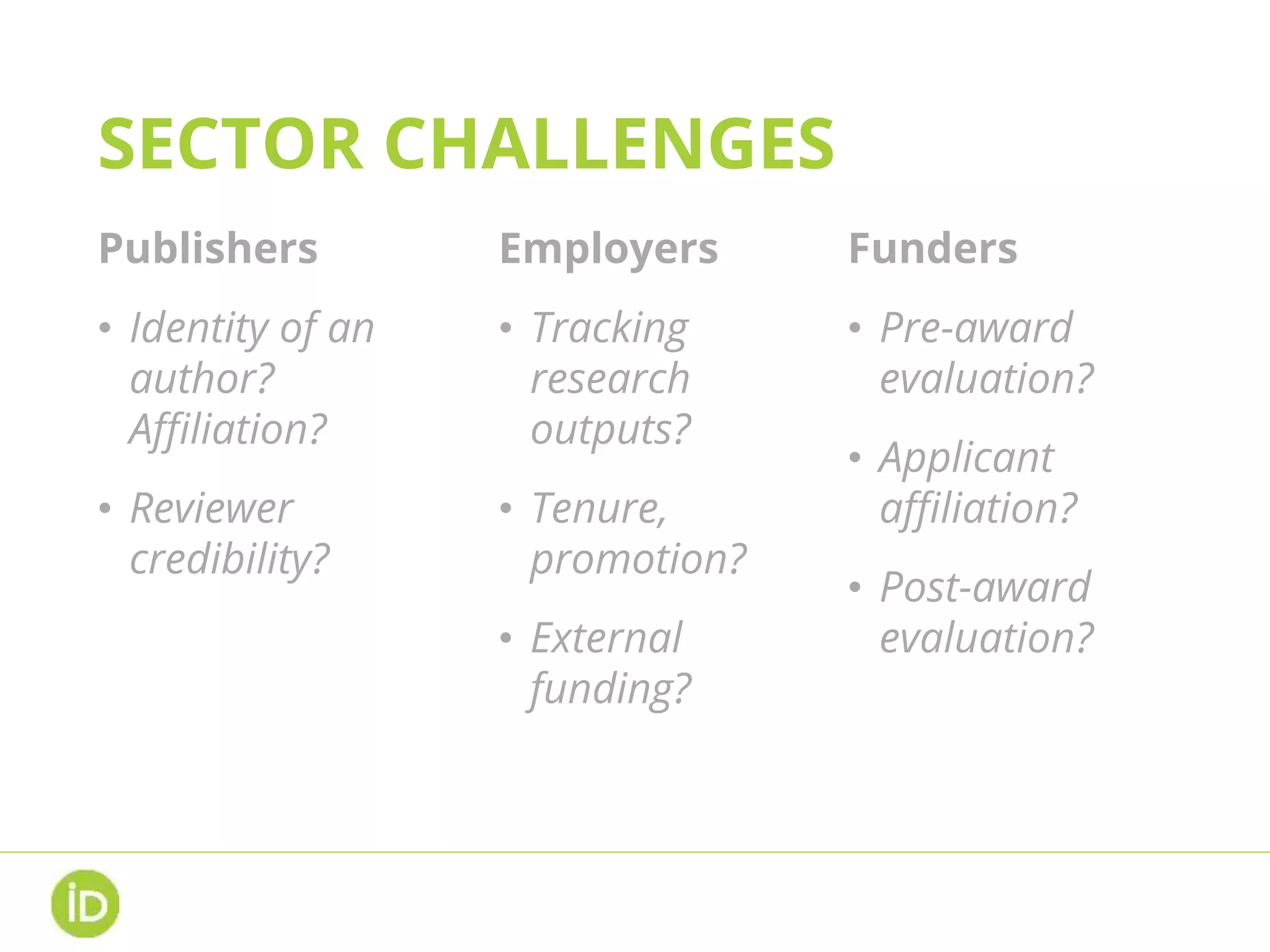
SECTOR CHALLENGES
Publishers
• Identity of an
author?
Affiliation?
• Reviewer
credibility?
Employers
• Tracking
research
outputs?
• Tenure,
promotion?
• External
funding?
Funders
• Pre-award
evaluation?
• Applicant
affiliation?
• Post-award
evaluation?
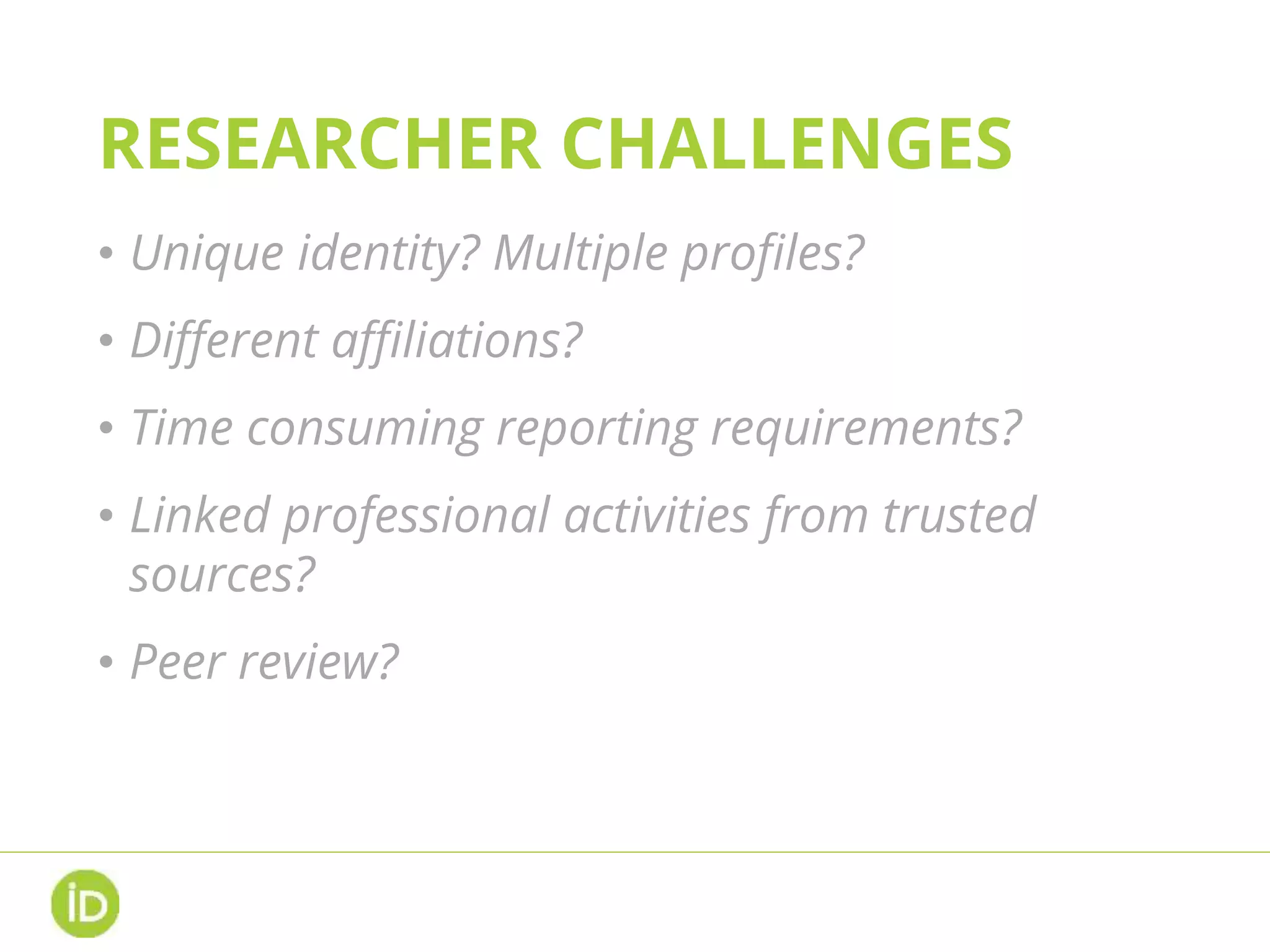
RESEARCHER CHALLENGES
• Unique identity? Multiple profiles?
• Different affiliations?
• Time consuming reporting requirements?
• Linked professional activities from trusted
sources?
• Peer review?
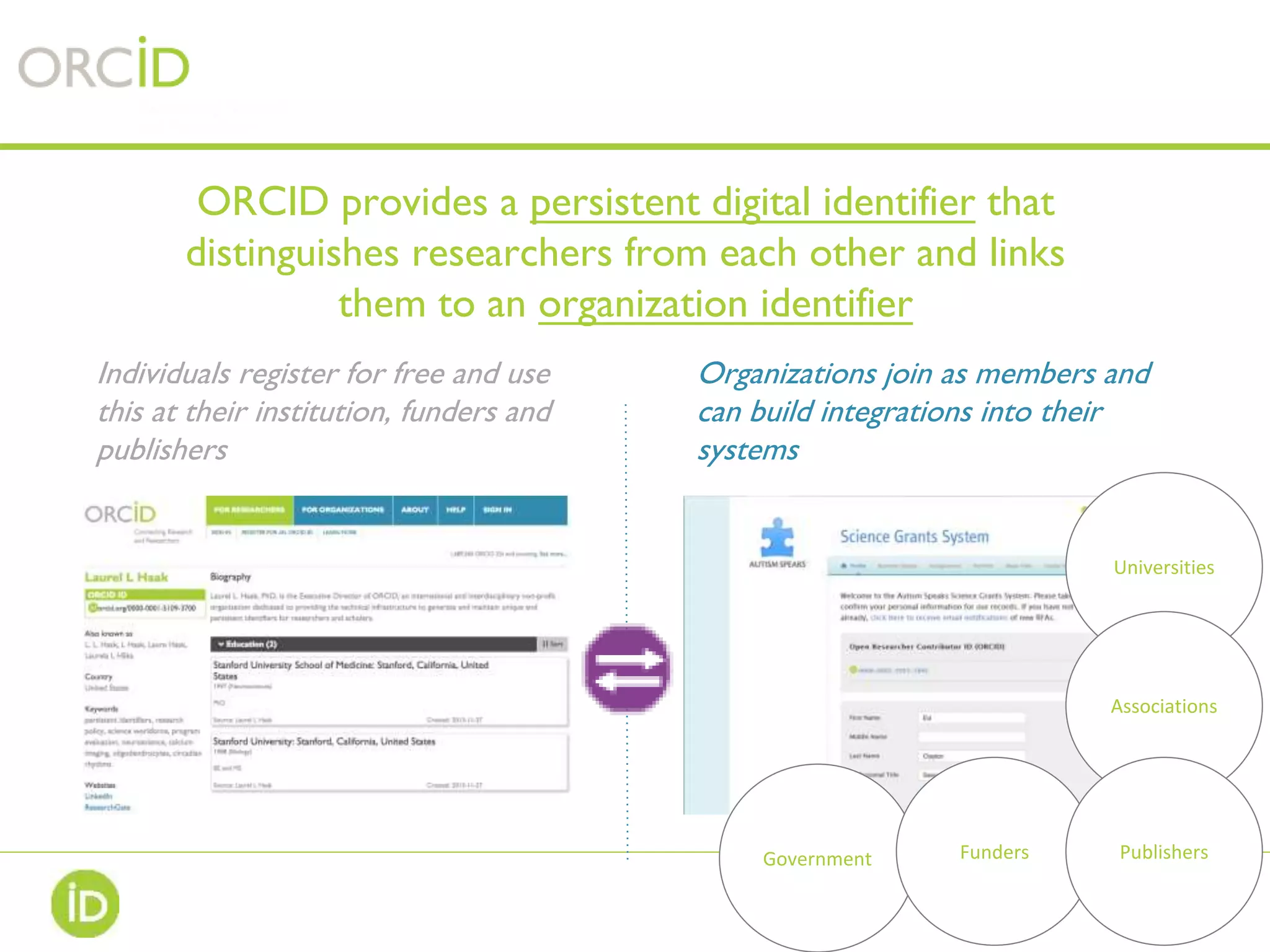
Government
ORCID provides a persistent digital identifier that
distinguishes researchers from each other and links
them to an organization identifier
Individuals register for free and use
this at their institution, funders and
publishers
Organizations join as members and
can build integrations into their
systems
Universities
Funders
Associations
Publishers
ORCID IS OPEN
• Non-proprietary and platform-neutral
• International service that integrates with
other researcher identifiers
• Registry use is free for individuals
• Independent non-profit membership
organization
• Open data, software, APIs, and
documentation
ANY DISCIPLINE, ANY
COUNTRY
• ORCID can connect to over 30 work types, in any
language
• The Registry is available in 11 languages
• We have staff in 9 countries who speak 7
languages
• We have members in over 20 countries, across
disciplines
• We have users in every country
RESEARCHER
RESPONSIBILITY
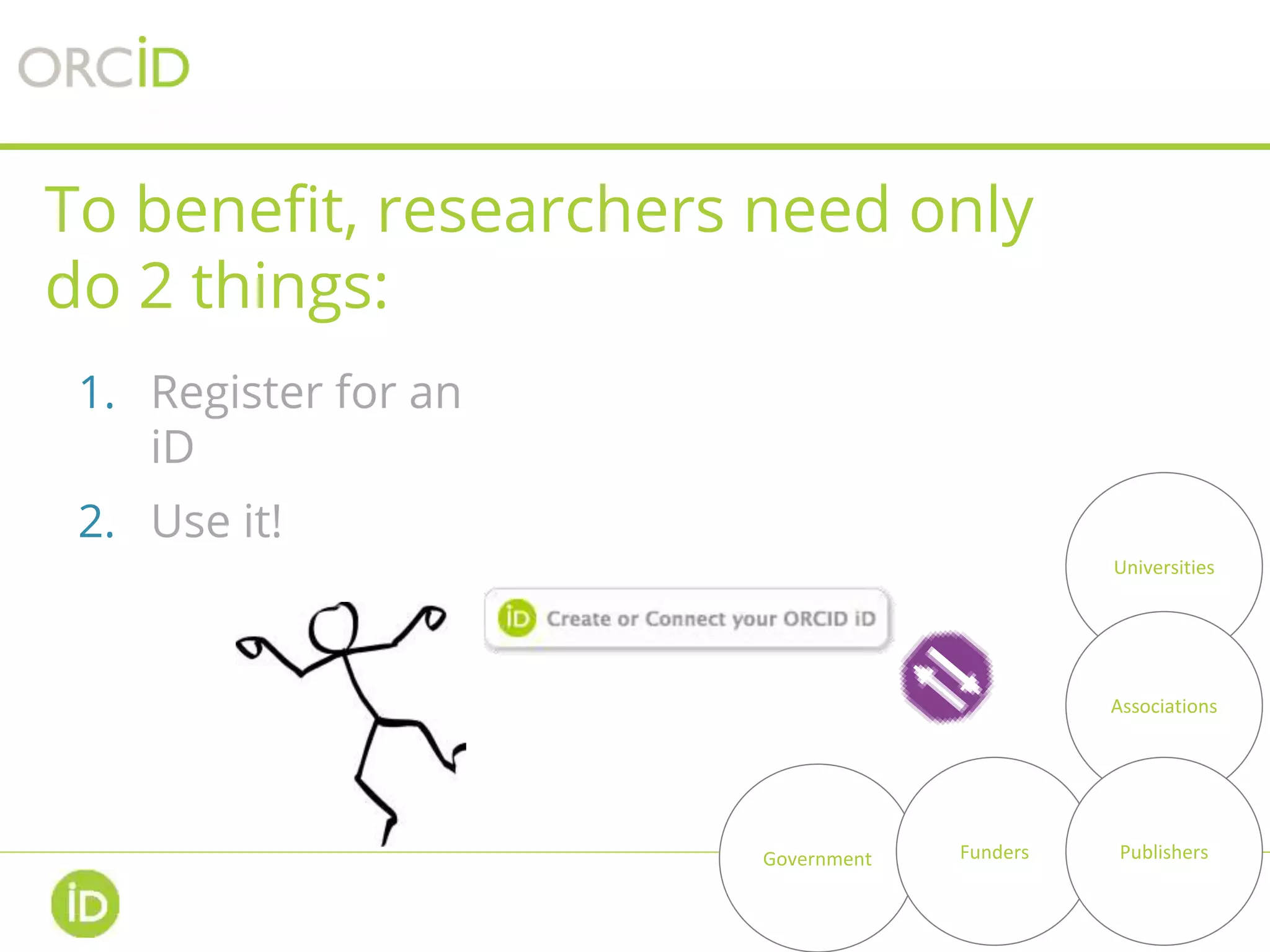
To benefit, researchers need only
do 2 things:
1. Register for an
iD
2. Use it!
Government
Universities
Funders
Associations
Publishers
Over 2.7 million researchers have
registered for an ORCID identifier.
ORCID iDs are associated with:
• >6 million unique DOIs (papers & data)
• >50 thousand unique organization IDs
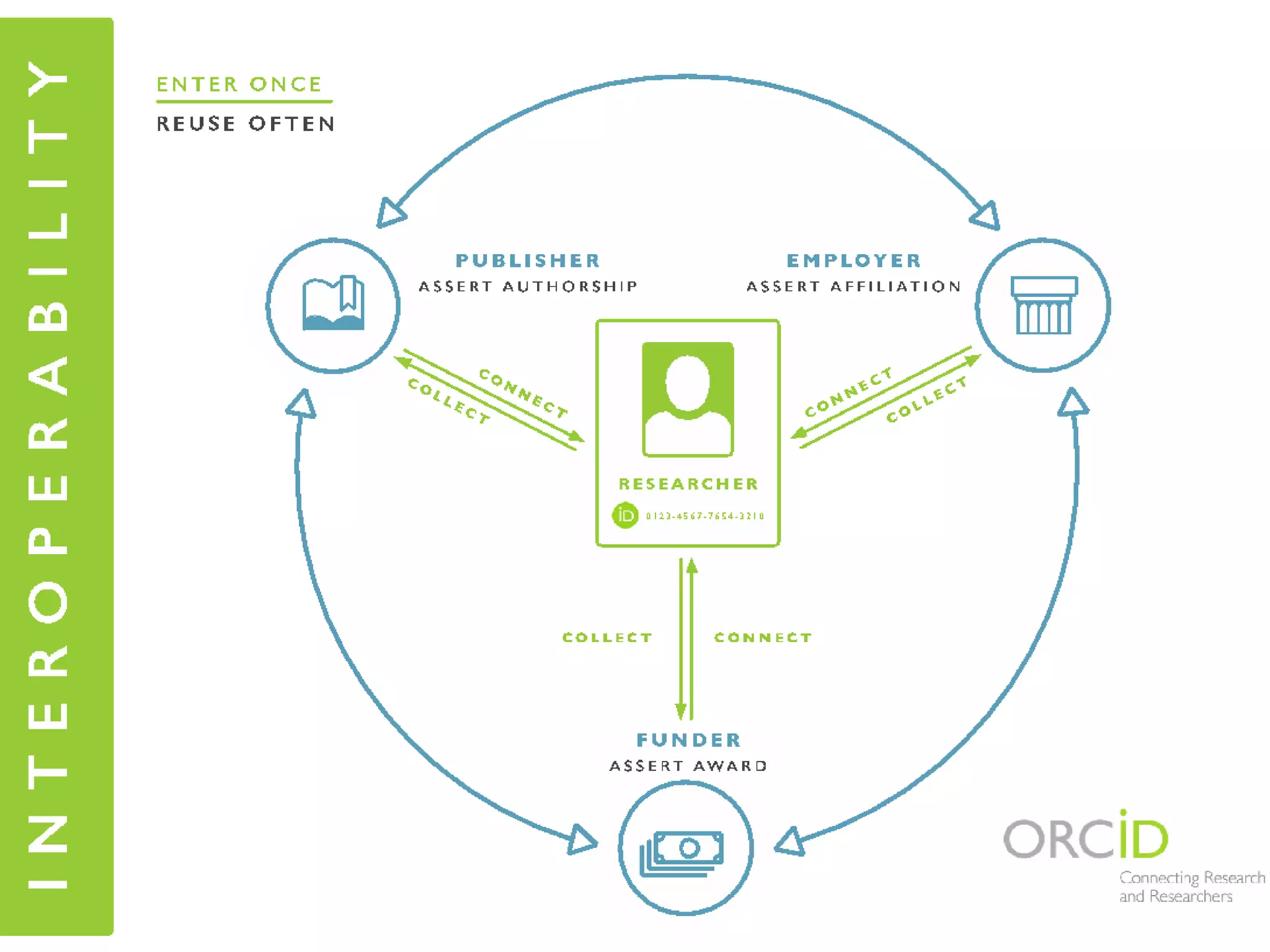
ORCID ENABLES ASSERTIONS
Organizations are
use ORCID APIs to
authenticate, collect,
display, and connect
persistent identifiers
for people, places,
and things in
research workflows
WHAT IS AN ORCID ID?
An ORCID iD is a unique persistent identifier which
resolves to data about a researcher. Researchers
control data associated with their record.
It looks like this:
http://orcid.org/0000-0001-5727-2427
WHAT’S IN A ORCID RECORD?
Organized into two sections.
Person:
Names, Countries, Keywords, Websites, Person
Identifiers, Biography
Activities:
Education, Employment, Funding, Peer Reviews,
and Works
ORCID RETURNS THINGS LIKE
THIS!
XML Data
JSON Data
HTML
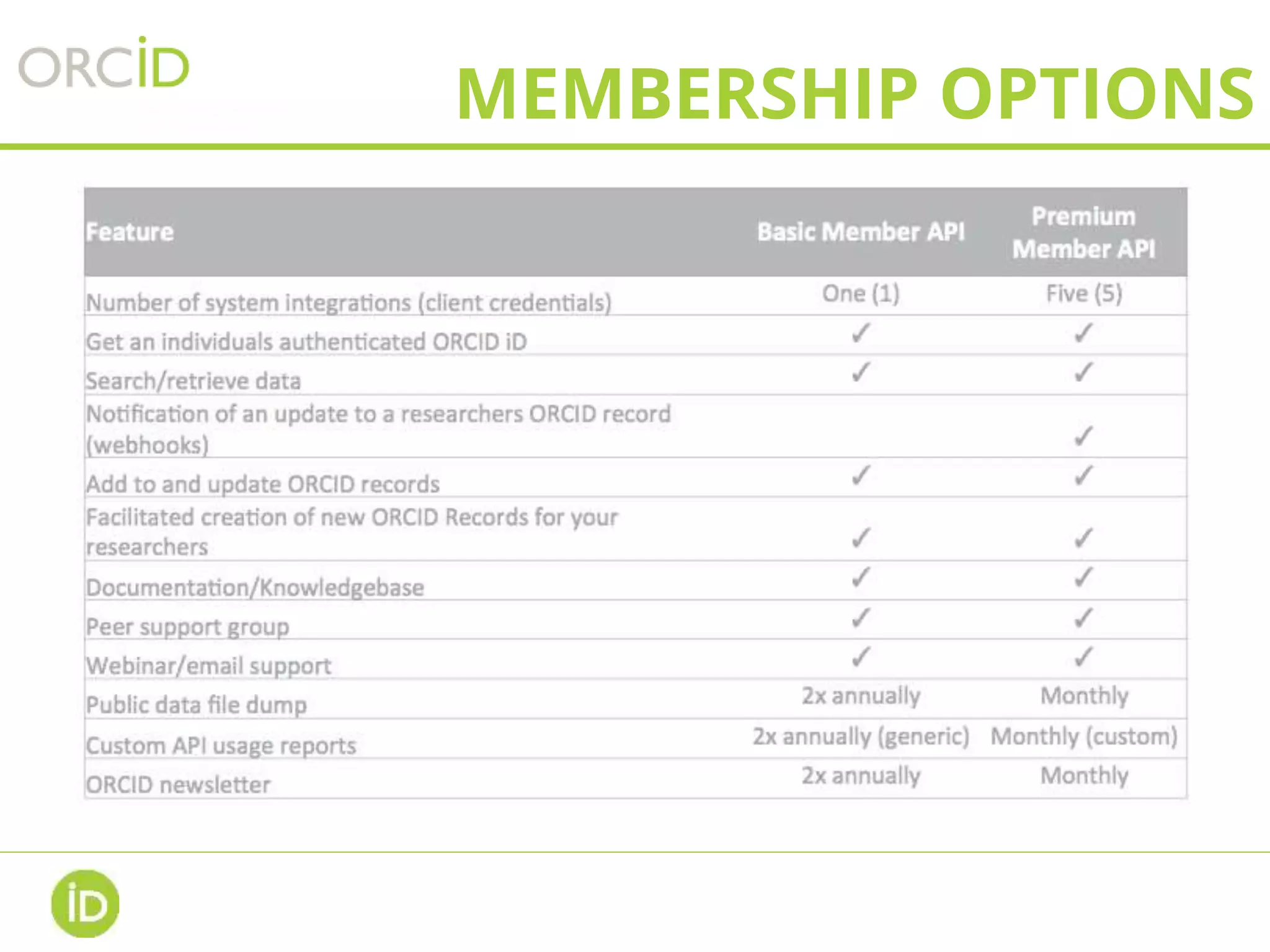
ORCID MEMBER API
Member API - Only available to member organizations
○Read Limited (non-public information a researcher chooses
to share with a member organization)
○Add and update records (requires users permission)
○Webhooks
○Researcher Notifications
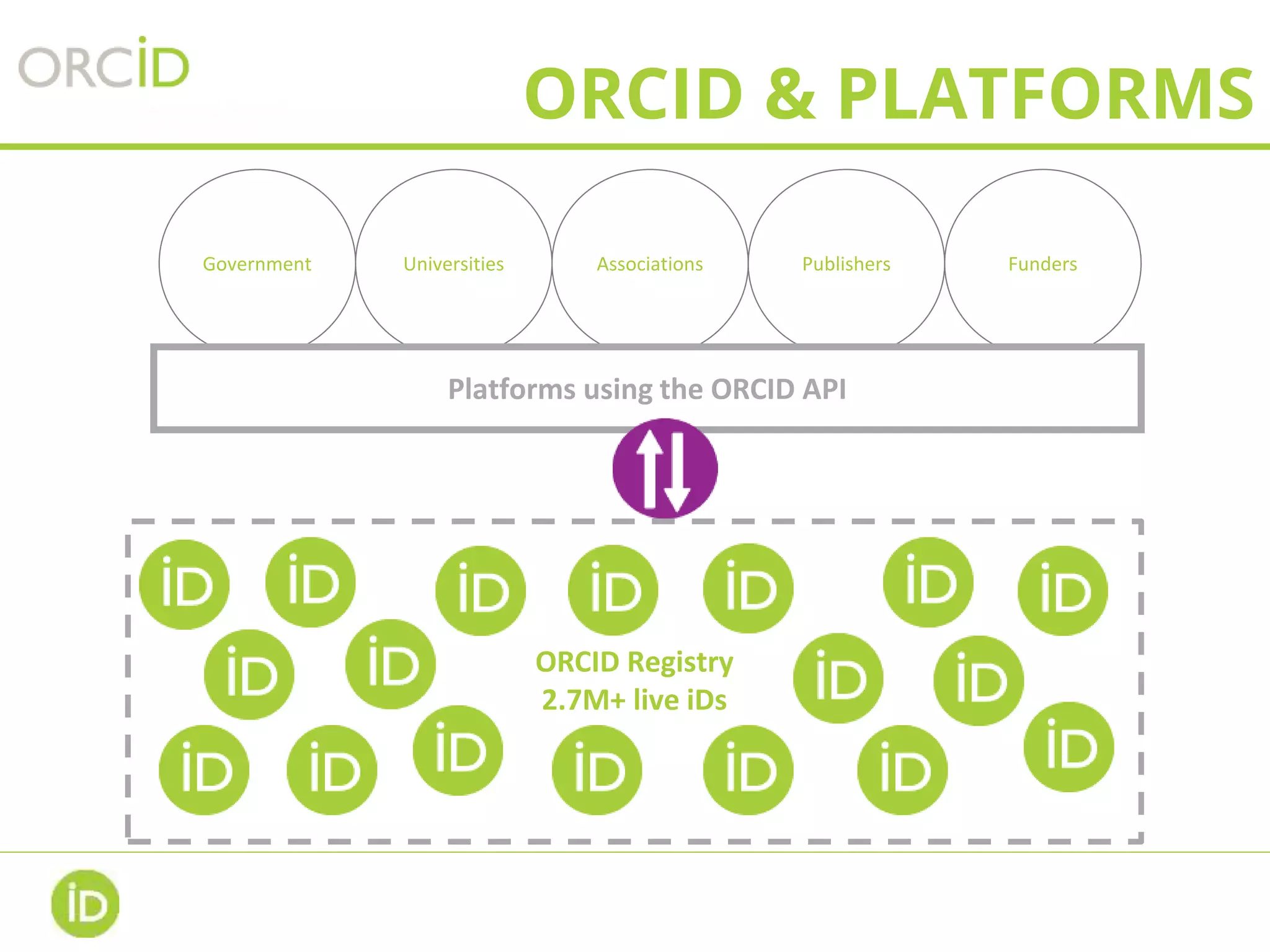
ORCID & PLATFORMS
Government Universities FundersAssociations Publishers
Platforms using the ORCID API
ORCID Registry
2.7M+ live iDs
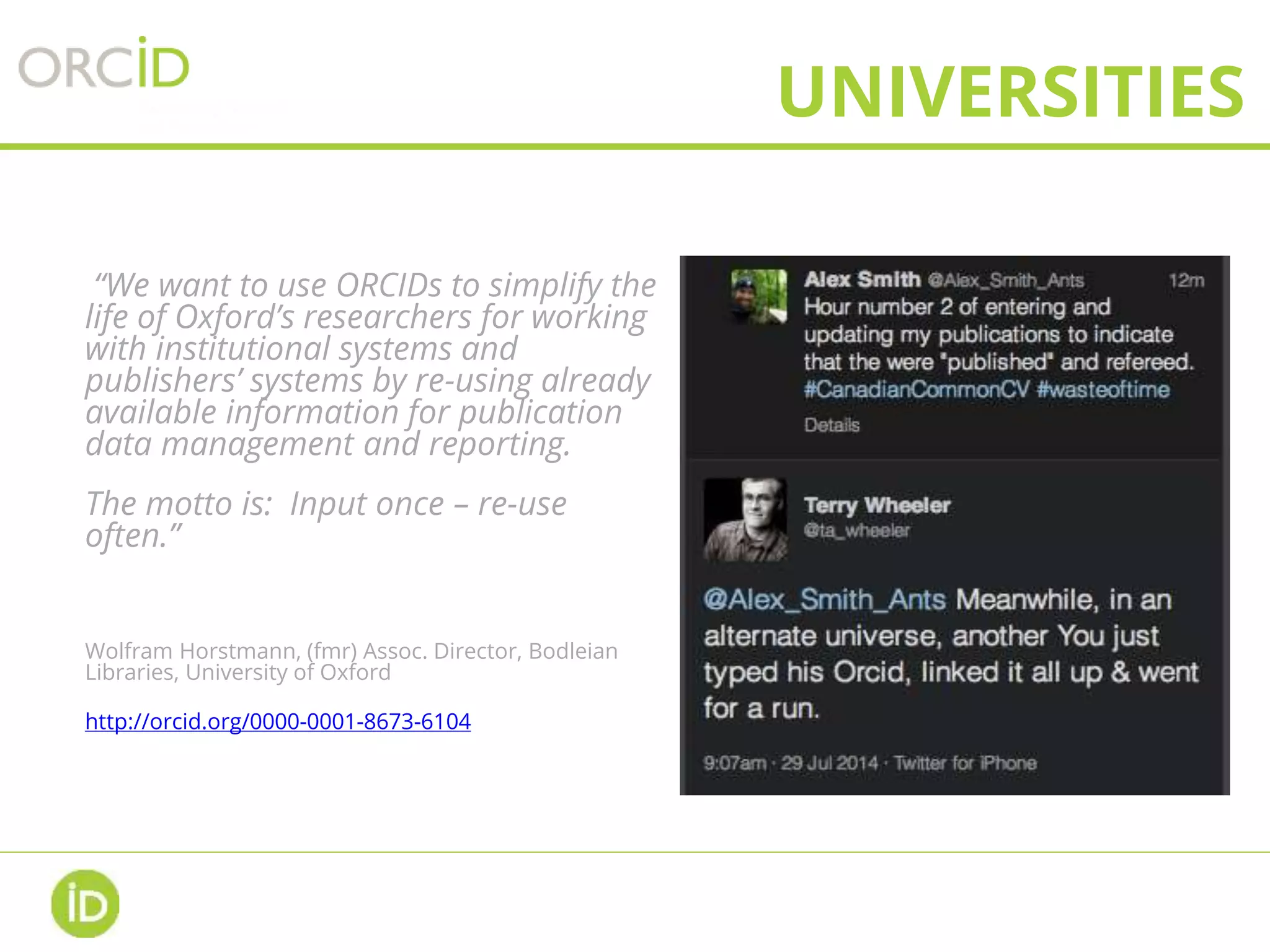
“We want to use ORCIDs to simplify the
life of Oxford’s researchers for working
with institutional systems and
publishers’ systems by re-using already
available information for publication
data management and reporting.
The motto is: Input once – re-use
often.”
Wolfram Horstmann, (fmr) Assoc. Director, Bodleian
Libraries, University of Oxford
http://orcid.org/0000-0001-8673-6104
UNIVERSITIES
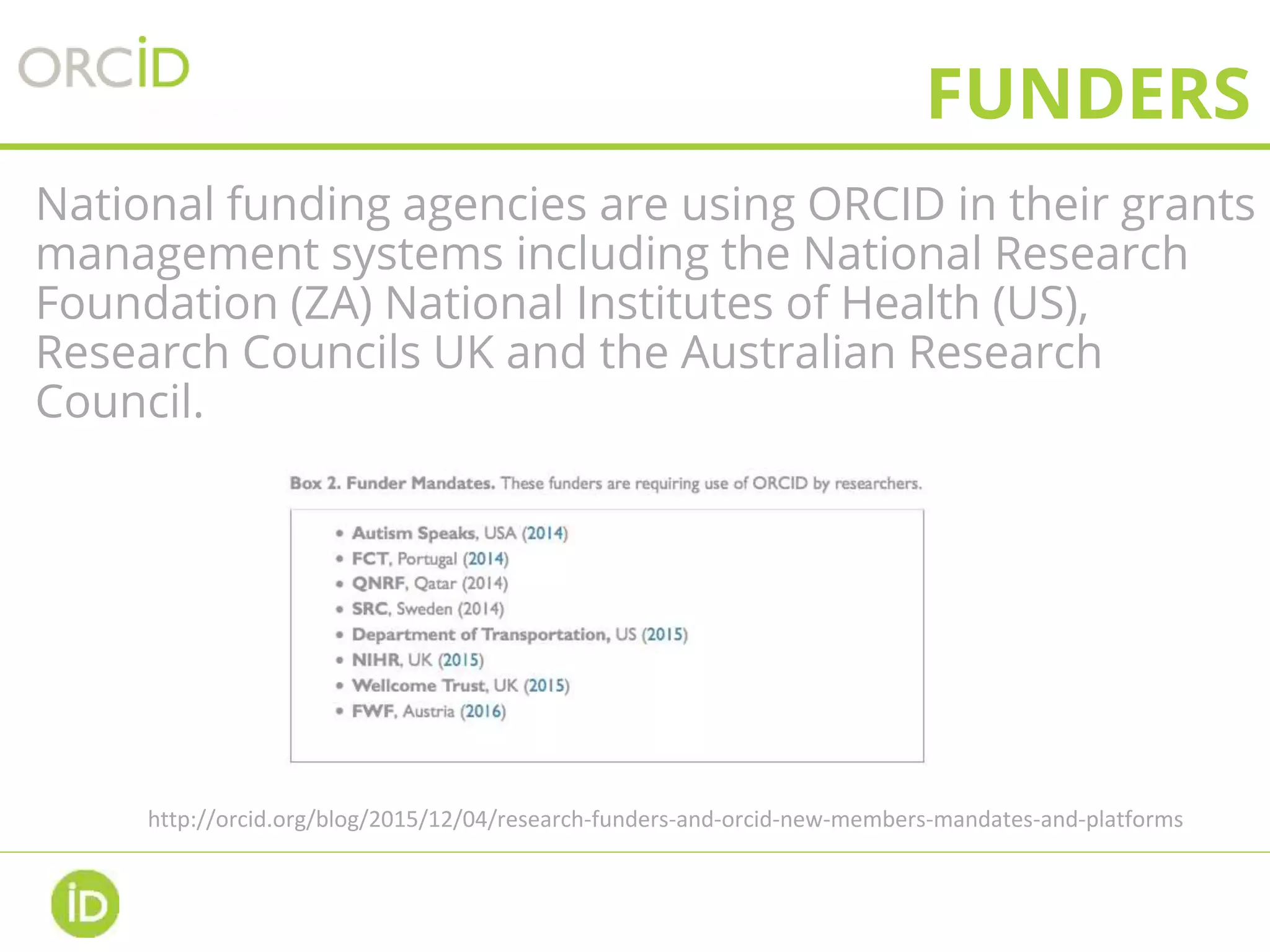
FUNDERS
National funding agencies are using ORCID in their grants
management systems including the National Research
Foundation (ZA) National Institutes of Health (US),
Research Councils UK and the Australian Research
Council.
http://orcid.org/blog/2015/12/04/research-funders-and-orcid-new-members-mandates-and-platforms
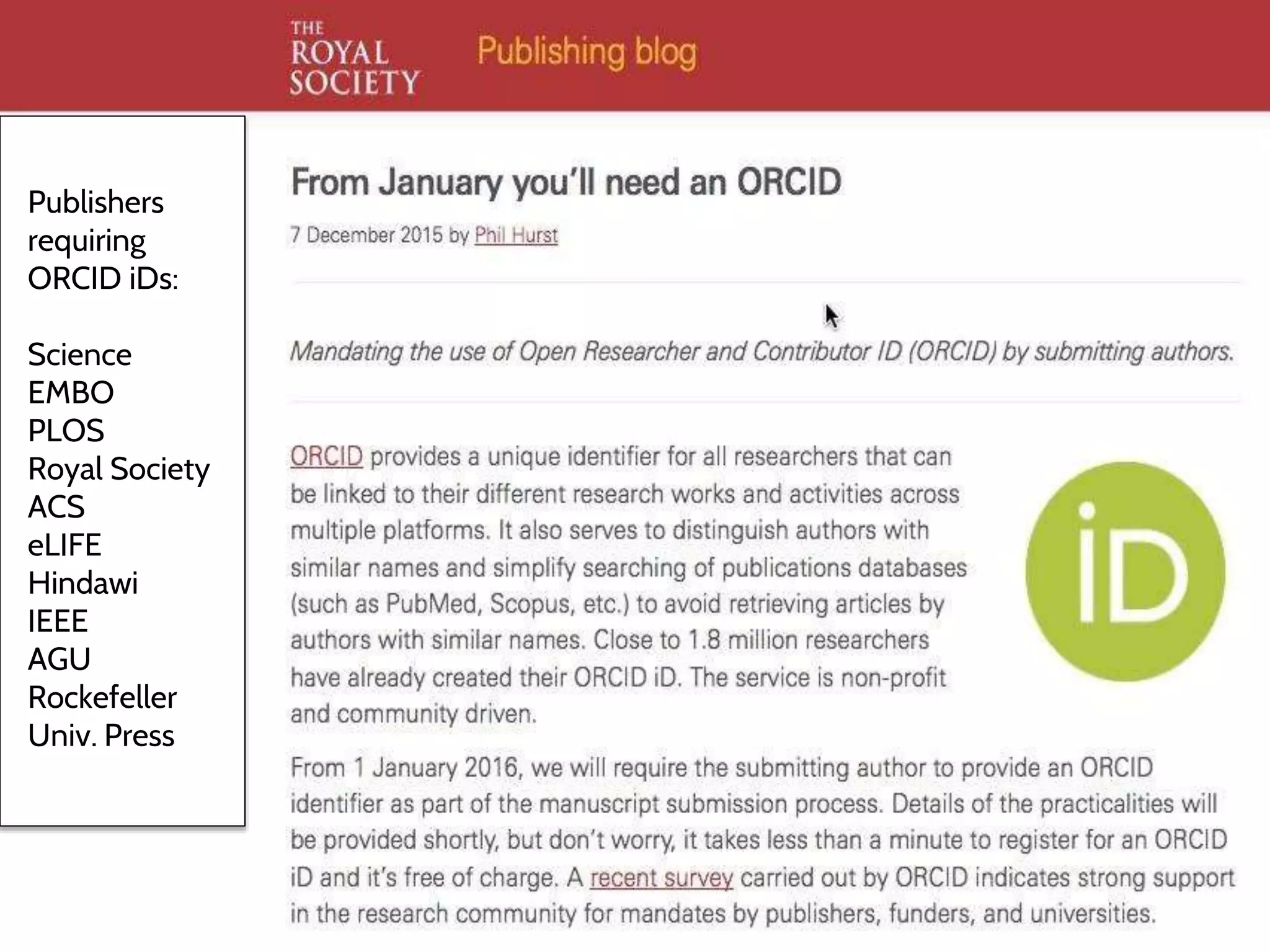
Publishers
requiring
ORCID iDs:
Science
EMBO
PLOS
Royal Society
ACS
eLIFE
Hindawi
IEEE
AGU
Rockefeller
Univ. Press
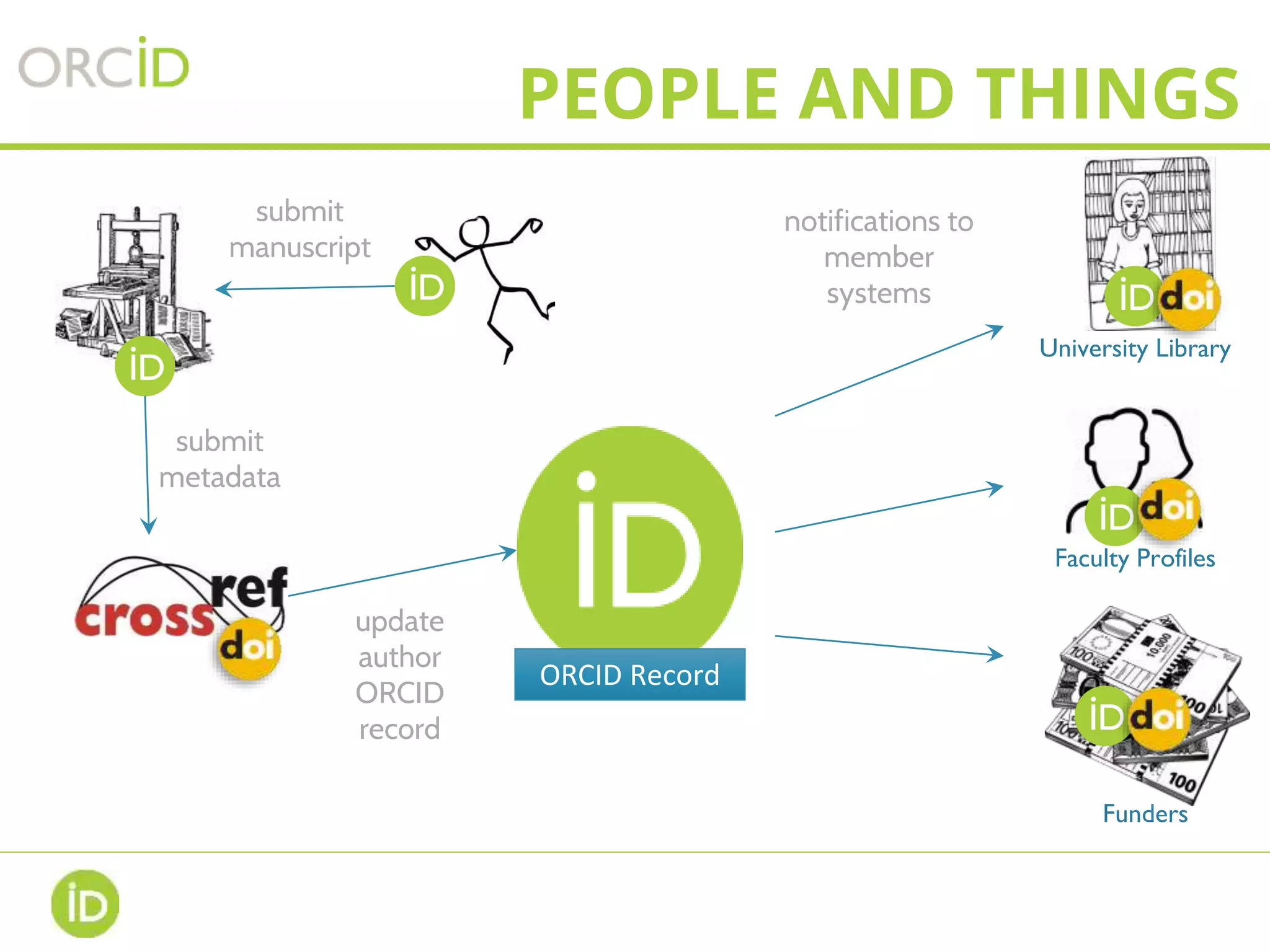
PEOPLE AND THINGS
ORCID Record
University Library
Funders
submit
manuscript
notifications to
member
systems
Faculty Profiles
submit
metadata
update
author
ORCID
record
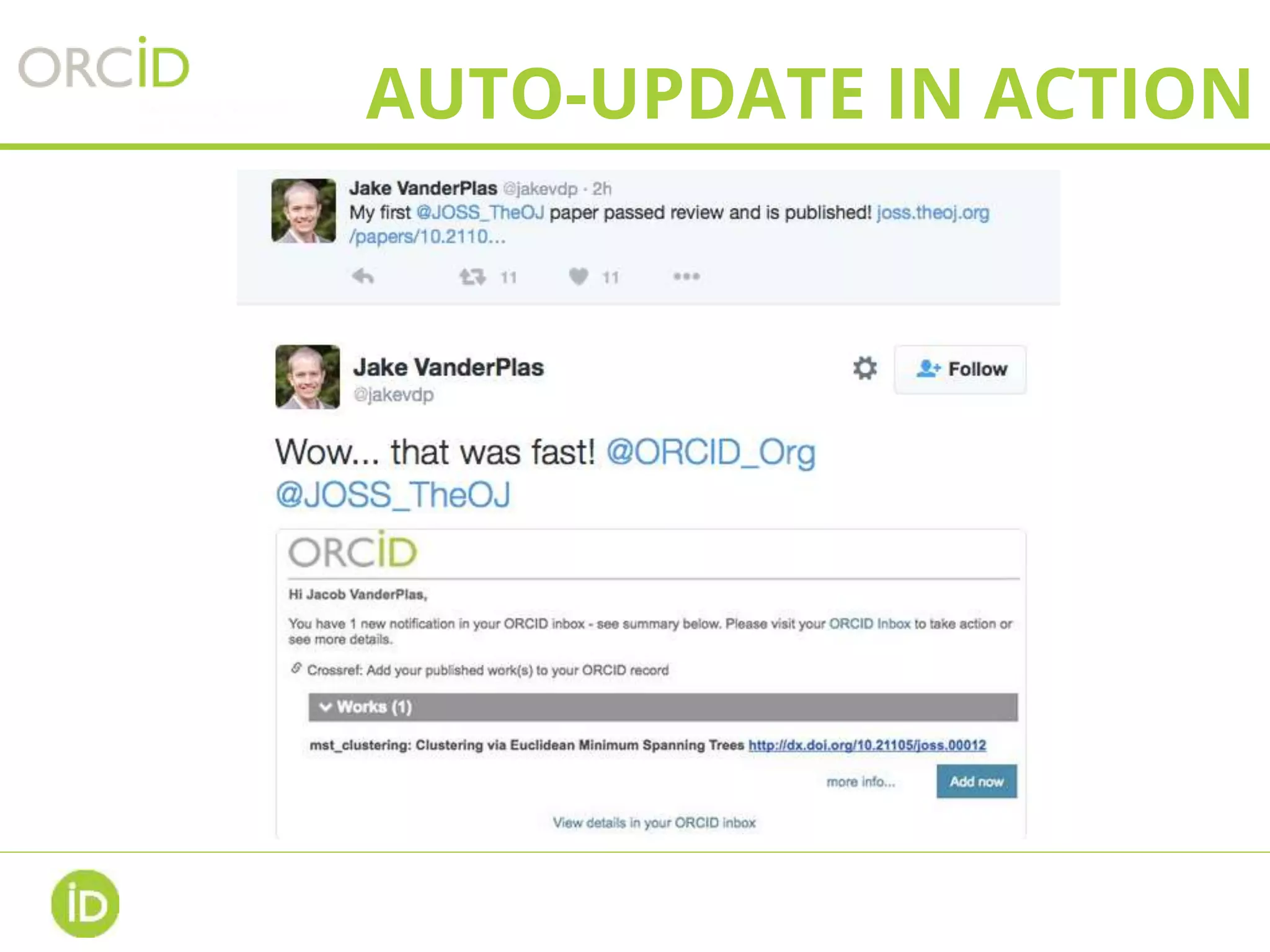
AUTO-UPDATE IN ACTION
MEMBERSHIP OPTIONS
RESOURCES
PHOTO: Stairway to somewhere © Jonathan Fenton
https://flic.kr/p/7Guxgu
member resources (includes planning & communication
resources)
http://members.orcid.org
API documentation
http://members.orcid.org/api
getting authenticated ORCID iDs
http://members.orcid.org/api/tutorial-retrieve-orcid-id-curl-v12-and-earlier
vendors that support ORCID iDs
http://members.orcid.org/publisher-tools
getting help at ORCID
http://orcid.org/help/contact-us
The ability to uniquely identify
contributors is a deceptively simple
concept which, if realised, could enable
forms of real-time understanding of
scientific research that up to now have
been extremely costly (if not impossible).
--Jonathan Kram, Wellcome Trust
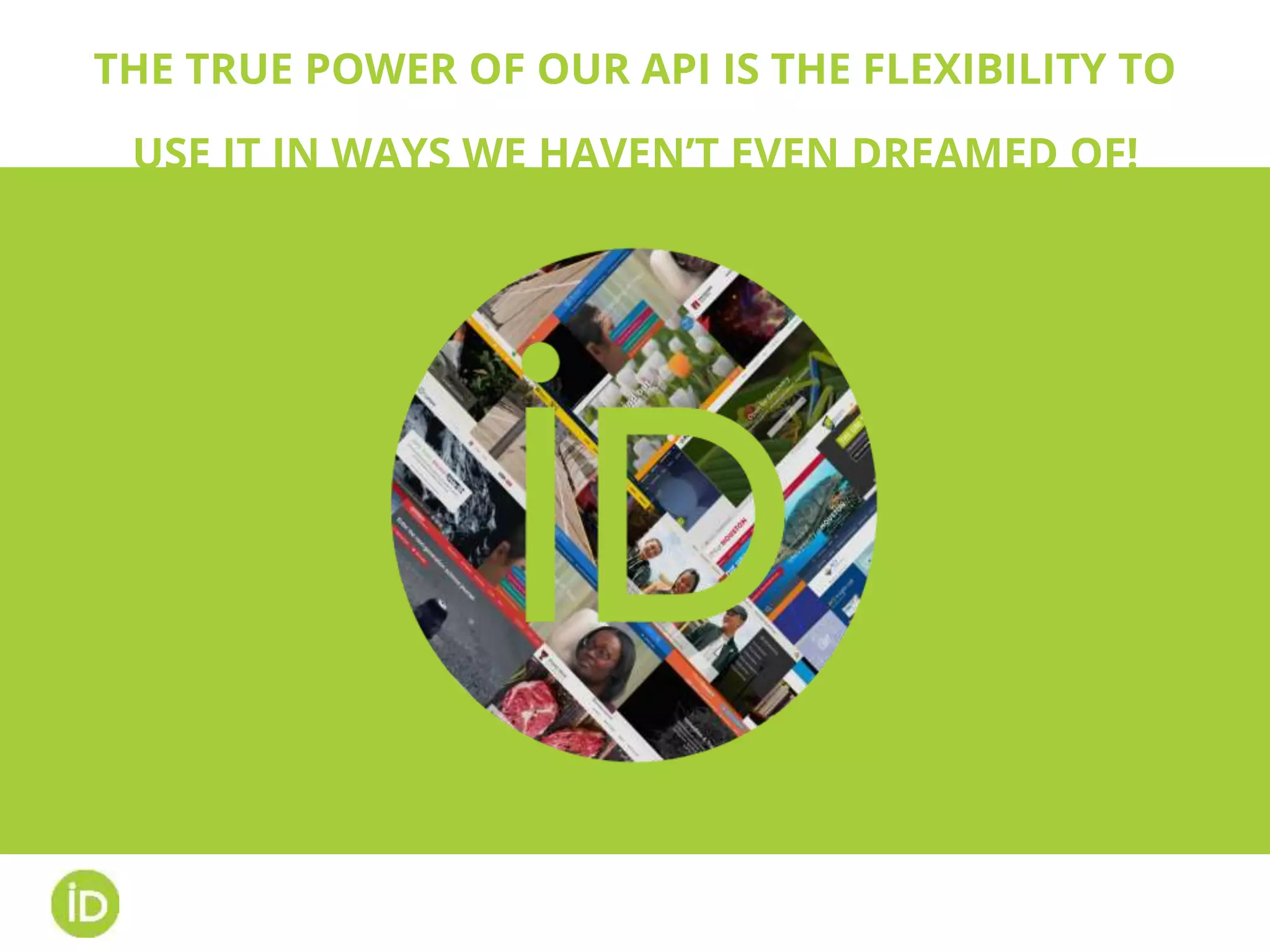
THE TRUE POWER OF OUR API IS THE FLEXIBILITY TO
USE IT IN WAYS WE HAVEN’T EVEN DREAMED OF!
TODO:
One big screenshot of websites that use ORCI
• Find out more at http://orcid.org
• Register at
http://orcid.org/register
• Twitter @ORCID_Org / @mjbuys
THANK YOU!
Matthew Buys
Regional Director, ORCID
m.buys@orcid.org
http://orcid.org/0000-0001-7234-3684

Research in a world where machines read (M. Buys)

  • 1.
    ORCID: RESEARCH INA WORLD WHERE MACHINES READ ORCID ABU DHABI WORKSHOP | NOVEMBER 14, 2016 MATTHEW BUYS orcid.org/0000-0001-7234-3684 REGIONAL DIRECTOR
  • 2.
    ENGAGING RESEARCHERS “Researchers wantto be read, acknowledged, and quoted.” “Researchers want to spend their time on research, not reporting”
  • 3.
    The research communityhas lacked the ability to link researchers and scholars with their professional activities. • Name variations: • Matthew J Buys, MJ Buys, M Buys, Matthew John Buys, ‫بايز‬، ‫ماثيو‬ • Institutional variations: • ORCID, ORCID Incorporated, ORCID Inc, ORCID EMEA WHY IS THERE A PROBLEM?
  • 6.
    Of the morethan six million authors in major journal citations and abstracts database,+2/3 share last name and single initial with another author. An ambiguous name in the same database refers on average to eight people. http://ands.org.au/newsletters/share_issue18.pdf Credit???
  • 7.
  • 8.
    CAN NAMES BECLEANED UP? Of course they can! We need to use digital names: persistent identifiers that uniquely specify the person, organization, or object to which a name refers
  • 9.
    SECTOR CHALLENGES Publishers • Identityof an author? Affiliation? • Reviewer credibility? Employers • Tracking research outputs? • Tenure, promotion? • External funding? Funders • Pre-award evaluation? • Applicant affiliation? • Post-award evaluation?
  • 10.
    RESEARCHER CHALLENGES • Uniqueidentity? Multiple profiles? • Different affiliations? • Time consuming reporting requirements? • Linked professional activities from trusted sources? • Peer review?
  • 11.
    Government ORCID provides apersistent digital identifier that distinguishes researchers from each other and links them to an organization identifier Individuals register for free and use this at their institution, funders and publishers Organizations join as members and can build integrations into their systems Universities Funders Associations Publishers
  • 13.
    ORCID IS OPEN •Non-proprietary and platform-neutral • International service that integrates with other researcher identifiers • Registry use is free for individuals • Independent non-profit membership organization • Open data, software, APIs, and documentation
  • 14.
    ANY DISCIPLINE, ANY COUNTRY •ORCID can connect to over 30 work types, in any language • The Registry is available in 11 languages • We have staff in 9 countries who speak 7 languages • We have members in over 20 countries, across disciplines • We have users in every country
  • 15.
    RESEARCHER RESPONSIBILITY To benefit, researchersneed only do 2 things: 1. Register for an iD 2. Use it! Government Universities Funders Associations Publishers
  • 16.
    Over 2.7 millionresearchers have registered for an ORCID identifier. ORCID iDs are associated with: • >6 million unique DOIs (papers & data) • >50 thousand unique organization IDs
  • 17.
    ORCID ENABLES ASSERTIONS Organizationsare use ORCID APIs to authenticate, collect, display, and connect persistent identifiers for people, places, and things in research workflows
  • 18.
    WHAT IS ANORCID ID? An ORCID iD is a unique persistent identifier which resolves to data about a researcher. Researchers control data associated with their record. It looks like this: http://orcid.org/0000-0001-5727-2427
  • 19.
    WHAT’S IN AORCID RECORD? Organized into two sections. Person: Names, Countries, Keywords, Websites, Person Identifiers, Biography Activities: Education, Employment, Funding, Peer Reviews, and Works
  • 20.
    ORCID RETURNS THINGSLIKE THIS! XML Data JSON Data HTML
  • 21.
    ORCID MEMBER API MemberAPI - Only available to member organizations ○Read Limited (non-public information a researcher chooses to share with a member organization) ○Add and update records (requires users permission) ○Webhooks ○Researcher Notifications
  • 22.
    ORCID & PLATFORMS GovernmentUniversities FundersAssociations Publishers Platforms using the ORCID API ORCID Registry 2.7M+ live iDs
  • 23.
    “We want touse ORCIDs to simplify the life of Oxford’s researchers for working with institutional systems and publishers’ systems by re-using already available information for publication data management and reporting. The motto is: Input once – re-use often.” Wolfram Horstmann, (fmr) Assoc. Director, Bodleian Libraries, University of Oxford http://orcid.org/0000-0001-8673-6104 UNIVERSITIES
  • 24.
    FUNDERS National funding agenciesare using ORCID in their grants management systems including the National Research Foundation (ZA) National Institutes of Health (US), Research Councils UK and the Australian Research Council. http://orcid.org/blog/2015/12/04/research-funders-and-orcid-new-members-mandates-and-platforms
  • 25.
  • 26.
    PEOPLE AND THINGS ORCIDRecord University Library Funders submit manuscript notifications to member systems Faculty Profiles submit metadata update author ORCID record
  • 27.
  • 28.
  • 29.
    RESOURCES PHOTO: Stairway tosomewhere © Jonathan Fenton https://flic.kr/p/7Guxgu member resources (includes planning & communication resources) http://members.orcid.org API documentation http://members.orcid.org/api getting authenticated ORCID iDs http://members.orcid.org/api/tutorial-retrieve-orcid-id-curl-v12-and-earlier vendors that support ORCID iDs http://members.orcid.org/publisher-tools getting help at ORCID http://orcid.org/help/contact-us
  • 30.
    The ability touniquely identify contributors is a deceptively simple concept which, if realised, could enable forms of real-time understanding of scientific research that up to now have been extremely costly (if not impossible). --Jonathan Kram, Wellcome Trust
  • 31.
    THE TRUE POWEROF OUR API IS THE FLEXIBILITY TO USE IT IN WAYS WE HAVEN’T EVEN DREAMED OF! TODO: One big screenshot of websites that use ORCI
  • 32.
    • Find outmore at http://orcid.org • Register at http://orcid.org/register • Twitter @ORCID_Org / @mjbuys THANK YOU! Matthew Buys Regional Director, ORCID m.buys@orcid.org http://orcid.org/0000-0001-7234-3684